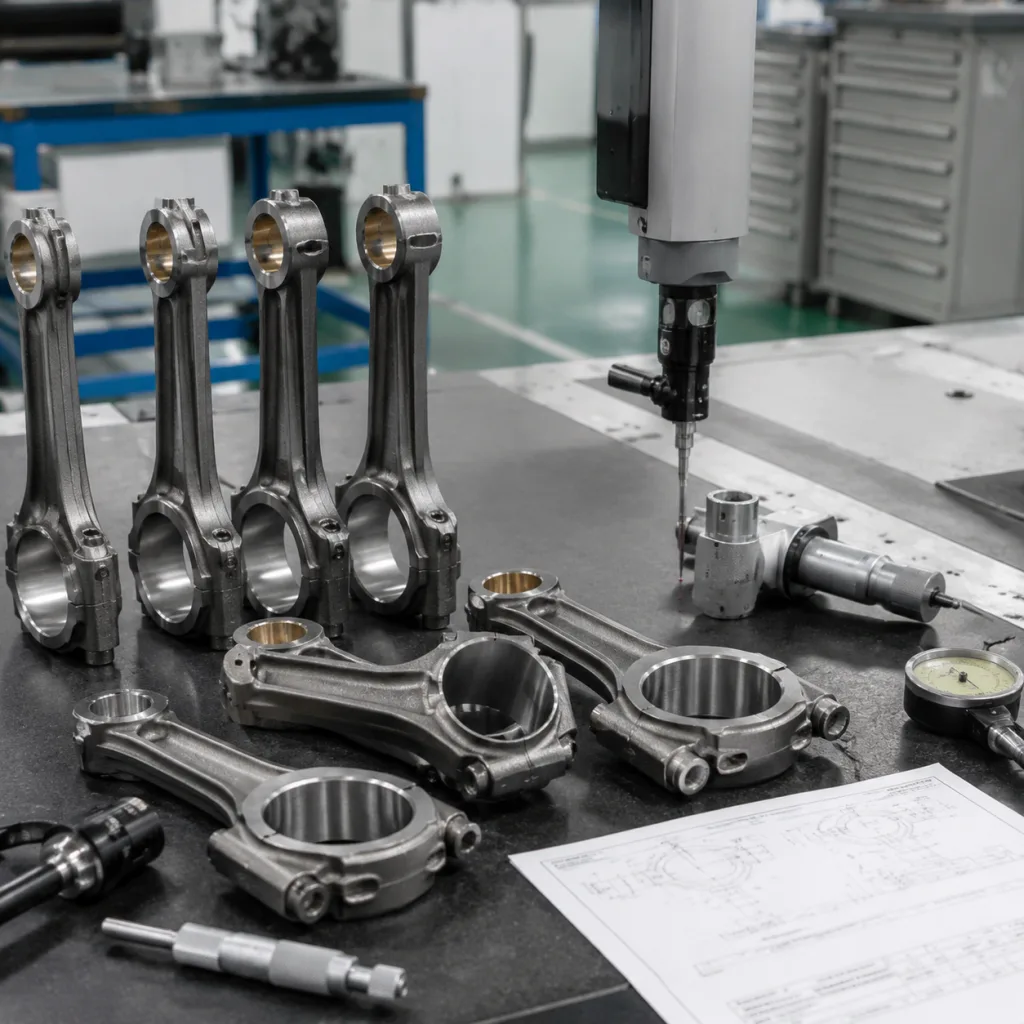
Valve seat recession is not just a workshop defect. For a buyer, it is a warranty pattern, a remanufacturing yield problem, and often a specification gap between the fuel, duty cycle, valve alloy, seat material, guide condition, and machining process. The condition shows up as the valve gradually sinking into the cylinder head or insert, reducing valve lash until the valve no longer closes cleanly. The result can be hot misfire, compression loss, burnt exhaust valves, repeated head repairs, or rejected cores.
The highest-risk programs are predictable: LPG and CNG conversions, dry-fuel industrial engines, stationary engines, high-load commercial applications, and older cast-iron heads originally designed around leaded petrol. Recession can also follow poor guide-to-seat concentricity, excessive seat width or runout, overheating, detonation, incorrect spring load, abrasive contamination, loose inserts, or a hard-soft mismatch between valve face and seat.
This guide treats valve seat recession causes and fixes as a sourcing decision, not a generic repair topic. It gives procurement teams a way to read the evidence, separate fuel-related wear from machining or material failure, specify durable replacement parts, and write purchase controls for valves, hardened seat inserts, guides, springs, seals, fasteners, and gasket sets. Driventus is an independent aftermarket manufacturer; brand names are referenced for fitment only.
Start With the Pattern: Is It Recession or Another Failure?
The first question is not “which part should we buy?” It is “what pattern does the engine show?” True valve seat recession usually leaves a measurable trail before the valve burns.
On engines with mechanical adjustment, the early clue is exhaust valve-clearance loss. Any exhaust valve that loses more than 0.05-0.10 mm over a short interval deserves attention. Repeated adjustment back to zero lash is stronger evidence. Hydraulic lash adjusters hide the movement until their travel is used up, so the first complaint may be hot misfire, low compression, or a burnt valve.
Look for this sequence:
Exhaust lash closes faster than the service schedule predicts
Lash reaches zero or negative clearance after 5,000-20,000 km, or 100-500 hours in severe duty
Hot starting becomes difficult because one or more valves cannot fully close
Compression falls more than 10-15% below companion cylinders
Leak-down exceeds 15-20% through the exhaust port
Misfire appears under load, especially on LPG, CNG, or high exhaust-temperature duty
Valve margins burn, valve heads tulip, or the seat shows a narrow polished wear ring
Power drops, exhaust gas temperature rises, and valve adjustments become repeat work
A useful diagnostic order is simple: record the complaint, confirm fuel type and duty cycle, measure lash using the correct hot or cold procedure, run compression and leak-down checks, inspect the chamber and ports with a borescope, then remove the cylinder head only when leakage or installed-height evidence supports it. Before machining, record valve stem installed height. An exhaust stem tip that sits 0.20-0.50 mm higher than similar positions can be more useful than a cleaned-up photo.
For warranty returns, require the facts that separate recession from lookalikes. Ask for mileage or hours, fuel type, valve-clearance history, cylinder number, load profile, coolant and oil condition, LPG/CNG calibration notes, and any prior seat machining. Add photos before cleaning plus a table of lash, compression, leak-down, and installed height by valve position. This prevents soft-seat recession from being confused with overheating, guide wear, detonation, poor filtration, assembly error, or an incorrect repair process.
Failure Modes Behind Valve Seat Recession
Valve seat recession rarely has one clean cause. It normally develops when high impact load, weak surface protection, exhaust heat, poor geometry, abrasive particles, or unsuitable material act together. Replacing the valve alone is a short repair if the insert, head casting, guide, machining setup, or application duty remains wrong.
Failure mode
Typical evidence
Buying response
Dry-fuel or unleaded conversion duty
Exhaust-seat wear, repeated lash loss, hotter valve area
Specify hardened inserts, compatible exhaust-valve alloy, and clear fuel-use notes
Seat material too soft
Rapid recession, polished wear band, hardness below drawing range
Require material certificate, hardness range, and batch traceability
Poor seat geometry
Off-centre contact, excessive width, runout, chatter marks
Audit machining capability and guide-to-seat concentricity control
Check filtration, washing, assembly cleanliness, and packaging controls
Insert movement
Witness marks behind insert, loose insert, local seat distortion
Define interference fit, counterbore finish, chamfer, and installation process
</tr></thead><tbody> </tbody></table>Fuel choice is often the trigger. Older engines designed for leaded petrol benefited from lead compounds that reduced microwelding and adhesive wear at the valve-seat contact. When those engines move to unleaded petrol, LPG, CNG, or long high-load cycles, the exhaust seat often needs a hardened insert and a valve face that can handle higher thermal and impact load. Many buyers target hardened exhaust-seat inserts around 35-45 HRC, or an equivalent application-proven metallurgy. The aim is not maximum hardness at any cost; it is a compatible valve-seat pair.
The final specification depends on the system: head material, insert design, valve alloy, valve diameter, guide clearance, spring load, combustion temperature, cooling condition, expected service interval, and whether the engine runs steady-state or stop-start duty. Ask suppliers to state the material grade, heat-treatment condition, hardness test method, minimum case depth where surface-treated, and approved mating valve material.
Inspection Deep-Dive: Measurements That Change the Decision
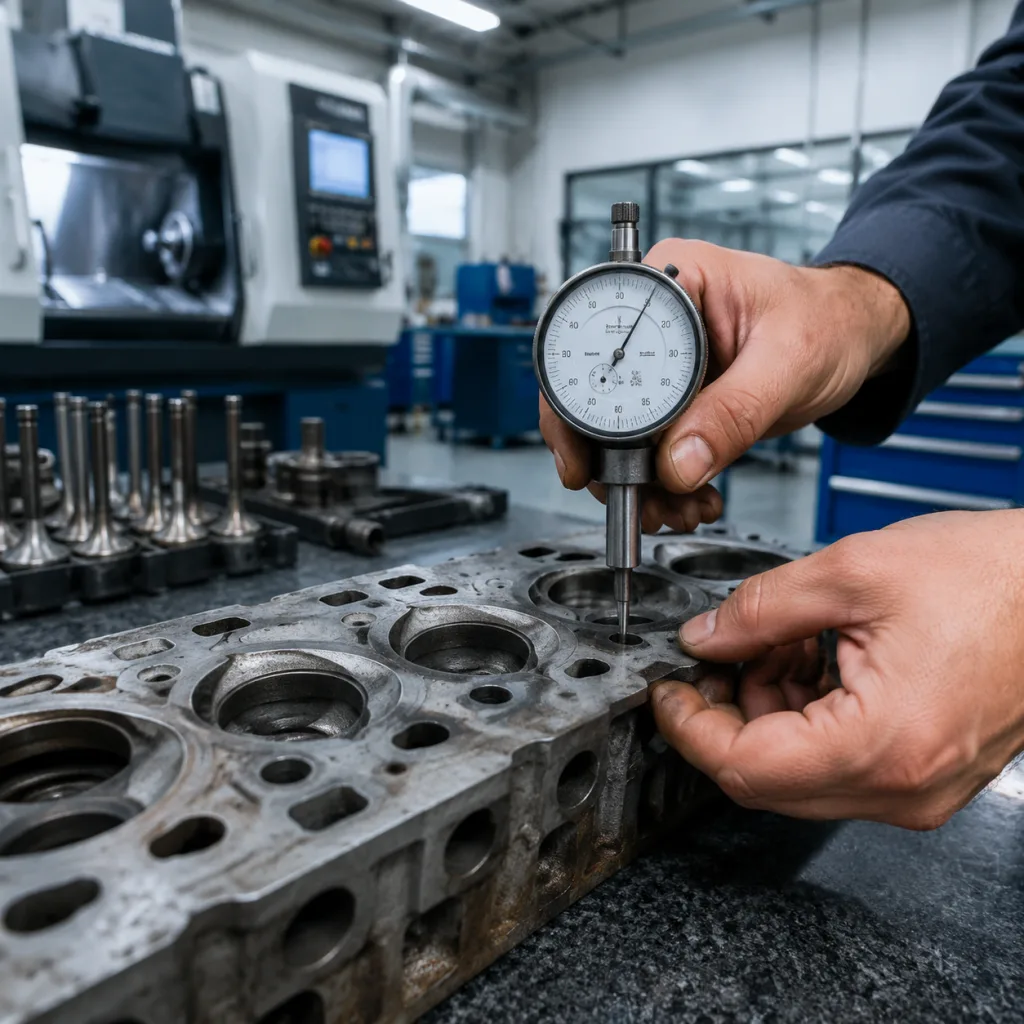
A good inspection protects the buyer from two expensive mistakes: replacing good parts, or buying the same failure again. Measurements must be taken before blasting, grinding, or seat cutting removes the wear pattern.
Workshop measurements
Capture these points before cleaning or machining:
Cold valve lash by cylinder and valve position, with the engine specification noted
Valve stem installed height, compared across same-position valves and service limits
Recession depth from a fixed deck or spring-seat reference where the OEM procedure allows
Seat width, seat runout, and contact position on the valve face
Valve margin thickness; many light-duty exhaust valves are rejected around 0.8-1.0 mm unless the engine manual states otherwise
Valve-face angle condition, pitting, burning, tuliping, and stem straightness
Guide clearance and stem wear pattern, because excessive clearance side-loads the seat
Spring installed height, free length, seat load, and open load when equipment is available
Compression and leak-down readings before disassembly
Evidence of overheating, detonation, oil consumption, lean operation, or exhaust restriction
Machining targets vary by engine, but the PO or repair standard should not be vague. Typical finished seat width is about 1.0-1.5 mm for many intake valves and 1.5-2.0 mm for many exhaust valves. Heavy-duty engines may use wider exhaust seats for heat transfer. Seat runout is commonly controlled to 0.03-0.05 mm TIR, while tighter production or remanufacturing programs may target 0.02-0.03 mm if the head, guide, and tooling support it. Contact should sit in the intended zone on the valve face, not at the outer edge where burning risk rises or too far inside where heat transfer suffers.
Material and process checks
For returned or suspect parts, request hardness testing on the seat area and valve face where practical. Confirm insert metallurgy, heat treatment, machining finish, and dimensional tolerances against the approved drawing. For pressed inserts, check retention, interference fit, counterbore condition, installation damage, and witness marks from movement in service. A common aluminium-head insert interference range is roughly 0.05-0.10 mm depending on insert diameter, head material, and operating temperature; large or heavy-duty inserts may need a different engineered value.
Surface finish is not cosmetic. A torn or chattered seat creates local heat and accelerates wear. Buyers can specify a measurable finish, such as Ra 0.8-1.6 µm on the finished seat where suitable for the application, and require pilot/tooling control after guide replacement. If the guide is replaced, final seat machining should happen after guide installation and sizing.
Driventus production control is managed under IATF 16949:2016 and ISO 9001:2015, with traceability for material batches and inspection records. Buyers can review our quality system when setting audit requirements for engine component sourcing.
Repair Decision Tree: Recut, Insert, or Replace?
The fix depends on recession depth, head design, remaining material, fuel type, and duty cycle. A shallow case may only need a controlled recut and restoration of valve stem installed height. But each cut consumes head material and spring installed-height margin. If recession repeats, the base material is too soft, the contact band is badly pitted, or the engine will run on LPG, CNG, unleaded conversion duty, or severe service, a hardened insert is usually the durable answer.
Use this decision logic:
Recut only when recession is shallow, the seat cleans within service limits, and stem installed height stays within specification
Replace any valve with burning, tuliping, stem stretch, face cracks, excessive stem wear, or margin below limit
Install hardened seat inserts when the original head material cannot meet fuel and load requirements
Replace worn guides before final seat machining; a worn guide must not be used as the pilot reference
Restore spring installed height with approved shims or replacement parts, then verify seat and open load
Check cooling, mixture control, ignition timing, exhaust restriction, oil consumption, and filtration before release
Replace head gaskets, stem seals, torque-to-yield fasteners, keepers, retainers, and related service items according to the repair procedure
For insert repairs, control the process like production. Machine the counterbore square to the guide axis. Maintain the specified bottom radius or chamfer. Deburr without rounding the register. Heat or chill parts only within approved limits. Press the insert without cocking. Then rough-cut and finish-cut the seat after the insert has stabilized. Check insert protrusion or flushness, absence of rocking or witness gaps, final seat runout, seat width, contact position, and leakage by vacuum or solvent test after assembly.
Parts must be specified as a matched system. A very hard insert paired with an unsuitable valve-face material can move the wear from the seat to the valve. A new valve installed against a soft, off-centre, or badly machined seat can fail quickly. For standard engine components, buyers can review our catalog and engine part families under engine components. For non-standard alloys, seat insert dimensions, private-label kits, or LPG/CNG upgrades, Driventus supports custom manufacturing.
RFQ Checklist for Recession-Prone Engine Programs
A purchase order that lists only engine model and quantity leaves too much open. The supplier needs operating context and critical dimensions so material, heat treatment, hardness, surface finish, and fit are controlled. Separate catalogue replacement demand from engineered severe-duty demand; the cost, MOQ, validation time, and lead time are different.
Annual volume, first order quantity, service kit structure, and forecast by SKU
Cylinder head material, including cast iron or aluminium with separate inserts
Valve position and dimensions: intake or exhaust, head diameter, stem diameter, overall length, groove type, and tip treatment
Seat angle, top and throat angles if controlled, seat width, insert outside diameter, counterbore size, and interference-fit requirement
Valve face alloy, hardfacing requirement, nitriding requirement, chrome stem requirement, or other surface treatment
Hardness range for the valve face, seat insert, and any specified wear-resistant layer
Guide material, clearance target, and compatibility with the valve stem finish
Packaging controls to prevent impact damage, corrosion, or contamination on machined surfaces
Required documentation, such as dimensional inspection report, material certificate, hardness report, IMDS data, and PPAP level where applicable
Commercial planning should follow risk. Catalogue valves or common seat inserts may be available with lower MOQs. Custom alloys, non-standard insert sizes, private-label packaging, or PPAP-controlled programs usually need tooling review, sample production, and batch commitment. As a practical range, allow 2-4 weeks for drawing review and quotation, 4-8 weeks for first samples where tooling exists, and 8-12+ weeks where new tooling, heat-treatment trials, or validation testing are required. MOQ should be negotiated by part family and process because bar stock, forging, heat treatment, grinding setup, and packaging can set the economic batch size.
Compare offers on the complete package, not only the unit price. Confirm whether the quote includes material certificates, hardness reports, dimensional sampling, corrosion-protective packaging, private label, PPAP documentation, freight terms, and warranty-support reporting. A cheaper valve without the correct face treatment, stem finish, or mating insert specification can become expensive after one repeat head removal.
For emissions-related engine programs, component changes should be controlled so the repaired or remanufactured engine remains consistent with the applicable vehicle certification basis. Regulations such as ECE R-83 and US EPA emissions requirements apply at vehicle or engine-system level, not as a blanket approval for an individual aftermarket valve or seat insert. Chemical compliance may also matter for export programs, including REACH (EC) No 1907/2006 for substances placed on the EU market.
Driventus is an independent aftermarket manufacturer; brand names are referenced for fitment only. No vehicle manufacturer approval or endorsement is claimed.
Scenario: Why Repeat Recession Claims Keep Coming Back
A typical repeat claim looks like this: a repair chain replaces burnt exhaust valves on a converted LPG fleet, adjusts lash, and returns the vehicles to service. Three months later, the same engine family comes back with tight lash, misfire, and another burnt valve. The valve supplier is blamed first. The real cause may be softer original seats, worn guides, excessive seat width, poor insert retention, lean calibration, or one valve grade being used across petrol, LPG, CNG, and severe-duty applications.
For B2B supply programs, the control plan should define:
Incoming material verification for valves, guides, and inserts, including batch hardness checks
Heat-treatment records linked to batch traceability and shipment lots
Seat machining inspection after guide replacement or insert installation
Sampling plans for hardness, dimensional checks, surface-finish review, and runout
Clear fitment notes for LPG, CNG, unleaded conversions, and severe-duty applications
Kitting rules so valves, inserts, guides, seals, springs, and gaskets are not mismatched
Packaging and handling rules for finished valve faces and machined seat inserts
Warranty return coding that separates recession, burning, guide wear, contamination, overheating, and assembly defects
A practical sampling plan can combine 100% visual inspection of critical finished surfaces with AQL-based dimensional checks and periodic hardness verification by batch. During launch or supplier changeover, buyers may require first-article inspection on all drawing dimensions, then reduce to agreed control-plan checks after stable capability is proven. Critical characteristics for recession-prone programs usually include valve face hardness or hardfacing, stem diameter and finish, valve head diameter, seat insert OD/ID, insert hardness, seat angle, and packaging condition.
The strongest programs connect field evidence back to sourcing choices. Track engine family, fuel, mileage or hours, cylinder position, valve-clearance change, compression, leak-down, photos of the failed seat and valve, and whether the head had previous insert work. Patterns will show whether the issue is concentrated in a material batch, a machining process, a fuel application, or a repair procedure. If three or more similar claims appear from the same engine family, fuel type, or repair network within a short period, open a formal 8D or corrective-action review before releasing more stock.
Driventus manufactures engine and powertrain components in Taizhou, Zhejiang, and exports to more than 60 countries. For recession-related programs, our engineering team can review drawings, samples, duty-cycle notes, and warranty evidence, then propose valve, insert, gasket, and related component supply options. If your team is building a sourcing package, include the inspection data listed above when you request a quote.
Frequently asked questions
Measure valve lash and valve stem installed height, then compare them with service limits and companion cylinders. Tight exhaust lash plus a higher stem tip position is a strong indicator that the valve has moved deeper into the seat. Confirm with compression or leak-down testing; more than 15-20% leakage through the exhaust port usually justifies cylinder-head removal and seat inspection.
Often yes. If the head casting is crack-free and has enough material, a machine shop can recut shallow seats or install hardened seat inserts. The decision depends on recession depth, remaining machining allowance, guide condition, counterbore quality, insert interference fit, and whether final stem installed height and spring installed height can be restored within specification.
Buyers should consider valves, hardened seat inserts, guides, stem seals, springs where worn, keepers or retainers where damaged, head bolts where required, and the head gasket set. Sourcing these parts as a matched package reduces the risk of hardness, geometry, thermal, or spring-load mismatch causing another failure.
If you are qualifying valves, seat inserts, or cylinder head repair components for a distributor, OEM service, or repair-chain program, Driventus can review drawings, samples, duty-cycle data, MOQ targets, documentation requirements, and application risks. Send your requirements through /contact.html