Mazda Dual Mass Flywheel Supplier Evaluation Guide
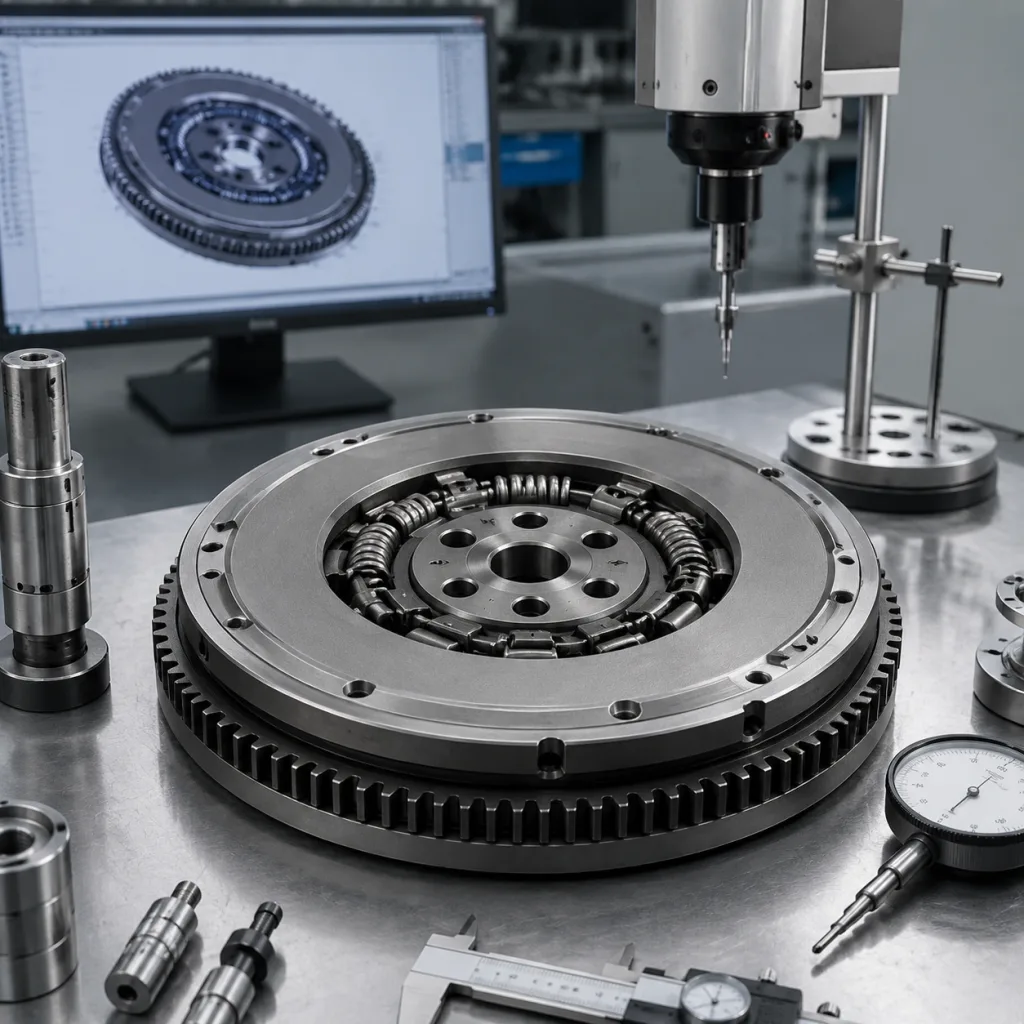
A Mazda-fit dual mass flywheel is not a commodity disc. It is a torsional damping assembly that must match the crankshaft, clutch cover, starter ring gear, transmission package, and repair-market expectations. One wrong interface dimension can turn a low unit price into catalogue disputes, returns, and warranty labour. Driventus supplies engine and powertrain components from Taizhou, Zhejiang, with production managed under IATF 16949:2016 and ISO 9001:2015 systems. This guide gives importers, repair-chain buyers, and aftermarket distributors a sharper way to evaluate a dual mass flywheel Mazda supplier: define the part, test the process, compare the true landed offer, and control the first shipment. Driventus is an independent aftermarket manufacturer; brand names are used only for fitment reference. We do not claim approval or endorsement by any vehicle manufacturer.
Decision Framework: Define the Mazda Application Before Price
Start with fitment risk, not the quote sheet. A dual mass flywheel is a precision damping assembly, so the buying question is not “Who has the lowest price?” It is “Who can prove this unit will fit the intended Mazda application and repeat that result batch after batch?”
Before negotiation, lock down the engine family, transmission type, clutch cover interface, starter ring gear, crankshaft bolt pattern, pilot bearing arrangement, and expected vehicle parc. If the project covers several markets, separate the application logic by region. Model-year shorthand is rarely enough.
A serious supplier should confirm fitment through application data and, where available, buyer-provided samples, drawings, or OE part-number cross-references. Keep mixed catalogue references out of the technical approval file unless the engine family and interface logic are verified. References such as OE 06A107065 or OE 11251… may appear in broad sourcing spreadsheets, but they should not be treated as Mazda-fit evidence without validation.
Build the RFQ around measurable inputs:
- Annual forecast and first-order quantity by SKU, split into launch order, 90-day replenishment, and 12-month estimate
- Target market: EU, UK, US, Canada, Australia, Brazil, or mixed regions
- Engine displacement, fuel type, engine code, transmission code, and clutch kit reference if available
- Flywheel outer diameter, friction surface diameter, overall height, mass, and ring gear tooth count
- Crankshaft bolt PCD, bolt count, centre bore diameter, bolt grade, and tightening sequence if supplied
- Clutch cover dowel positions, threaded hole specification, and thread gauge standard
- Pilot bearing, locating bore, or crankshaft spigot requirements, including bore depth where relevant
- Friction face runout target, mounting face runout target, and buyer-specific balance grade if required
- Packaging format: neutral, buyer brand, or repair-chain programme pack
- Labelling language, barcode format, carton dimensions, pallet height limit, and palletisation rules
For comparison, require each supplier to mark which dimensions come from drawings, which come from samples, and which come from catalogue cross-reference. Then classify dimensions by risk. Bolt PCD, centre bore, clutch cover dowels, starter ring gear position, and overall stack height should normally be treated as critical-to-fit. Less critical reference dimensions can still be recorded, but they should not distract from the interfaces that stop an installation. Procurement teams can also review our catalog to understand broader powertrain coverage before consolidating SKUs into one shipment.
Failure Modes: Where Supplier Selection Usually Breaks
Most sourcing problems do not start with a dramatic factory failure. They start with small assumptions: a subcontracted process not controlled, a sample approved without a retained reference, a carton changed after launch, or a tolerance copied from a generic catalogue line.
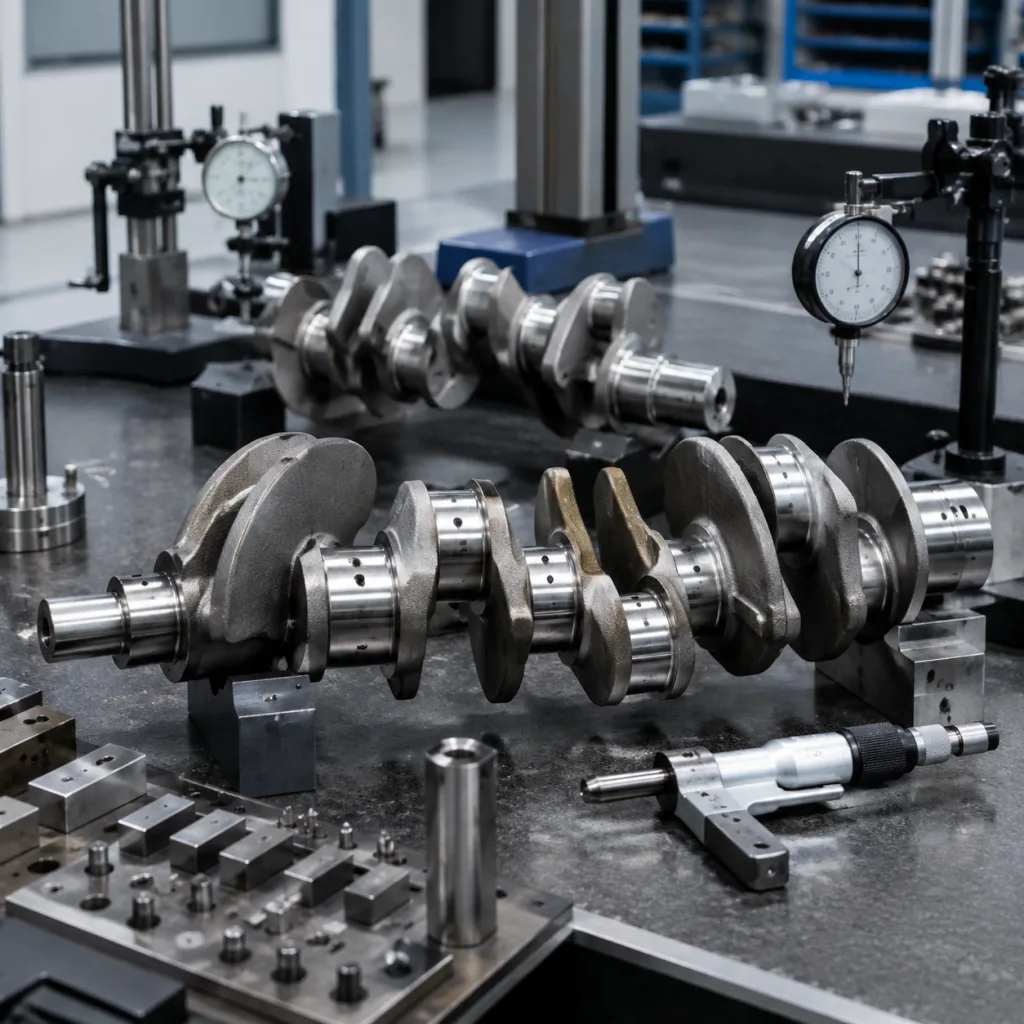
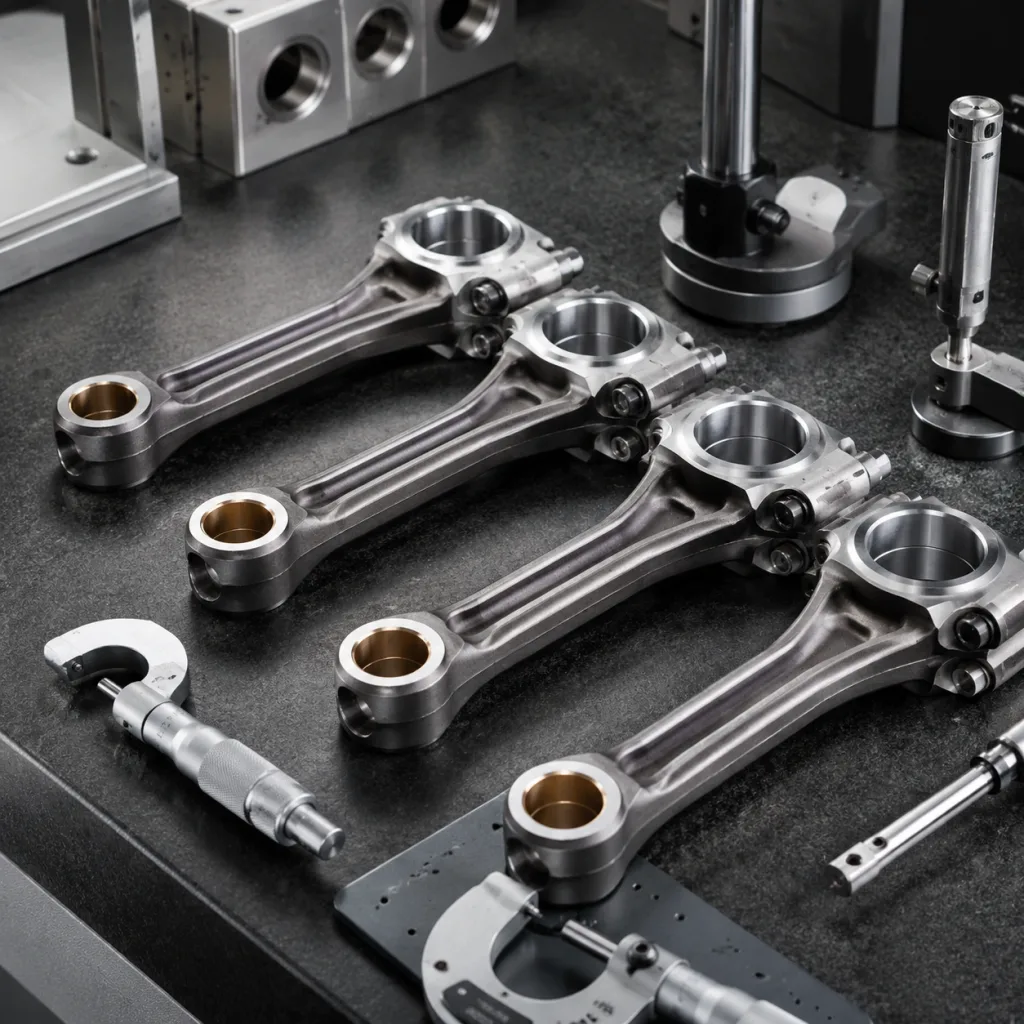
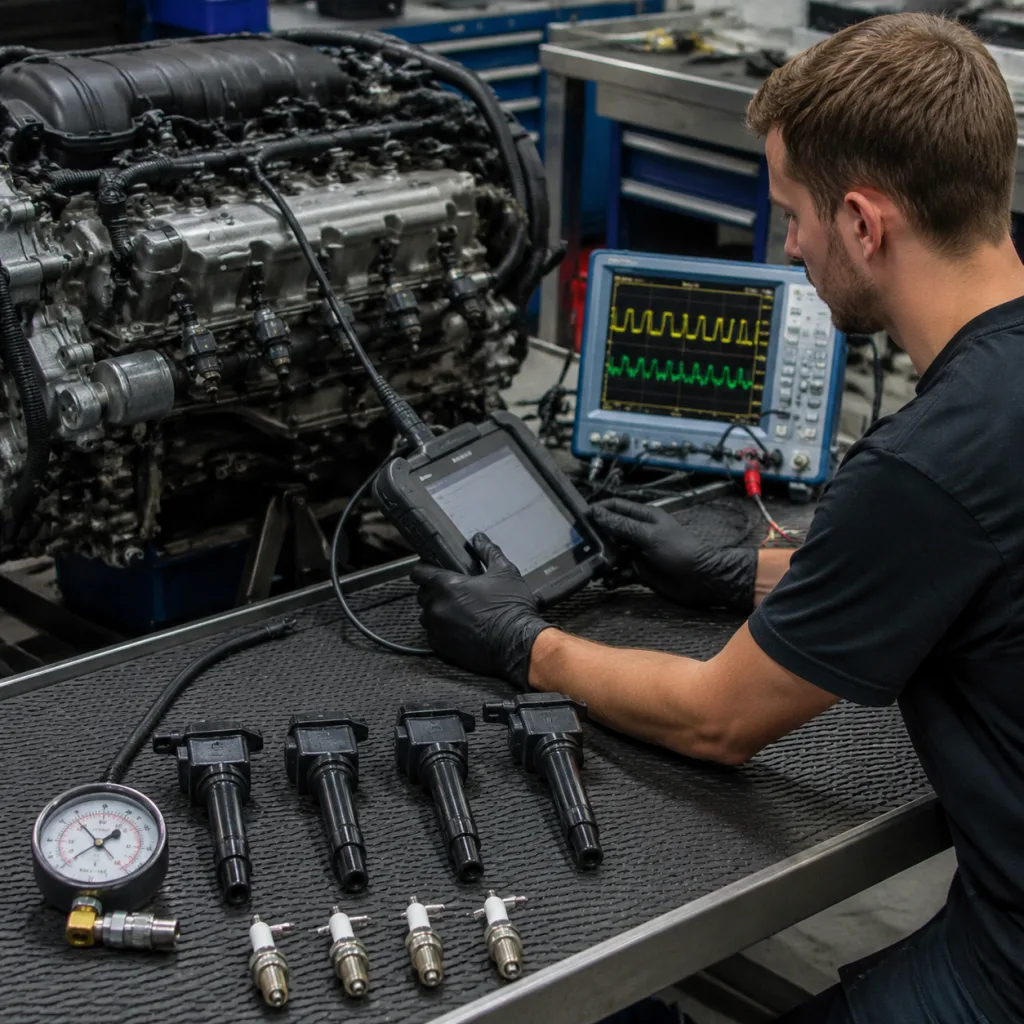
When assessing a dual mass flywheel Mazda supplier, check capability at process level. Ask whether machining, dynamic balancing, spring and damper assembly, surface grinding, inspection, and packing are controlled internally or subcontracted. Subcontracting can be acceptable. Invisible subcontracting is the risk. The control plan must show external processes, incoming inspection rules, lot release authority, and responsibility for nonconforming material.
Typical commercial planning ranges are below. Treat them as planning assumptions, not fixed quotations.
| Sourcing item | Typical planning range | Procurement note |
|---|---|---|
| MOQ for active aftermarket SKU | 50–200 pieces | Lower volumes may be possible when combined with other clutch or powertrain SKUs |
| MOQ for new or slow-moving SKU | 200–500 pieces | Often driven by casting, forging, ring gear, spring, and packaging batch economics |
| Sample quantity | 2–10 pieces | Keep at least one retained sample and one installation or bench-test sample |
| New SKU sample lead time | 30–60 days | Depends on drawing completeness, sample availability, fixture status, and damper component sourcing |
| Repeat production lead time | 45–75 days | Confirm before seasonal demand peaks or repair-chain launches |
| Buyer-branded carton preparation | 10–20 days after artwork approval | Add time for print proof, barcode confirmation, and packing-line segregation |
| PPAP-style sample review | By agreement | Useful for repair-chain, OEM, or Tier-1 controlled programmes |
| Neutral carton packing | Standard option | Suitable for wholesalers and regional distributors |
| Buyer-branded packing | Requires artwork approval | Confirm carton burst strength, label data, and packing segregation |
| Evaluation area | Why it matters | Evidence to request |
|---|---|---|
| Fitment confirmation | Reduces returns and catalogue disputes | Application list, sample report, buyer approval record |
| Process control | Reduces batch variation | Control plan, inspection records, capability data where applicable |
| Traceability | Supports warranty investigation | Batch code, production date, material lot linkage |
| Export readiness | Reduces logistics delays | HS code support, packing list accuracy, pallet specification |
| Change control | Prevents unapproved revisions | Engineering change procedure and notification timing |
| Warranty process | Limits claim ambiguity | Inspection checklist, return analysis workflow |