Turbo Whistle Repair Cost Guide for Fault Diagnosis
A turbo whistle can be a minor pressure leak, or it can be the first audible sign of bearing wear, compressor contact, cracked ducting, exhaust leakage, or boost control instability. For procurement teams, workshop managers, fleet operators, and parts buyers, the commercial question is not just what is making the noise, but whether repair or replacement is the lower-risk choice once labour, downtime, and warranty exposure are included. This turbo whistle repair cost guide outlines the most common fault paths, the inspection sequence used to isolate them, and the cost drivers that affect parts spend, workshop time, vehicle off-road time, and repeat-failure risk. It also shows where a hose, clamp, gasket, actuator, or installation kit is enough, and where a turbocharger exchange, CHRA replacement, intercooler service, oil line renewal, or associated component replacement is the safer route. Driventus is an independent aftermarket manufacturer; brand names and OE-style references are used for fitment identification only.
What a turbo whistle usually means
A whistle is a symptom, not a diagnosis. It can come from a pressure leak, damaged compressor wheel, excessive shaft play, exhaust leakage upstream of the turbine, or an intake or exhaust restriction that changes airflow velocity. In workshop and fleet environments, the first step is to decide whether the noise is a normal induction change under load or a fault that will worsen with boost, raise exhaust temperature, reduce engine efficiency, or damage the turbocharger core.
Operating condition matters. A whistle that appears only under boost often points to compressed air escaping through a charge-air hose, intercooler end tank, O-ring, loose clamp, or cracked resonator. A high-pitched siren or whistle at idle that rises with engine speed can indicate bearing wear, compressor contact, or abnormal airflow at the inlet. A sharp ticking or squealing sound near the manifold may be exhaust gas escaping before the turbine rather than an internal turbo fault.
Typical causes include:
Split intercooler hose, degraded O-ring, or loose charge-air clamp
Intake leak between the air filter, mass airflow sensor, and turbo inlet
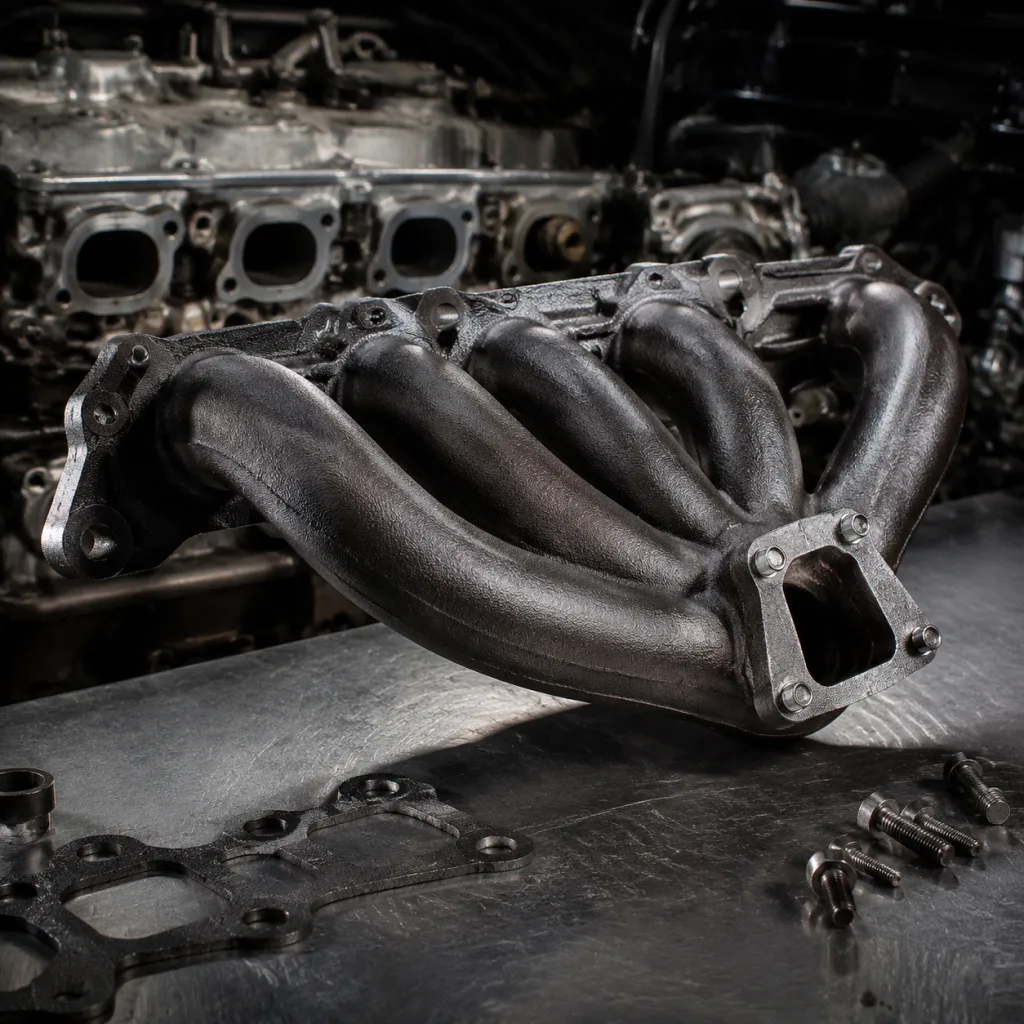
Exhaust leak upstream of the turbine at the manifold, gasket, flange, or flex section
Compressor wheel damage from foreign object ingestion or housing contact
Excessive shaft play from worn journal bearings or damaged thrust components
Oil contamination from failed seals, blocked drains, or poor crankcase ventilation
Boost control faults that move the turbo outside its intended operating range
The surrounding symptoms are decisive. Low boost, black smoke, blue smoke, oil consumption, overboost codes, unstable boost control, or fresh oil in the charge pipe shift the diagnosis from a noise complaint to a durability issue. A whistle that becomes louder over a short interval should be treated as a failure trend, not a comfort issue, because a small leak or early bearing wear can quickly turn into compressor damage, intercooler contamination, or vehicle downtime.
Repair cost drivers and what they usually include
The cost of a turbo whistle fault depends on where the defect sits in the system and how much of the installation must be removed to verify it. Labour often exceeds the parts cost when the vehicle requires removal of heat shields, undertrays, intake ducting, downpipe sections, EGR pipework, or tightly packaged charge-air components. For commercial buyers, total cost should include diagnostic time, labour, consumables, parts, off-road time, warranty handling, and the risk of a repeat visit.
Cost driver
Typical impact on total cost
What it usually includes
Clamp, hose, or O-ring leak
Low
Visual inspection, pressure test, replacement hose, clamp, seal, or gasket
Vacuum line testing, actuator travel check, solenoid testing, vane mechanism check where fitted
Turbocharger removal
Medium to high
Access labour, heat shield removal, oil and coolant line disconnection, gasket renewal, reinstallation
CHRA or full turbo replacement
High
Assembly replacement, installation kit, oil priming, calibration checks, and road test
Ancillary damage
Medium to high
Contaminated intercooler, restricted oil feed or return, damaged aftertreatment, or debris clean-out
</tr></thead><tbody> </tbody></table>The lowest-cost repair is usually a confirmed external leak: a hose, clamp, O-ring, gasket, or resonator replacement after pressure testing. Cost rises when the turbocharger must be removed for shaft-play measurement, housing inspection, or oil-line verification. If debris has entered the compressor, if oil has saturated the intercooler, or if an exhaust aftertreatment component has been affected, the repair scope can expand beyond the turbocharger itself.
For buyers comparing repair routes, the largest hidden cost is downtime. A repair with a lower parts bill can be more expensive overall if the root cause was not isolated and the vehicle returns for a second intervention. A defensible estimate should identify the diagnostic method, the assumed failure point, the parts included, and the evidence required before major assembly approval. In engineering validation, emissions and durability testing may reference standards such as SAE J2527, while material compliance reviews may include REACH (EC) No 1907/2006.
Inspection sequence before authorising replacement
A structured inspection reduces unnecessary turbo replacement and gives procurement teams a defensible basis for approving spend. Start with external checks and move inward only if the intake, charge-air, exhaust, oil, and control systems pass. Replacing a turbocharger before confirming the leak path, oil supply, and boost-control condition can transfer the same fault onto a new unit.
Suggested diagnostic sequence
1. Confirm when the whistle occurs: idle, light load, full boost, lift-off, cold start, or hot operation. 2. Check intake ducting, airbox seals, clamps, and resonator joints for looseness, rubbing, splits, or collapse. 3. Inspect the compressor inlet for oil pooling, blade damage, foreign-object marks, dust tracking, or housing contact marks. 4. Pressure-test the charge-air system for leaks at hoses, intercooler tanks, quick connectors, O-rings, and EGR-related joints. 5. Smoke-test or visually inspect the exhaust side for leaks at the manifold, gasket, turbine flange, V-band, or cracked pipework. 6. Measure shaft end play and radial play against the service specification for the relevant turbo family. 7. Confirm that the oil feed and return lines are clean, correctly routed, and free from carbon restriction, kinks, sealant contamination, or sludge. 8. Check crankcase ventilation, because excess crankcase pressure can force oil past seals and mimic turbo seal failure. 9. Verify boost control function, including vacuum lines, actuator movement, electronic actuator response, solenoid operation, and variable-vane movement where fitted. 10. Review diagnostic trouble codes, live boost data, mass airflow readings, exhaust temperature data, and prior repair history before approving replacement.
The inspection record should include photographs of damaged hoses, compressor-wheel condition, oil evidence, fault codes, pressure-test results, and measured shaft play where applicable. That documentation helps distributors and fleet teams separate installation faults from component faults and reduces warranty disputes.
If the whistle is accompanied by blue smoke, oil consumption, metal contact marks, low boost, or unstable boost control, replacement is often justified because internal wear or system contamination is already established. If the sound traces to a hose, clamp, intercooler joint, or exhaust gasket, the repair may be limited to the pressure side or sealing components, followed by a boost test to confirm the fault has been removed.
When repair is sensible and when replacement is safer
Repair is usually sensible when the fault is external to the turbocharger core and the shaft, wheels, and housings remain within specification. Replacement is safer when rotating parts show contact, contamination, unstable clearances, seal failure, or repeated noise after external repairs. The decision should be based on evidence from inspection rather than the whistle alone.
Repair is usually acceptable when:
The whistle is caused by a confirmed charge-air leak
Clamps, hoses, O-rings, resonators, or gaskets are visibly damaged
Intake and exhaust joints can be resealed without turbocharger removal
Boost-control components test correctly and actuator movement is stable
Oil supply is clean, unrestricted, and correctly routed
Shaft movement remains within service limits
Compressor and turbine wheels show no contact, cracks, chips, or debris damage
The intercooler is not heavily contaminated with oil or metal particles
Replacement is usually the better option when:
Compressor or turbine wheel contact is visible
Bearings have excessive radial or axial play
Oil seals are failing and contaminating the intake or exhaust
The turbo has ingested debris or shows blade damage
Repeated hose, clamp, or gasket repairs have not removed the noise
Oil feed or return failure has already caused bearing distress
The actuator, vane mechanism, or wastegate assembly is seized or unstable and not serviceable separately
The vehicle has low boost, smoke, oil consumption, or abnormal turbo-speed symptoms alongside the whistle
The commercial threshold matters as well. On a high-mileage vehicle with difficult access, replacing a marginal turbocharger and the installation hardware together can be lower risk than paying twice for labour. On a newer unit where the whistle is traced to a single cracked hose, a full replacement would add cost without reducing risk. For procurement teams, the replacement decision should be based on validated fitment, pressure capability, oil and coolant connection compatibility, actuator specification, and thermal durability.
Driventus supports OE cross-reference workflows for aftermarket sourcing, and our catalog can be reviewed through our catalog and quality system. Fitment references should be checked against engine code, turbo family, actuator type, emission configuration, and mounting hardware before an order is released.
How sourcing teams should compare repair parts and assemblies
For B2B buyers, the turbo whistle repair cost guide is not only about workshop labour. It is also about part availability, warranty exposure, installation completeness, traceability, and the risk of repeat failure across a fleet or distributor programme. A lower unit price can be poor value if the repair kit is incomplete, if clamps lose tension after heat cycling, if hose material softens in oil mist, or if turbocharger tolerances vary across shipments.
Key points to compare:
Hose material compatibility with oil mist, boost pressure, ozone exposure, and heat cycling
Clamp band strength, screw quality, corrosion resistance, and retained tension under load
Gasket thickness, coating, bolt-hole accuracy, and seating geometry
Correct actuator type, calibration range, electrical connector, and vacuum or electronic control compatibility
Installation kit completeness, including studs, nuts, washers, gaskets, oil-line seals, and coolant seals where required
Packaging protection for machined faces, actuator arms, sensors, and compressor inlets during transport
Documentation for traceability, lot control, inspection records, and warranty review
Certification under IATF 16949:2016 and ISO 9001:2015
A strong sourcing comparison should also consider whether the supplier can support staged repair. Common hose, clamp, and gasket items should be available for fast external repairs, while complete turbocharger assemblies should be available when inspection confirms internal wear. That keeps routine whistle complaints from becoming full-assembly replacements by default, while still protecting the fleet when the turbocharger has reached the end of its service life.
If a buyer needs non-standard geometry, airflow tuning, specific mounting features, private-label packaging, or programme-level documentation, custom manufacturing is the correct route. For standard replacement programmes, OE 06A107065-type references may be used only for fitment identification where applicable, not as a claim of approval by any vehicle manufacturer. Driventus supplies independent aftermarket parts only.
Cost control for fleets and distributors
The most effective way to control turbo whistle repair cost is to reduce repeat diagnostics and prevent small external leaks from becoming major turbocharger failures. That means standardising inspection steps, keeping common leak items in stock, documenting the first failure point, and setting approval rules before major parts are ordered. A consistent process gives workshops speed, gives buyers cost visibility, and gives distributors cleaner warranty evidence.
Practical controls for parts programmes:
Stock common intake hoses, charge-air hoses, clamps, O-rings, and gaskets by engine family
Require a boost-leak or smoke test before turbo replacement approval
Record shaft play, oil condition, compressor wheel condition, and fault codes at intake
Replace or clean contaminated intercooler sections when oil carryover or debris is present
Inspect oil feed, oil return, and crankcase ventilation before fitting a replacement turbocharger
Use installation kits so old gaskets, stretched fasteners, and damaged seals are not reused
Track repeat failures by vehicle, engine family, supplier lot, mileage, and installation workshop
Use validated suppliers with stable lead times, lot traceability, and clear warranty review processes
For mixed fleets, the best procurement outcome is often a staged repair plan: external leak parts first, then actuator, CHRA, or full turbo replacement only if the inspection proves internal wear or control failure. For distributors, the same logic helps build better stocking tiers. Fast-moving leak components support low-cost repairs, while complete assemblies cover confirmed failures, urgent off-road cases, and high-mileage units where repeat labour would be more expensive than replacement.
A controlled repair programme should also define when associated parts are mandatory. If an old oil feed line is carbon-restricted, a new turbocharger can fail quickly. If an intercooler contains oil or metal fragments, the replacement unit can be damaged on first start. If boost-control faults remain unresolved, the vehicle may over-speed or under-boost even with a new assembly. If you need a supply review, staged repair list, or costed parts package, you can request a quote.
Frequently asked questions
No. Many whistle complaints come from split hoses, loose clamps, worn O-rings, intercooler leaks, or exhaust leaks. Internal turbo failure is more likely when the noise is accompanied by smoke, oil loss, boost drop, wheel contact, debris damage, or measurable shaft play.
Labour, diagnosis, and downtime usually matter more than the part price. Access time, boost testing, smoke testing, oil-line inspection, and removal of surrounding components can add more cost than the hose, clamp, or gasket itself.
Repair is appropriate for confirmed external leaks and intact rotating parts. Replace the turbocharger if bearings, wheels, seals, actuator function, or clearances are out of specification, or if oil or debris contamination has already spread through the system.
If you need a documented repair or replacement plan, review the options and [request a quote](/contact.html).