Minimum Order Quantity for Oil Pan Gasket: Buyer Guide
When buyers ask about the minimum order quantity for oil pan gasket parts, they are usually balancing three needs: a workable order size, stable dimensional control, and repeat supply that does not lock too much cash into inventory. In B2B sourcing, the right MOQ depends on gasket construction, material choice, OE cross-reference coverage, and whether the part is standard, modified, or fully custom. Driventus is an independent aftermarket manufacturer; brand names are referenced for fitment only. For oil pan gasket programs, MOQ is often shaped by die-cut setup, material yield, inspection time, and packaging requirements rather than by the gasket alone. Before asking for a quote, buyers should confirm the exact engine application, sealing material, target annual volume, and whether the part will serve aftermarket distribution, repair chains, or OEM/Tier-1 channels. The sections below explain how MOQ is calculated, what suppliers need from you, and how to reduce cost and risk without weakening seal performance.
What drives MOQ for an oil pan gasket
MOQ is not a single fixed number for every oil pan gasket. It moves with construction, tooling status, material utilization, and the handling needed to produce, inspect, and pack the gasket correctly. A simple flat gasket cut from existing sheet stock is a very different sourcing case from a molded sealing component with tighter compression requirements and more demanding inspection steps.
MOQ driver
Effect on order size
Buyer check
Material type
Cork-rubber, nitrile rubber, silicone, paper, PTFE composite, or steel-backed constructions each have different yield and scrap rates
Confirm oil resistance, temperature range, and compatibility with engine oil additives
Tooling status
Existing tooling usually lowers MOQ; new tooling increases setup cost and first-order volume
Ask whether tooling already exists and whether it is dedicated or shared
Part geometry
Large perimeters, irregular cut-outs, and dense bolt-hole patterns increase material use and nesting waste
Request a nesting or yield estimate
Thickness control
Tighter compression control requires more inspection and more start-up rejects
Ask for nominal thickness, tolerance band, and compression specification
Packing format
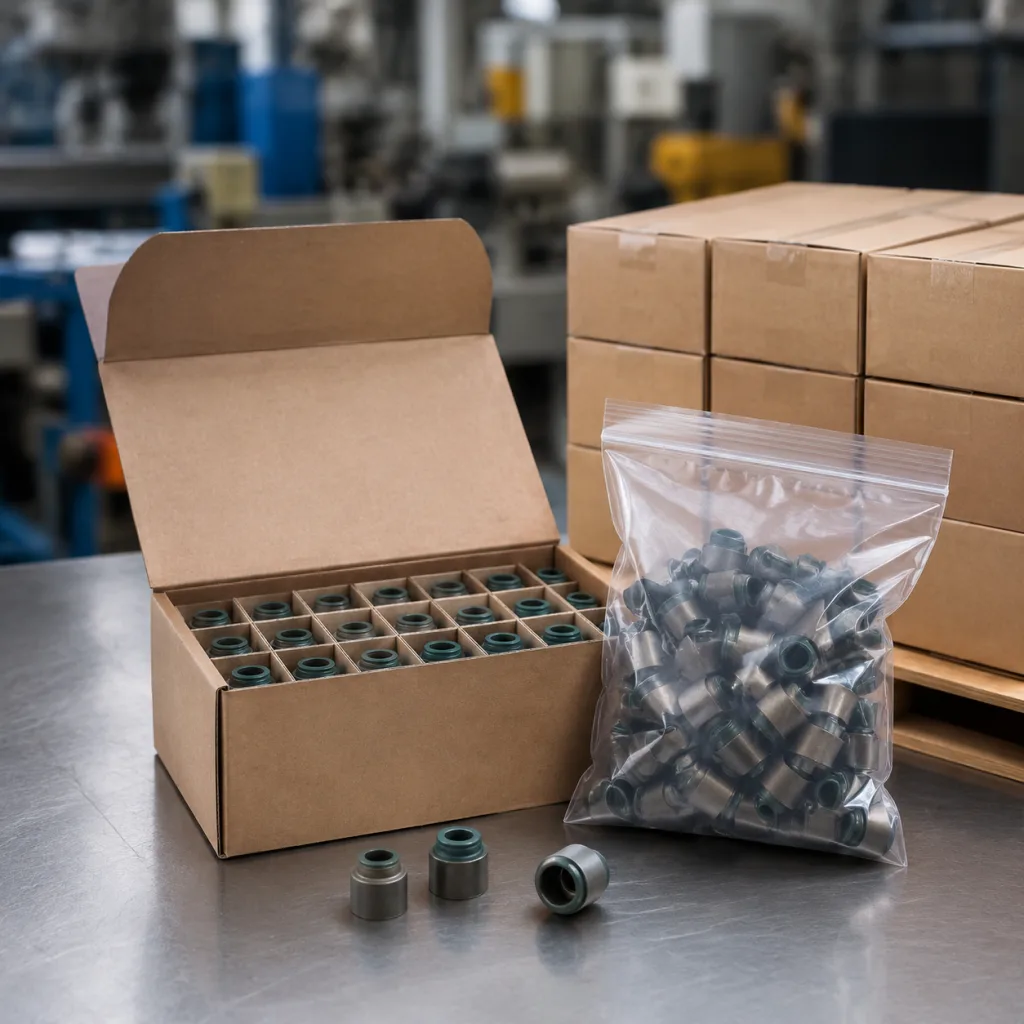
Retail-style kits, barcode labels, and insert cards add labor versus bulk packing
Specify carton count, inner pack, and label rules upfront
Validation scope
First article checks, dimensional reports, and PPAP-style documentation add setup work
Define the required inspection and approval level
Forecast stability
Irregular demand forces the supplier to protect capacity with a higher MOQ
Share quarterly forecast and replenishment cadence
</tr></thead><tbody> </tbody></table>For standard aftermarket parts, MOQ may range from a few hundred to a few thousand pieces, depending on size, material, and packing method. Custom programs usually require a higher first order because the supplier has to cover die setup, sample making, die trials, dimensional verification, and any special packaging or labeling work. If the part is tied to an OE cross-reference such as OE 06A107065 or a similar fitment family, the supplier may be able to use an existing pattern. That typically reduces both lead time and MOQ because the process has already been proven.
When comparing quotations, separate unit price from setup cost. A low piece price can hide engineering, tooling amortization, or packaging charges that make the first order more expensive than it looks. Ask for the MOQ at each price tier, the cost basis behind that tier, and whether the quote assumes a stable forecast or a one-time buy. That gives procurement a clearer view of landed cost and prevents false savings from a low unit price with hidden minimums.
How to specify the part before you ask for pricing
A procurement request is much easier to price when it includes complete technical data. For oil pan gasket sourcing, the supplier needs enough information to identify the sealing design, validate the material, and confirm whether an existing process can meet the request without new tooling or a new test plan.
Send the following details with the RFQ:
Engine code and vehicle platform
OE reference, for example OE 06A107065 when applicable
Material requirement: cork-rubber, molded rubber, silicone, paper, PTFE composite, steel-backed, or another approved construction
Oil type, operating temperature range, and whether the vehicle sees long idle, heavy-duty, or high-load service
Target market compliance: REACH (EC) No 1907/2006, plus any country-specific restrictions or reporting obligations
Required documents: sample approval, dimensional report, material declaration, and traceability level
If you are building a private-label or catalog range, request dimensional confirmation against the original sample and include a formal drawing approval step. With gasket parts, small differences in bolt-hole position, sealing land width, bead height, emboss depth, or compression set can affect leakage performance. The supplier should state whether the part is made to OE-equivalent dimensions, reverse-engineered from an original sample, or built to a customer drawing with agreed tolerances. That distinction matters because MOQ, inspection method, and liability profile all change by route.
Driventus publishes technical product coverage through our catalog and can support broader engine sealing programs through engine components when buyers want to consolidate sourcing. Sharing the application scope early helps avoid a second quotation round and moves the project from inquiry to sample more quickly.
How MOQ affects quality control and sampling
A lower MOQ does not make inspection less important. In many cases, it makes sampling discipline more important because there are fewer pieces to absorb variation, packaging errors, or process drift. In a small batch, one dimensional problem can affect a larger share of the shipment and cause immediate service issues for distributors or workshops.
A practical control plan should include:
1. Incoming material verification 2. First-article dimensional inspection 3. Visual check for flash, nicks, delamination, burrs, or surface contamination 4. Fit check on the intended housing or oil pan 5. Packaging, label, and count verification 6. Batch traceability review before release
For export supply, buyers should ask whether the factory operates under IATF 16949:2016 and ISO 9001:2015, and how those systems are applied to gasket production. Certification by itself is not enough. The supplier should be able to show how incoming material checks, process checks, and final release criteria are used on the line. If the program requires documentation, request a dimensional report, material declaration, and batch traceability by lot number or production date.
For replacement parts, validation is usually based on fitment, leak resistance, and oil exposure performance. Relevant test references may include internal oil immersion checks, temperature cycling, compression recovery, and seal retention under torque load. Not every gasket needs the same test package, but the test method should be written into the purchase specification so both sides understand what constitutes pass or fail.
If you need to review the supplier's process controls, start with the quality system before placing the first order. That is the right time to confirm sample size, acceptance criteria, and whether any special measurement fixtures are required for the oil pan gasket profile.
Ways to lower MOQ without weakening the part
Buyers can often reduce MOQ by making the product easier to manufacture, inspect, and pack. The aim is not to push the supplier toward an unrealistic number. It is to remove avoidable complexity so the supplier can quote a smaller first run while still protecting fit and seal reliability.
Practical levers
Use an existing OE-equivalent pattern instead of a new drawing
Select a standard material thickness and hardness range
Approve bulk packaging rather than retail blister packs
Consolidate several engine references into one family where the geometry allows it
Commit to a rolling forecast instead of a one-time spot order
Keep artwork, labeling, and carton sizes standard
Accept supplier-standard pallet patterns where shipping efficiency matters more than display packaging
Allow a shared tooling approach if the sealing profile is stable across variants
Where custom work is still needed, ask whether the supplier can share tooling across related references. This is common in gasket programs where the outer profile changes but the bolt-hole pattern, sealing width, and material spec remain similar. Shared tooling can reduce scrap, simplify setup, and lower the first-order quantity because the factory is not building a separate process for one SKU.
A supplier with vertical integration can usually move faster on die-cutting, inspection, and packing because fewer steps sit outside the factory. Driventus also supports custom manufacturing for buyers who need a private-label specification, revised packaging, or a special material build. That support is especially useful when the commercial target is a smaller MOQ but the part still needs controlled manufacturing and traceable output.
Do not reduce material quality just to hit a target MOQ. For oil pan gasket parts, leakage risk usually costs more than inventory. A small increase in stock is often cheaper than a return claim, labor rework, or a warranty intervention in the field.
Buying checklist for procurement teams
Use this checklist before issuing a purchase order. It keeps the RFQ focused, reduces back-and-forth, and helps the supplier quote an MOQ that reflects actual demand rather than an assumed catalog pattern.
Confirm exact engine and vehicle fitment
Match the OE reference or approved drawing
Confirm material, thickness, and durometer requirements
Ask for MOQ by price tier, not only a single headline number
Ask for lead time for stock, sample, and made-to-order parts
Request sample quantity and the approval procedure for first-article sign-off
Confirm REACH compliance for the target market
Confirm carton quantity, label format, and palletization rules
Ask for batch traceability, inspection records, and release documents
Verify whether the price includes tooling amortization, packaging, or test charges
Confirm whether the supplier can hold safety stock for repeat replenishment
Check whether the quote assumes annual volume, quarterly call-offs, or a one-time purchase
If the part is for a multi-location repair chain or distributor network, consistency matters as much as price. A gasket that fits in one branch but leaks in another creates avoidable warranty cost and weakens customer confidence in the whole range. Buyers should keep the specification narrow and the acceptance criteria clear, especially for sealing surfaces, hole alignment, and packaging identification.
For direct sourcing, start with a small test order, verify fit and packaging, then scale to the MOQ that supports your replenishment cycle. That approach is usually better than placing a large first order without validation. It gives procurement a controlled way to confirm market demand, supplier responsiveness, and product stability before committing to larger inventory positions.
Frequently asked questions
It depends on material, tooling, geometry, and packaging. Standard aftermarket parts may start in the low hundreds, while custom programs are often higher because setup, sampling, and inspection costs must be covered. Large or complex gaskets can also carry a higher MOQ because material yield is lower.
Yes. If the supplier already has the pattern or tooling for the referenced application, MOQ is often lower. A complete OE number, such as OE 06A107065 where applicable, helps speed quoting and reduces the chance of a new tooling charge or an unnecessary sample cycle.
Ask for a dimensional report, material declaration, batch traceability, packaging details, and compliance information. If needed, request a sample approval step before full production, along with clear acceptance criteria for fit, leakage risk, and label accuracy.
If you need a quotation, sample plan, or MOQ review for your gasket program, please [request a quote](/contact.html).