camshaft · 2026-06-04

Camshaft Jaguar Supplier: B2B Sourcing Guide

When you are choosing a camshaft Jaguar supplier for aftermarket distribution, repair networks, or OEM programmes, the decision quickly moves beyond unit price. Fitment control, repeatable production, and supply continuity all matter because a camshaft is a precision rotating component. Buyers need controlled journal diameter and runout, consistent lobe geometry and lift, verified heat treatment, clean packaging, and batch-level traceability. Driventus supplies engine and powertrain components from Taizhou, Zhejiang, exporting to 60+ countries with documented production systems for B2B buyers. Driventus is an independent aftermarket manufacturer; brand names are referenced for fitment only. For supplier comparison, the practical question is straightforward: can the factory repeat the agreed specification, support OE reference matching where applicable, and provide the records needed for audit and import compliance?

What procurement teams should verify first

For Jaguar camshaft sourcing, start with fitment, metallurgy, and verification records. A supplier can only be qualified when the part matches the required engine code, valve timing profile, journal diameters, bearing surfaces, and overall length, with tolerances held across production lots. For B2B buyers, the first risk is rarely price. It is mismatch: the wrong profile, incorrect lobe lift, or a part that looks close but does not meet the approved application.

Core checks before RFQ

  • OE cross-reference and engine family confirmation
  • Engine code, cylinder head variant, and valve train layout
  • Material specification and heat-treatment route
  • Journal roundness, runout, and lobe profile data
  • Surface hardness and case depth, where applicable
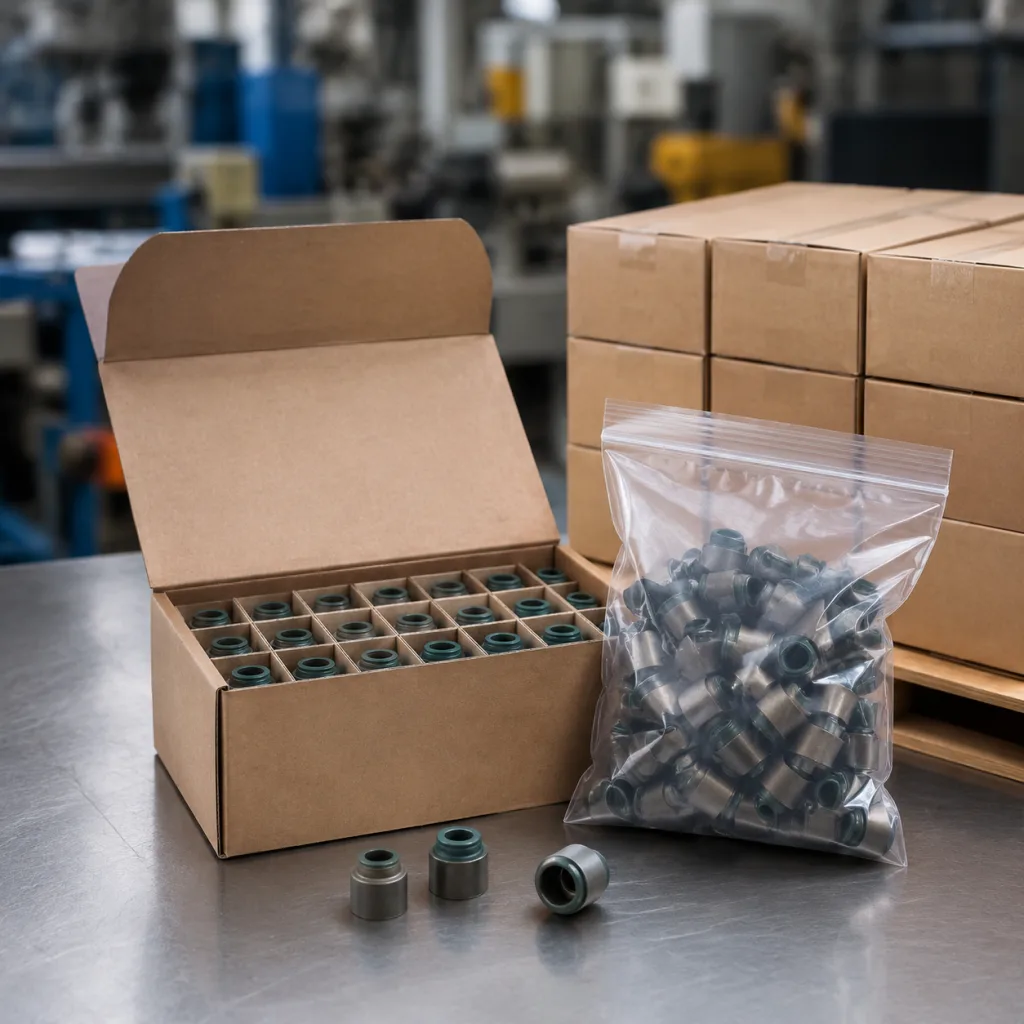
  • Packaging, corrosion protection, and labelling
  • Batch traceability and inspection reports
  • Sample approval procedure and reference part retention

It is also worth confirming whether the part is being sourced as an OE-equivalent replacement, a performance upgrade, or a private-label reference. Those three categories may share a sales description, but they do not always share the same acceptance criteria. For B2B importers, the key question is not whether the part looks similar. It is whether the supplier can demonstrate repeatable dimensional control and documented inspection data for the exact application, while also explaining how nonconforming lots are contained before shipment.

Specifications and manufacturing controls

A camshaft is typically produced from chilled cast iron, ductile iron, or forged steel, depending on application, load, and target service life. The right production route depends on duty cycle, wear resistance, and valve train design. In higher-volume replacement supply, consistency in lobe geometry, hardness, and surface finish is critical because small deviations can change valve timing, increase noise, or shorten component life.

A supplier serving the automotive aftermarket should be able to walk buyers through the full manufacturing path: raw material receipt, machining, heat treatment, finish grinding, cleaning, and final inspection. Ask where the lobes are hardened, how the journal surfaces are finished, and which controls keep part-to-part variation inside the approved window.

</tr></thead><tbody> </tbody></table>When a buyer asks for a camshaft Jaguar supplier, the conversation should cover both the finished part and the controls behind it. That includes inspection frequency, gauge management, first-article approval, and the method used to lock a design revision. For structured sourcing, see our catalog and our engine components range.

MOQ, lead time, and export support

Procurement teams usually divide camshaft sourcing into stocked aftermarket items and made-to-order runs. Stocked items can move faster when the part family is already in production and tooling is established. Custom or low-volume references typically need a longer setup and validation cycle because the supplier may have to confirm tooling, programming, sample approval, and final packaging before shipment.

Lead time should be discussed in practical terms, not marketing language. Ask whether the quoted timeline begins at order confirmation, deposit receipt, drawing approval, or sample sign-off. Then confirm whether it includes outbound inspection, packaging, and export document preparation. For production planning, those details can matter as much as the nominal number of days.

Driventus supports export documentation for cross-border shipments, including commercial invoices, packing lists, and product traceability documents. Buyers in the EU, UK, US, Canada, Australia, and Brazil should also check local import rules and chemical compliance where packaging or coatings are involved. REACH (EC) No 1907/2006 may be relevant for substances in the supply chain, so compliance requirements should be defined in the RFQ rather than left for the supplier to infer.

Typical buyer requests include:

  • MOQ by reference and by production route
  • Sample lead time and mass-production lead time
  • Carton quantity, inner protection, and pallet configuration
  • Inspection report format and data fields
  • Incoterms, origin statement, and export document set
  • Photo confirmation before dispatch for first orders
  • Label content, barcode requirement, and private-label options

For factory review, buyers should request the supplier’s quality system documentation before placing a pilot order. That review should cover who signs off on nonconformance, how deviations are recorded, and whether retained samples are available for later claim investigation.

How Driventus supports sourcing audits

A procurement audit usually looks at process control, traceability, and corrective-action response. Driventus operates under IATF 16949:2016 and ISO 9001:2015, giving buyers a defined framework for quality planning, inspection control, document retention, and nonconformance handling. For B2B buyers, these controls matter because the problem is rarely just one defective camshaft. The larger question is whether the supplier can prevent recurrence across a lot, a shipment, or an entire programme.

Audit topics commonly covered:

  • Incoming material verification and supplier qualification
  • In-process dimensional checks and sampling frequency
  • Final inspection records and release authority
  • Gauge calibration status and maintenance logs
  • Batch traceability, lot coding, and retention samples
  • Complaint response timing and containment actions
  • Root-cause analysis and corrective-action closure
  • Change control for tooling, process, and packaging revisions

For buyers comparing suppliers across regions, this distinction is important. Camshafts are not interchangeable commodity castings. A failure in surface hardening, lobe geometry, oil-hole cleanliness, or journal finish can cause noise, wear, timing deviation, or early engine damage. A qualified supplier should be able to present production flow, inspection frequencies, process controls, and escalation paths during an audit. If the factory cannot explain where critical characteristics are measured, or cannot show evidence that those measurements are recorded by lot, that is a sourcing risk rather than a paperwork issue.

If your programme needs a special profile, modified packaging, or a private-label specification, Driventus also offers custom manufacturing for defined B2B requirements. This is useful when the buyer needs application-specific adjustments, controlled branding, or packaging built around a regional distribution model.

Fitment, testing, and claim control

Before release to distribution, buyers should validate the camshaft against the engine build list and test plan. For OE-equivalent replacement programmes, dimensional match alone is not enough. Verification should include profile comparison, visual inspection, and, where possible, functional testing in a controlled build. The aim is to prove that the part works in the intended engine family before the first commercial shipment creates claims exposure.

Recommended validation steps: 1. Confirm engine code, OE cross-reference, and revision level. 2. Measure critical dimensions against the approved drawing or reference sample. 3. Review hardness, runout, and finish data from the supplier. 4. Verify packaging, marking, and part identification on arrival. 5. Fit one pilot sample into a controlled engine build. 6. Check idle quality, valve timing stability, oiling behaviour, and abnormal wear after run-in. 7. Retain a reference sample and inspection record for future claim comparison.

For high-volume applications, build a simple approval matrix that defines who signs off the first sample, who approves a dimensional deviation, and who can release the part to stock. That prevents delays later when a regional distributor, workshop chain, or warehouse asks for proof that the part was validated against the approved build.

When a supplier can support these steps, distributor claim rates usually fall and cross-border returns are easier to defend. That is the practical value of documented process control. Driventus is an independent aftermarket manufacturer; brand names are referenced for fitment only.

Frequently asked questions

Yes. Driventus supplies camshafts and related engine components for B2B aftermarket programmes. Fitment is verified by engine application, OE reference, and agreed drawing or sample approval before mass production.

Ask for material declaration, dimensional inspection data, hardness or heat-treatment information, batch traceability, packaging details, and the release standard used for final inspection. For larger programmes, request audit access to the quality system and process flow, plus retained sample availability.

Yes. For defined B2B requirements, Driventus supports custom manufacturing, subject to technical review, MOQ agreement, sample approval, and packaging confirmation before mass production.

If you need a camshaft supply quotation, fitment confirmation, or sample review, send your requirements and engine references through our team at /contact.html.

Request a Quote
Control point What buyers should request Why it matters
Base materialMaterial declaration and mill or heat recordConfirms chemistry and traceability
Heat treatmentHardness range, case depth, and process summaryAffects wear resistance and service life
Dimensional dataJournal diameter, overall length, lobe lift, and key offsetsConfirms fit and timing profile
Runout / concentricityInspection results by lotReduces vibration, noise, and bearing wear risk
Surface finishRa value or internal finish standardSupports oil film stability and durability
CleanlinessResidual machining debris or wash standardReduces early-life contamination risk
PackagingVCI, carton spec, inner protection, palletisationProtects export shipments and shelf condition
MarkingPart number, lot code, and origin identificationSupports traceability and claims control