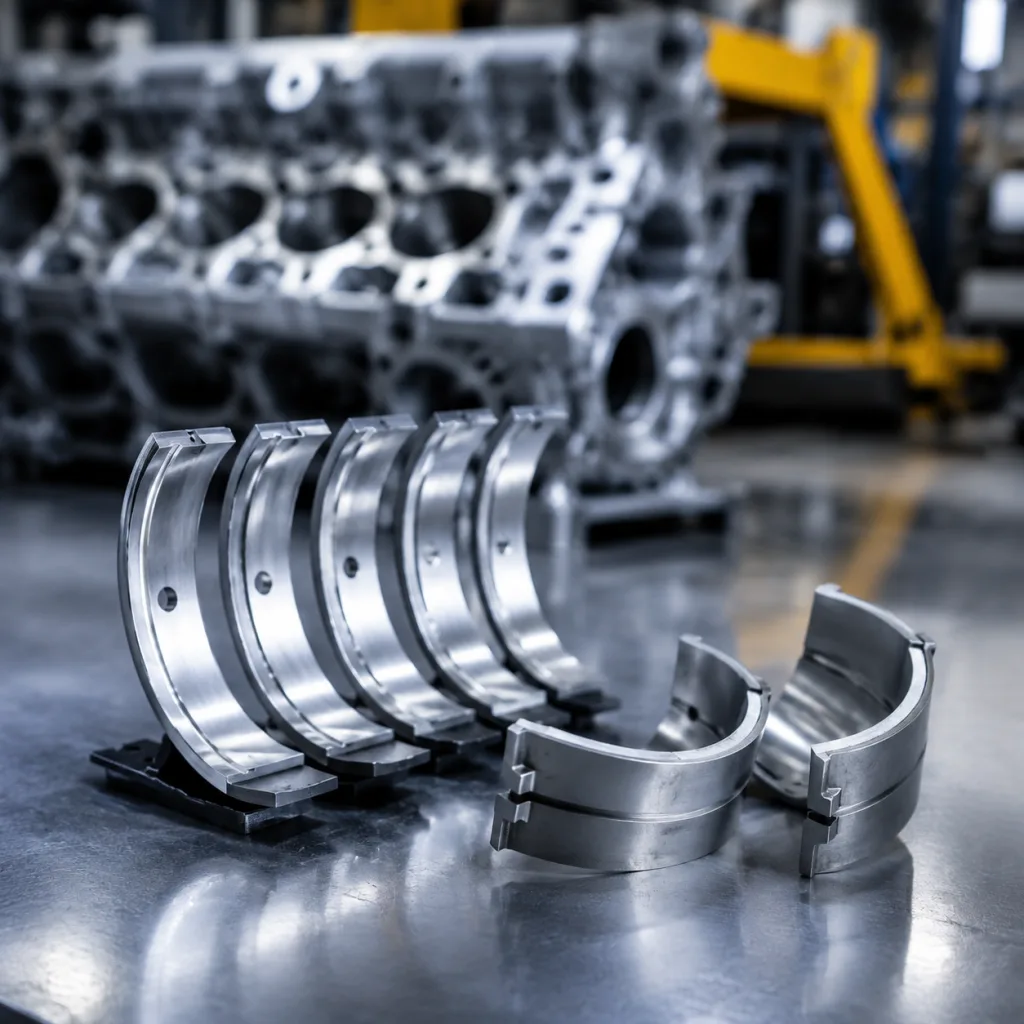
Turbo gasket kit specifications matter because turbocharger joints see extreme exhaust heat, pressure cycling, and repeated thermal expansion. Buyers need measurable material data, thickness control, bolt-hole accuracy, and confirmation that the kit matches the target turbo system and OE cross-reference. Driventus is an independent aftermarket manufacturer; brand names are referenced for fitment only. For procurement teams, the spec set should also show whether the kit uses graphite, multi-layer steel, stainless steel, copper, or composite sealing elements, and whether fasteners and seals are supplied as a complete set or a partial configuration. A clear specification document reduces leakage risk, limits workshop rework, and simplifies incoming inspection. It also supports supplier comparison under IATF 16949:2016 and ISO 9001:2015 controls. For active sourcing, buyers should define MOQ, target price bands, sample approval timing, and production lead time before RFQ release. Below is a practical spec view for sourcing, audit review, and RFQ preparation.
What a buyer should confirm first
Before comparing vendors, lock down the few details that decide whether the kit is usable at all. Turbo gasket kit specifications should define the joint, the fitment basis, and the contents in plain language.
Kit scope: turbine inlet, turbine outlet, oil feed, oil return, coolant lines, mounting hardware, and seals if included
OE cross-reference: for example, `OE 06A107065` where the buyer already uses that reference
Engine code or broader turbo housing pattern
Material stack: graphite, stainless steel reinforcement, multi-layer steel, copper, or fibre-reinforced composite
Nominal thickness and allowable variation
Bolt-hole diameter, centre distance, and flange outline
Temperature and chemical exposure limits
MOQ, sample quantity, and target annual volume
If fitment is broad rather than engine-specific, require a dimensional drawing before approval. If the kit is intended for a private-label program, separate the commercial request into sample, pilot, and mass-production pricing so inspection, packaging, and tooling are not blurred together.
Material choice by failure mode
Material selection should follow the likely failure mode, not habit. Exhaust-side leakage, flange movement, corrosion, and heat soak each push the spec in a different direction.
Material
Typical use
Strengths
Procurement note
Graphite laminate
Exhaust-side static sealing
Conforms well to flange irregularity
Confirm temperature rating, reinforcement type, and minimum density
Multi-layer steel
High-load flange joints
Stable thickness and clamp retention
Check emboss depth, flatness control, and layer count
Stainless steel reinforced composite
Mixed thermal cycling
Corrosion resistance and durability
Confirm media exposure, layer bonding, and salt-spray requirement if used
Copper
Specialised high-heat joints
Good thermal stability
Verify anneal condition, hardness, and whether the part is reusable
Fibre composite
Lower-temperature ancillary lines
Cost-effective and easy to machine
Not suitable for all exhaust-side joints
</tr></thead><tbody> </tbody></table>For turbo applications, published requirements should align with REACH (EC) No 1907/2006 where material declarations are needed. If the kit includes fasteners, washers, or sealing rings, ask for material certificates, plating details, and any heat-treatment statement that applies. A practical sourcing rule is to align material choice to operating temperature: up to about 300°C for many ancillary seals, around 500–650°C for common exhaust-side graphite or composite seals, and higher-duty joints only where the supplier can document performance under the relevant thermal cycle profile. Buyers should also ask whether the material is virgin, recycled-content, or layered stock, because that can affect consistency and cost.
Dimensional controls that prevent leaks
A turbo gasket kit fails quickly when the geometry is off, even if the material looks right. The main control points are thickness, hole position, flange outline, and flatness.
Thickness tolerance, for example ±0.10 mm or tighter where the joint stack is critical
Flatness across the sealing face, commonly ≤0.20 mm over the full gasket face unless the drawing states otherwise
Inner and outer profile offset
Bolt-hole positional tolerance, typically ±0.15 mm for general replacement work and tighter on precision flanges
Edge condition and burr limit
Compression recovery after heat cycling, if the material requires it
Free-state thickness and compressed thickness, if a crushable seal is used
Even a small error in hole position can shift clamp load and create a local leak path. Buyers should request a first-article report, a sample dimensional drawing, and a measuring method statement. If the supplier uses CMM, optical scanning, or manual gauges, the inspection method should be stated clearly. This is especially important when comparing replacement kits against OE `06A107065` or similar references. A buyer-facing drawing should identify datum points, measurement points, and inspection sampling frequency, such as first piece, then one piece per lot, or AQL-based lot sampling for production releases.
Standards and validation checks
A credible supplier should prove process control, not just ship a sealed bag. The validation file should show how the part was made, measured, and released.
Relevant standards and references include IATF 16949:2016, ISO 9001:2015, REACH (EC) No 1907/2006, ECE R-83 where adjacent emission-system fitment questions arise, and SAE J2527 for durability context when materials are evaluated under thermal cycling or exposure programmes.
Ask for:
1. Material declaration and conformity statement 2. Dimensional inspection record by lot 3. Heat resistance or thermal cycling test summary 4. Surface finish or coating specification, if present 5. Traceability by batch, date code, or carton identifier 6. PPAP-style sample pack or equivalent approval file for repeat orders 7. Production lead time by order type: stocked, made-to-order, or custom-packed
Driventus is an independent aftermarket manufacturer; brand names are referenced for fitment only. That disclosure matters in RFQs and catalog listings, particularly where the turbo gasket kit is selected by OE cross-reference rather than a vehicle-maker endorsement. For buyer control, a sound approval path is sample sign-off first, then pilot quantity, then volume release after lot-level dimensional evidence is accepted. Where the supplier offers controlled production, ask for capability data such as process yield, inspection pass rate, or historical reject rate for the gasket family being quoted.
How to write the RFQ without back-and-forth
A clean RFQ removes ambiguity before quoting starts. The request should separate fitment, materials, packaging, compliance, and commercial terms.
Use this checklist:
Part description and OE reference
Engine code or turbo model family
Required contents of the kit
Material preference and temperature target
Thickness and hole-position tolerance
Required certification documents
Label and carton requirements
Forecast volume and release schedule
MOQ target for trial order and steady-state order
Required sample lead time, usually 7–15 days for catalog items and longer for custom tooling
Target mass-production lead time, commonly 15–30 days for standard parts depending on stock and packing
Target price band by annual consumption, with sample pricing separated from bulk pricing
If the buyer needs a private-label pack, custom fold instructions, or a modified kit content list, use our custom manufacturing route. For standard-range items, start with our catalog and the engine-component range at /products/engine-components.html to narrow the fitment group before quote submission. A practical procurement move is to request three commercial cases in the same RFQ: one for MOQ, one for a mid-volume annual forecast, and one for a long-run program, because unit pricing often improves once cartons, labels, and inspection are standardized.
Standard kit or custom build?
Procurement teams usually face two choices: buy a ready-made replacement kit or specify a custom pack. The better option depends on fitment certainty, order volume, and how tightly the kit needs to mirror the application.
Option
Best for
Key advantage
Trade-off
Standard turbo gasket kit
Broad aftermarket supply
Faster procurement and simpler stocking
Limited fitment flexibility
OE-cross-referenced kit
Replacement programmes
Easier application matching
Requires stronger dimensional proof
Custom kit
Fleet or programme-specific demand
Exact content and packaging control
Longer lead time and higher setup effort
</tr></thead><tbody> </tbody></table>For audit-ready sourcing, review the supplier’s quality system before placing volume orders. If the requirement includes carton labelling, mixed kit contents, or special materials, ask for request a quote with a drawing or sample reference attached. As a commercial rule of thumb, standard kits usually carry the lowest setup cost and shortest lead time, while custom kits may require a one-time tooling or packaging fee plus a higher MOQ. Buyers should confirm whether quoted pricing includes inner bags, labels, master cartons, and barcode generation, because those items often change landed cost more than the gasket material itself.
Frequently asked questions
At minimum: kit contents, material type, thickness, bolt-hole dimensions, fitment reference, temperature limit, inspection method, MOQ, and lead time. Buyers should also confirm whether fasteners, rings, and line seals are included, and whether the quote is based on sample, pilot, or mass-production pricing.
Use the OE reference, engine code, and turbo family together, then compare a dimensional drawing or sample against the flange and port geometry. Do not rely on the part name alone. For repeat sourcing, confirm the same datum points, thickness tolerance, and bolt-hole position on every lot.
Ask for material declarations, dimensional reports, traceability records, and certification evidence under IATF 16949:2016 or ISO 9001:2015. For regulated markets, also request REACH compliance information, plus sample approval data, production lead time, and MOQ confirmation if you are building a purchase program.
If you need a quoted specification pack, share your target OE reference, drawing, sample, expected annual volume, and target lead time through /contact.html and we will review fitment, materials, and production options.