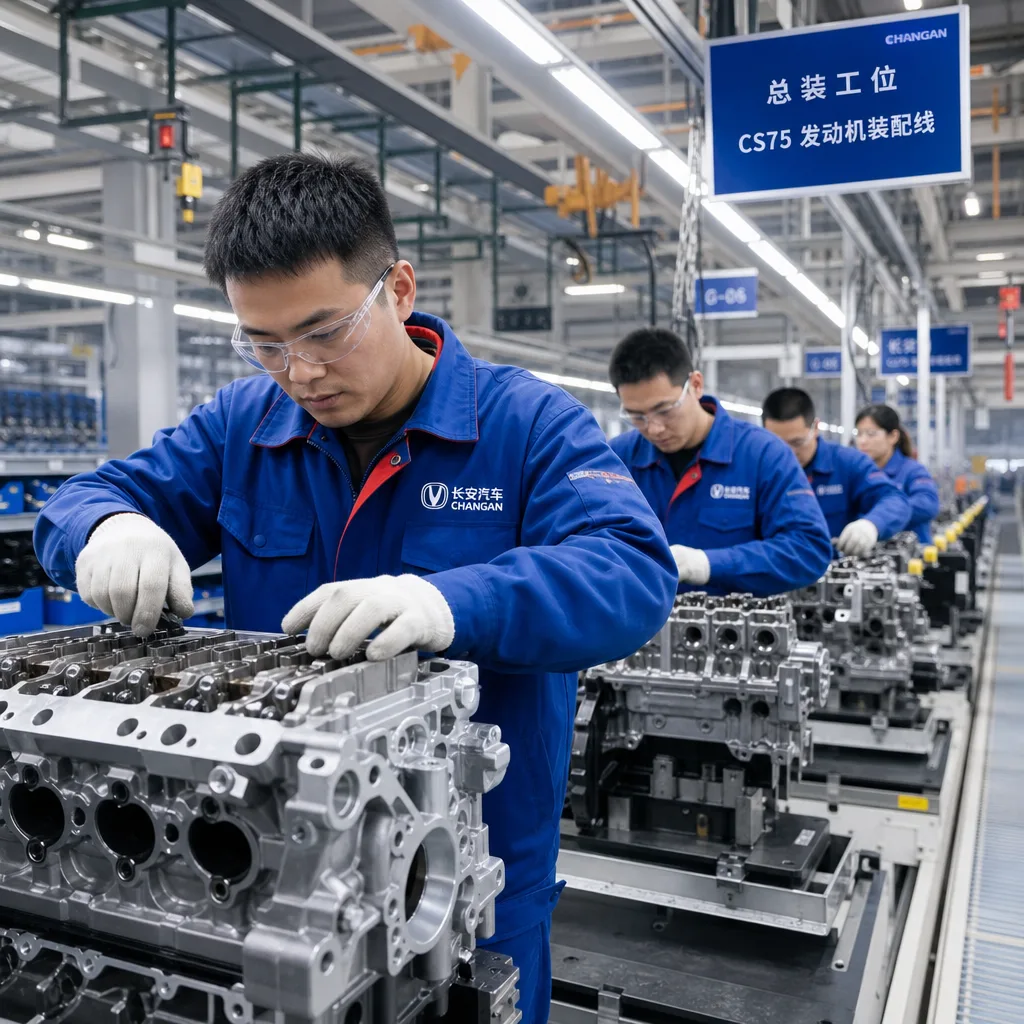
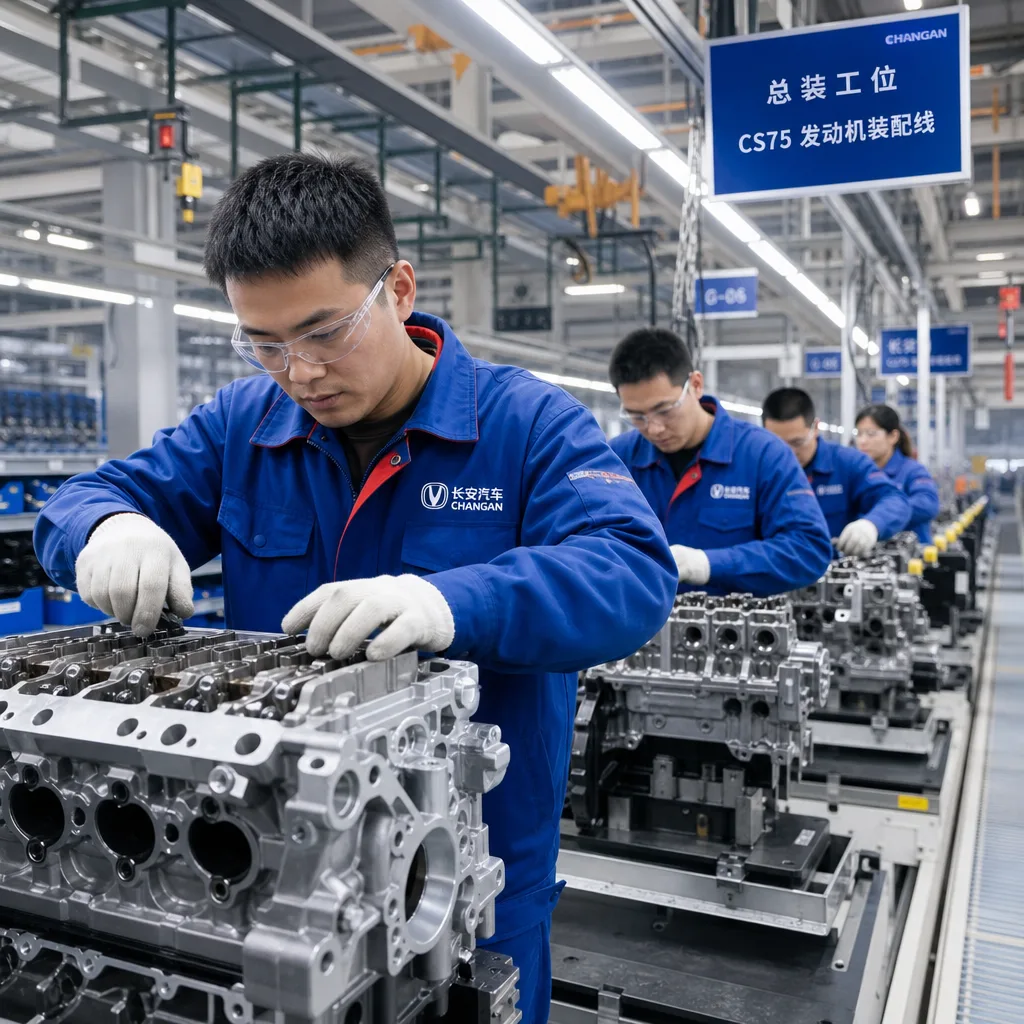
Procurement teams sourcing engine bearings for Fiat applications usually need more than a catalogue listing. They need controlled metallurgy, dimensional repeatability, packaging traceability, and a supplier that can support both aftermarket references and private-label programmes. Driventus manufactures engine and powertrain components in Taizhou, Zhejiang, with exports to more than 60 countries and certified management systems under IATF 16949:2016 and ISO 9001:2015. This guide shows how to evaluate an engine bearing Fiat OEM supplier through a sourcing decision framework, common failure modes, specification controls, factory evidence, and commercial planning. It covers application matching, material selection, validation records, MOQ and lead-time tradeoffs, and the checks buyers should complete before placing recurring orders. Driventus is an independent aftermarket manufacturer; brand names are referenced for fitment only.
Start with the fitment decision tree
The first sourcing mistake is treating every bearing request as the same part. A Fiat engine bearing can differ by journal size, load path, coating, and service purpose. Before you ask for a quote, decide which branch of the decision tree you are on.
Start with four questions:
Is the part for main bearing, connecting rod, thrust, or flange use?
Is the requirement standard size, undersize, or oversize?
Does the application demand a bi-metal or tri-metal structure?
Is the order meant for repair, private label, or OE-equivalent supply?
Once those answers are fixed, the supplier can map the part to the correct reference and avoid hidden mismatch risk. This matters because a bearing that looks right in a catalogue can still fail on crush height, oil clearance, or journal compatibility.
The buyer should also lock the reference scope early. Define engine family, displacement, fuel type, year range, and destination market. Then confirm width, wall thickness, bore diameter, parting-line geometry, and oil-hole position against either a drawing or a controlled sample. If the supplier cannot translate the application into measurable dimensions, the sourcing process is still too vague.
Driventus can review samples, drawings, or buyer reference lists against our catalog. For broader powertrain programs, procurement teams may also review engine components to consolidate pistons, gaskets, water pumps, and related parts.
Brand names and vehicle model names remain fitment identifiers only. They do not imply vehicle manufacturer approval, supply contract status, or endorsement.
Where bearing programs usually fail
Most warranty issues do not start with a dramatic defect. They start with a small mismatch that slips through approval. A sourcing team evaluating an engine bearing Fiat OEM supplier should watch for the failure modes that repeat most often.
Common failure modes include:
Wrong size family selected from a near-match reference
Wall thickness or crush height drifting outside the approved window
Oil-hole location not aligned with the intended engine family
Overlay or alloy choice not suited to the load cycle
Packaging damage that creates handling or corrosion risk
Lot mixing that breaks traceability after goods arrive
The most dangerous problem is overreliance on wording like “high quality” or “OEM standard.” Those phrases do not tell you whether the shell thickness is stable, whether the lot was segregated, or whether the supplier can reproduce the same result next month. Buyers need measured data, not reassurance.
A useful test is simple: ask the supplier to explain how the bearing is controlled from incoming metal to final carton. If the answer jumps straight to pricing, the control system may be too weak for recurring supply.
For many programs, the buyer should ask for the measured range from the latest lot plus the accepted control limit from the drawing. That gives a real comparison point for benchmarking suppliers. It is far better than comparing quotes by unit price alone.
Compare bi-metal and tri-metal options
Material choice should follow duty cycle, not habit. An engine bearing Fiat OEM supplier should be able to explain when a bi-metal bearing is enough and when a tri-metal construction is the safer call.
</tr></thead><tbody> </tbody></table>In practical sourcing terms, buyers should ask for a tolerance table tied to each part number. At minimum, the table should show wall-thickness variation, width tolerance, bore size after assembly, and overlay thickness where applicable. If the supplier cannot provide those controls, the material discussion is incomplete.
Also ask how the factory checks crush height, free spread, parting-line condition, and oil-groove geometry. Those dimensions decide whether the shell seats correctly in the housing. A part can look clean and still fail in installation if the geometry is unstable.
Relevant compliance and management references may include IATF 16949:2016 for automotive quality management, ISO 9001:2015 for quality management systems, and REACH (EC) No 1907/2006 for chemical substance obligations in the European market. These standards do not replace part-specific validation, but they do show whether the factory runs a disciplined control system.
Request proof, not promises
A supplier claim is only useful when it can be audited. For bearings, the strongest evidence is the paper trail from raw material to final packing.
Request the following before nomination:
Valid IATF 16949:2016 and ISO 9001:2015 certificates, including scope and issuing body
Process flow chart covering stamping, forming, machining, coating, washing, and packing
Control plan showing critical-to-quality dimensions and inspection frequency
Incoming material records for steel backing and bearing alloy material
In-process measurement reports for wall thickness, width, crush height, and oil-hole location
Final inspection reports by batch or production lot
Traceability method linking finished cartons to production date, machine line, inspection record, and shift
Packaging drop-test or transport validation where long-distance export is required
Calibration records for gauges used on the referenced dimensions
Nonconformance and corrective-action history for the same family or process line
For distributor audits, Driventus can support document review and remote or on-site factory assessment through its quality system. For OEM and Tier-1 purchasing teams, the audit scope can be expanded to include PPAP-style document packages, special characteristic controls, gauge calibration, and corrective-action history.
A practical audit should also show how nonconforming bearings are isolated. Quarantine labels, locked storage, concession control, and rework approval matter because one mixed batch can create installation and warranty risk. Ask for the actual hold-and-release procedure, not a verbal promise. If the supplier cannot show sample retention, lot segregation, and disposition sign-off, that is a warning sign for repeat-order programs.
Plan MOQ and lead time by scenario
Commercial structure changes by reference type. Long-tail Fiat applications often need small runs, while high-volume main and rod bearings need stable monthly output. A qualified engine bearing Fiat OEM supplier should explain MOQ by tooling status, material availability, and packaging requirement.
Use this planning split:
Existing references: lower MOQ subject to stock, packaging, and destination market
New reference development: MOQ depends on tooling, sample validation, and forecast volume
Private-label packing: carton, label, and insert MOQ should be confirmed separately
Standard production lead time: planned after sample approval, order confirmation, and artwork sign-off
Export consolidation: bearings can be combined with other engine components to improve pallet efficiency
Forecasting: rolling 3- to 6-month demand plans reduce shortages on slower-moving references
Do not mix first-article timing with repeat-order timing. New development usually includes drawing review, sample production, dimensional inspection, and buyer approval. Repeat orders depend on confirmed capacity, raw material cycle, and shipping lane. Quote three numbers for every reference: MOQ for stock items, MOQ for new tooling or packaging, and a replenishment MOQ for repeat orders. That makes landed-cost comparisons more honest.
Lead time should also be split. Ask for sample lead time, mass-production lead time, packing lead time, and transit lead time. One single number hides delays caused by carton approval, first-run inspection, or artwork changes. It also makes safety-stock planning sloppy.
For import managers in the EU, UK, US, Canada, Australia, and Brazil, packaging should be specified early. Requirements may include neutral cartons, private label, barcode labels, pallet limits, humidity protection, and country-specific documentation. Export paperwork should be aligned with the importer’s customs broker before shipment.
Walk the development process step by step
Some buyers arrive with a fixed Fiat bearing list. Others need reference expansion across several European and Latin American applications. Either way, the process should be controlled.
A practical development route looks like this:
1. Buyer provides drawings, samples, catalogue references, or application data. 2. Driventus reviews dimensional feasibility, alloy structure, and journal compatibility. 3. Engineering confirms whether existing tooling can be used or whether new tooling is required. 4. Samples are produced for dimensional and visual inspection. 5. Buyer reviews fitment, packaging, and any bench or engine validation requirements. 6. Approved references move into controlled batch production. 7. Pilot lot results are checked against thickness, crush, width, and surface finish targets before full release.
This sequence prevents the usual shortcut where a part gets quoted before the engineering basis is clear. It also helps procurement compare proposals on the same scope.
For buyers needing proprietary drawings, packaging, or consolidated engine kits, Driventus can support custom manufacturing. The goal is to reduce sourcing fragmentation while keeping part-level traceability intact.
Where application data uses vehicle brand names, those names remain fitment references only. Driventus does not claim approval or endorsement by any vehicle manufacturer. Driventus is an independent aftermarket manufacturer; brand names are referenced for fitment only.
Use a shortlist before recurring orders
Before you place a recurring purchase order, compress the decision into a shortlist. Engine bearings carry low unit value but high repair cost if the specification is wrong.
Recommended buyer checklist
Confirm bearing type, position, size grade, and engine application.
Approve drawings, samples, or reference specifications before mass production.
Verify IATF 16949:2016 and ISO 9001:2015 certification scope.
Request control plan, inspection report, and traceability method.
Confirm REACH (EC) No 1907/2006 obligations for EU-bound goods where applicable.
Define private-label artwork, carton strength, palletization, and barcode rules.
Agree MOQ by reference, not only by total order value.
Separate new-development lead time from repeat-order lead time.
Specify claim-handling process, evidence required, and response timeline.
Set acceptance criteria for thickness, width, crush height, and packaging condition.
For large distributors and repair chains, a pilot shipment is often worth the time. It can verify carton durability, warehouse scanning, installation feedback, and claim communication before volume ramps. For Tier-1 buyers, a more formal approval route may be needed, including capability studies, sample retention, and periodic requalification.
The cleanest commercial control is to define when a reference moves from sample status to confirmed recurring supply. That point should name who signs off the dimensional report, which drawing revision controls, and what happens if alloy, coating, or packaging materials change. Without that rule, reorders drift away from the approved baseline.
Frequently asked questions
Yes. Driventus can support neutral or private-label packaging, subject to MOQ, artwork approval, and destination-market requirements. Buyers should provide reference lists, packaging specifications, and forecast volumes so the commercial and production plan can be confirmed. For new references, the buyer should also share target thickness, width, crush-height, and packaging constraints so the quotation reflects the actual specification.
Key documents include IATF 16949:2016 and ISO 9001:2015 certificates, process flow, control plan, material records, dimensional inspection reports, batch traceability method, and packaging specifications. Additional validation records can be discussed for OEM or Tier-1 programs. Buyers should also request the latest lot data for wall thickness, width, crush height, and oil-hole position so the approval decision is based on measurable results.
No. Driventus is an independent aftermarket manufacturer; brand names are referenced for fitment only. Any vehicle or engine name is used to help buyers identify application compatibility and does not imply endorsement or approval.
If you are qualifying an engine bearing Fiat OEM supplier for recurring purchase, send your reference list, forecast, and packaging requirements to Driventus. You can [request a quote](/contact.html) or contact our sourcing team at /contact.html