Timing belt kit material should be treated as a sourcing risk control, not a catalog note. The belt compound, tensile cord, tooth facing, pulley metallurgy, tensioner bearing, grease, seals, dust protection, coatings, and fasteners determine how the kit behaves after heat, load, storage, and installation variation. For RFQ comparison, put the critical values on the quote line: belt compound grade, cord type, tooth count, pitch, belt width tolerance, pulley runout limit, bearing clearance, grease temperature range, coating specification, MOQ, sample lead time, mass-production lead time, and inspection standard. Regional sourcing adds another layer. Buyers may need traceability, material declarations, REACH (EC) No 1907/2006 compliance where applicable, and repeatable production under IATF 16949:2016 and ISO 9001:2015. This article breaks the kit into practical approval decisions: what to specify, where failures usually start, which material trade-offs matter, and what evidence belongs in the supplier file. Driventus is an independent aftermarket manufacturer; brand names and OE references are used for fitment identification only. The guidance is written for sourcing engineers, category buyers, import managers, and repair-chain procurement teams that need defensible data before placing volume orders.
Map the Kit Before You Compare Prices
A timing belt kit is a matched wear system. Treating it as a belt plus accessories hides the real procurement risk. Every load-bearing, rotating, sealing, and wear-contact part needs a stated material and an approval check.
</tr></thead><tbody> </tbody></table>Start with the application, not the supplier's best-selling kit. The material stack must match engine duty cycle, target service interval, ambient temperature range, contamination risk, and installation environment. A practical baseline is belt width tolerance within ±0.3 mm unless the drawing is tighter, pulley radial runout around 0.05-0.10 mm for common aftermarket applications, and traceability back to rubber mix, cord lot, bearing lot, and final packing date. The same OE reference can justify different sourcing decisions in different markets when climate, fuel quality, maintenance habits, and warranty expectations change.
Choose the Belt Compound by Failure Mode
The compound decision is really a failure-mode decision. Heat hardens rubber. Oil mist can soften or swell it. Repeated flexing starts cracks. Poor adhesion lets the tooth fabric move before the belt looks visibly worn.
Common options include:
HNBR: The usual choice for modern applications because it resists heat, ozone, oil mist, and ageing better than older chloroprene compounds. Buyers often specify continuous service capability around 120-150°C, depending on formulation and test method.
CR: Still suitable for selected legacy applications where temperature, oil exposure, and service interval are moderate. It is a value choice for lower-heat programs, not a safe default for newer engines.
High-temperature elastomer blends: Used where the OE design or aftermarket target requires higher heat-ageing resistance, improved flex life, or longer replacement intervals. The claim should be supported by endurance data.
Do not approve a belt compound on name alone. Ask what happens after ageing. A belt can pass incoming dimensions and still fail early if hardness shifts, tensile strength drops, or fabric adhesion weakens after heat soak. The supplier file should include initial and post-ageing hardness, tensile strength retention, elongation retention, tooth shear data, and rubber-to-fabric adhesion. Common purchasing controls include hardness within about ±5 Shore A of the approved master sample, no visible cracking after low-temperature bend checks at the specified market temperature, and no fabric delamination after heat/oil exposure cycles. Where relevant, request test summaries aligned with the supplier's endurance program and recognized methods such as SAE J2527 when those methods fit your qualification process.
When Static Dimensions Lie: Cord Stability Checks
Cord reinforcement controls elongation, and elongation controls timing accuracy. A belt can measure correctly on the bench and still drift in service if the cord package is wrong for the load, heat, and bend cycle.
Common cord options
Fiberglass cord: Widely used because it balances tensile strength, cost, fatigue resistance, and dimensional stability for broad aftermarket coverage.
Aramid cord: Offers stronger stretch resistance and good thermal performance, often used for higher-load or longer-interval applications.
Polyester cord: Cost-effective in selected applications, but generally less stable than fiberglass or aramid under high heat and extended service.
For source approval, ask for:
Nominal cord type, construction, and count
Belt pitch tolerance, commonly controlled around ±0.10-0.20 mm over the specified measuring span unless the drawing defines another method
Width tolerance, often ±0.2-0.3 mm for common passenger-car belts
Elongation limit under a defined load, stated as percentage change rather than a vague "low stretch" claim
Minimum bend radius and flex-cycle test condition
Adhesion performance between cord, rubber, and tooth fabric
For mixed vehicle fleets, dimensional consistency across batches often matters more than the highest tensile number on a datasheet. A stable cord package reduces timing drift, belt-edge wear, and post-installation noise. For PPAP-style approval, keep a signed master sample, first-article dimensional report, and at least three-batch capability data for width, pitch, tooth height, and overall length before releasing repeat orders.
Look Beyond the Belt: Rotating Parts That Trigger Claims
Many timing kit warranty returns begin outside the belt. The compound may be correct, but a rough pulley, leaking bearing seal, weak tensioner, or poor coating can still create noise, heat, misalignment, and early return claims.
Pulleys are commonly made from stamped steel, sintered steel, machined steel, polymer-faced steel, or aluminum alloy. Bearings are typically hardened bearing steel with controlled raceway geometry, grease fill, cage design, and seal construction. Buyers should confirm:
Bearing internal clearance class, commonly C3 where thermal expansion and operating load require it, or normal clearance where the OE design specifies it
Grease type, fill quantity, and temperature rating, such as lithium-complex or polyurea grease rated from about -40°C to 150°C for demanding locations
Seal material and contact design, including whether the bearing uses contact, non-contact, or labyrinth protection
Raceway hardness and surface finish, with hardened bearing steel normally expected around 58-64 HRC
Pulley runout and surface roughness, with RFQ targets stated numerically instead of "smooth running"
Corrosion protection on exposed metal surfaces, including zinc, phosphate, e-coat, or application-specific coatings
For automatic tensioners, include the spring material, damping system, pivot friction, and preload range in the approval file. Ask for nominal tension setting, acceptable torque window, arm travel range, and end-of-line test method. Small changes in torque, alignment, or bearing friction alter belt tracking and noise. Repair-chain buyers should pay particular attention here because installation quality, tool availability, and technician habits vary by location. A more forgiving material and tensioner specification can reduce field variation, but it still needs bearing noise checks, rotational torque records, and traceable assembly inspection.
Procurement Trade-Offs by Material Choice
Use this table for early screening before engineering confirms the drawing, test plan, and application list. It is a decision matrix, not a ranking.
Material choice
Strengths
Trade-offs
Typical buyer fit
Commercial note
HNBR belt compound
Strong heat and oil-mist resistance, good ageing performance, longer service potential
Higher cost than CR
Modern engines, mixed fleets, longer replacement intervals
Usually worth the premium where warranty cost or brand position matters
CR belt compound
Proven in moderate-duty applications, competitive cost, broad legacy use
Use only where the application and interval support it
Fiberglass cord
Stable, widely available, cost-effective, good fatigue behavior
Less stretch control than aramid in severe duty
Broad aftermarket coverage and standard replacement kits
Best default for high-volume catalog coverage
Aramid cord
Very low stretch, good heat resistance, strong load capacity
Higher cost and greater supply sensitivity
High-duty engines, long-interval programs, demanding fleet use
Confirm MOQ and lead time before quoting tenders
Steel pulley and bearing set
Robust, familiar service behavior, strong wear performance
Heavier than some alternatives and dependent on coating quality
High-volume aftermarket kits and repair-chain programs
Coating and bearing grade drive return rate more than steel alone
Aluminum tensioner housing
Good stiffness-to-weight ratio and OE-style design flexibility
Requires controlled casting, machining, and surface treatment
OE-matched applications and weight-sensitive designs
Tooling and machining capacity affect launch timing
NBR or ACM seals
Cost-effective contamination control for many environments
Material must match grease, heat, and exposure conditions
Standard idler and tensioner assemblies
Upgrade seal material where heat and dust exposure justify it
</tr></thead><tbody> </tbody></table>Material selection should follow the engine load case, temperature profile, contamination exposure, warranty position, and target replacement interval. Lowest unit price is rarely lowest total cost if it increases noise complaints, installation sensitivity, inspection burden, or early bearing returns. For RFQs, compare landed kit cost, defect allowance, claim handling, and inspection workload as well as ex-works price. Standard catalog kits may support lower MOQs. Private-label packaging, custom contents, and upgraded belt compounds usually require higher batch quantities because printed boxes, labels, rubber mixing, bearing procurement, and kit assembly have to be planned together.
Build the Approval File Around Evidence
A credible specification file connects timing belt kit material claims to test evidence. The test depth depends on program risk, but the file should prove that materials, dimensions, and assembly processes are controlled.
Ask for the following where applicable:
Dimensional inspection records for belt width, pitch, tooth profile, overall length, pulley bore, pulley offset, and pulley runout
Heat ageing results for the belt compound, including test temperature, duration, and retained tensile or hardness change
Oil, ozone, or chemical exposure data when relevant to the application
Tensile and elongation data for reinforcement cord under a defined load and sample length
Adhesion test results for rubber, cord, and tooth fabric interfaces
Bearing life, rotational torque, starting torque, grease leakage, or noise evaluation for tensioners and idlers
Grease specification and operating temperature range, including supplier name or equivalent grade control where disclosure is possible
Corrosion resistance checks for metal components and fasteners, such as salt-spray hours matched to the coating specification
Packaging, labeling, barcode, and traceability records for batch control
For a normal aftermarket launch, buyers can request pre-shipment inspection using AQL 1.0-2.5 for critical visual and dimensional items, plus 100% rotation/noise checks on bearing assemblies where the supplier has automated or semi-automated equipment. Higher-risk programs should add endurance testing on a representative engine rig or belt drive simulator before volume release. For European programs, request documentation aligned with REACH (EC) No 1907/2006 where material declarations are required. For the supplier qualification file, confirm operation under IATF 16949:2016 and ISO 9001:2015 where those standards are part of sourcing policy. These systems do not replace part-level validation, but they reduce process risk when comparing suppliers across regions and make audit findings easier to close.
Fitment Control Scenario: Same Reference, Different Risk
Consider a kit sourced against an OE cross-reference such as OE 06A107065. The printed reference may look correct in the catalog, but the approval risk changes by market. One buyer may need a basic belt, idler, and tensioner set for a price-sensitive channel. Another may need fasteners, water pump inclusion, stricter packaging traceability, and a higher heat-ageing target because the vehicle parc is older and maintenance intervals are inconsistent.
Before purchase approval, verify:
Engine code and production build range
Kit contents versus the OE service package, including water pump or fasteners if the market expects them
Belt tooth count, pitch, width, and tooth form
Tensioner and idler mounting geometry, bolt diameter, offset, and locating features
Service interval expectation by market and warranty exposure by customer channel
A practical workflow is to freeze the application list first, confirm the OE and aftermarket cross-reference table, approve the physical kit contents, and only then release packaging artwork. This avoids a common failure: correct belt material paired with an incomplete or poorly matched service pack. Driventus is an independent aftermarket manufacturer; brand names and OE references are used for fitment identification only. We do not claim OEM approval. We build and verify against dimensional, material, and packaging targets that support application matching for aftermarket distribution, Tier-1 supply support, and multi-location repair chains. Buyers should approve the final kit against their own catalog rules, warranty policy, and market-specific vehicle parc.
Q&A: How Driventus Controls the Material Stack
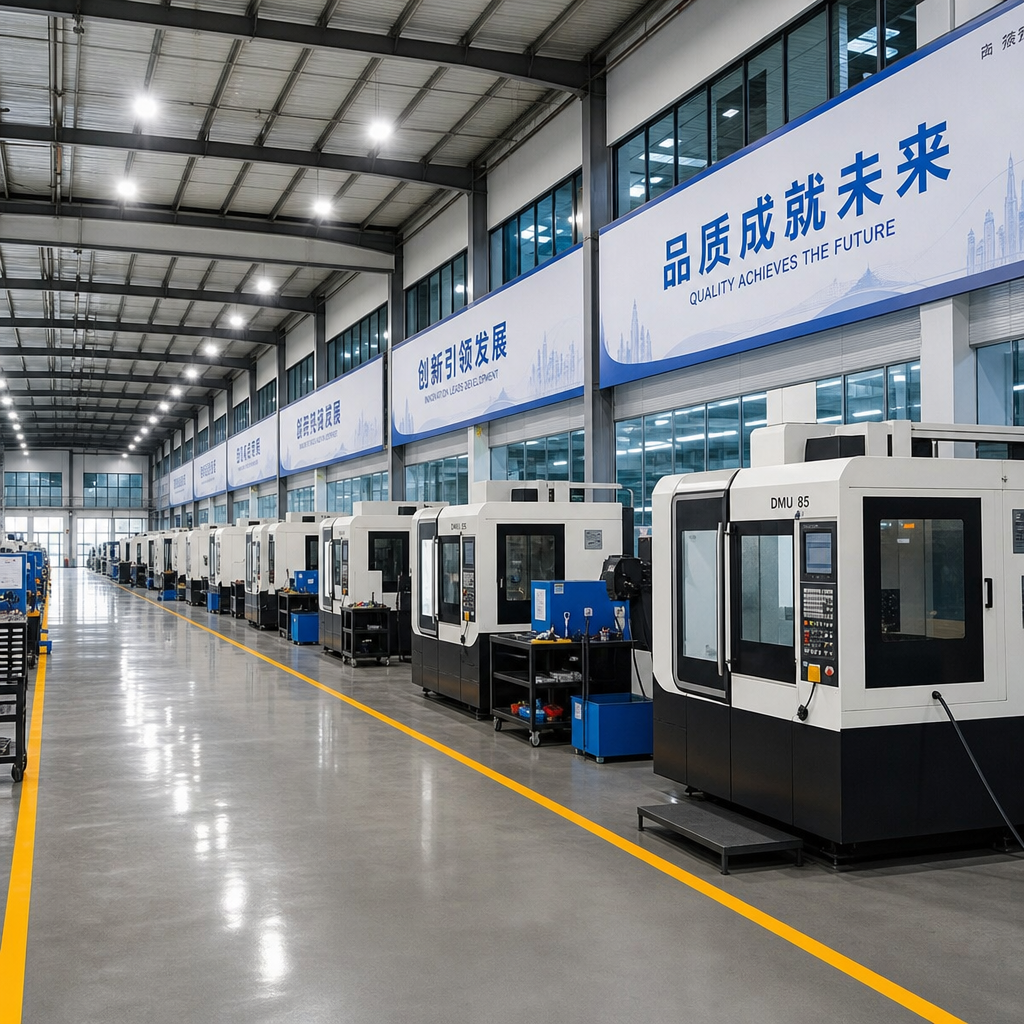
What does vertical integration change for buyers? As a vertically integrated manufacturer in Taizhou, Zhejiang, Driventus controls more of the timing belt kit material stack than a typical packer or trading company. That reduces batch variation, gives buyers a clearer audit path, and makes private-label or market-specific kit configurations easier to manage.
Where are the control points? Our production and approval process typically covers:
1. Incoming material verification for elastomers, steels, cords, bearing inputs, grease, seals, and coatings, with lot numbers recorded against the production order. 2. In-process dimensional checks on belt geometry, pulley features, tensioner assembly points, and critical mounting surfaces, using drawing-based gauges and calibrated measuring equipment. 3. Bearing and pulley assembly checks for rotation feel, noise, grease protection, axial play, and visible defects before kit packing. 4. Final inspection for kit completeness, visual quality, labeling, traceability, and packaging integrity. 5. Batch-level retention records for quality review and complaint investigation. 6. Export documentation for multi-market shipments, including material and compliance records where required.
Which timelines should procurement separate? Separate engineering confirmation, sample approval, and mass production. Standard catalog items often move faster because drawings, tooling, and packing data already exist. Custom kits, private-label boxes, special barcode rules, or upgraded timing belt kit material specifications need extra time for artwork, component allocation, first-article checks, and packaging validation.
What drives price? Price is normally shaped by belt compound, cord selection, bearing grade, pulley material and coating, kit content count, packaging format, annual volume, MOQ, and inspection requirement. Buyers can review our catalog, check the quality system, and discuss custom manufacturing when a program needs non-standard packaging, private label, adjusted kit contents, or OE-matched service packs. For broader powertrain sourcing, see engine components.
Frequently asked questions
HNBR is widely used for the belt body in modern applications because it handles heat, ozone, ageing, and oil-mist exposure well. Reinforcement is commonly fiberglass or aramid, depending on the engine load case, duty cycle, and service interval. For RFQs, ask suppliers to state the compound family, cord type, belt width tolerance, pitch tolerance, and heat-ageing data.
Cord material controls elongation and pitch stability after installation. A belt can meet incoming dimensional checks but still stretch, drift, or run noisily under heat and load if the reinforcement is not matched to the application. Buyers should request elongation data under a defined load, not only a generic tensile-strength statement.
Approve the full kit. Pulley bearings, tensioners, grease, seals, hardware, and packaging traceability can determine the final failure mode even when the belt material itself is suitable. Approval should include bearing clearance, grease temperature range, pulley runout, tensioner preload, coating, and kit-content verification.
Request material declarations, dimensional inspection records, test summaries, bearing and grease specifications, traceability data, coating records, sample approval reports, and evidence of IATF 16949:2016 and ISO 9001:2015 operation where relevant to your approval file.
For application matching, timing belt kit material specifications, MOQ guidance, sample timing, and sourcing support, review the kit range and send your OE reference through our contact page at /contact.html.