Connecting Rod Citroen OE Equivalent: Sourcing Guide
A connecting rod Citroen OE equivalent is not proven by a catalog match. For a procurement team, the part has to protect the engine build: centre-to-centre length, big-end and small-end bore geometry, rod mass, cap clamp load, bolt interface, straightness, twist, and material condition all need to stay inside the approved window. One missed variant can turn into returns across several repair branches.
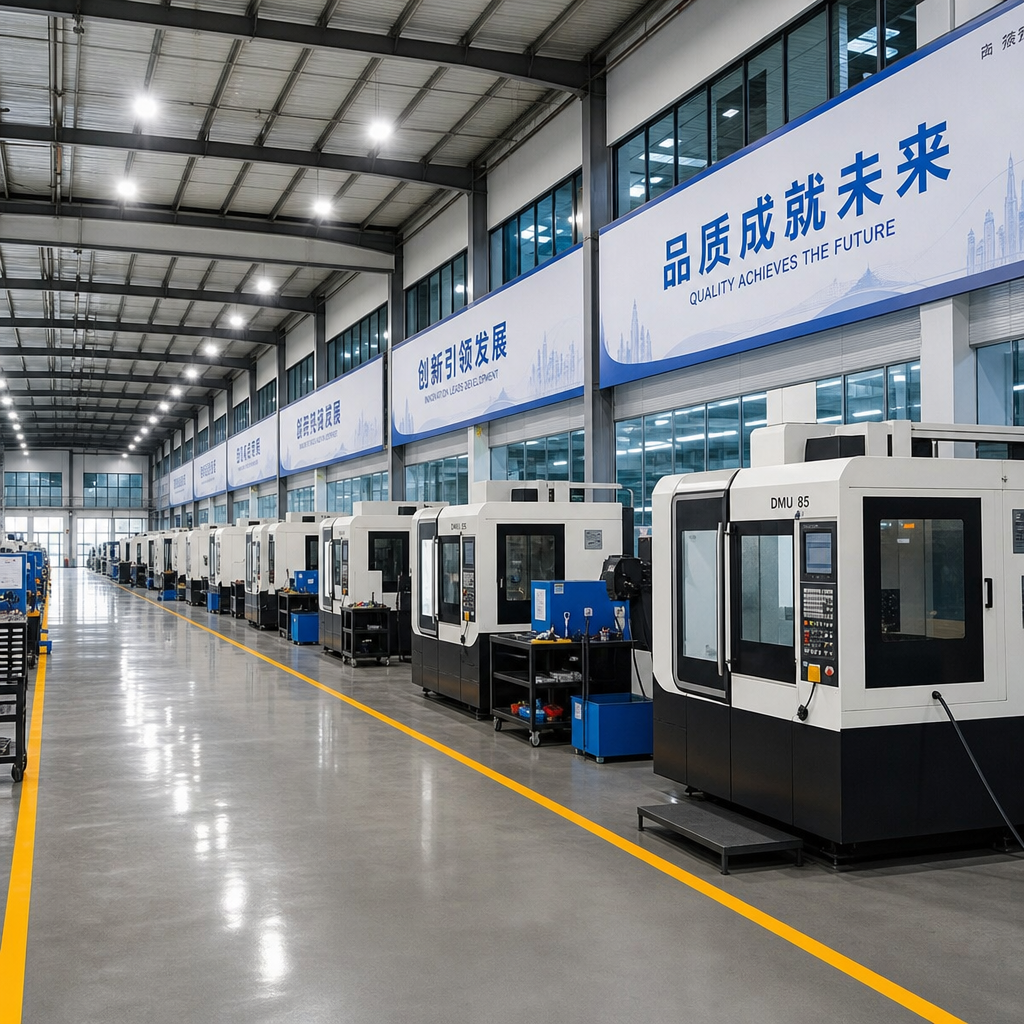
Driventus is an independent aftermarket manufacturer in Taizhou, Zhejiang. Brand names are referenced for fitment only. We support B2B buyers with engine and powertrain components, cross-reference checks, batch-level quality records, and repeatable commercial terms for replacement programmes. Use this guide as a buying framework: define what OE equivalence means, identify the failure modes, request the right evidence, approve samples, and lock the commercial conditions before volume release.
Start With A Decision Rule, Not A Catalog Match
Treat "OE equivalent" as a claim that has to be proved. A rod qualifies only when it matches the original part's functional dimensions, load path, mass class, and assembly interface for the exact engine code.
For Citroen applications, the buying decision should clear these checks first:
Centre-to-centre length, often controlled to a drawing tolerance such as +/-0.02 mm to +/-0.05 mm depending on engine design
Big-end bore, small-end bore, roundness, taper, and bearing crush compatibility
Rod cap interface, including dowel location or fracture-split condition where applicable
Total mass and end-to-end balance class, commonly held within 2 g to 5 g per set for service replacement programmes
Straightness and twist after machining, not only before heat treatment
Material grade, production route, and post-heat-treatment condition
An OE number is a useful entry point. It is not the final approval. Validate the engine family, engine code, production year range, and accepted cross-reference, then compare measured geometry. Two rods can look interchangeable in a catalog and still differ enough in small-end bore, bearing width, bolt stretch, or weight class to create field issues.
For a connecting rod Citroen OE equivalent, ask the supplier to state the basis of the quotation: existing catalog item, reverse-engineered sample, buyer drawing, or new tooling. That answer changes sample cost, MOQ, approval timing, and warranty responsibility.
Driventus is an independent aftermarket manufacturer; brand names are referenced for fitment only.
The Inspection Points That Catch Most Bad Buys
The most useful sourcing file for a connecting rod is not a sales sheet. It is a dimensional report tied to the exact part number, revision, and batch. For Citroen replacement programmes, request measured values instead of nominal descriptions.
Check point
What to verify
Practical acceptance logic
Centre-to-centre length
Measured in mm with stated tolerance
Controls compression height and piston position; many buyers specify +/-0.03 mm after final machining
Big-end bore
Final size, roundness, taper, and perpendicularity
Affects bearing fit and oil clearance; roundness and taper are often controlled in the micron range
Small-end bore
Finished diameter and bushing condition
Protects pin fit, oil film, and noise control
Big-end face width
Match to crank journal and bearing set
Prevents side loading and crank interference
Rod weight
Total mass and matched classes
Limits imbalance across cylinders; request weight class marking if used
Bolt spec
Thread, grade, torque, angle, and stretch method
Governs cap clamp load and bearing bore stability
Straightness/twist
Measured post-machining
Reduces vibration, bore misalignment, and fatigue risk
</tr></thead><tbody> </tbody></table>For a serious RFQ, ask for:
100% inspection on big-end bore, small-end bore, centre distance, and bolt thread acceptance
Statistical process control for length, bore size, and rod weight on production batches
Material certificate by heat number or powder batch, depending on the production route
Hardness range after heat treatment, with location and test method stated
First article inspection for new tooling, new drawings, or new cross-reference approvals
Gauge R&R or calibration status for bore gauges, height gauges, and CMM checks when required by the buyer's quality system
A practical incoming check for distributors is to measure 5 to 10 rods from the first shipment, then at least 3 pieces per lot on repeat orders unless the programme requires tighter AQL sampling.
If the supplier cannot provide these records, the part may still be a low-cost replacement. Do not classify it as an OE-equivalent component in a controlled supply programme. A connecting rod citroen oe equivalent is purchased to reduce fitment and warranty risk, not only to meet a price point.
Failure Modes Hidden In Material And Heat Treatment
A connecting rod works under alternating tensile and compressive load. Material and heat treatment therefore matter as much as the headline dimensions. In aftermarket supply, common production routes include forged steel and powder metal, depending on the original engine design, target durability, and cost position.
Ask the supplier to identify:
Base material specification, such as 40Cr, 42CrMo, C70S6, or the agreed equivalent grade where applicable
Forming route: forging, sintering, machining from billet, or another controlled process
Heat-treatment process, hardness range, and tempering control
Shot peening status, coverage, and intensity if the OE design or buyer specification requires it
Surface finish on journal bores, pin bore, parting faces, and beam
Crack detection method, such as magnetic particle inspection for ferrous forged rods where applicable
Bolt material grade and whether bolts are supplied assembled, loose, or excluded
Published standards may include IATF 16949:2016 and ISO 9001:2015 for the quality system, plus REACH (EC) No 1907/2006 for material compliance in the EU market. These standards do not prove that one rod fits one engine. They do help define supplier control.
The practical question is direct: can the supplier prove the batch is built to survive the same load profile as the original part? Nominal chemistry alone is not enough. Fatigue life depends on the full chain: material, heat treatment, geometry, surface condition, crack control, and assembly preload.
For higher-risk programmes, request at least one of these records: fatigue test summary, destructive section analysis, metallographic report, or historical field claim rate for the same part family. The strongest evidence links the record to a batch, heat number, and machining revision.
Fitment Validation: A Short Workflow For First Approval
Validate the replacement rod against the engine build record, not only the vehicle make and model. Keep the workflow short, repeatable, and documented.
1. Confirm the engine code, displacement, fuel type, and cylinder count. 2. Match the OE number or accepted cross-reference. 3. Check centre-to-centre length and big-end/small-end dimensions. 4. Confirm bearing width, pin diameter, and piston compatibility. 5. Confirm bolt specification, torque value, angle tightening, and whether bolts are reusable. 6. Compare rod weight class against the original sample or full engine set. 7. Review material certificate, hardness report, and inspection data. 8. Approve a first production sample before volume release.
If a used original rod is available, measure it directly against the supplier sample. Clean the rod, remove bearing shells, torque the cap to the specified condition, then measure the big-end bore at two axes and at two positions across the width. This catches catalog errors where one vehicle family used more than one rod design across model years, emissions variants, or production updates.
For larger programmes, build a simple qualification pack:
Dimensional inspection report with actual values, not only pass/fail marks
Material certificate and heat-treatment record
Hardness test results with test position and scale
Visual and magnetic particle inspection report where applicable
Sample assembly check with bearing, pin, and piston if supplied as a kit
Packaging and labelling specification
Batch traceability format
This matters most when the SKU will be distributed through multi-location repair chains. A small mismatch can produce a large return rate when one reference is installed across mixed vehicle populations. Clear validation also makes reorders easier because each new batch can be compared with the approved baseline.
Compare The Sourcing Routes Before You Negotiate Price
Not every replacement rod serves the same buying objective. The right route depends on risk, volume, documentation needs, and how much validation the programme can support.
Option
Typical use
Strengths
Limits
Direct OE-equivalent aftermarket rod
Repair and distributor supply
Best balance of fit, cost, and service life
Requires good documentation and cross-reference control
Controlled spec, packaging, traceability, and revision ownership
Longer lead time, higher MOQ, possible tooling charge
Reused original rod
Salvage or experimental use
Exact original geometry if undamaged
Condition risk, fatigue history unknown, limited supply
</tr></thead><tbody> </tbody></table>For most procurement teams, a documented aftermarket equivalent is the most efficient route. It can balance cost and risk if the inspection file supports the claim. Budget rods may suit low-value repairs, but they need a defined incoming inspection plan. A 1% to 3% return rate can erase a small unit-price saving once freight, labour claims, sorting, and customer service time are included.
Custom manufacturing becomes more appropriate when demand is stable, the target market is fragmented, or the buyer needs branded packaging, a defined print, or tighter specification control. Expect a first article stage, a confirmed annual forecast, and a higher MOQ than shelf parts. If annual demand is below a few hundred pieces, an existing catalog equivalent is often more economical than new tooling or a locked special revision.
Driventus supports custom manufacturing for buyers who need controlled dimensions, batch records, and export-ready documentation.
Quality File Q&A For Supplier Review
A connecting rod stops being a simple commodity when the buyer carries warranty exposure. The quality file should be specific enough for an internal supplier review and clear enough to connect process control to the part being purchased.
What certifications should be on file?
Ask for company certification to IATF 16949:2016 and ISO 9001:2015, with scope relevant to engine or machined metal components.
What records should identify the material?
Request incoming material control records, including heat number, supplier batch, or powder lot. For EU-bound shipments, REACH compliance should be addressed at both material and packaging level.
Which process records matter?
The file should show forging, forming, heat treatment, machining, and cleaning flow. It should also include in-process machining inspection for rough machining, cap cutting, bolt assembly, boring, honing, and final wash.
How should final inspection be documented?
Final criteria should cover critical dimensions, rod weight, visual defects, burrs, and thread condition. Traceability should connect lot, shift, furnace heat, and inspection date.
What separates a strong response from a weak one?
A strong response shows the measurement system, acceptance window, and retained records at each checkpoint. A weak response relies on broad claims and does not explain how the factory controls centre distance, bore geometry, rod weight, cap clamp load, or traceability for the actual batch.
For a first order, request a signed production part approval file or a simplified PPAP-style pack if your organization does not require full PPAP. For repeat orders, require supplier notification before any change to material source, heat-treatment supplier, bolt supplier, machining fixture, packaging format, or drawing revision.
You can review our quality system if you need to compare certification scope and inspection flow before starting a programme.
Scenario: Stock Rod, Private Label, Or Made-To-Order?
The rod itself is only one part of the sourcing decision. For distributors and repair-chain buyers, packaging and replenishment discipline affect pick accuracy, storage condition, and stock rotation.
A practical supply agreement should define:
Carton quantity and inner packing method, such as one rod per VCI bag or foam-separated inner box
Part number labelling, OE cross-reference, batch code, and barcode format
Moisture protection, rust prevention oil, and shelf-life expectation
Palletisation, export carton strength, and gross weight limits for manual handling
Lead time for stock and non-stock items
MOQ by part family, private-label pack, and custom revision
Buffer stock level or reorder point for fast-moving references
For high-volume catalog supply, buyers usually want stable lead times and clear revision control. For lower-volume Citroen applications, the key may be correct cross-reference support rather than scale. A supplier that can confirm the application and maintain batch records is often more useful than one offering a broad list without technical backing.
Separate shelf-stock logic from make-to-order logic. Existing stock can often ship after payment and export documentation are cleared. Standard production has to account for machining capacity, heat treatment, inspection, and packing. Custom revisions need sample production, first article approval, then batch production, so the calendar must include time for buyer measurement and sign-off.
As a working RFQ benchmark, ask suppliers to state MOQ, sample quantity, tooling status, unit price breaks, and lead time in the same table. Price may change at 100, 300, 500, and 1,000 pieces because machining setup, inspection labour, packaging, and export carton utilization are spread differently across the order. A low quote without MOQ and lead-time detail is not actionable for replenishment planning.
Driventus supports buyers who source across several engine families through our catalog and engine components. That helps procurement teams consolidate pistons, rods, gaskets, and related hard parts under one vendor review.
If the programme requires private label, kit assembly, or a non-standard surface finish, custom manufacturing is the correct route rather than a generic shelf part.
Sample Or Quote? Use This Trigger List
A quote request should happen after the engine code, OE reference, and inspection target are defined. That keeps the commercial stage aligned with the technical stage and helps suppliers respond with the correct part, lead time, MOQ, and documentation set.
Request a sample when:
The original rod is unavailable for direct measurement
The engine family has multiple rod variants
The buyer is changing from one supplier to another
A new distribution region requires local compliance review
The replacement is part of a remanufacturing or rebuild kit
The buyer needs to confirm bearing, piston pin, or bolt assembly fit before a volume order
Request a quote when the buyer can state:
OE reference or accepted cross-reference
Engine code, displacement, and model-year range
Annual volume, first order quantity, and forecast pattern
Target packaging format and carton quantity
Required documentation set, including inspection report and material certificate
Destination market, incoterm, and preferred shipment method
Whether the price should include bolts, bushings, packaging, labels, or kit components
When comparing suppliers, the cheapest quote is often the one with the most hidden cost if the inspection file is weak. A slightly higher unit price can be rational if it reduces sorting, claims, emergency shipments, and return freight. Evaluate a connecting rod citroen oe equivalent on total programme risk, not unit price alone.
A practical RFQ should ask for three price levels: sample or trial order, first production order, and forecast volume. It should also ask whether pricing is valid for 30, 60, or 90 days, whether steel price changes are excluded, and whether repeat orders use the same approved drawing and inspection baseline. That gives the buyer a cleaner comparison than one unit price with no commercial assumptions.
If you are building a sourcing shortlist for Citroen replacement programmes, request a quote with the engine code, sample photos, OE reference, required annual volume, and any measured dimensions you already have.
Frequently asked questions
It must match the original rod's key dimensions, bolt spec, weight class, material condition, and functional fit for the specific engine code. Visual similarity is not enough.
No. An OE reference helps identify the application, but the supplier should still confirm dimensions, tolerance window, and validation records before you release volume.
Ask for dimensional inspection, material certificate, hardness results, traceability, and certification to IATF 16949:2016 or ISO 9001:2015 where applicable.
Yes. For defined programmes, we can support custom manufacturing with controlled dimensions, packaging, and documentation for export supply.
If you need a Citroen replacement rod with documented fitment and batch control, send the engine code and OE reference through our contact page: /contact.html