engine block · 2026-06-07

Engine Block Land Rover Wholesale Sourcing Guide

Wholesale buyers sourcing Land Rover-fitment engine blocks need more than a dimensional match. Import managers, category buyers and sourcing engineers have to confirm casting consistency, machining accuracy, packaging protection, traceability and supplier capacity before adding a block to a regional programme. Driventus manufactures engine and powertrain components in Taizhou, Zhejiang, and supplies B2B customers in more than 60 countries. For engine block Land Rover wholesale programmes, we support fitment coverage, repeatable production, inspection records and export-ready documentation for independent aftermarket supply. Driventus is an independent aftermarket manufacturer; brand names are referenced for fitment identification only. This guide explains the procurement checks to complete before trial orders, pilot batches or container-level replenishment, including certification, MOQ planning, factory audit topics and validation evidence.

Wholesale Fitment Scope And Programme Planning

A Land Rover-fitment engine block programme usually serves one of three channels: aftermarket distributors, engine rebuilders or repair chains that need predictable supply for scheduled replacements. The buying decision should start with application coverage, annual demand and the failure profile in each target market.

For procurement teams, the first question is not only whether the block fits. It is whether the supplier can hold the same specification across repeat batches. Engine block programmes often include slow-moving SKUs, so a factory must be able to manage mixed models without confusing castings, machining routes, inspection records or packing labels.

Typical sourcing inputs include:

  • Target engine family, displacement range and engine code where available
  • Material requirement, such as cast iron or aluminium alloy according to application
  • Bare block, semi-finished block or fully machined block requirement
  • Machined surface, bore condition and critical tolerance expectations
  • Expected monthly, quarterly and annual order volume
  • Country-specific documentation, labelling and pallet rules
  • Warranty return process and technical evidence required for claims

Buyers should also decide whether the programme is catalogue-led or drawing-led. Catalogue-led sourcing is faster when fitment data is already proven, while drawing-led or sample-led sourcing is better for private-label programmes, special market requirements or applications where local rebuilders have strict machining preferences.

Buyers can review related engine components in our catalog and use custom manufacturing when a controlled drawing package, private label or market-specific configuration is required.

Factory Certification And Audit Evidence

For an engine block Land Rover wholesale order, certification should be treated as the starting point, not the final approval. Driventus operates under IATF 16949:2016 and ISO 9001:2015 quality management principles, with process controls covering supplier selection, incoming inspection, machining, final inspection, packing and corrective action.

A practical supplier audit should check the records behind the certificate. Buyers should ask for evidence that links the production batch to raw material, foundry inspection, machining inspection and final release. This is especially important for heavy cast components, where a late defect can affect assembly labour, freight cost, warranty exposure and distributor reputation.

</tr></thead><tbody> </tbody></table>Documentation should also consider market compliance. REACH (EC) No 1907/2006 may be relevant for EU importers reviewing chemical substance obligations in materials, coatings or packaging. The buyer remains responsible for confirming the final compliance route for the destination market, including any importer declarations, customs data or local labelling requirements.

Dimensional And Material Controls For Engine Blocks

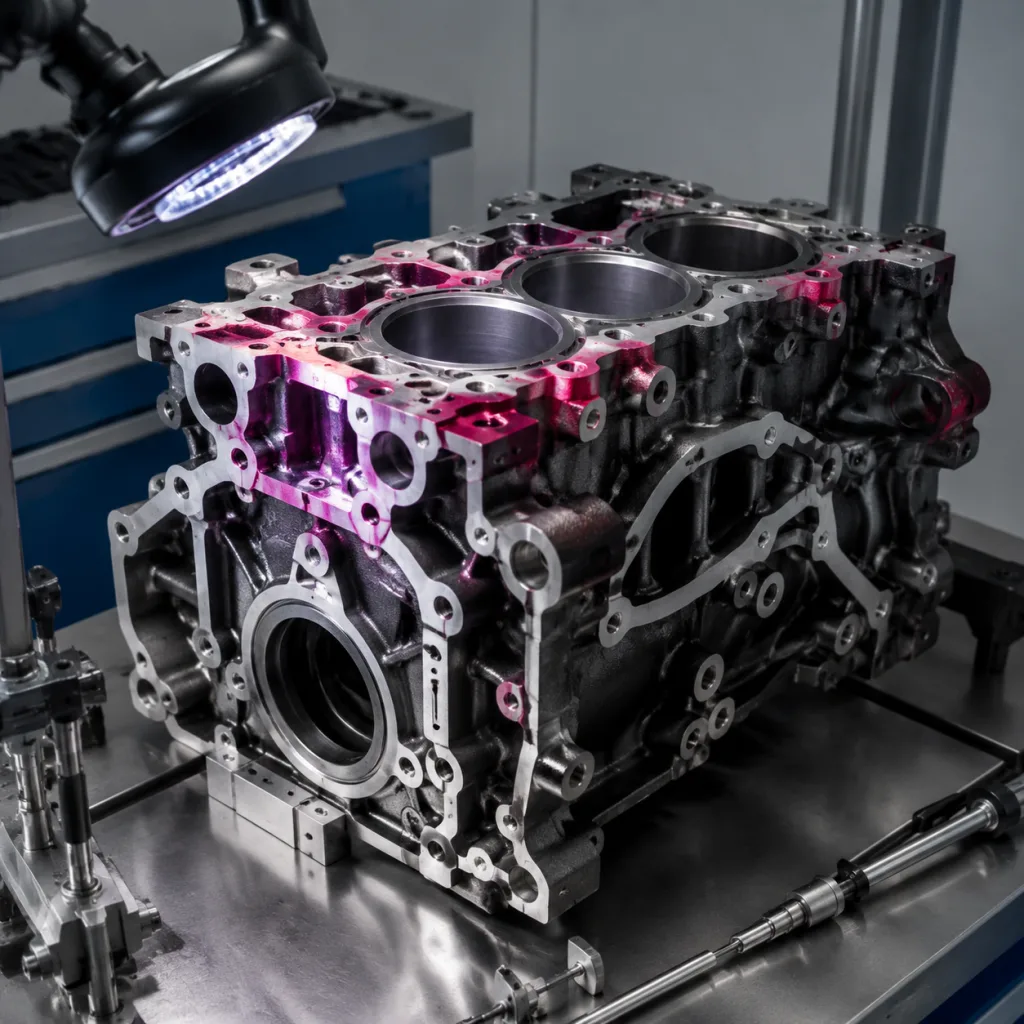
Engine blocks are high-risk components because several systems depend on the same casting: crankshaft alignment, cylinder sealing, coolant flow, oil galleries and mounting interfaces. A block that is visually clean but dimensionally unstable can create assembly failures after machining, installation or early service.

Procurement specifications should define the inspection points clearly before the first purchase order. For engine block wholesale supply, Driventus recommends confirming the following specification list during sampling:

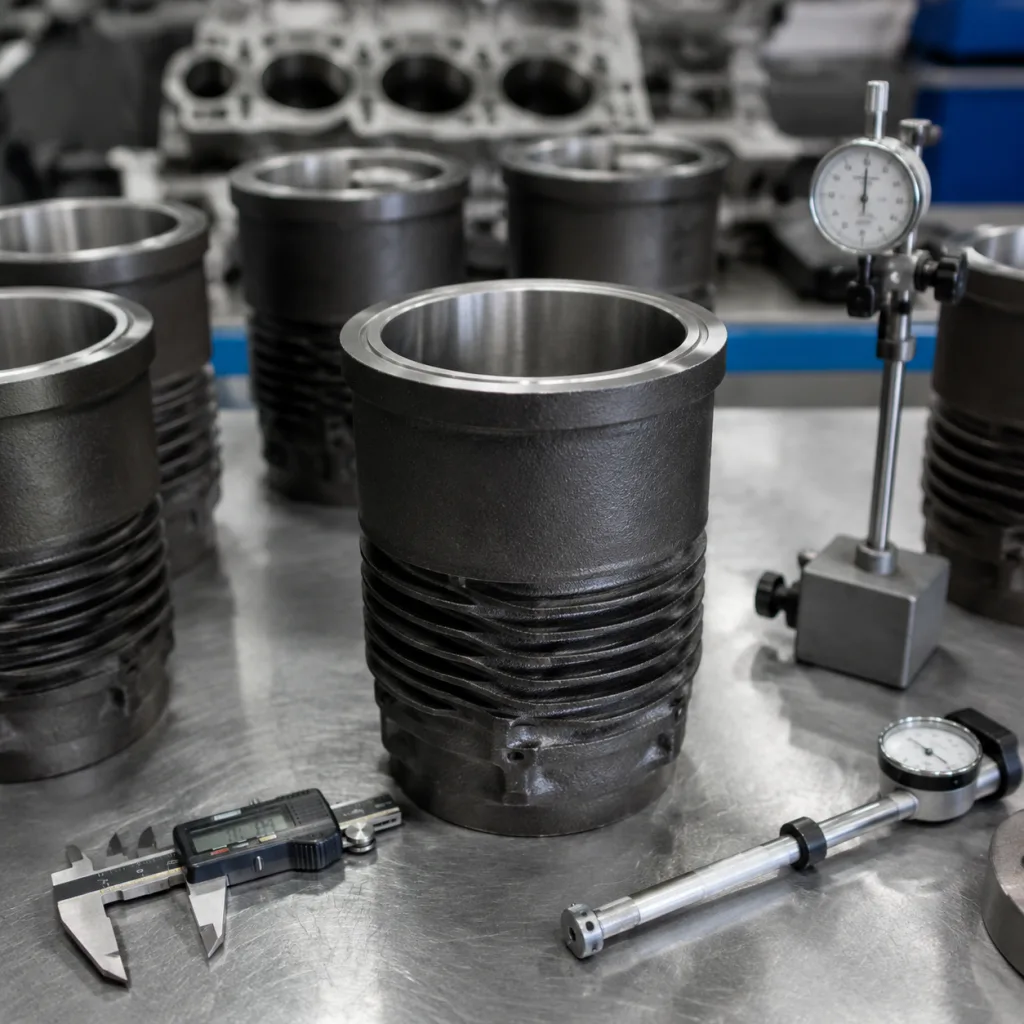
  • Cylinder bore diameter, cylindricity and roundness range as agreed in the buyer drawing or sample approval file
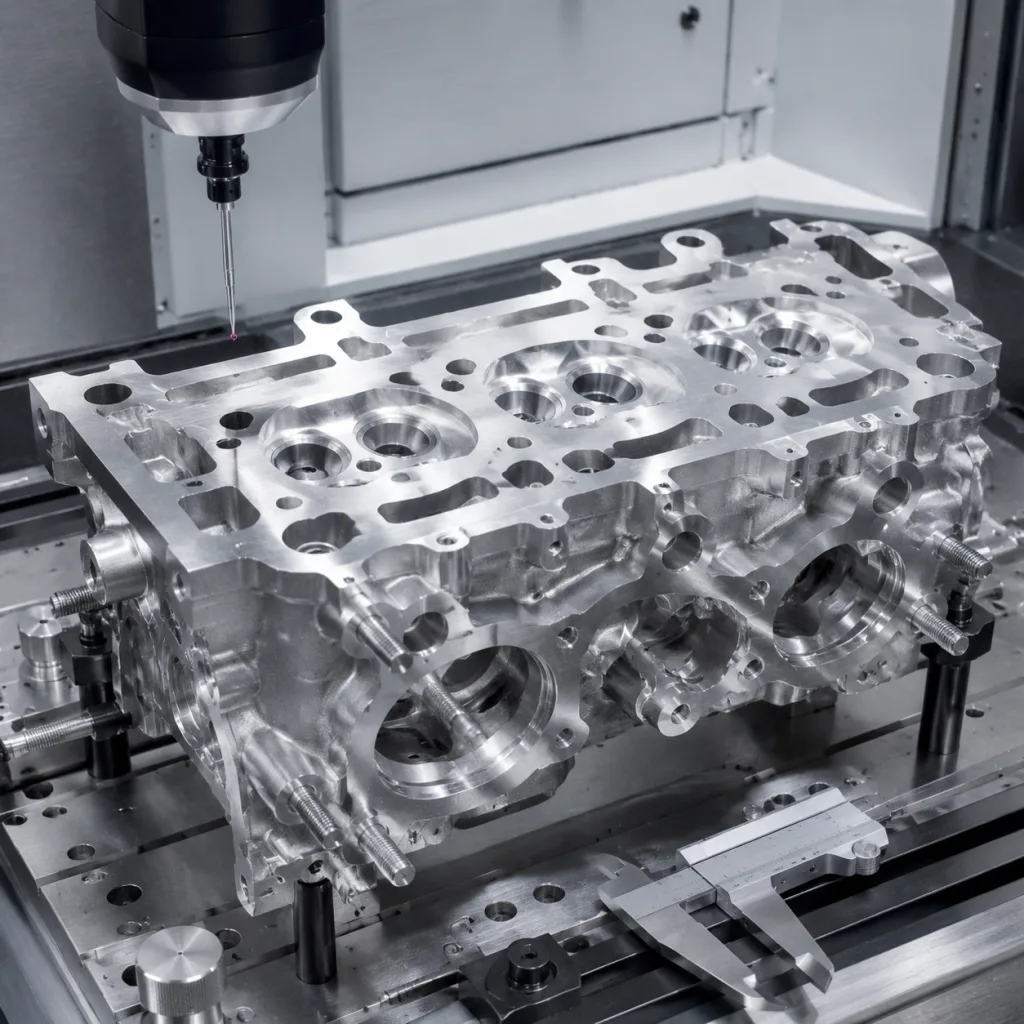
  • Deck flatness and surface finish for gasket sealing
  • Main bearing tunnel alignment and housing bore condition
  • Thread condition for head bolts, mounts, oil pan and ancillary components
  • Oil gallery cleanliness after machining and washing
  • Coolant passage integrity and pressure leak test result where applicable
  • Casting hardness and material grade confirmation
  • Visual casting limits for porosity, cracks, inclusions and repair marks
  • Part identification, batch code and packing label format

Where buyers provide drawings or approved samples, the inspection plan should follow those controlled references. Where the programme is based on aftermarket fitment data, the supplier should still create a measurable specification file before series production. That file should include critical dimensions, inspection frequency, acceptable limits, measuring tools and retention sample rules.

Sampling should also include a packaging review. Even a correctly machined block can become unsellable if deck faces, threaded bosses or mounting ears are damaged during inland handling, container loading or warehouse transfer. For this reason, technical approval and packing approval should be completed together.

MOQ, Lead-Time And Order Structure

MOQ and lead-time depend on casting availability, machining status, packaging requirements and whether the order uses a standard catalogue configuration or a buyer-specific specification. For engine blocks, the most stable purchasing model is usually a staged programme: sample order, pilot batch, then rolling wholesale replenishment.

Indicative planning points for buyers:

Audit item What procurement should verify Why it matters
Quality certificationValid IATF 16949:2016 and ISO 9001:2015 certificatesConfirms controlled automotive manufacturing processes
Material traceabilityHeat or batch records linked to casting lotsSupports claim investigation and repeat supply
Machining controlFixture control, tool wear checks and inspection frequencyReduces bore, deck and alignment variation
Inspection equipmentCMM, gauges, hardness testing and calibrated instrumentsConfirms dimensions are measured with suitable equipment
Packing validationDrop resistance, rust prevention and export pallet formatReduces transit damage for heavy castings
Corrective action8D or equivalent problem-solving recordsShows whether defects are contained and prevented

</tr></thead><tbody> </tbody></table>Buyers should avoid approving a programme from photos alone. A sample block should be inspected by the buyer, a contracted engine builder or a qualified technical team before larger purchases. The review should cover fitment, machining references, surface condition, threaded holes, oil and coolant passages, and the supplier's inspection report.

For container shipments, packing design matters because engine blocks carry high point loads. Wooden crates or reinforced export cartons should prevent deck damage, broken mounting ears and oil gallery contamination. Pallet layout should also account for forklift handling, container vibration, stacking limits and the buyer's warehouse unloading method.

Driventus can quote based on standard supply, private-label packing or a controlled drawing package. Buyers can request a quote with annual demand, destination port, target applications and inspection requirements.

Quality Records For Importers And Distributors

A distributor may not machine or assemble the engine block, but it still carries the commercial risk if the part does not meet the buyer's catalogue promise. For this reason, wholesale supply should include records that can be retained for warranty review, customer support and internal supplier performance tracking.

Useful shipment records include:

  • Commercial invoice and packing list with SKU and batch identification
  • Final inspection report for sampled critical dimensions
  • Material or casting batch reference where applicable
  • Packing photos before dispatch
  • Traceable production date or lot code on label or part record
  • Corrective action file for any nonconforming batch

The quality system should also define how nonconforming products are contained. For high-value components such as engine blocks, a buyer should agree in advance how suspect stock will be quarantined, inspected and resolved. This reduces uncertainty if a distributor receives a field complaint from an engine rebuilder or repair chain.

A strong record package also helps separate installation issues from product issues. For example, warranty analysis may require checking gasket selection, torque procedure, coolant contamination, lubrication failure, overheating history or machining performed after delivery. Batch-level records give both buyer and supplier a practical starting point for that investigation.

Driventus does not claim approval or endorsement by any vehicle manufacturer. Product references are used to identify fitment targets for independent aftermarket supply. Driventus is an independent aftermarket manufacturer; brand names are referenced for fitment only.

What To Send Before Quotation

Clear RFQ data shortens quotation time and reduces the risk of a wrong product match. For engine block Land Rover wholesale sourcing, buyers should provide application details and commercial expectations in the same request.

A complete RFQ normally includes:

  • Vehicle fitment range, engine code if available and market region
  • Required block type: bare, machined, semi-finished or assembled short-block input if relevant
  • Annual quantity estimate and first order quantity
  • Target destination country and preferred Incoterms
  • Packing requirement, pallet limits and label format
  • Certification or compliance documents required by the importer
  • Sample approval process and inspection report format
  • Any private-label, barcode or carton artwork requirement

If the buyer has an existing failed sample, competitor sample or drawing, it should be shared during the technical review. That helps the supplier confirm oil gallery layout, gasket surfaces, mounting points and machining references before quoting. It also helps avoid the common sourcing error of matching by catalogue description while missing a production-year or engine-code difference.

Photos are helpful, but they should not replace technical data. Clear images of casting numbers, deck surfaces, bearing tunnels, side mounting points and packaging damage can support the review, while measurements and application details allow the supplier to confirm the correct route with more confidence.

For buyers building a wider powertrain programme, Driventus can combine engine blocks with pistons, crankshafts, gaskets, water pumps and related components to simplify supplier management.

Frequently asked questions

Yes. Private-label packing, barcode labels and buyer-specific documentation can be reviewed during quotation. The technical specification, inspection plan and approval samples should be confirmed before repeat wholesale production.

Buyers should request evidence linked to IATF 16949:2016 and ISO 9001:2015 quality management, plus batch-level inspection records. Destination-market compliance checks, including REACH (EC) No 1907/2006 where relevant, should be confirmed by the importer.

No. Driventus supplies independent aftermarket components for fitment reference only and does not claim vehicle manufacturer approval or endorsement. Driventus is an independent aftermarket manufacturer; brand names are referenced for fitment only.

For current MOQ, lead-time and inspection documentation, send your target applications, annual forecast and destination market. Contact Driventus to start a technical quotation at /contact.html

Request a Quote
Order stage Typical purpose Procurement focus
Sample orderFitment, machining review and assembly trialInspection report, photos, packing check
Pilot batchMarket validation and warranty monitoringBatch traceability and return feedback
Repeat wholesale orderDistributor stock or repair-chain replenishmentForecast accuracy, lead-time and pallet efficiency
Annual programmeMulti-SKU supply agreementPrice stability, capacity reservation and audit schedule