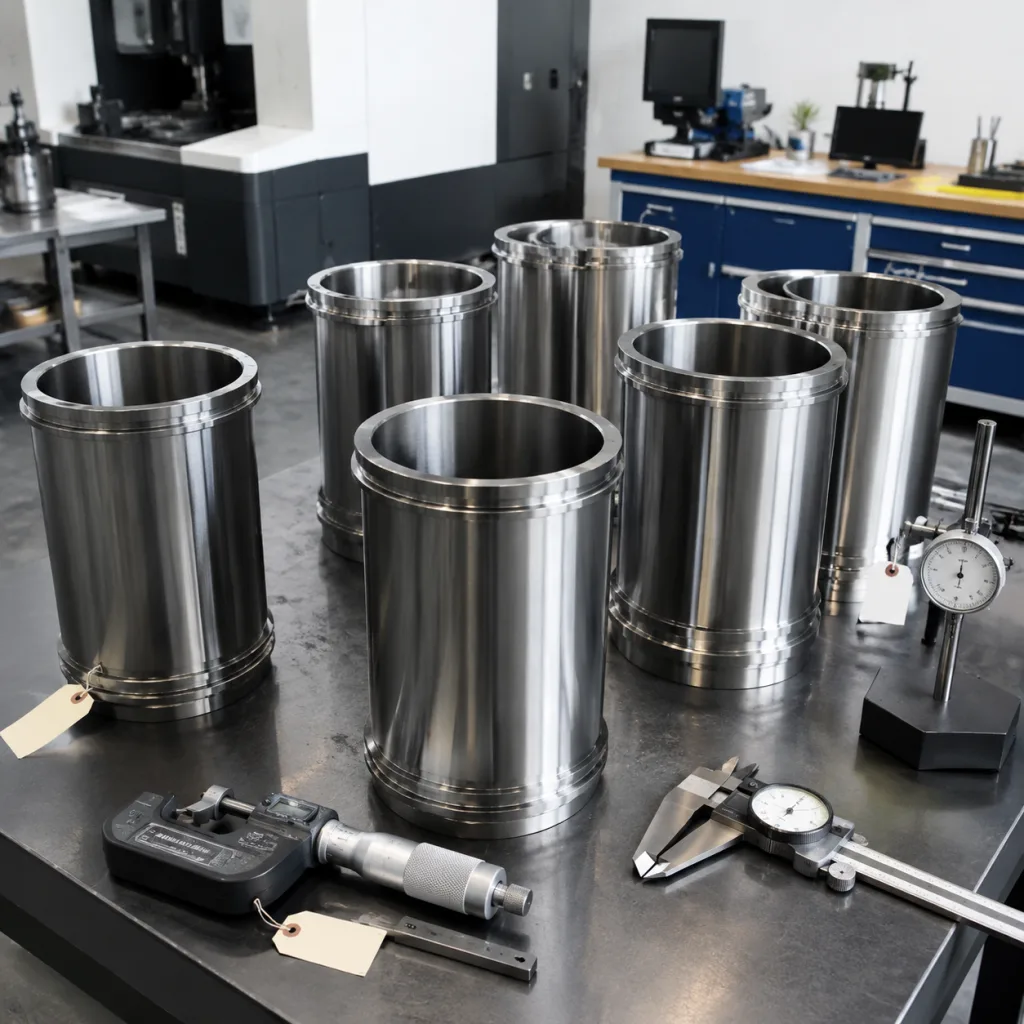
For procurement teams buying oil sump assemblies, REACH compliance for oil sump sourcing is mainly a matter of material control, supplier traceability, and defensible documentation. It is not enough to accept a broad label claim or a one-line declaration. Buyers need evidence that each relevant material in the supplied part is managed against applicable REACH (EC) No 1907/2006 obligations, including restrictions and candidate-list substances where they apply.
This matters for cast aluminium sumps, pressed-steel pans, and composite designs because the compliance risk is rarely limited to the main body. Coatings, pretreatments, gaskets, sealants, drain plugs, inserts, packaging chemicals, and outsourced finishing steps can all affect the final declaration. A sound sourcing process verifies the bill of materials, requests substance declarations, reviews coating and sealing chemistry, and connects the supplier’s document pack to your import, customer, and audit requirements.
Driventus is an independent aftermarket manufacturer; brand names are referenced for fitment only. The checklist below is written for sourcing engineers, category buyers, QA teams, and import managers who need a practical audit trail before placing volume orders.
What REACH compliance means for an oil sump
REACH compliance means the part’s relevant homogeneous materials are controlled against applicable requirements under REACH, including restricted substances, substances of very high concern (SVHCs), and registration-related obligations where relevant to the supply chain. For an oil sump, the review should not stop at the base casting or pan. It should cover the base metal or polymer, coating, gasket, sealant, drain plug, threaded inserts, bonded magnets, labels, and any pre-applied features.
A capable supplier should be able to identify and document:
Base material specification: aluminium alloy, steel grade, or polymer composite
Surface treatment: paint, e-coat, powder coat, anodising, passivation, or bare finish
Sealing materials: gasket paper, rubber compound, RTV, or pre-applied sealant
Drain plug and insert details: plating, thread sealant, washer, and magnetic elements if used
Restricted-substance and SVHC declaration by material family
Batch traceability, production date code, and approved process route
If you source across the EU and UK, keep the declaration format consistent with REACH (EC) No 1907/2006, UK REACH expectations where relevant, and your internal supplier approval procedure. For mixed-material parts, avoid accepting a single generic statement when the coating, gasket, or sealant comes from a separate sub-supplier. The declaration should be specific enough to support part-number-level review, not just a general company policy statement.
Documents to request before purchase order release
Use a document pack that can be reviewed by purchasing, QA, customs, and your end customer without repeated clarification. The goal is to connect the physical oil sump, its revision, and its production lot to the compliance evidence supplied by the manufacturer.
Document
Why it matters
Who should issue it
REACH declaration of conformity
Confirms the supplier’s position on restricted substances and SVHC control
Manufacturer
Full material declaration
Identifies each relevant homogeneous material and supports customer review
Manufacturer, material supplier, or compounder
SDS for coatings, sealants, adhesives, or corrosion inhibitors
Supports chemical review of process inputs and packaging-related materials
Chemical supplier
Certificate of analysis or batch record
Links the shipment to a production lot, material batch, or process run
Manufacturer
Coating or plating specification
Clarifies pretreatment, paint, e-coat, passivation, or plated finish chemistry
Manufacturer or finishing supplier
PPAP-style dimensional report, if applicable
Confirms fitment-critical geometry, sealing surfaces, and threaded features
Quality team
</tr></thead><tbody> </tbody></table>Check that every document uses the same part number, revision level, supplier name, and date range. If your organisation works with OEM or Tier-1 requirements, align the file structure with IATF 16949:2016 and ISO 9001:2015 controls so the compliance pack also fits your quality approval workflow. Driventus can support document review through our catalog, our quality system, and custom manufacturing where a tailored BOM, finish, or packaging specification is required.
Material and process checks for sump sourcing
A practical review starts with how the part is made. Different oil sump constructions carry different compliance risks, and each construction needs a slightly different verification route. The strongest approach is to compare the drawing, bill of materials, approved process flow, and supplier declarations before approving production.
Typical oil sump material controls
Cast aluminium sump: verify alloy designation, recycled-content controls if used, coating chemistry, and any chromate-free pretreatment claims
Pressed-steel sump: confirm steel grade, phosphate or paint system, weld consumables, and corrosion-protection method for seams and flanges
Composite sump: review resin system, fillers, fibre content, additives, mould-release agents, and any bonded metal inserts
Drain plug and insert: check plated finish, washer material, thread sealant, magnet material, and torque-related interface requirements
Gasket and sealing system: identify the compound, adhesive, carrier material, and whether the seal is supplied loose or pre-applied
For each material, ask whether the supplier uses controlled incoming material specifications and whether sub-suppliers are approved through a documented process. If a part is supplied for export to the EU, request confirmation that candidate-list updates are monitored and that any affected material family can be re-declared when regulations change.
A good supplier should also explain which process steps are controlled internally and which are outsourced. Outsourced coating, plating, gasket production, or adhesive application should still be covered by traceability records and purchasing controls. That level of detail is essential when evaluating REACH compliance for oil sump parts that share one body design but use different finishes or gasket sets for different customers.
Inspection points that reduce compliance risk
Compliance issues often appear in secondary components rather than the main casting or stamping. Build the inspection checklist around the items most likely to change between production lots, sub-suppliers, or destination markets.
1. Gasket and sealant identification: confirm the exact compound, supplier, revision, and application method. 2. Coating verification: check whether the finish uses restricted metals, legacy chromates, or unapproved pretreatment chemicals. 3. Drain plug assembly: verify plating, washer material, magnetic insert, and thread sealant against the approved BOM. 4. Markings and traceability: ensure lot code, date code, work order reference, or carton-level traceability is available. 5. Packaging controls: review corrosion inhibitors, plastic bags, labels, and desiccants so they do not create conflicting chemical declarations. 6. Sampling plan: define incoming inspection frequency by part risk, supplier history, material changes, and customer requirements.
If the oil sump will be installed or resold in regions with additional environmental rules, map REACH checks against local requirements before release. Some customers may request declarations aligned with REACH, ELV, SCIP-related data needs, or internal green-procurement policies. Keep the supplier file clear and controlled: one part number, one revision, one approved material set, and one current evidence pack. When a finish, sealant, or gasket changes, treat it as a controlled revision rather than a routine purchasing substitution.
How to qualify a supplier for recurring orders
A repeatable sourcing process is the most reliable way to manage REACH compliance for oil sump programmes over time. The qualification process should cover the part, the documentation, and the supplier’s ability to keep both stable through repeated shipments.
Use this sequence before releasing recurring orders:
Confirm part number, revision, drawing status, fitment scope, and destination markets
Request the REACH declaration, full material declaration, and supporting SDS files where relevant
Review the process flow, including coating, gasket, sealant, drain plug, and packaging supply chains
Verify IATF 16949:2016 and ISO 9001:2015 certificates are current, if required by your programme
Check traceability depth from raw material or purchased component to finished carton
Validate sample parts against drawing dimensions, sealing interfaces, thread quality, and surface finish
Approve shipment only after document review and physical inspection are complete
For high-volume programmes, add a supplier scorecard that tracks document timeliness, nonconformance rate, response time for corrective actions, and change-notification performance. If a specification change is needed, issue it through controlled engineering change management, not by email alone. This is especially important when one oil sump family is used across multiple engine variants, aftermarket references, and regional SKUs. A supplier that can maintain the same approved material set across repeat orders reduces both compliance risk and warranty risk.
What Driventus provides for compliant sourcing
Driventus manufactures engine and powertrain components for aftermarket and B2B supply channels from Taizhou, Zhejiang. For oil sump sourcing projects, we support buyers that need a documented, repeatable approach rather than a generic compliance statement.
For oil sump programmes, Driventus can provide:
Controlled material selection for cast, stamped, or composite designs
Review of coatings, gasket materials, sealants, plugs, inserts, and packaging requirements
Batch traceability and production records tied to agreed part references
Compliance-oriented documentation for restricted-substance and material review
Dimensional verification and fitment confirmation against agreed drawings or samples
Private-label, export-carton, and programme-specific packaging options
We export to 60+ countries and work with distributors, OEM / Tier-1 suppliers, and multi-location repair chains. Driventus is an independent aftermarket manufacturer; brand names are referenced for fitment only. If you need a part-family review across adjacent engine components, see our catalog or engine components. For a custom BOM, finish, document pack, or packaging request, use custom manufacturing.
Frequently asked questions
Not always. Many buyers rely on supplier declarations, material declarations, controlled process documentation, and traceability records. Testing is useful during onboarding, after material or sub-supplier changes, for higher-risk coatings or sealants, or when a customer requires independent verification.
Keep the REACH declaration, full material declaration, SDS files for chemical inputs, coating or plating specifications, batch traceability records, inspection results, and corrective action history. Store them by part number, revision, supplier, and shipment lot.
Yes, if the approved material set, coating, gasket, sealant, packaging, and traceability controls are maintained consistently. The buyer should still confirm local chemical, environmental, import, and packaging requirements for each destination market.
If you need a documented review of oil sump materials, traceability, compliance declarations, or export paperwork, contact Driventus for a supplier-side check and quotation: /contact.html