Reach Compliance for Crankshaft: Sourcing Checklist
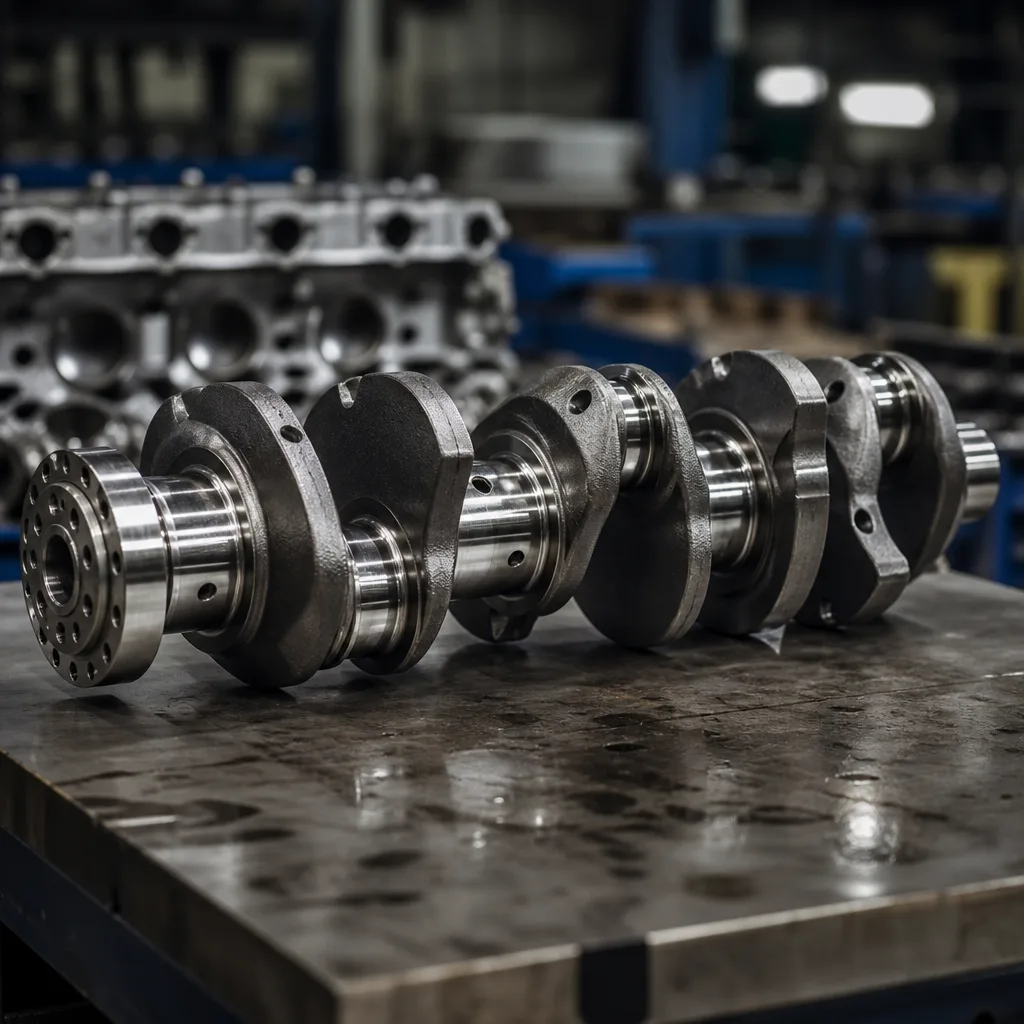
For procurement teams, REACH review in crankshaft sourcing begins with controlled documentation, not geometry. A crankshaft may match the engine drawing and still fail intake if the steel route, surface treatment, machining residues, rust preventive, coatings, or direct-contact packaging substances are not declared against the current REACH framework. This guide explains how to build a sourcing file for reach compliance for crankshaft programs: what to verify before supplier approval, which records to request, how to link those records to production lots, and where dimensional and durability validation remain separate gates. The goal is a traceable file that supports EU-market compliance review and internal audit while protecting fitment, endurance, lubrication, and service reliability. Driventus is an independent aftermarket manufacturer; brand names are referenced for fitment only.
What REACH means for a crankshaft program
REACH (EC) No 1907/2006 is a chemical regulation, not a crankshaft performance standard. It controls substances in articles, mixtures, processing aids, coatings, and materials that may enter the EU supply chain. For crankshafts, buyers need evidence that the finished article and relevant process inputs have been reviewed for restricted substances and substances of very high concern (SVHCs), including the 0.1% weight-by-weight article reporting threshold where applicable.
The review therefore has to reach beyond the forged steel blank. A practical crankshaft file should cover:
- base metal chemistry, alloying elements, residual elements, and heat-number traceability
- forging lubricants, quench media, machining coolants, cutting oils, cleaners, and dewatering fluids where residues may remain
- nitriding, induction hardening support chemistry, black oxide, phosphate layers, e-coat or other coatings, rust preventives, and temporary oils
- plugs, dowel pins, timing targets, balancing slugs, threaded inserts, or other items supplied with the crankshaft
- bags, wraps, VCI papers, desiccants, crate liners, labels, and direct-contact packaging materials used during export
A crankshaft can meet drawing dimensions, hardness, and balance requirements and still be rejected at intake if the supplier cannot show current declarations or lot-level traceability. The procurement file should connect the finished part to a controlled production route: melt or mill certificate, forging batch, heat-treatment batch, machining lot, finishing lot, final inspection release, and packing record. If the same crankshaft is sourced from multiple plants, require the same documentation format from every site so compliance, quality, and audit teams can compare like for like.
For reach compliance for crankshaft sourcing, the question is not just whether the supplier has a certificate. It is whether the declaration covers the exact part number, drawing revision, material grade, finishing route, rust preventive, and shipment configuration being purchased. A statement that names only a broad product family may be insufficient when the buyer is approving a specific engine application for EU-bound supply.
Data to collect from the supplier
Ask for data that lets you verify both chemical status and manufacturing consistency. A useful RFQ should identify the crankshaft by drawing number, revision level, application, sample status, annual volume, and destination market. If the RFQ names an OE 06A107065 cross-reference, request the exact variant and fitment basis rather than a family average or catalogue shorthand.
At minimum, collect:
1. steel grade and standard, such as 42CrMo4, 40Cr, 4340, S45C, or buyer-specified material, with mill certificate reference and heat-number control 2. forging route, normalization or stress relief where used, heat-treatment summary, machining route, and final finishing process 3. main journal and rod journal nominal sizes, tolerance bands, roundness and taper limits, stroke, thrust width, and balance specification 4. hardness range, surface hardness where applicable, nitrided or induction-hardened case depth, and any coating or phosphate specification 5. oil-hole drilling method, chamfering and deburring process, washing method, residual magnetic particle or abrasive control, and cleanliness target 6. lot coding, serialization or batch-marking method, inspection release process, nonconformance handling, and packing method 7. current REACH declaration with issue date, revision date, signer, supplier legal entity, manufacturing site, and covered part scope 8. SVHC statement showing the candidate list version or review date used by the supplier and the article threshold position 9. outsourced process list, including heat treatment, coating, cleaning, balancing, rust prevention, and packaging providers where relevant 10. change-control triggers that require a new declaration, revalidation, sample submission, or buyer notification
A brief supplier answer is usually a risk signal. Buyers should expect the supplier to explain which subprocesses are internal, which are outsourced, and which lot records are retained for each step. That matters because a coating change, a new rust preventive, a replacement machining coolant, or a different VCI packaging material can alter the compliance status even when the steel grade and drawing dimensions are unchanged.
It also helps to separate commercial fitment language from controlled engineering data. A catalogue match may support the sales discussion, but release should be based on the approved drawing, tolerances, process flow, control plan, inspection plan, and compliance documents. When these inputs are collected at RFQ stage, supplier approval is faster and fewer exceptions appear during PPAP-style sample review, customs documentation checks, or customer audit.
Documents and declarations to request
A compliant file is usually a linked document set, not a single certificate. The documents should show who issued the information, which part or process it covers, when it was reviewed, and how it connects to the supplied lot. In crankshaft sourcing, document control matters because chemical risk can sit in a secondary operation or packaging material rather than in the base steel.
| Document | What it should show | Why it matters |
|---|---|---|
| REACH declaration | part number, drawing revision where available, supplier name, manufacturing site, issue date, signature, scope, and revision status | confirms current chemical review for the supplied article and process route |
| SVHC statement | candidate list review date, article threshold position, and reporting status for substances above 0.1% w/w where applicable | shows the supplier has checked regulated substances instead of recycling an outdated statement |
| Material certificate to EN 10204 3.1 | steel chemistry, heat number, mill identity, batch reference, and mechanical or test results where specified | supports raw-material traceability from melt to finished crankshaft |
| Quality certificate | IATF 16949:2016 or ISO 9001:2015 scope, site name, accreditation body, and validity date | shows controlled production, document control, change management, and corrective-action systems |
| Process declaration | forging, heat treatment, nitriding or induction hardening, coating, cleaning, rust prevention, and finishing route | links chemical control to the actual manufacturing route used for the part |
| Packaging declaration | VCI paper, poly bags, crate liners, desiccants, labels, barrier film, and other direct-contact materials | reduces risk from export packaging that touches the crankshaft or transfers residues |
| Inspection report | dimensional results, hardness, runout, balance, visual checks, and surface condition for the approved sample or production lot | confirms the compliance file is attached to a part that also meets the technical release plan |
| Change notification procedure | changes requiring notice, approval timing, responsible contact, and document revision method | prevents silent changes in chemicals, suppliers, process routes, or direct-contact packaging |