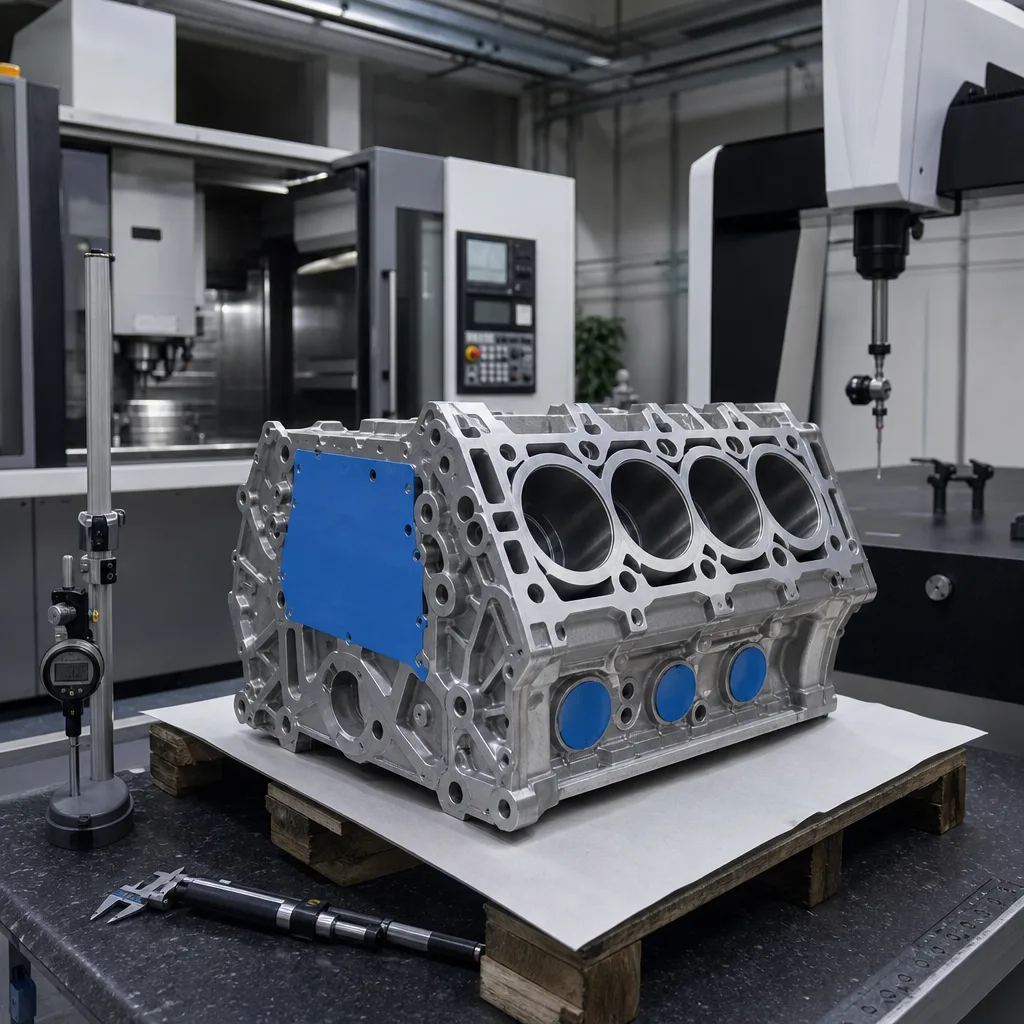
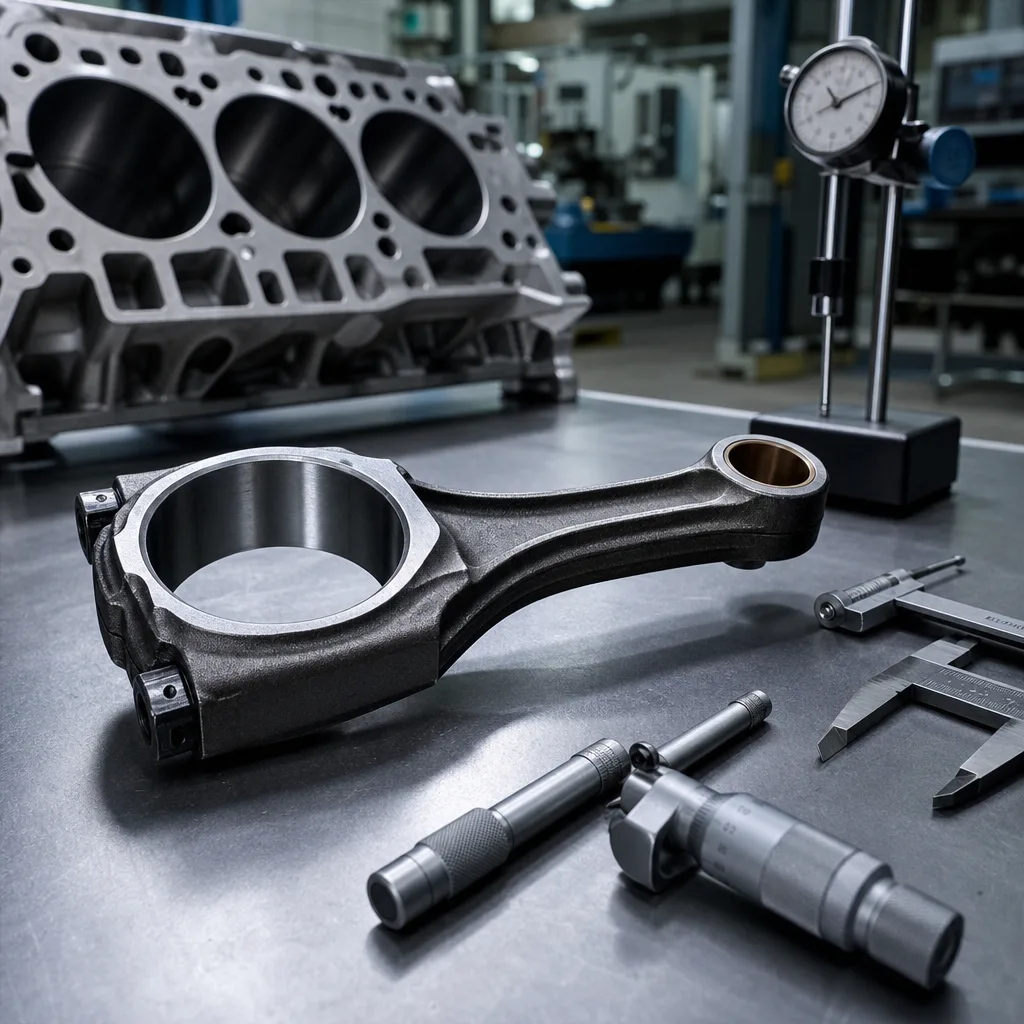
Crankshaft How to Replace: A Practical Workshop Guide
Replacing a crankshaft is a precision engine-rebuild job, not a routine parts swap. The repair only lasts when the failure mode is understood, the block and rotating assembly are measured, and the replacement crankshaft matches the engine’s stroke, main and rod journal diameters, fillet radii, thrust location, flange pattern, oil-hole layout, crank nose, sensor features, and balance specification. A shaft that looks identical can still be wrong if the reluctor indexing, thrust width, counterweight mass, or bearing chamfer compatibility is different. Overlooked checks often show up later as low hot oil pressure, vibration, front or rear seal leaks, thrust bearing wipe, crank sensor faults, or rapid bearing failure after assembly. This guide follows the practical sequence used by rebuild shops and technical purchasing teams: decide whether replacement is justified, remove and inspect the failed parts, verify machining and dimensional requirements, install the crankshaft with documented clearances, and validate the engine before release. For B2B buyers, the same workflow reduces sourcing risk by linking the purchase order to measurable specifications, inspection records, and application data instead of relying on visual matching or a single cross-reference. Driventus is an independent aftermarket manufacturer; brand names are referenced for fitment only. For buyers and rebuilders, the process also supports decisions when comparing OE-equivalent crankshafts, controlled undersize variants, custom machining, and lot-level quality control under IATF 16949:2016 and ISO 9001:2015.
1. Confirm that replacement is actually required
Before you commit to crankshaft how to replace, confirm whether the crankshaft is truly beyond polishing, grinding, or straightening limits. A shaft that looks badly marked after bearing failure may still be recoverable if the main and rod journals clean up within the engine maker’s approved undersize range, the oil holes can be chamfered correctly, and the fillet radii remain compatible with the selected bearings. Replacement becomes the lower-risk route when the shaft is cracked, heat-affected, bent beyond runout limits, worn past available bearing undersizes, or damaged in an area that cannot be machined without reducing fatigue strength.
Typical replacement triggers include deep scoring on main or rod journals, cracked webs or throws, excessive runout measured on V-blocks, blue or black heat discoloration, damaged keyways, fretted flywheel or flexplate flange faces, and a spun bearing that has cut into the journal shoulder or fillet area. Thrust face damage needs its own inspection. If the thrust surface is tapered, grooved, heat-marked, or below minimum width, a bearing set alone will not restore end-play control.
Use this checklist before disassembly or before approving the purchase order:
- Review oil pressure history, warning-light events, hot idle pressure, and previous bearing noise.
- Inspect the sump, oil pickup, pressure relief valve, and oil filter media for bearing overlay, copper/lead material, and ferrous particles.
- Measure crankshaft runout if the engine still turns freely enough to test; many service manuals set limits in the 0.03-0.08 mm range, but the exact value must come from engine data.
- Confirm whether journals can be reground to an available undersize such as 0.25 mm, 0.50 mm, or the manufacturer’s specified repair grade.
- Inspect fillet radius, oil-hole chamfers, thrust faces, and seal tracks, not only journal diameter.
- Confirm whether the engine uses a crankshaft position reluctor, trigger wheel, or machined sensor feature that must match tooth count, air-gap target, and angular indexing.
- Record OE cross-references such as OE 06A107065 only after confirming engine code, production date, transmission pairing, emission calibration, and application data.
Correct the root cause before the replacement crankshaft goes in. A blocked oil gallery, distorted main housing bore, incorrect bearing grade, contaminated oil cooler, clutch release overload, torque converter ballooning, or incorrect assembly torque can destroy the new shaft within minutes of start-up. If the crankshaft is cracked, heat-damaged, outside journal undersize limits, or compromised at the fillet or thrust face, replacement is usually safer than reconditioning.
2. Prepare the parts, tools, and measurement plan
A good installation starts with measurement, not assembly. The replacement crankshaft should match the original stroke, main journal diameter, rod journal diameter, thrust width, thrust bearing location, flange bolt pattern, pilot bore, crank nose design, keyway position, oil-hole layout, counterweight package, and internal or external balance requirement. Engines within the same family can still use different reluctor wheels, flange depths, bearing grades, or thrust locations, so ordering by model name alone creates avoidable fitment risk.
For workshop teams, write the measurement plan before final cleaning begins. For inventory and sourcing teams, that same plan becomes the incoming inspection checklist: confirm the shaft against dimensional drawings, engine application data, inspection reports, and packaging traceability before release to a rebuilder, distributor, or production line.
Minimum tools and checks
- Outside micrometers for main and rod journals, with resolution suitable for 0.01 mm or finer checks
- Dial bore gauge for main housing bores and connecting-rod big ends, set from a calibrated ring or micrometer
- Dial indicator with magnetic base for crankshaft end play and runout
- V-blocks, bench centers, or a crankshaft inspection fixture for runout checks
- Plastigage or equivalent clearance verification method when service procedure allows it
- Straightedge, inspection light, and thread chaser for cap seating, block cleanliness, and fastener holes
- Assembly lube, clean engine oil, calibrated torque wrench, angle gauge, and new torque-to-yield hardware where specified
- Manufacturer service data for torque sequence, bearing grades, end play, side clearance, and bearing oil-clearance ranges
Parts to replace or inspect
- Main bearings and rod bearings in the correct standard, graded, or undersize specification
- Thrust washers or integrated thrust bearing shells matched to thrust location and width
- Rear main seal, front crankshaft seal, wear sleeve, and seal carrier gasket where fitted
- Oil pump, pressure relief valve, pickup screen, oil cooler, piston cooling jets, and gallery plugs
- Timing chain, belt, crank gear, sprockets, guides, tensioner, and damper if wear or contamination is visible
- Connecting rod bolts, main bolts, bedplate bolts, and flywheel/flexplate bolts if specified as single-use
- Flywheel, flexplate, harmonic damper, pulley, crank sensor, and trigger components for cracks, wear, offset, and indexing
Cleanliness is a measurable requirement, not a housekeeping detail. Bearing debris can remain in oil galleries, piston cooling jets, oil coolers, turbocharger feed lines, and the pickup even after the failed crankshaft is removed. If that contamination is left behind, it can enter the new bearing film during pre-lube or first start.
For sourcing, compare dimensional drawings, material specification, hardness range, surface finish requirement, heat-treatment method, oil-hole chamfering, straightness limit, balance tolerance, corrosion protection, and packaging traceability against our catalog. Typical incoming checks include journal diameter, journal taper and ovality, thrust width, flange runout, nose runout, thread condition, reluctor geometry, and seal surface finish. If you need a non-standard stroke, controlled journal undersize, altered reluctor configuration, custom flange, or special balancing requirement, custom manufacturing is the correct route.
3. Remove the old crankshaft and document wear patterns
Strip the engine in a controlled sequence and preserve the evidence. Keep each main cap, rod cap, bearing shell, thrust washer, and fastener identified by cylinder and position so the wear pattern can be read later. Photograph the thrust bearing, oil pickup, bearing shells, damaged journals, crank nose, flange, seal tracks, and sensor wheel before cleaning. These records help separate a crankshaft material or machining issue from an oiling, assembly, contamination, or operating problem.
Follow this order:
1. Disconnect the battery, drain oil, and remove the sump or oil pan. 2. Remove the timing drive, front cover, crank pulley or damper, flywheel or flexplate, and rear seal carrier. 3. Mark main caps and rod caps for orientation if they are not already clearly identified. 4. Loosen rod and main fasteners in the specified sequence to avoid cap distortion or thread damage. 5. Remove rod caps and move connecting rods clear of the crankshaft journals without nicking the journals or cylinder bores. 6. Remove the main bearing caps or bedplate evenly, then lift out the crankshaft with support at both ends. 7. Bag and label bearings by position, then clean the block oil galleries and inspect for embedded debris.
Look for clues that explain the failure, not just the visible damage. A wiped thrust face may indicate excessive end play, clutch release load, torque converter pressure, missing converter clearance, or poor thrust bearing lubrication. A single overheated rod journal can point to a blocked oil supply, misaligned bearing shell, restricted oil-hole feed, or connecting-rod big-end distortion. Repeated wear across multiple journals often means the oil-clearance specification, oil viscosity, line bore, oil pump output, or previous machining quality was wrong.
Also inspect the parts that locate, drive, or load the crankshaft. A failed harmonic damper can create torsional vibration and front seal wear. A cracked flexplate or flywheel can mimic crankshaft knock. A distorted main cap, fretted bedplate, or out-of-round housing bore can pinch a new bearing even when the shaft measures correctly. A damaged crank sensor wheel can create a no-start condition after an otherwise correct mechanical repair. Documenting these details before cleaning helps prevent the rebuild from becoming a parts replacement with the original failure still present.
4. Fit the replacement crankshaft with measured clearances
Trial fit the replacement crankshaft in a cleaned block before final assembly. Install clean bearing shells in their correct positions, lubricate only as directed for the measurement method, and torque the main caps or bedplate to specification using the correct sequence. Check main bearing clearance, crankshaft end play, and rotational drag before adding pistons and rods. Working in stages makes it easier to isolate a tight bearing, cap alignment issue, incorrect thrust component, or dimensional mismatch.
| Item | Typical workshop check | Why it matters |
|---|---|---|
| Main bearing clearance | Micrometer plus bore gauge, or Plastigage where approved | Prevents low oil pressure, bearing wipe, and seizure |
| Rod bearing clearance | Micrometer plus bore gauge after rod big-end inspection | Protects the oil film under combustion load |
| Journal taper and ovality | Micrometer readings at multiple clock positions and locations | Confirms the journal is within grind and polishing limits |
| End play | Dial indicator at the crank nose or flange after thrust bearing installation | Controls thrust wear and clutch or torque converter loads |
| Runout | Dial indicator on center journals or inspection fixture | Confirms the shaft is straight after machining, handling, or shipping |
| Journal surface finish | Specification-based inspection, typically with Ra requirement from drawing or service data | Supports stable bearing film formation and avoids overlay damage |
| Fillet radius and bearing chamfer | Dimensional comparison to bearing design | Prevents edge contact between bearing shell and journal radius |
| Balance match | Assembly record, supplier balance report, or dynamic balance check | Reduces vibration, seal wear, and main bearing stress |
| Sensor or reluctor geometry | Visual and dimensional comparison with original shaft | Prevents no-start, misfire, or timing correlation faults |