engine bearing · 2026-06-19

Engine Bearing Opel Wholesale: Build the Range Without Buying Problems

Engine bearing Opel wholesale buying goes wrong when it is treated as a catalogue-and-price exercise. The real decision is whether a supplier can hold geometry, material, size marking, packaging, and lot traceability steady across repeat orders. Driventus Auto Parts manufactures engine and powertrain components in Taizhou, Zhejiang, serving aftermarket distributors, OEM/Tier-1 programmes, repair chains, and importers across Europe, the UK, North America, Australia, Brazil, and other export markets. For Opel-fit rebuilding ranges, buyers usually need main bearings, connecting rod bearings, thrust washers, and repair oversizes, often across several engine codes that look similar on a spreadsheet but differ at the shell. This article reframes the sourcing process as a buying framework: what to define first, where bearing programmes fail, which specifications matter, what evidence to audit, and how to move from samples to repeat wholesale supply. Driventus is an independent aftermarket manufacturer; Opel and other brand names are referenced only to identify fitment.

Decision framework: define the bearing range before asking for price

Start with range logic, not unit cost. A precise RFQ reduces sample loops, prevents catalogue confusion, and keeps slow-moving mismatched stock out of your warehouse. For Opel-fit bearing programmes, define the engine family, target market, repair oversizes, packaging format, and estimated annual volume before requesting a quotation.

Model names are not enough. The same platform can involve different crankshaft diameters, housing bores, thrust layouts, shell widths, locating lugs, and oil-hole positions across production years or regions. A price based on a vague model description is not a price; it is a risk placeholder.

If your catalogue uses OE-style cross-references, provide them in a neutral fitment format. Separate buyer-supplied references from applications already verified by drawings, samples, or prior sales history. That distinction helps the supplier quote the correct shell geometry rather than a visually similar bearing.

Include this RFQ data:

  • Bearing type: main bearing, connecting rod bearing, camshaft bearing, or thrust washer set
  • Size range: standard, +0.25 mm, +0.50 mm, +0.75 mm, or project-specific repair sizes
  • Engine details: engine codes, displacement, fuel type, production years, and market region
  • Critical geometry: shell width, locating lug design, oil-hole position, thrust face design, and quantity per set
  • Shell structure: steel backing with aluminium-tin lining or copper-lead intermediate layer where specified
  • Surface requirement: overlay, flash plating, polymer-style coating, or lead-free material requirement where applicable
  • Packaging: bulk tray, neutral box, private-label box, kit packaging, barcode labels, and carton layout
  • Compliance documents: material declaration, REACH (EC) No 1907/2006 statement for EU-bound supply, and inspection report

Buyers can review related engine components in our catalog and the engine parts category at /products/engine-components.html before sending a consolidated engine bearing Opel wholesale enquiry.

Failure modes: where bearing sourcing breaks down

Most bearing claims do not begin with dramatic defects. They begin with small misses: the wrong oversize in the right-looking box, an oil hole shifted just enough to matter, a shell that loses crush, or packaging that lets overlays rub during sea freight. By the time the problem reaches a machine shop or repair chain, the cost is no longer the part price. It is rework, downtime, returns, and damaged trust.

The common failure modes are predictable:

  • Wrong application match: similar shells quoted against unverified cross-references
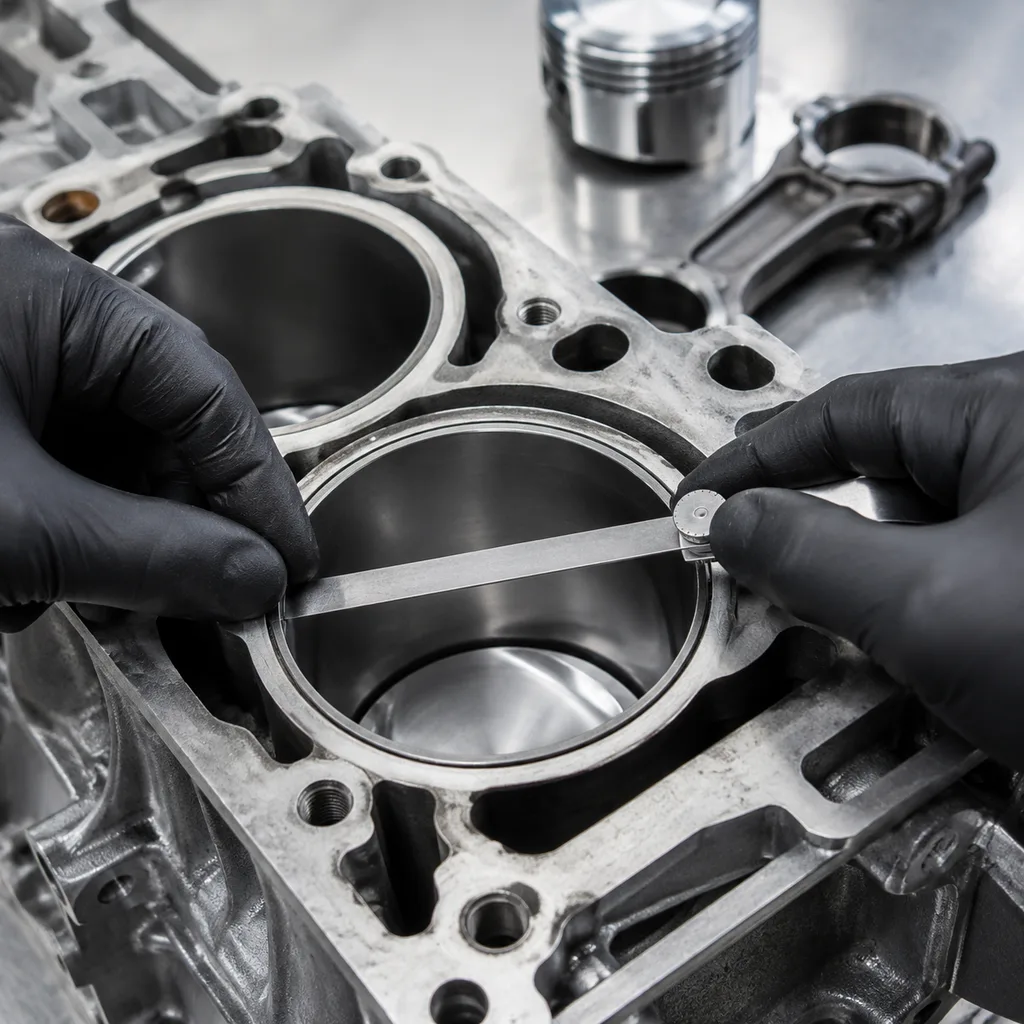
  • Unstable wall thickness: assembled oil clearance falls outside the engine builder’s range
  • Poor crush control: shell movement, spinning, fretting, or housing damage risk increases
  • Mixed size grades: standard and oversize bearings are confused during packing or picking
  • Surface damage: overlays are marked by inadequate internal separation or rough handling
  • Material mismatch: lead-free requirements, lining structure, or coating expectations are not documented
  • Weak traceability: a field issue cannot be isolated to a lot, raw material batch, or shipment

A low unit price cannot compensate for any of these failures. Engine bearings work under mixed lubrication during start-up, high cyclic loading, oil-temperature variation, and tight clearance control. For an engine bearing Opel wholesale programme, the supplier should identify the material system and confirm which dimensions are controlled for each drawing.

Common bearing structures include steel backing for support, a lining or intermediate layer for load capacity, and a surface layer designed for embeddability, conformability, and seizure resistance. Some older applications may still request traditional copper-lead structures. Many EU-oriented programmes require lead-free material declarations aligned with REACH (EC) No 1907/2006.

</tr></thead><tbody> </tbody></table>Where the application is sensitive or the buyer is replacing a discontinued line, drawings and physical samples should be reviewed together. Driventus can evaluate drawing-based requirements through custom manufacturing when a distributor needs a private specification instead of a standard catalogue item.

Audit trail: what proves the factory can repeat the part

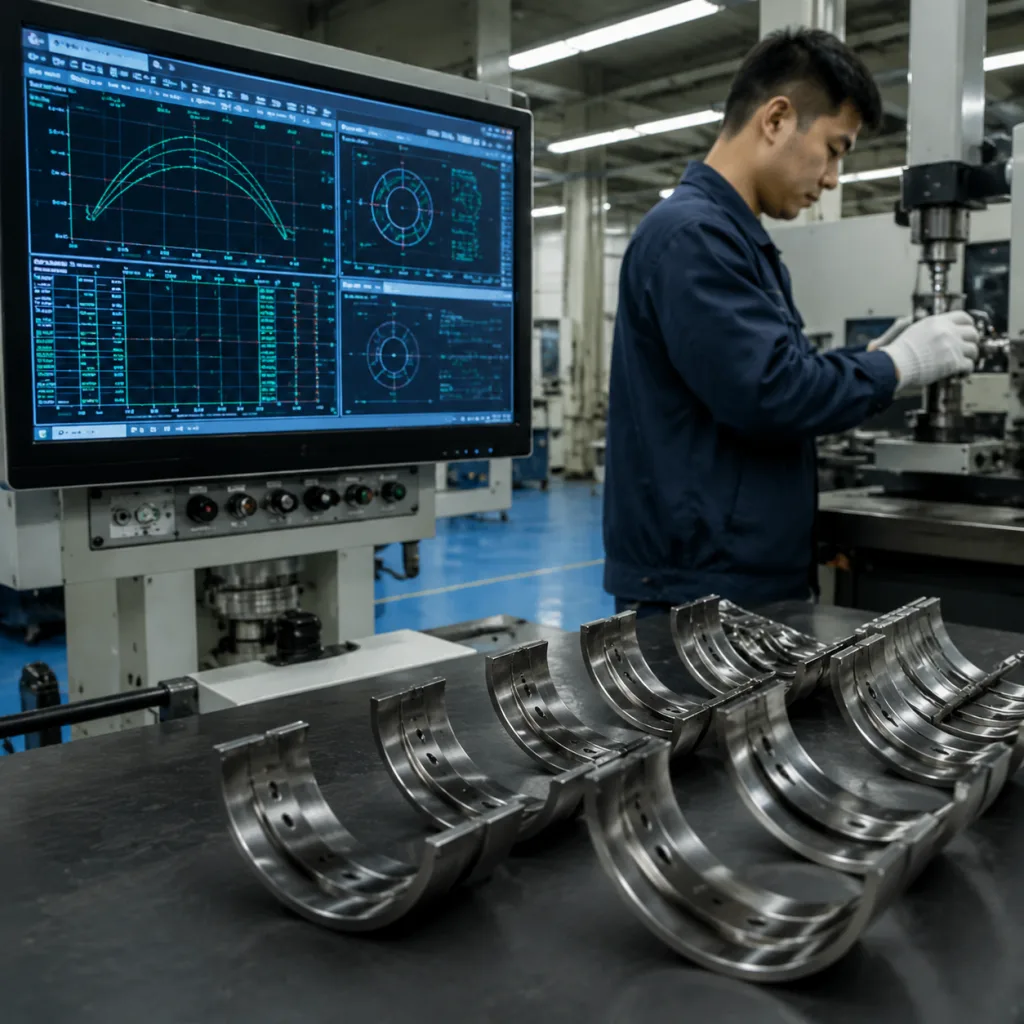
Catalogue breadth is useful only after process control is proven. A bearing supplier should be evaluated by how it controls material, forming, machining, surface treatment, marking, packing, and corrective action. Driventus operates under IATF 16949:2016 and ISO 9001:2015. For wholesale buyers, the practical question is simple: can the factory repeat the approved sample across later batches?

During a factory audit or remote supplier qualification, request evidence for these items:

  • Current IATF 16949:2016 and ISO 9001:2015 certificates with valid scope
  • Incoming inspection records for steel strip, lining materials, plating or coating materials, and surface treatment chemicals
  • Process flow chart from blanking to forming, heat treatment where applicable, machining, washing, inspection, marking, and packing
  • Control plan showing critical characteristics such as wall thickness, crush height, free spread, parting face condition, oil-hole position, and marking
  • Gauge calibration records traceable to recognised measurement systems
  • Operator inspection instructions and in-process check sheets for critical stages
  • PPAP-style documents where your purchasing procedure requires them
  • Nonconforming product procedure and recent corrective action examples
  • Lot traceability from raw material batch to finished carton

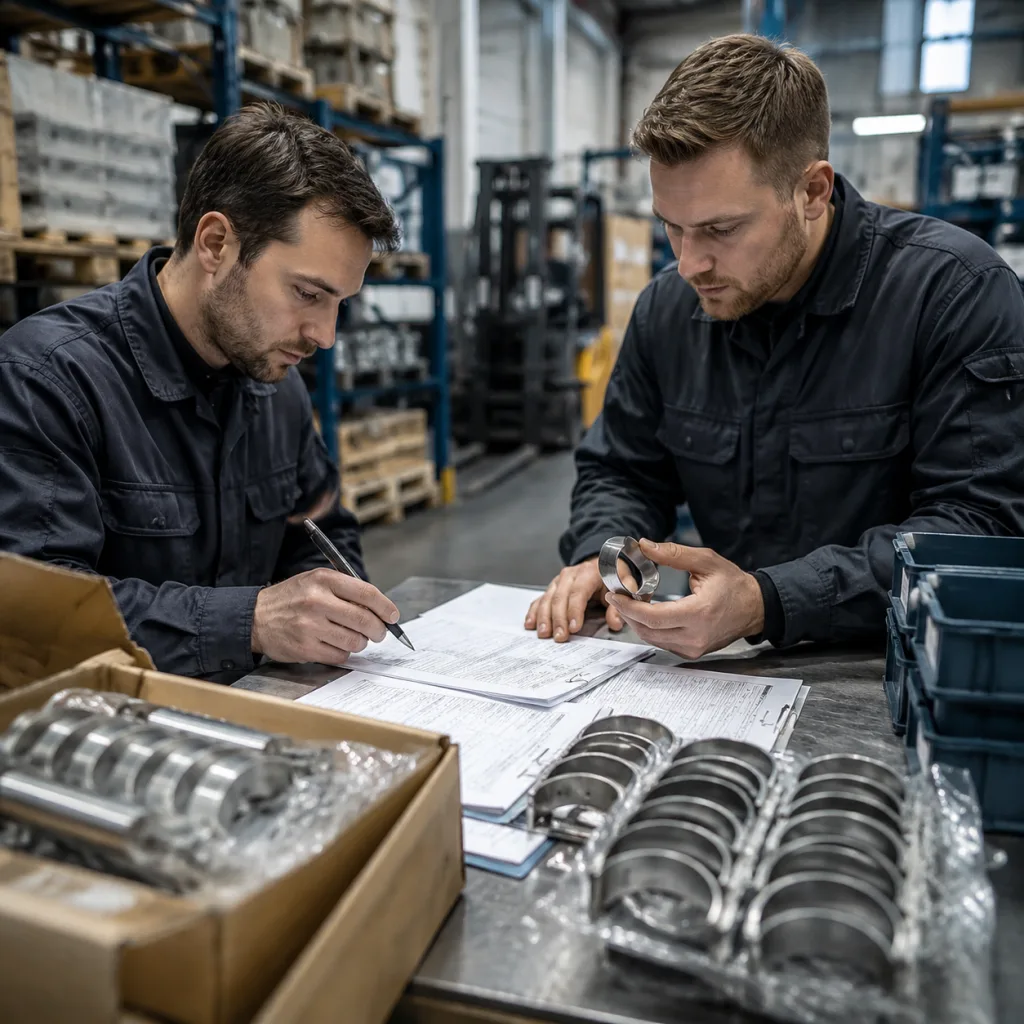
Do not stop at certificates. Ask how the supplier separates standard, +0.25 mm, and +0.50 mm variants during production and packing. Review carton coding, barcode logic, humidity protection, internal separation, and drop resistance. Bearing shells are precision components; poor separation inside the box can mark overlays during sea freight, especially in mixed-pallet shipments with heavier products.

Our quality system page summarises how Driventus manages inspection, documentation, and traceability for export supply.

Audit trail: what proves the factory can repeat the part

Stock scenario: balancing fast movers, oversizes, and MOQ

A distributor rarely buys one bearing number in isolation. The order usually combines fast-moving standard sets with slower repair sizes. Treat these as different stock behaviours. Standard-size main and connecting rod bearings may fit routine production planning, while +0.75 mm sizes, uncommon thrust variants, special coatings, or private markings may require a dedicated run.

Plan at part-number and size-grade level. Total order value is not enough. A mixed order can look attractive on paper while still failing MOQ on the slow sizes that rebuilders actually need.

Typical planning factors include:

  • MOQ by part number and size grade, not only by total order value
  • Minimum production run when a special lining, coating, marking, or carton is required
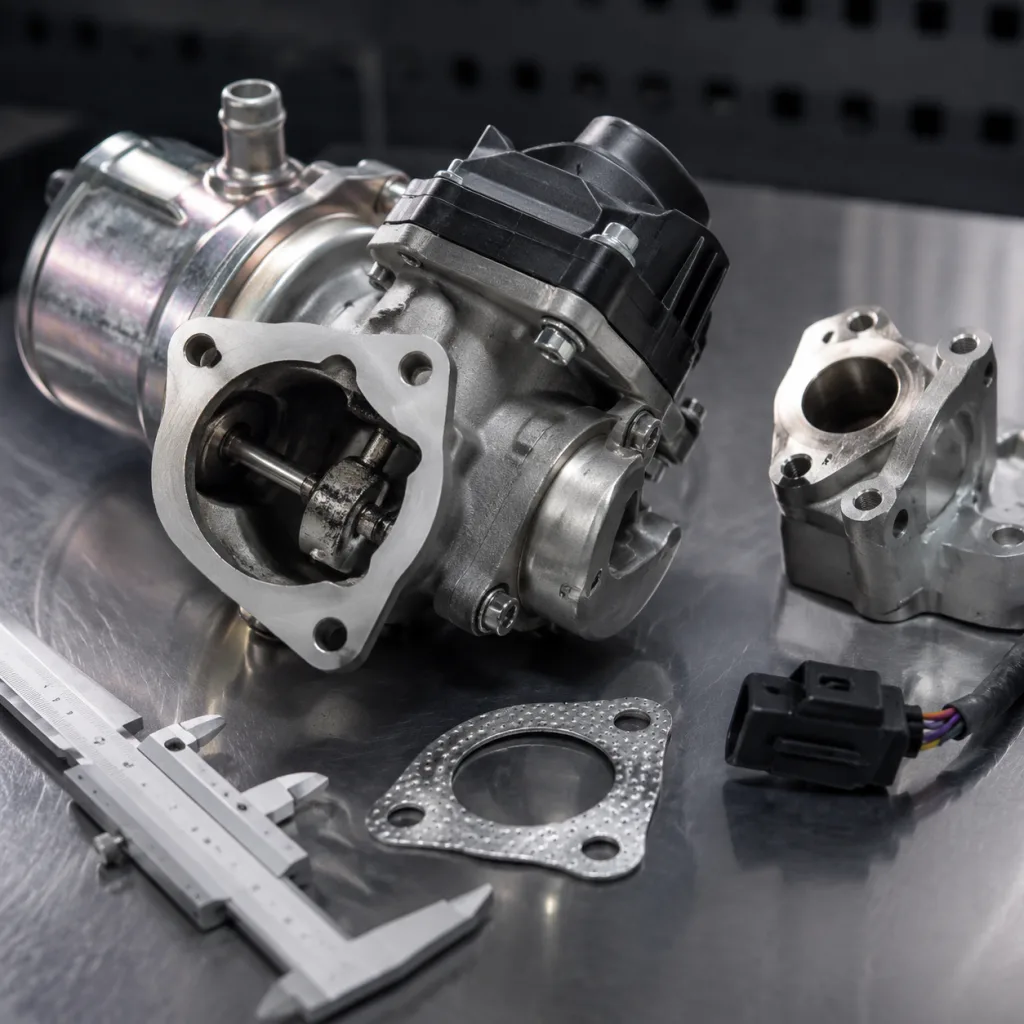
  • Mixed-container consolidation with pistons, gaskets, water pumps, timing parts, and other engine components
  • Sample lead time for dimensional approval, appearance review, and packaging confirmation
  • Mass-production lead time after sample approval, artwork approval, and deposit
  • Safety stock for regional distribution centres and repair-chain replenishment
  • Private-label artwork approval time, barcode verification, and carton print confirmation
  • Import documentation, HS code review, country-of-origin requirements, and shipping-route planning

A practical engine bearing Opel wholesale launch starts with a pilot batch covering the top-moving engine codes and the most common repair oversizes. After sell-through data is available, the range can expand to lower-volume bearings, additional oversizes, and complete overhaul kits.

Market behaviour matters. A rebuilding market with frequent crankshaft grinding may consume more oversize bearings. A general aftermarket channel may need broader coverage in smaller quantities. For repair-chain supply, carton coding and scan-friendly labels can be as important as the bearing itself, because branch-level picking errors create returns, delayed repairs, and technician downtime.

Pre-shipment checklist: records to approve before volume supply

Before repeat orders, build a validation file that is strong enough to confirm dimensional match, material consistency, and batch repeatability. It does not need to be excessive for every low-risk part number. It does need to prevent the familiar problems: wrong fitment, unstable clearance, damaged packaging, mixed size grades, and undocumented material changes.

Request these records before volume supply:

  • Dimensional inspection report with sampling quantity, drawing reference, and gauge method
  • Material certificate or material declaration for backing and lining system
  • Surface condition inspection record, including visible defects, plating condition, or coating appearance where relevant
  • Hardness, bonding, or adhesion test record where specified by drawing or internal control plan
  • Crush height, wall thickness, free spread, and shell width records for critical applications
  • Salt spray or corrosion-protection evidence where the packaging route requires it, using recognised test methods if agreed in the purchase specification
  • Marked sample photos showing part number, size grade, set contents, and orientation features where applicable
  • Packing list with lot numbers, carton quantity, gross weight, and traceability reference
  • Declaration covering REACH (EC) No 1907/2006 for EU-bound supply

Avoid approving a new range from only a product photo and price list. Ask for marked samples, installation orientation notes where relevant, and a cross-reference sheet that separates verified applications from buyer-supplied catalogue references. This is especially important when multiple engines use similar-looking shells with different oil holes, lugs, or thrust positions.

Driventus does not claim approval or endorsement by any vehicle manufacturer. Application and brand references are used only to identify fitment and aftermarket replacement coverage.

Pre-shipment checklist: records to approve before volume supply

Q&A route: how Driventus turns a part list into supply

What can Driventus support? Driventus supplies engine and powertrain components to distributors and industrial customers in more than 60 countries. For Opel-fit bearing ranges, support can include catalogue matching, neutral packaging, private-label packaging, consolidated shipment, and drawing-based development for selected parts.

What should the buyer send first? Send the part list, engine codes, size grades, annual forecast, and packaging requirements. If available, add samples, drawings, buyer inspection reports, or current supplier problems. These details help align wall thickness, shell width, locating lug geometry, oil-hole position, thrust face design, marking, and set configuration.

What happens after the enquiry? Driventus checks catalogue availability and identifies items requiring tooling, sample comparison, or technical confirmation. Samples are produced or supplied from current stock for buyer inspection. Dimensional results, fitment notes, markings, and packaging feedback are confirmed before mass production.

How is repeat supply managed? Production batches are inspected, packed, and shipped with the agreed documents. Reorder planning can then be reviewed against sell-through data, regional demand, and repair-size consumption.

This route is designed for distributors that need repeatable aftermarket supply without vehicle-manufacturer endorsement claims. It also helps purchasing teams build a structured bearing range instead of buying isolated part numbers with no long-term coverage plan. To start a technical review, share your target applications, required sizes, and expected order structure through request a quote.

Frequently asked questions

Send engine code, bearing type, size grade, quantity, packaging format, target market, and any OE-style cross-reference already used in your catalogue. Samples or drawings help confirm wall thickness, oil-hole position, locating lug design, shell width, and thrust arrangement.

Yes. Driventus can support neutral packaging or buyer-approved private-label packaging for wholesale orders. Artwork, label format, barcode structure, carton strength, and internal protection should be confirmed before mass production to reduce receiving and warehouse errors.

No. Driventus is an independent aftermarket manufacturer; Opel and other brand names are referenced for fitment only. The company supplies aftermarket engine components manufactured under its own quality controls and does not claim approval or endorsement by any vehicle manufacturer.

If you are building an engine bearing Opel wholesale range, send your part list, annual forecast, size requirements, and packaging plan for review. Contact Driventus at /contact.html

Request a Quote
Sourcing item Typical procurement requirement Why it matters
Steel backing thicknessControlled per drawing and batch inspection planSupports shell rigidity and housing retention
Bearing wall thicknessMeasured at defined gauge pointsDetermines oil clearance after assembly
Crush heightControlled within drawing toleranceHelps prevent shell movement, spinning, and fretting
Free spreadVerified before packingSupports retention during installation
Parting face and edge conditionChecked visually and dimensionallyReduces assembly interference and local loading
Oil-hole and groove positionConfirmed against drawing or sampleMaintains correct lubrication path
Overlay or lining conditionVisual and thickness inspection where specifiedAffects conformability, fatigue life, and seizure resistance
Repair oversizesClearly marked on shell and boxReduces warehouse, installer, and warranty errors