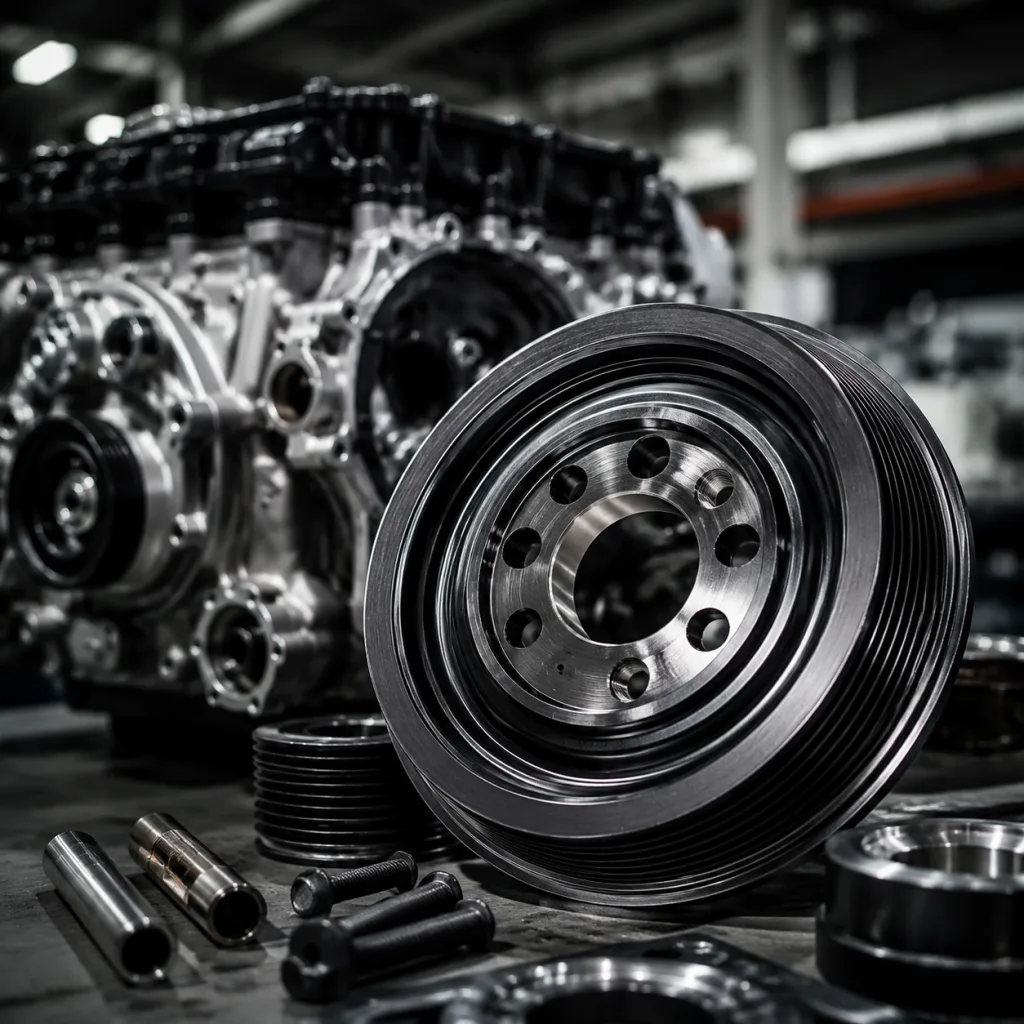
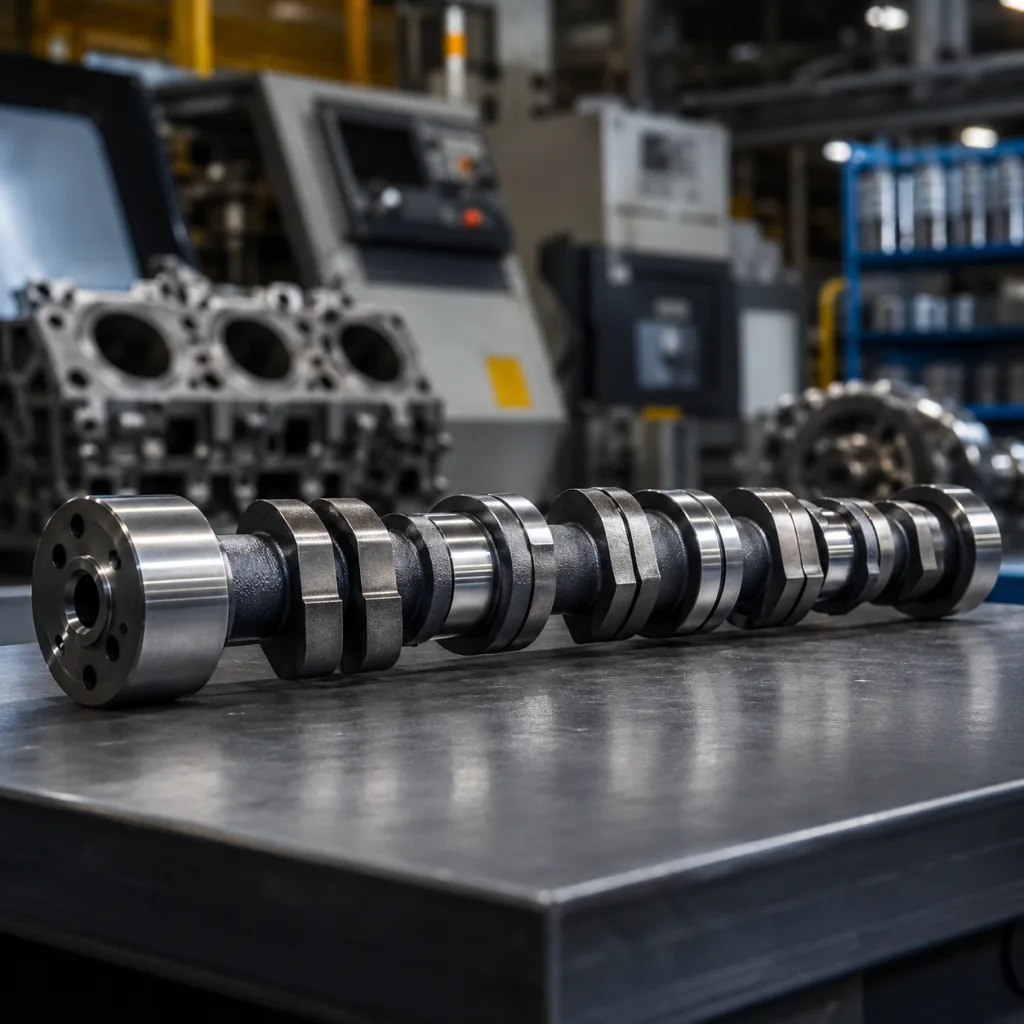
Crankshaft Pulley Mercedes-Benz Manufacturer China: Sourcing Guide
Buyers searching for a crankshaft pulley Mercedes-Benz manufacturer China usually need more than a unit-price quote. They need a supplier that can confirm OE cross-reference accuracy, belt-line offset, groove geometry, bore and hub dimensions, damping construction, material traceability, and repeat-order control across multiple Mercedes-Benz engine families. On Mercedes-Benz applications, the crankshaft pulley may be a solid accessory-drive pulley, a decoupled pulley, or a damper-integrated harmonic balancer designed to control crankshaft torsional vibration. If concentricity, axial offset, elastomer hardness, bonding strength, or surface protection are off, the result can be belt squeal, edge wear, tensioner oscillation, accessory bearing load, and downstream warranty claims.
Driventus supplies crankshaft pulleys for aftermarket distribution, OEM and Tier-1 sourcing, and repair-network replenishment. We manufacture in Taizhou, Zhejiang, and export to 60+ countries with IATF 16949:2016 and ISO 9001:2015 systems in place. Driventus is an independent aftermarket manufacturer; Mercedes-Benz and other brand names are referenced only for fitment identification. For procurement teams, the practical questions are lead time, MOQ, OE cross-reference control, dimensional tolerance, validation evidence, packing accuracy, and whether the supplier can reproduce the approved specification after the first shipment. This guide explains what to verify before placing an order and how to compare Chinese pulley manufacturers on measurable sourcing criteria.
What buyers should verify before sourcing
For a Mercedes-Benz application, the pulley must match the engine family, belt geometry, axial offset, bore, hub interface, and damping design. Do not buy on outside diameter alone. Two pulleys can look similar in photos but differ in groove count, PK belt profile, effective belt diameter, hub depth, bolt-circle diameter, elastomer layout, or belt-line position. A few millimetres of offset error can move the belt out of plane and overload the tensioner, idlers, alternator overrunning pulley, or A/C compressor bearing.
Verify these points in the RFQ:
- OE cross-reference format, such as OE 11203... or OE 11237... when applicable
- Vehicle platform, model year range, engine code, fuel type, and market region
- Pulley type: solid, decoupled, or damper-integrated harmonic balancer
- Grooves: count, PK pitch/profile, included angle, and effective belt diameter
- Outer diameter, effective belt diameter, axial offset, and belt-line datum
- Bore diameter, keyway or locating feature, bolt pattern, bolt-circle diameter, and fastening method
- Hub height, face width, mounting-face flatness, and contact-surface dimensions
- Axial run-out and radial run-out limits, preferably measured from defined datums
- Dynamic balance requirement for larger or damper-integrated designs
- Material: cast iron, steel, aluminium, or elastomer-bonded metal assembly
- Elastomer specification for bonded damper pulleys, including hardness range and ageing requirement where applicable
- Surface protection: phosphate, E-coat, black oxide, zinc finish, paint, or other coating with salt-spray target if required
- Packaging, label, barcode, country-of-origin marking, and traceability requirements
For procurement, the important issue is not whether a sample fits a bench fixture. It is whether the part remains stable after thermal cycling, belt load, crankshaft vibration, and repeated accessory-drive operation. A supplier should be able to state measured tolerances on a drawing and repeat them in production. Ask for a drawing or inspection sheet that identifies critical-to-fit dimensions, measurement datums, and acceptable limits before approving a sample. If you are building out a broader engine-parts programme, review the catalog and engine components pages for the quickest part-family starting point.
Why pulley quality affects belt drive durability
The crankshaft pulley transfers engine torque into the accessory drive. It drives components such as the alternator, water pump on some layouts, power-steering pump where applicable, air-conditioning compressor, and auxiliary systems. If concentricity or groove geometry is poor, the belt can track incorrectly, generate noise, and accelerate wear on the belt ribs, tensioner arm, idler pulleys, alternator clutch, and compressor bearings. If a damper pulley uses an unstable elastomer bond, the outer ring can shift, wobble, separate, or change belt alignment under heat and load.
Typical failure drivers
1. Rubber bond degradation from heat, oil exposure, ozone, and ageing 2. Machining drift on bore, hub face, groove profile, mounting face, or run-out 3. Material fatigue under cyclic torsion, repeated acceleration, and start-stop operation 4. Incorrect axial offset, groove alignment, or effective belt diameter 5. Inadequate corrosion protection on exposed steel or cast surfaces 6. Poor dynamic balance on larger or damper-integrated pulleys 7. Incorrect elastomer hardness, compression set, or damping characteristics 8. Uncontrolled casting porosity, burrs, or sharp groove edges that damage belt ribs
A sourcing team should ask for dimensional inspection records and, where relevant, dynamic balance data. For pulleys that include damping elements, validation should include heat ageing, torsional endurance, bonding checks, hardness verification, and visual inspection after simulated operating stress. Common procurement checks include radial and axial run-out inspection, belt-groove gauge verification, hub-face flatness, coating thickness or corrosion-resistance evidence, and batch-level traceability. For metal-only pulleys, machining accuracy, material consistency, deburring, and surface finish are the main controls. We build parts to support aftermarket service intervals, so repeatability matters more than isolated sample performance. Buyers who compare suppliers on test documentation, tolerance discipline, and batch control usually reduce warranty exposure later in the programme.
Driventus manufacturing controls and certifications
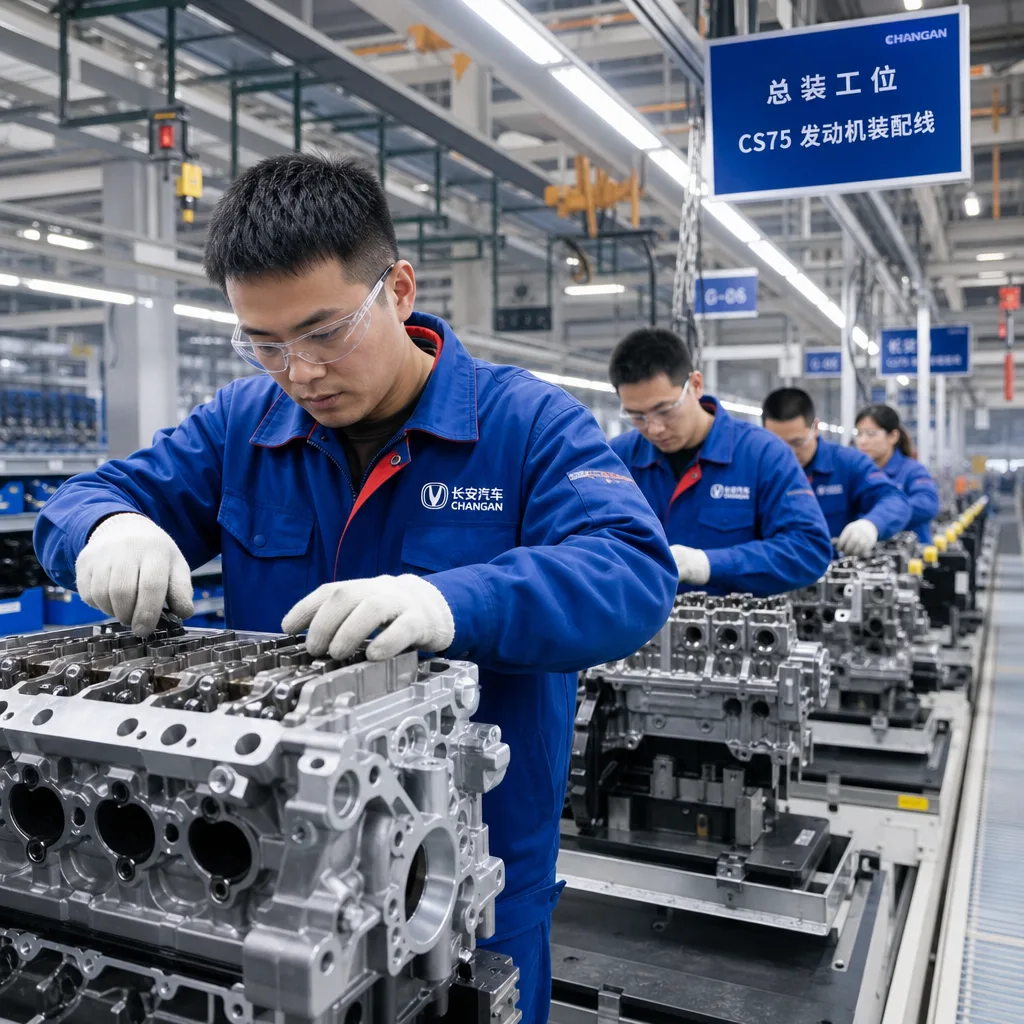
Driventus operates as a vertically integrated manufacturer in Taizhou, Zhejiang. We control machining, assembly, inspection, and packing inside a managed production flow, which helps keep OE cross-reference data, approved drawings, inspection records, and shipment traceability aligned from sample approval through repeat orders. For crankshaft pulley programmes, this matters because a small drawing change, datum mismatch, coating substitution, or undocumented elastomer change can affect belt alignment, noise performance, and service life.
| Control item | What buyers receive | ||
|---|---|---|---|
| Quality system | IATF 16949:2016 and ISO 9001:2015 aligned processes | ||
| Material traceability | Lot tracking by batch, work order, and production record | ||
| Incoming inspection | Material, dimensional, coating, and visual verification before use | ||
| Machining control | Bore, hub face, groove profile, mounting surface, diameter, and offset checks | ||
| Assembly control | Elastomer bonding, ring alignment, press or fixture-controlled assembly where applicable | ||
| In-process inspection | Bore, groove, face, diameter, offset, run-out, and appearance checks | ||
| Final inspection | Functional, dimensional, visual, label, and packing release before shipment | ||
| Packing control | Label, carton, barcode, pallet, and export packing verification | ||
| Export support | Documentation support for EU, UK, US, Canada, Australia, and Brazil shipments |
| Buyer type | Primary requirement | Common risk | Driventus response |
|---|---|---|---|
| Aftermarket distributor | MOQ, availability, packaging, catalogue coverage | Mixed part quality, weak cross-reference control, or inconsistent labels | Controlled batch production, OE cross-reference review, carton rules, and label traceability |
| OEM / Tier-1 | Specification stability and document support | Unmanaged engineering change or undocumented material substitution | Documented revision control, sample approval, inspection records, and specification alignment |
| Repair chain | Fast replenishment and installation reliability | Stock-outs, wrong-fit parts, or noisy belt-drive operation after installation | Forecast-based planning, repeat-order support, part-number verification, and fitment review |
| Private-label brand | Brand presentation and consistent carton data | Packaging mismatch, barcode errors, or mixed artwork across shipments | Custom label formats, carton rules, packing photos, and controlled private-label workflow |