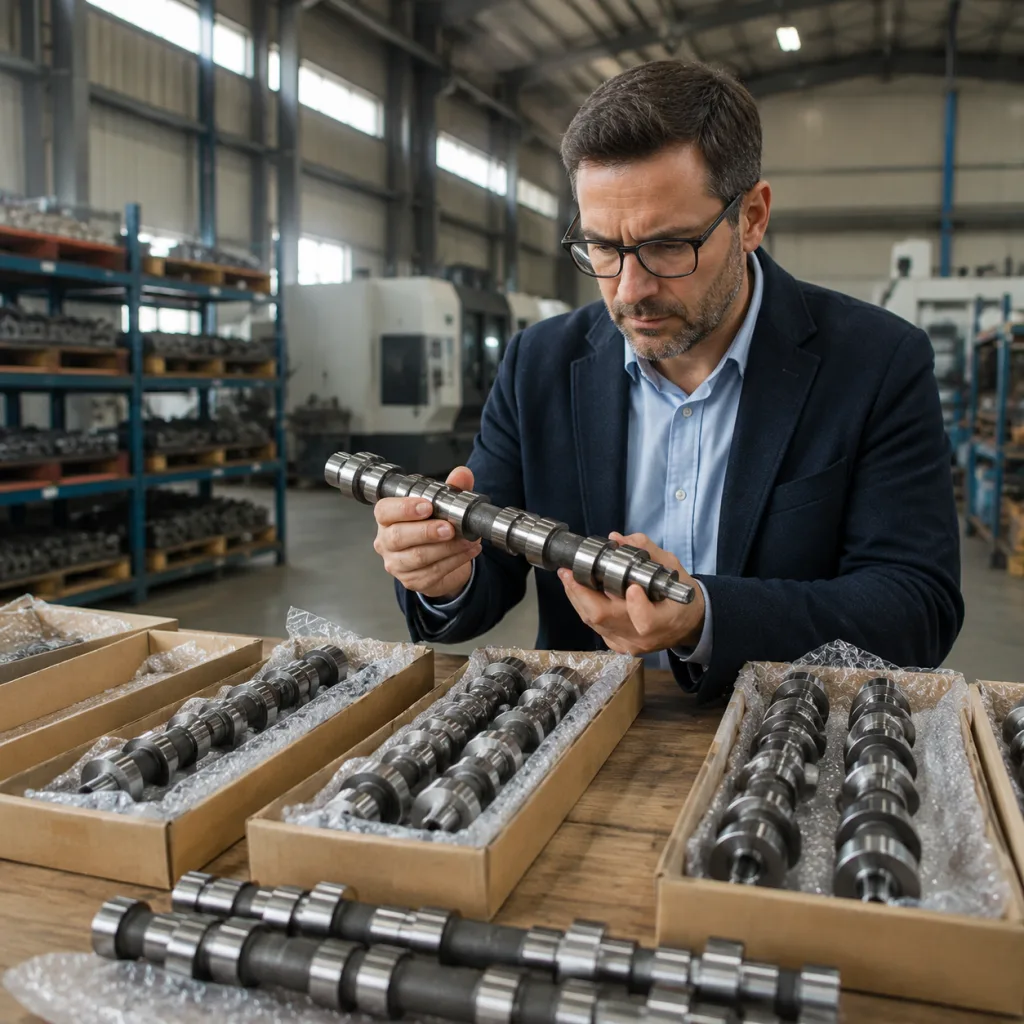
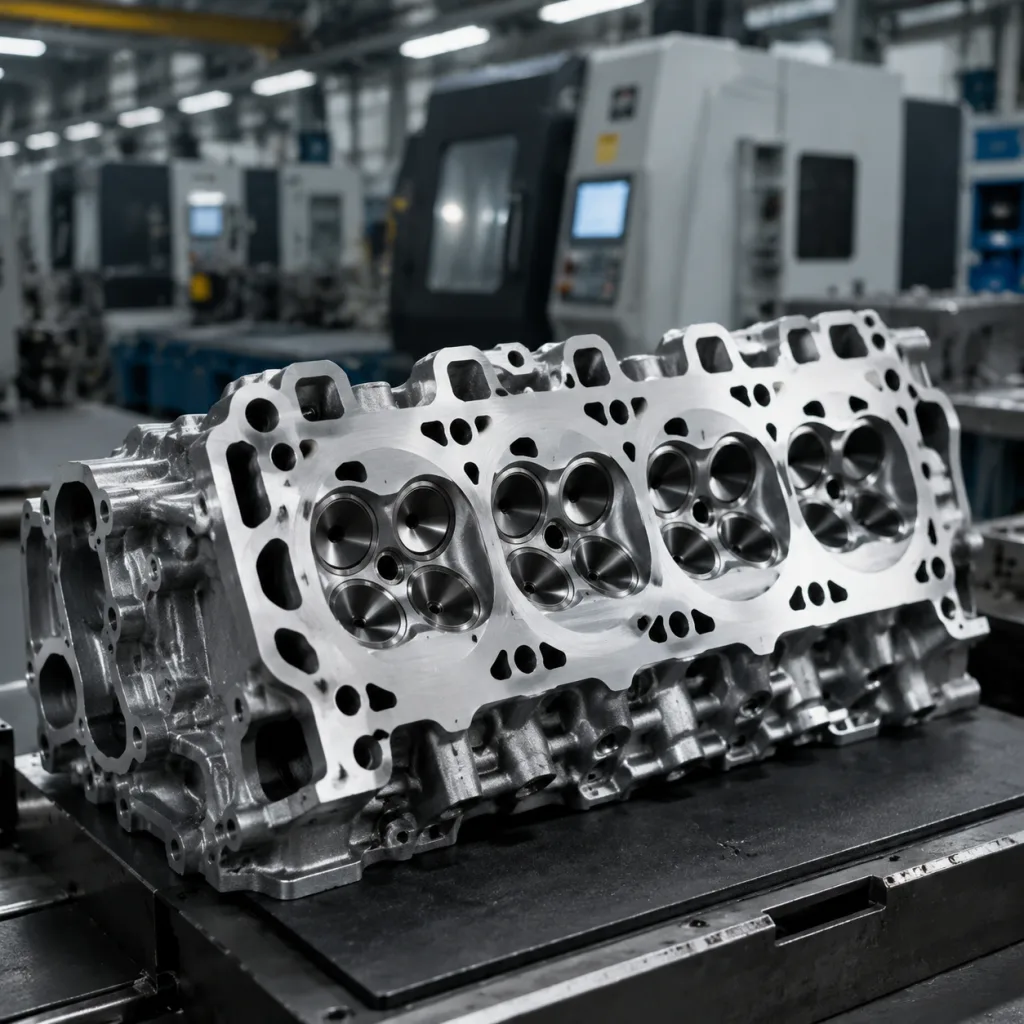
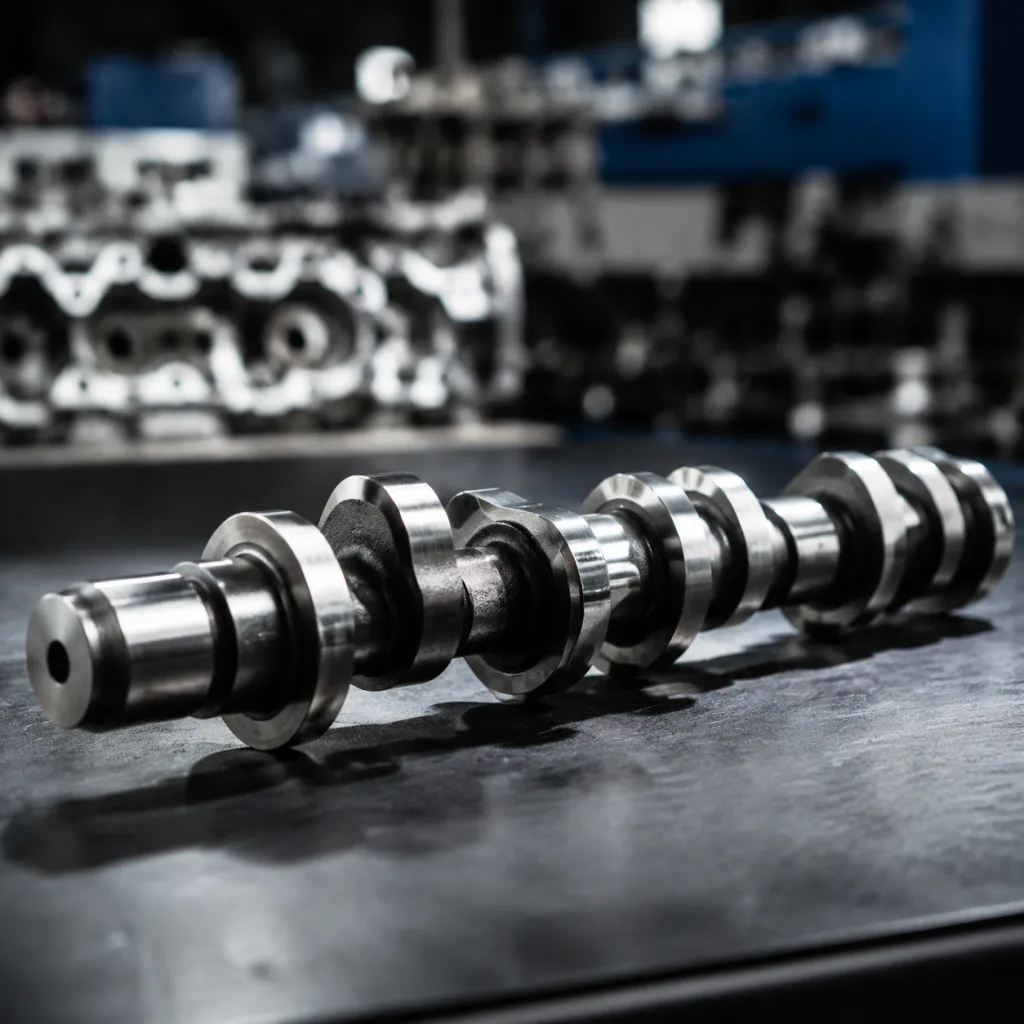
Minimum order quantity for camshaft purchases is usually driven by setup time, alloy choice, heat treatment, inspection effort, and packaging. The real sourcing question is not just how many pieces a supplier wants, but whether that minimum order quantity for camshaft supply fits your demand pattern, inventory policy, and validation plan. A camshaft program can be a stocked replacement part, a private-label line, or a custom profile for a specific engine family, and each one carries a different commercial structure. Driventus is an independent aftermarket manufacturer; brand names are referenced for fitment only. This guide breaks down the main MOQ drivers, the failure points buyers miss, and the checks that matter before you approve a pilot order or a repeat run.
Where MOQ really comes from
MOQ is rarely a sales tactic pulled out of thin air. In camshaft manufacturing, the floor usually reflects a simple question: how much production cost must be recovered before the line makes sense?
Typical drivers include:
Machine setup and changeover time, especially for lobe grinding and journal finishing
Heat-treatment batch size and furnace utilization
First-article inspection, CMM checks, and hardness verification
Packaging, palletization, and export paperwork
Scrap risk if the profile, material, or finish is new
That is why a stocked aftermarket camshaft may be available in lots of 20 to 100 pieces, while a private-label or custom profile may start at 100 to 300 pieces or more. The minimum order quantity for camshaft sourcing should track your real demand, but it will always reflect the supplier’s cost to set up, verify, and ship the part.
What breaks a quote
A camshaft quote often looks competitive until the hidden items appear. The fastest way to get burned is to compare unit price alone.
Watch for these failure modes:
Failure mode
What it looks like
Why it matters
MOQ hidden by finish
One price for bare shaft, another for coated or boxed units
The quote changes once packaging is finalized
Tooling split out late
Setup fee appears after the first sample round
First-order cash outlay jumps unexpectedly
Lead time ambiguity
Supplier says 45 days, but starts counting after deposit and drawing approval
Launch dates slip without warning
Sample pricing mismatch
Pilot lot is priced like a one-time engineering job
Trial economics become misleading
Packaging assumptions
Carton quantity or label format is not fixed
Rework happens at shipment stage
</tr></thead><tbody> </tbody></table>If a supplier will not state whether the MOQ is per part number, per finish, or per packaging variant, pause the quote. That is usually where re-quotes start. For the minimum order quantity for camshaft procurement, clarity matters more than a slightly lower headline price.
Compare quotes like a buyer, not a shopper
The right comparison is a decision sheet, not a price list. Put MOQ, piece price, tooling, freight, sample cost, and lead time on the same page.
Use this structure when reviewing offers:
Cost element
Ask this
What you learn
Tooling or NRE
Is it included, amortized, or separate?
True first-order cost
MOQ
Is the floor per SKU, finish, or packaging spec?
Whether the quote is usable
Unit pricing
Where are the tier breaks at 50, 100, 250, 500, or 1,000 pieces?
Real volume economics
Lead time
Does it start after approval, payment, or sample sign-off?
Actual launch timing
Sample cost
Is the pilot refundable against volume?
Trial risk
</tr></thead><tbody> </tbody></table>A useful negotiation move is to ask for two prices: one for pilot quantity and one for repeat supply. For example, 25 to 50 pieces may carry a higher unit cost because setup is concentrated there, while 200 or 500 pieces should reprice lower once the process is stable. If tooling is included, ask for amortization in writing so the minimum order quantity for camshaft supply is tied to a payback schedule, not a vague sales floor.
Choose the right sourcing model
MOQ changes with the sourcing model. The more engineering, traceability, and risk the supplier carries, the higher the floor usually goes.
Stocked aftermarket replacement: 20 to 50 pieces is common when the part is already finished and in inventory.
Private-label distribution: 50 to 150 pieces is typical when labels, cartons, and barcodes are customized.
OEM or Tier-1 style supply: 200 pieces and up is common because traceability and process control add cost.
Custom engineering program: 300 to 1,000 pieces may be justified when the supplier funds design, fixtures, gauges, and validation.
The cleanest structure is often a pilot run followed by a committed repeat schedule. You can request 25 to 50 pieces for validation, then 100 to 200 pieces after fitment approval. That keeps inventory exposure under control and still gives the supplier enough volume to recover setup cost. If the program is seasonal, push for quarterly call-offs instead of a single annual lot so you do not overbuy slow-moving variants.
Spec checks that prevent expensive mistakes
A camshaft is not just a fitment reference. If the spec is vague, the supply chain gets expensive fast.
Check these details before you commit:
Journal diameter tolerance: often ±0.01 to ±0.03 mm on precision-ground journals
Runout limit: commonly 0.02 to 0.05 mm max across the shaft
Lobe lift variation: keep to the drawing callout, often ±0.02 to ±0.05 mm
Surface hardness: frequently 55 to 65 HRC, depending on material and process
Case depth or hardening depth: specify the minimum effective depth in mm
Surface finish: require a measurable Ra value on ground contact surfaces where applicable
For a new program, ask for a first-article report with CMM data, hardness map, and runout measurement before you approve the full lot. For OE cross-reference work, confirm the thrust face, timing keyway, and sensor trigger features are included in the reference drawing. Ask for documentation aligned to IATF 16949:2016 and ISO 9001:2015, and confirm material and chemical compliance where relevant to REACH (EC) No 1907/2006. If durability is part of the approval, align the test method with the program requirement instead of assuming a generic validation package will cover it.
How Driventus structures MOQ requests
Driventus structures MOQ around the stage of the buyer’s program, not just the part number. That means a validation order, a repeat replenishment order, and a custom-engineered run can all be quoted differently.
Catalogue parts: pilot quantities of 25 to 50 pieces are often possible if the SKU is already in the active production queue.
Repeat supply: MOQ can be aligned to forecast release schedules, often with 60- to 90-day cover windows and tiered pricing at 100, 250, or 500 pieces.
Custom manufacturing: drawings, OE 06A107065-style cross-references where provided, and validation requirements are reviewed before quoting, then tooling, gauges, and sample approval are separated if needed.
Export programs: pallet height, carton counts, label fields, and consolidations can be coordinated for EU, UK, US, Canada, Australia, and Brazil.
The most useful quote is the one that separates tooling, samples, production, and freight lead times. That makes it easier to decide whether the minimum order quantity for camshaft sourcing should be accepted, negotiated, or split into a pilot and a later release.
The fastest quotes come from buyers who send a complete brief the first time. If the supplier has to guess at the engine, profile, or packaging, MOQ will usually rise.
Use this checklist:
1. Confirm engine family, displacement, valve train configuration, and whether the camshaft is SOHC or DOHC. 2. Provide an OE cross-reference, sample number, or drawing revision so the supplier does not quote the wrong lobe profile. 3. State annual demand, quarterly forecast, target inventory cover, and whether you need safety stock at the factory or in your warehouse. 4. Specify finish requirements, material grade, heat treatment, sensor trigger features, and any anti-corrosion coating. 5. Ask for sample lead time, tooling lead time, MOQ, and repeat-order lead time separately. 6. Request inspection records for hardness, runout, lobe lift, journal diameter, and any critical sensor or thrust dimensions. 7. Confirm packaging, carton quantity, pallet height, barcode format, and label content for your warehouse. 8. Ask whether price changes at 50, 100, 250, and 500 pieces so you can see the break-even point for the minimum order quantity for camshaft purchasing.
A tight brief reduces back-and-forth and helps the supplier quote the right lot size on the first pass.
Frequently asked questions
MOQ depends on setup time, material batch size, heat treatment capacity, inspection cost, and whether tooling or gauges are included. A stocked replacement part can have a low MOQ, while a custom profile usually needs a higher lot to cover engineering, validation, and first-article inspection.
Yes, many suppliers support a pilot lot for fitment and demand testing. Ask whether the sample is a pre-production part or a production part, whether the price is refundable against volume, and which inspection data will ship with it.
Ask for material specification, inspection report, lead time, MOQ, packaging details, and certification status. For controlled programmes, request evidence aligned to IATF 16949:2016 and ISO 9001:2015.
If you are comparing camshaft MOQ, lead time, and validation requirements, send your drawing, sample, or cross-reference to Driventus and [request a quote](/contact.html).