Loose Timing Chain vs Timing Belt: Diagnosis and Next Steps
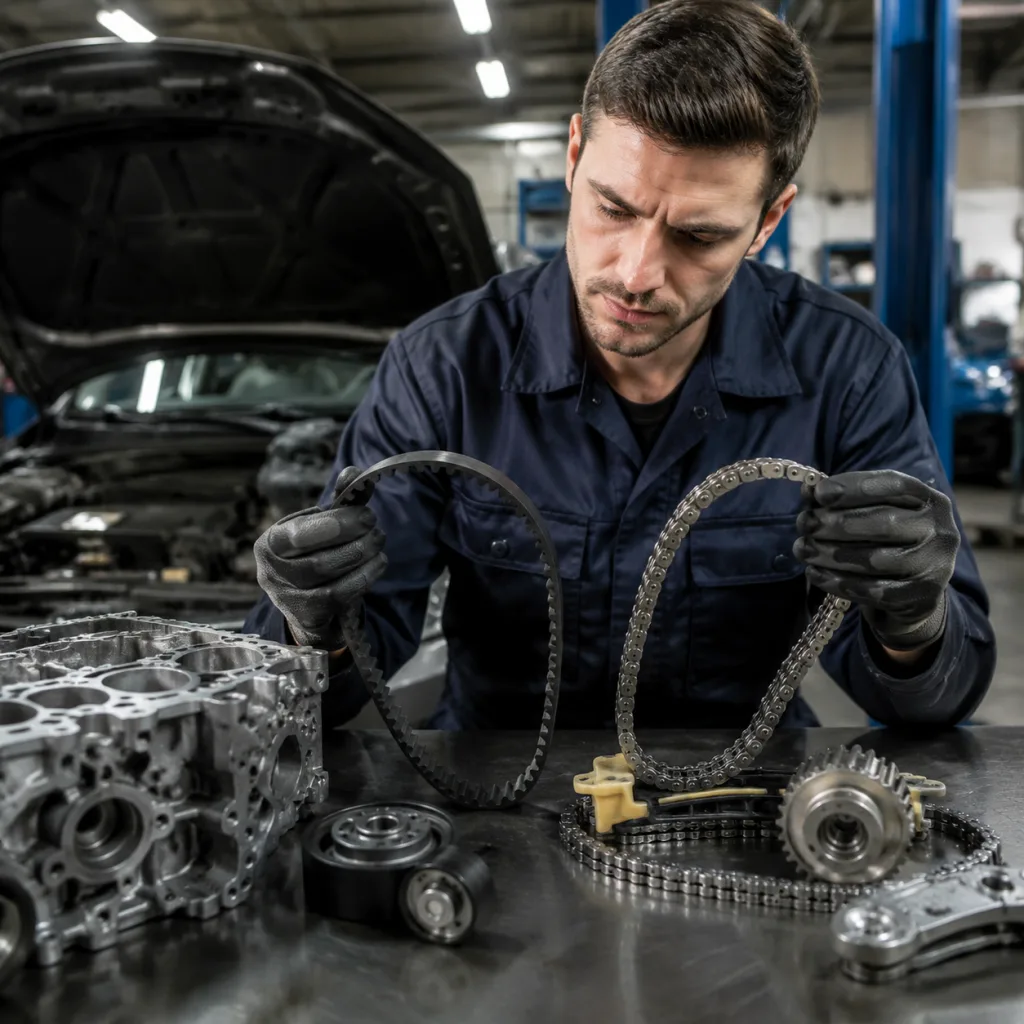
A loose timing chain timing belt complaint usually starts with noise, rough running, or a fault code, then turns into a sourcing decision: which component has lost control of valve timing, and what should be replaced with it. For procurement teams and workshop buyers, the priority is not guesswork. It is to identify whether the engine uses a chain or a belt, confirm the failure mode, and select a replacement that matches OE dimensions, tooth profile, tensioner interface, and service interval requirements. Driventus is an independent aftermarket manufacturer; brand names are referenced for fitment only. Our timing components are produced under IATF 16949:2016 and ISO 9001:2015 controls, with material and dimensional checks tied to application data. This article explains the most common symptoms, inspection points, and what to specify when ordering a belt kit or related engine components through our catalog.
Chain or belt? Start with the failure mode
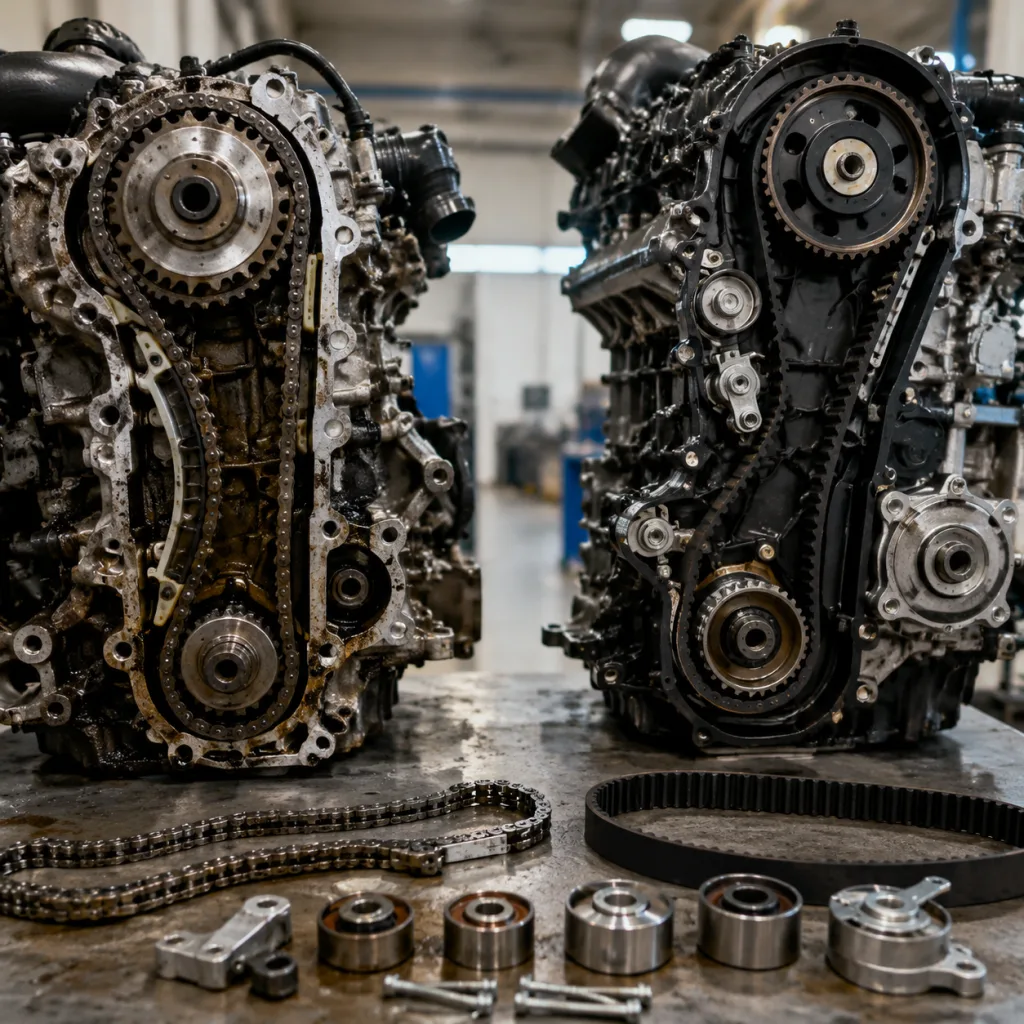
A customer may describe a "loose timing chain timing belt" issue when the engine actually has one of three conditions: excessive slack in a chain drive, belt tension loss, or valve-timing noise that is being misdiagnosed as a front-cover problem. The symptom is not the diagnosis. The first task is to identify the drive type from the engine code, service data, or removed parts.
Typical field reports include:
Cold-start rattling for 1 to 3 seconds
Intermittent cam/crank correlation faults
Rough idle after a belt service
Loss of power at higher load
Visible belt edge wear, glazing, or cord exposure
Chain whip marks on guides or cover contact
If the engine uses a belt, slack often points to a worn tensioner, idler, pump pulley, or incorrect installation. If it uses a chain, slack usually comes from stretch, guide wear, hydraulic tensioner bleed-down, or oil contamination. The replacement decision should follow inspection, not the noise description alone.
What the symptoms are really telling you
Use a symptom-to-cause approach before ordering parts. It reduces comebacks and avoids replacing the wrong assembly.
Symptom
Likely cause
First check
Start-up rattle
Chain stretch or weak tensioner
Measure tensioner travel and guide wear
Whining noise
Over-tight belt or pulley bearing wear
Spin idlers and water pump by hand
Misfire at idle
Timing drift or tooth jump
Verify cam/crank correlation with scan tool
Oil contamination
Front seal leak
Inspect belt surface and cover area
Uneven belt wear
Misaligned pulley
Check sprocket and accessory alignment
</tr></thead><tbody> </tbody></table>For belt-driven systems, inspect the full kit, not only the belt. That includes the tensioner, idlers, water pump where specified, seals, and fasteners if the OE procedure calls for one-time-use hardware. For chain systems, inspect rails, guides, hydraulic tensioner function, and oil service history. A poor oil change record can materially shorten chain and tensioner life.
Inspection checklist before you order
Start with the engine cold and the ignition isolated. Remove the upper cover or inspection access point and look for visible wear patterns. If the belt is cracked, glazed, frayed, or contaminated, replacement is straightforward. If the belt looks intact but tension is unstable, check the tensioner indicator position and the idler bearings.
Inspection checklist
Confirm engine code and timing drive type
Record belt width, tooth count, and profile where applicable
Check tensioner preload position and movement
Inspect idler and water pump bearing noise
Look for oil, coolant, or fuel contamination
Check crank pulley wobble and mounting torque history
Verify no tooth jump marks on cam and crank references
On chain systems, measure slack against service data if available and inspect for elongated links, worn sprocket teeth, and guide grooving. If the engine has a hydraulic tensioner, confirm oil pressure supply and check for varnish or sludge. In both systems, document whether the failure is isolated or secondary to another issue such as a leaking seal or seized pulley.
What should be replaced together
The safest sourcing practice is to match the complete wear set to the failure mode. That lowers repeat labour and helps protect warranty exposure.
Recommended replacement logic:
Timing belt only: use only when OE data explicitly allows it and surrounding components test sound
Belt kit: preferred for most service jobs because tensioner and idlers age with the belt
Belt kit plus water pump: suitable when the pump is driven by the timing system or hidden behind the cover
Chain set: replace chain, guides, tensioner, and sprockets when wear is confirmed
Seals and hardware: replace when the service manual specifies one-time-use parts
For buyers comparing suppliers, ask for dimensional match data, tooth profile confirmation, material specification, and application traceability. Driventus supports timing components under our quality system, with controlled incoming inspection and process verification. If your programme needs private label or drawing-based parts, our custom manufacturing service covers application-specific requirements.
RFQ details that prevent bad fitment
Procurement should focus on fit, repeatability, and documentation. A low price that creates installation variation is not a saving.
Specify the following at RFQ stage:
Engine code and OE cross-reference
Belt tooth count, width, pitch, and profile
Tensioner and idler inclusion
Packaging and labelling requirements
Material and rubber compound targets
Validation expectations such as thermal cycling, endurance, and contamination resistance
Where fitment is critical, ask for dimensional samples and sample approval before release. For belt applications, validation may reference published methods and programme-specific tests aligned to SAE J2527, REACH (EC) No 1907/2006, and customer durability requirements. For timing chain related assemblies, the same discipline applies to sprocket geometry, guide material, and tensioner response.
You can review our catalog and related engine components for current coverage. For pricing, lead time, or OE 06A107065-style cross-references when available from your application list, request a quote.
Frequently asked questions
Check the engine code, service data, and front cover layout. Chain drives usually rattle at start-up and show guide wear. Belt drives usually show cracking, glazing, or tensioner movement outside the normal range.
For most service jobs, the full kit is the lower-risk option because tensioners and idlers age with the belt. Replace only the belt when OE service data clearly allows it and the remaining components pass inspection.
No. Driventus is an independent aftermarket manufacturer; brand names are referenced for fitment only. Parts are supplied to application data and controlled under IATF 16949:2016 and ISO 9001:2015 systems.
If you need an OE-matched timing belt or related engine component set, send your application data and target quantity through our contact page: /contact.html