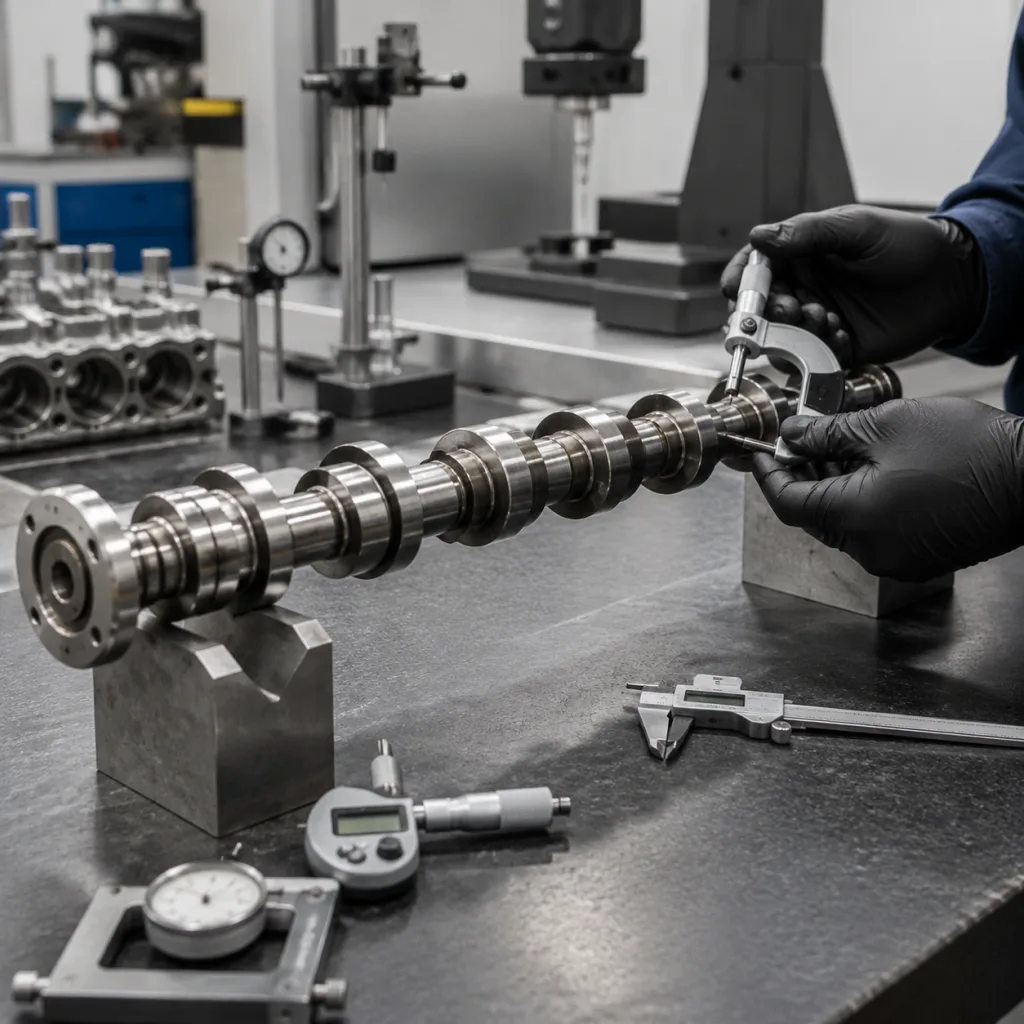
Intake manifold gasket dimensions are not limited to length, width, and bolt-hole spacing. For procurement teams, the critical data also includes port geometry, bead height, compressed thickness, fastener clearance, material stack-up, and tolerance control across production lots. A gasket that looks correct in a catalogue image can still fail fitment checks if mould shrinkage, coating build, or carrier alignment is not controlled. Driventus manufactures intake manifold gaskets for aftermarket distribution, private-label programmes, and OE-service supply chains from Taizhou, Zhejiang. This article outlines the dimensional information buyers should request before approval, how tolerances are typically controlled, and which validation documents help reduce incoming inspection risk. Driventus is an independent aftermarket manufacturer; brand names are referenced for fitment only.
Core Dimensions to Confirm Before Sourcing
For intake manifold gaskets, dimensional approval should be based on a controlled drawing rather than only a sample or application list. A useful sourcing file normally includes a 2D drawing, 3D scan or CAD reference where available, material specification, inspection plan, and packaging requirement.
Dimension item
Why it matters
Typical control method
Overall length and width
Confirms envelope fit in the manifold recess or cylinder head face
Vernier, optical comparator, CMM for critical profiles
Port centre-to-centre spacing
Prevents port masking and vacuum leakage
CMM or fixture gauge
Port opening profile
Controls airflow path and sealing land coverage
Profile projector or 3D scan comparison
Bolt-hole diameter and pitch
Allows correct fastener clearance without gasket distortion
Go/no-go pins and CMM
Uncompressed thickness
Affects clamp load and manifold seating position
Digital thickness gauge under defined load
Compressed thickness
Indicates sealing behaviour after torque and heat exposure
Compression fixture test
Bead height or sealing rib height
Determines local contact stress
Height gauge or optical measurement
Carrier flatness
Reduces assembly rocking and leakage risk
Surface plate inspection
</tr></thead><tbody> </tbody></table>Buyers comparing suppliers through our catalog should ask whether the published application reference is backed by measured dimensions, production tooling records, and lot-level inspection data.
Material Stack-Up and Thickness Control
The same gasket outline can perform differently depending on material construction. Common intake manifold gasket designs include moulded rubber, rubber-coated metal, fibre composite, multi-layer steel with elastomer coating, and plastic or metal carrier gaskets with bonded sealing lips.
A practical specification should define:
Base material: NBR, HNBR, FKM, EPDM, ACM, fibre composite, stainless steel, aluminium, or engineered plastic carrier.
Hardness range for elastomer sealing sections, normally reported in Shore A.
Uncompressed thickness and tolerance, for example 1.20 mm +/- 0.08 mm where the design allows.
Compression set requirement after heat ageing, especially for engines exposed to high manifold temperatures.
Coating type and coating thickness range where rubber-coated metal is used.
Surface finish requirement on metal carriers or inserts.
Operating media exposure: air, fuel vapour, oil mist, exhaust gas recirculation residue, coolant proximity, or crankcase ventilation contamination.
For EU and UK importers, material declarations should support REACH (EC) No 1907/2006 review. Where the gasket is supplied into a wider emissions-related repair environment, dimensional stability can also affect compliance outcomes linked to ECE R-83 vehicle emissions performance, although the gasket itself is not approved under that regulation.
Dimensional Tolerances and Inspection Frequency
A buyer should avoid a single blanket tolerance for the full gasket. Non-critical outer edges can usually allow wider variation than bolt-hole pitch, port alignment, or sealing rib geometry. The supplier drawing should separate critical-to-fit and critical-to-seal characteristics.
Feature group
Example tolerance approach
Procurement note
Bolt-hole position
Tightest positional control on datum system
Prevents assembly stress and misalignment
Port profile
Profile tolerance against CAD or master sample
Controls sealing land and airflow obstruction
Bead height
Narrow height tolerance by cavity
Controls clamp load distribution
Outer contour
Moderate tolerance if no location function
Avoid over-specifying cosmetic edges
Thickness
Defined under measurement load
Prevents misleading free-state readings
Flatness
Applied to carrier or moulded frame
Important for plastic manifolds
</tr></thead><tbody> </tbody></table>Inspection frequency should match risk. New tooling, tool repair, material change, or cavity addition should trigger increased measurement. For stable serial production, buyers often request first-article inspection, then batch inspection with retained samples. Driventus operates under IATF 16949:2016 and ISO 9001:2015 aligned controls; buyers can review our quality system when preparing supplier audits.
Drawing Data Needed for RFQ and PPAP Review
A complete RFQ should make the intended verification path clear. If the buyer only provides an application list, the supplier may have to work from reverse engineering, existing tooling, or a physical reference sample. That can be acceptable for aftermarket programmes, but the approval record must identify the source.
Useful RFQ inputs include:
Target vehicle or engine family, with brand names for fitment reference only.
OE cross-reference format where available, such as OE 06A107065 or OE 11251... only when already used in the buyer's system.
Sample quantity required for dimensional, assembly, and endurance checks.
Annual volume, order frequency, and packaging format.
Drawing revision control and change-notification requirements.
Required documents: material certificate, inspection report, IMDS or material declaration if applicable, control plan, and capability study for critical dimensions.
Labelling requirements, including private-label cartons or neutral export packaging.
For programmes requiring non-standard geometry, tooling transfer, or a modified bead profile, custom manufacturing is usually more appropriate than catalogue sourcing. It allows the drawing, material, cavity layout, and validation plan to be agreed before tooling release.
Validation Tests Linked to Gasket Geometry
Dimensional data should be linked to performance testing. A gasket can meet free-state dimensions and still lose sealing force after thermal cycling or compression ageing. Procurement teams should request tests that match the engine environment and expected warranty risk.
Common validation checks include:
Initial dimensional inspection against drawing and approved sample.
Compression-deflection test to understand clamp load response.
Compression set after heat ageing.
Thermal cycling between low and high service-relevant temperatures.
Oil mist, fuel vapour, coolant, or EGR condensate exposure where relevant.
Vacuum leakage or pressure decay test on representative fixture.
Bolt torque simulation on mating manifold and cylinder head surfaces.
Visual inspection for flash, voids, coating breaks, delamination, and carrier distortion.
Brake friction standards such as SAE J2527 are not applicable to intake manifold gaskets, but they illustrate why buyers should cite only relevant standards. For gaskets, the stronger evidence is a controlled drawing, defined material standard or internal specification, validated process controls, and repeatable leak testing.
Purchasing Checklist for Dimension-Sensitive Programmes
Before approving a supplier, category buyers and sourcing engineers should align the specification, inspection plan, and commercial assumptions. This reduces disputes after first shipment and makes incoming inspection faster.
Checkpoint
Buyer action
Supplier evidence
Application confirmation
Confirm engine code and fitment market
Application list and sample match report
Dimension control
Identify critical features
Drawing with tolerances and inspection method
Material compliance
Define rubber, carrier, and coating needs
Material certificate and REACH declaration where required
Process capability
Select critical dimensions for study
Cpk report or first-article data
Packaging
Prevent deformation in transport
Tray, sleeve, bag, or carton specification
Change control
Agree notification rules
Revision history and change request process
</tr></thead><tbody> </tbody></table>For aftermarket distributors, a stable gasket programme depends on repeatability more than a single good sample. For OEM and Tier-1 purchasing teams, the same logic applies with stricter documentation, traceability, and process approval. Buyers can request a quote with drawings, samples, or an application list for review.
Frequently asked questions
The most important dimensions are port profile, bolt-hole pitch, sealing bead height, uncompressed thickness, compressed thickness, and flatness. Overall length and width matter, but leakage risk is usually driven by alignment and sealing pressure around each port.
Yes. Driventus can reverse engineer a sample, create a drawing, measure critical features, and propose tooling for aftermarket supply. For higher-risk programmes, buyer-approved drawings and validation criteria are recommended before production release.
Aftermarket gaskets are normally supplied against fitment and performance requirements, not vehicle manufacturer endorsement. Driventus is an independent aftermarket manufacturer; brand names are referenced for fitment only.
Share drawings, samples, target volumes, or application lists with our engineering team for a dimension review and quotation. Start a sourcing discussion at /contact.html