Camshaft for Citroen C3 Replacement: Buyer Verification Guide
A camshaft for Citroen C3 replacement should be specified by engine data, not by model name alone. Across C3 production years, different petrol and diesel engines can use different valve-train layouts, drive arrangements, sensor features, journal sizes, and lobe profiles. For B2B procurement teams, the real question is whether the part is dimensionally correct, metallurgically stable, consistently produced, and supported by inspection evidence. Driventus supplies aftermarket camshafts for passenger-car engine rebuild and replacement programmes, with controlled machining, dimensional inspection, and traceable production records. Driventus is an independent aftermarket manufacturer; Citroen and other brand names are referenced only to identify fitment. When comparing suppliers, prioritise the data that affects installation and service life: engine-code matching, hardness, runout, lobe lift, journal concentricity, surface finish, corrosion protection, packaging, and validation against samples or drawings. The sections below outline the checks buyers should complete before approving a replacement camshaft for stock, fleet maintenance, or customer supply.
What to confirm before ordering
The Citroen C3 badge covers multiple engine families, so the first step is to identify the exact application. A visually similar shaft may still differ in drive-end design, sensor pattern, bearing journal layout, or valve timing profile. Before placing an order, confirm the technical identifiers that determine fit.
Key checks include:
Engine code from the registration document, service record, VIN lookup, or old component
Fuel type, displacement, and production year range
Number of valves per cylinder and single-cam or dual-cam layout
Camshaft drive type, such as belt, chain, or gear-driven arrangement
Sensor trigger features, flats, slots, keyways, or phasing elements
Bearing journal count, journal diameter, thrust face design, and overall length
Where the old camshaft is available, direct dimensional comparison remains the most reliable route. Buyers can compare a retained sample with a controlled drawing or a production sample from our catalog. For mixed fleets, uncertain OE references, or private-label programmes, custom manufacturing can be used to match the required geometry, material route, and inspection standard before volume supply begins.
Dimensional checks that affect fit
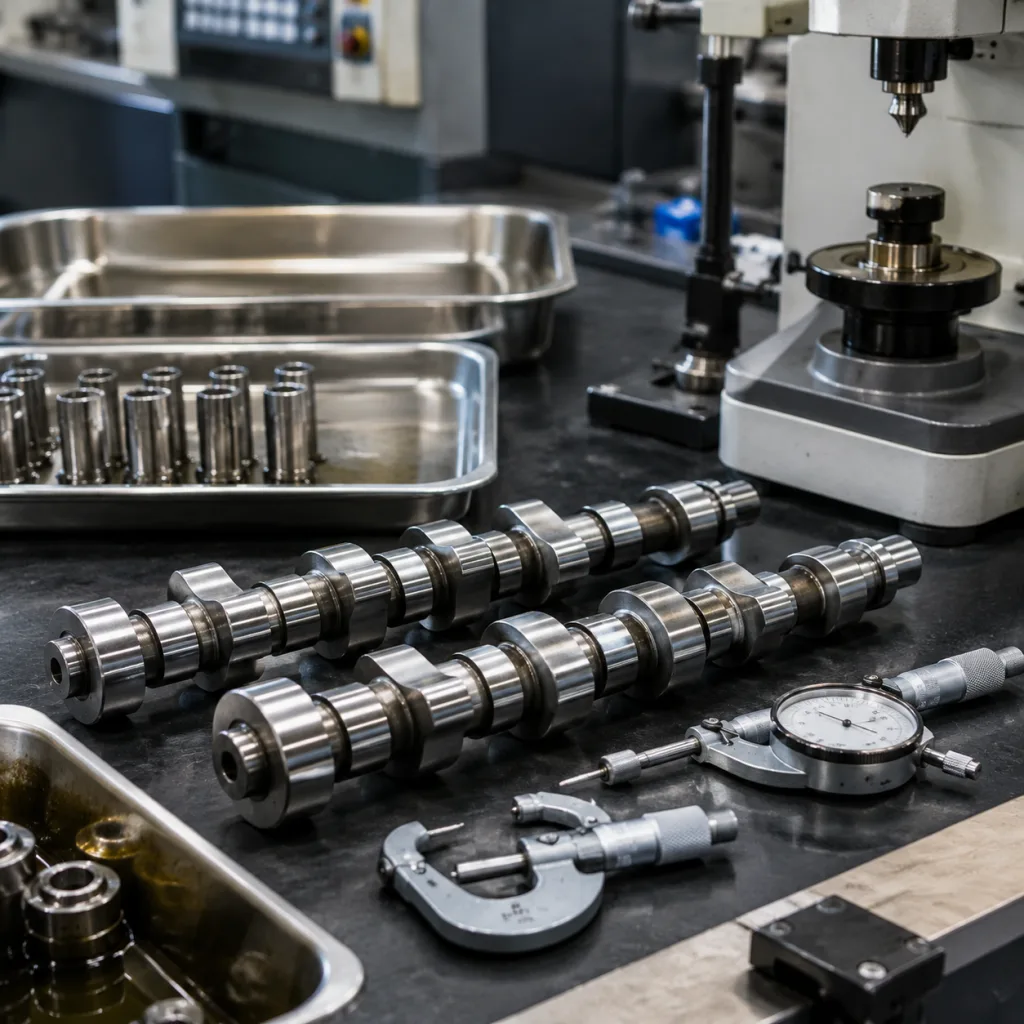
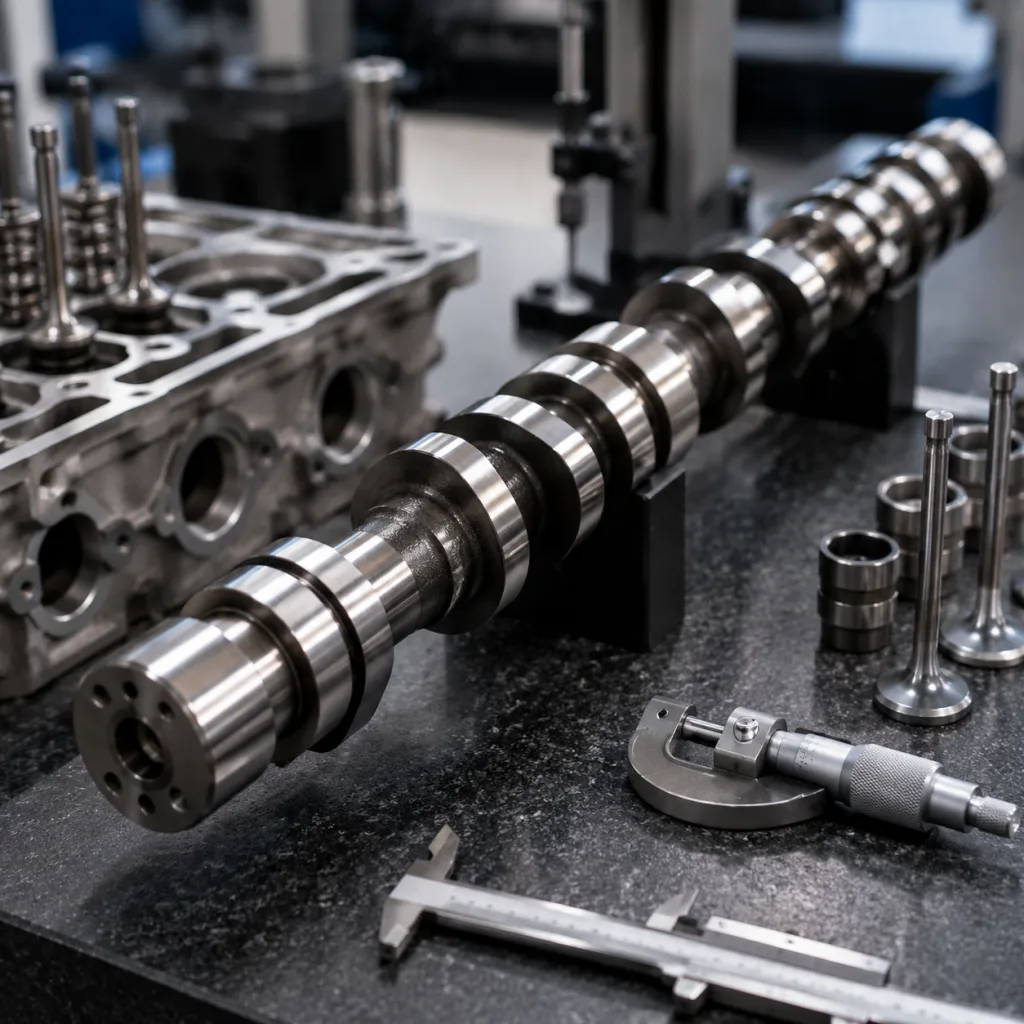
A replacement camshaft can appear correct in photos yet still create installation problems if a critical dimension is outside tolerance. The most important measurements are the ones that influence bearing clearance, valve lift, timing events, oil film stability, and ECU correlation.
Parameter
Why it matters
Typical procurement check
Overall length
Must suit cylinder-head geometry and thrust control
Compare with sample or controlled drawing
Journal diameter
Controls bearing clearance and oil pressure behaviour
Measure each journal at multiple points
Lobe height and base circle
Determines valve lift and effective timing
Verify against engine-code specification
Runout
Excess runout can cause noise, wear, and poor rotation
Check with V-blocks and dial indicator
Surface finish
Affects break-in, lubrication, and wear resistance
Review roughness and grinding inspection data
Trigger features
Required for crank-cam correlation on applicable engines
Match sensor pattern, slot position, and drive-end geometry
</tr></thead><tbody> </tbody></table>For commercial buyers, first-article inspection data and a production sample should be requested before larger orders are released. This is especially important when sourcing a camshaft for Citroen C3 replacement without a reliable OE number. A verified drawing, a physical sample, and measured inspection results reduce returns, workshop delays, and disputes after installation.
Material, hardness, and durability
Camshaft durability depends on the interaction between base material, heat treatment, grinding quality, lubrication conditions, and the mating valve-train components. Hardness alone is not a complete quality measure. A camshaft must resist lobe and journal wear while retaining a stable core structure and adequate fatigue strength.
Common procurement checkpoints include:
Material grade and manufacturing route, such as cast, forged, or machined blank where applicable
Heat-treatment process and surface-hardening method
Surface hardness, case depth, and hardness consistency across the working areas
Core hardness and microstructure control
Lobe profile accuracy after grinding or finishing
Journal surface finish and edge condition
Phosphate, black oxide, oiling, or other corrosion protection where specified
Supplier validation should be linked to recognised quality systems and the buyer's own release requirements. For automotive quality management, IATF 16949:2016 and ISO 9001:2015 are relevant references. If the wider assembly or packaging includes chemical-contact or elastomeric materials, REACH (EC) No 1907/2006 may also matter for European supply chains. Driventus documents inspection and process control through its quality system, supporting repeat orders, technical audits, and long-term aftermarket programmes.
How to compare suppliers objectively
Price matters, but it should not be the only basis for approving an aftermarket camshaft supplier. A low unit cost can disappear quickly if the parts arrive with inconsistent dimensions, weak corrosion protection, poor packaging, or incomplete fitment support. The stronger comparison is total procurement reliability: repeatability, inspection transparency, lead time, complaint handling, and the supplier's ability to support technical confirmation.
Use a structured supplier review:
1. Request a controlled drawing, OE cross-reference, or sample-matching report. 2. Confirm batch traceability, inspection records, and release criteria. 3. Check packaging design for lobe protection, journal corrosion prevention, and carton strength. 4. Verify that fitment is matched by engine family and technical features, not visual similarity alone. 5. Review complaint response, replacement policy, and corrective-action process. 6. Confirm spare capacity and lead-time stability for repeat orders.
For distributors, fleet operators, and engine rebuilders, consistent supply often protects margin better than a one-off low price. A part that fits correctly across repeat batches reduces workshop comebacks, warranty friction, and stock write-offs. Driventus supports B2B buyers through our catalog, documented inspection via our quality system, and application checks through request a quote when a specific engine variant needs confirmation.
Validation before release to stock
Before a replacement camshaft is released into stock, buyers should validate both geometry and handling condition. The objective is to confirm that the part can be installed without corrective machining and will perform correctly after break-in when paired with suitable lubrication and mating components.
Suggested validation steps:
Compare the camshaft against the retained sample, OE reference, or controlled drawing
Measure journals, lobes, thrust faces, overall length, and drive-end features
Check concentricity and runout at defined measurement points
Inspect keyways, slots, trigger wheels, flats, or sensor-related features
Confirm lobe and journal finish, edge condition, and cleanliness
Verify protective coating, oiling, or corrosion resistance for transit and storage
Review packaging labels, batch code, carton protection, and inner separation
Keep first-article records for future repeat-order comparison
For buyers supplying Europe, the UK, North America, Australia, Brazil, and other multi-warehouse markets, this process reduces variation before parts reach workshops. Where the application is unclear or a customer needs a non-standard aftermarket equivalent, custom manufacturing can support sample-based development, controlled redesign, or private-label replacement supply.
Why replacement quality affects workshop outcomes
A camshaft is a wear-critical and timing-critical engine component. If the lobe profile is wrong, the engine may suffer rough idle, low vacuum, reduced power, increased emissions, or accelerated valve-train wear. If journal diameter, straightness, or surface finish is poor, the result can be oil-pressure instability, noise, heat build-up, or early bearing damage. These issues often appear after installation, when the cost of correction is much higher than the cost of proper sourcing.
Replacement buyers should therefore ask for objective evidence rather than relying only on a fitment claim. A credible supplier should be able to explain what was measured, which tolerances were applied, how the batch was released, and how the part is protected in transit. For Citroen C3 applications, this is particularly important because one model range can include several engine families, emissions calibrations, and valve-train layouts across different years and markets. Driventus is an independent aftermarket manufacturer; brand names are referenced for fitment only. The safest procurement route is a camshaft matched to engine code, verified by measurement, protected through suitable packaging, and backed by a controlled quality process.
Frequently asked questions
Confirm the engine code, production year, valve-train layout, drive type, and key dimensions from the old shaft or a controlled drawing. The vehicle badge alone is not enough because the C3 range includes multiple engine variants.
Ask for a dimensional drawing or sample-match report, lobe and journal measurements, hardness and runout data, batch traceability, packaging details, and confirmation that production is controlled under IATF 16949:2016 or ISO 9001:2015.
Yes. Sample-based production is common when the OE number is unavailable, the application is uncertain, or a private-label aftermarket equivalent is required. A verified sample, agreed inspection plan, and first-article approval should come before volume supply.
If you need a verified replacement or a sample-based quotation, send the engine code, application details, and photos of the old part. Driventus can confirm fitment, inspection scope, packaging requirements, and lead time through [request a quote](/contact.html).