Head gaskets are inexpensive components with expensive failure modes. A small error in thickness, bore position, coating coverage, or fire-ring construction can lead to coolant loss, oil contamination, combustion leakage, overheating, or repeat engine teardown. For distributors, repair-chain buyers, and sourcing engineers, quality verification should begin before the purchase order, continue through pilot inspection, and be repeated during incoming quality control. This guide explains how to verify head gasket quality with practical checks that do not rely on brand claims alone. It covers application data, drawing control, material confirmation, dimensional inspection, coating review, validation records, traceability, and supplier documentation. Driventus manufactures head gaskets and related engine components in Taizhou, Zhejiang, under IATF 16949:2016 and ISO 9001:2015 controls for export markets. Driventus is an independent aftermarket manufacturer; brand names are referenced for fitment only.
Start with application data and drawing control
A head gasket cannot be judged by appearance alone. The first verification step is to confirm that the part matches the target engine family: bore layout, oil and coolant passages, fastener-hole positions, combustion sealing area, and installed thickness all matter.
Before sample approval, procurement teams should request:
Engine code or platform coverage list
OE part-number cross-reference, where applicable, such as OE 06A107065 or OE 11251… formats when supplied by the buyer
2D drawing or inspection drawing with critical dimensions
Material construction: MLS, graphite composite, fibre composite, or copper-based design
Nominal thickness and acceptable tolerance
Bore diameter and fire-ring geometry
Surface coating type and coating area
Packaging specification, label format, and batch traceability code
Drawing revision, approval date, and change-control contact
For aftermarket programmes, cross-references should support fitment identification only. They should not imply vehicle manufacturer approval, endorsement, or original-equipment supply. Driventus is an independent aftermarket manufacturer; brand names are referenced for fitment only.
Buyers reviewing our catalog can group head gaskets with related engine sealing and powertrain parts for platform-based sourcing. For engine-specific requirements, ask for drawing-controlled verification instead of relying on sample photographs, informal measurements, or catalogue descriptions alone.
Check material construction against the engine requirement
Different gasket constructions suit different combustion pressures, head and block materials, surface finishes, and repair-market requirements. A capable supplier should explain why a construction is used for the application and provide records that support the selection.
</tr></thead><tbody> </tbody></table>For MLS head gaskets, material checks normally include stainless or coated steel grade confirmation, hardness range, layer flatness, emboss profile, stopper condition, and coating coverage. For composite designs, confirm the carrier material, facing material, fire-ring material, edge sealing, and any anti-stick or sealant treatment.
A generic supplier statement is not enough for high-volume procurement. Request batch-level material certificates, internal inspection reports, or controlled material specifications linked to production lot numbers. These records should sit within a documented quality system, ideally aligned with IATF 16949:2016 and ISO 9001:2015. The goal is not paperwork for its own sake; it is to prove that the approved material can be repeated in every shipment.
Measure critical dimensions before pilot approval
Dimensional verification is the fastest way to find tooling, cutting, stamping, or lamination errors before they reach the field. It should be performed on multiple samples from the same pilot lot, not on a single hand-selected item.
Recommended inspection points include:
Overall gasket length and width
Bore diameter at all cylinders
Distance between cylinder bores
Head bolt hole diameter and location
Oil and coolant passage position
Installed or compressed thickness, if the design requires it
Free-state thickness at defined points
Fire-ring width and concentricity
Edge burr height on cut steel or carrier layers
Flatness and visible waviness
Layer alignment on MLS constructions
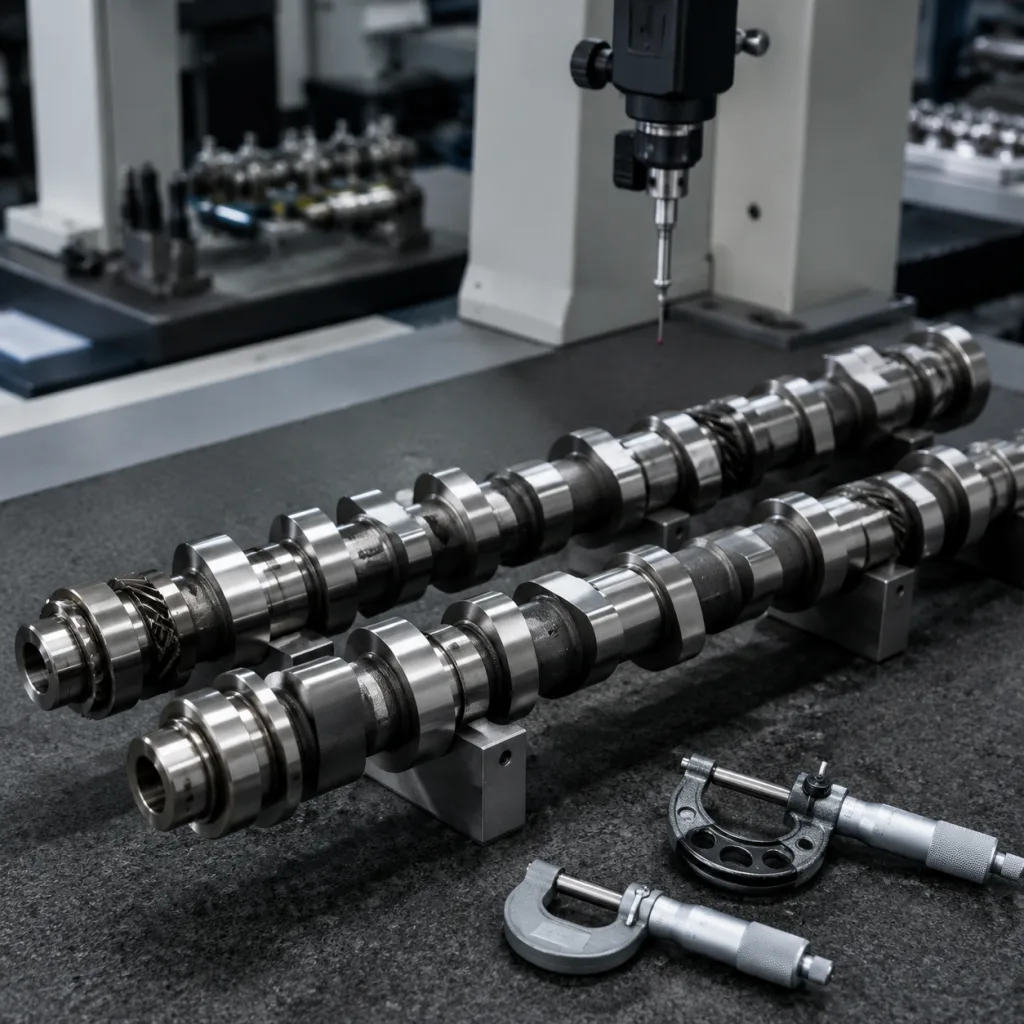
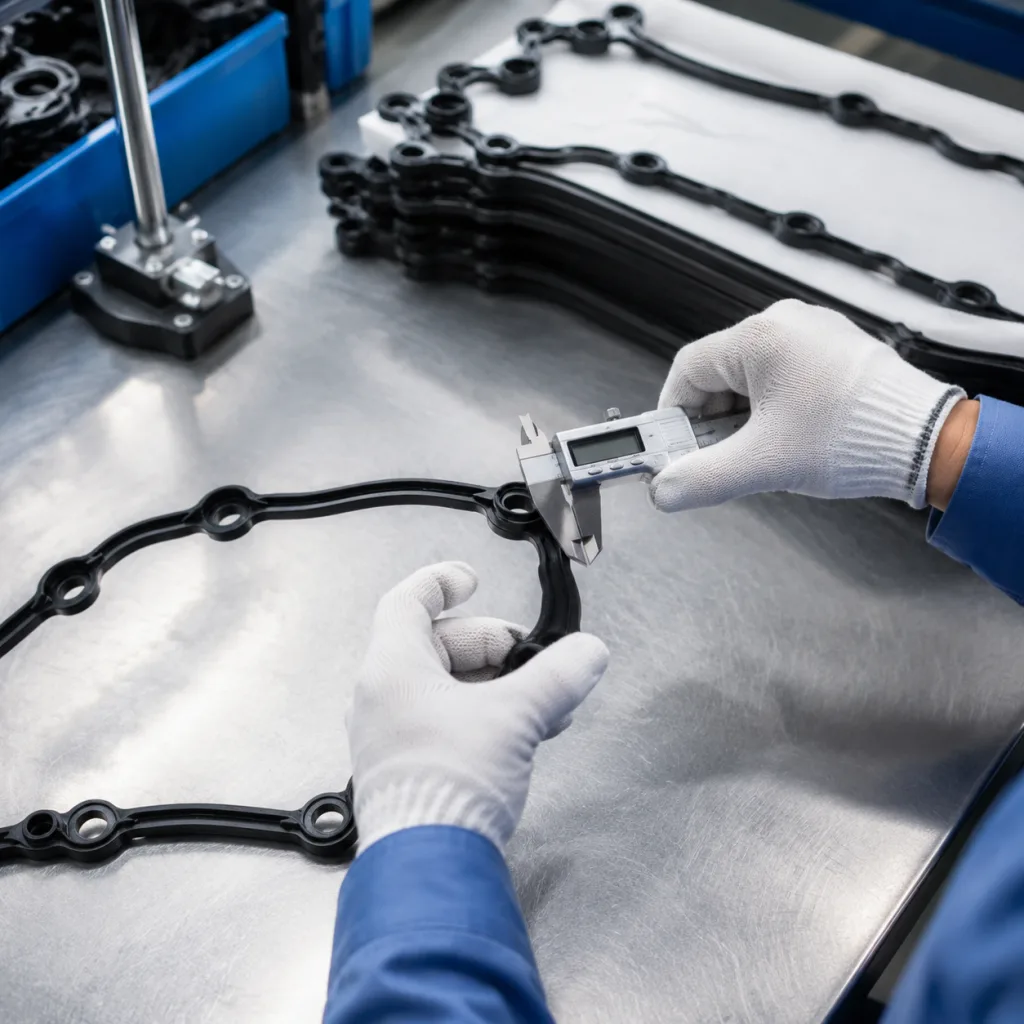
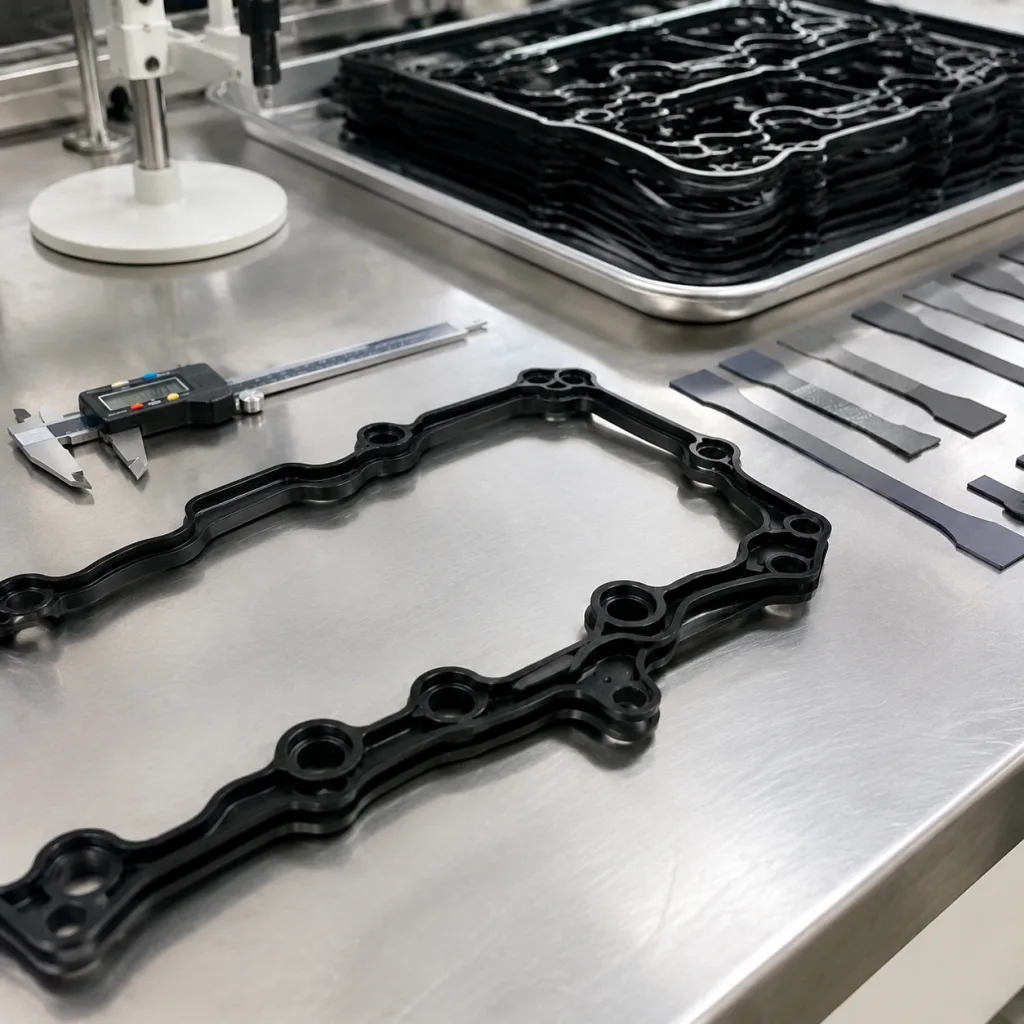
A practical incoming inspection plan may use vernier callipers, micrometers, height gauges, optical comparators, pin gauges, and a coordinate measuring machine where hole position is critical. Tolerances must come from the drawing, not from a verbal agreement. If no buyer drawing is available, the supplier should issue an inspection drawing for approval before pilot production.
For MLS parts, emboss height and stopper geometry are especially important because they control local sealing pressure around the combustion chamber. A small deviation may not be visible in a catalogue photo, but it can change clamp-load distribution after installation. Where possible, request sectional measurement records, bead-profile measurement, or first-article inspection data for the sealing features.
This is also the point to confirm whether the product will be manufactured from existing tooling or through custom manufacturing. Custom tooling should include drawing sign-off, initial sample inspection, retained master samples, and change-control procedures before mass production.
Inspect coating, surface finish, and visual defects
Coating quality affects cold sealing, fluid sealing around oil and coolant passages, and resistance to micro-movement between the gasket and mating surfaces. Visual inspection should be systematic, not limited to checking whether the gasket looks clean.
Use a controlled light source and inspect both sides. Check for:
Missing coating near embosses, ports, or edges
Coating bubbles, pinholes, peeling, or cracking
Scratches that expose the metal substrate
Contamination from oil, dust, fibres, or release agents
Delamination between layers
Fire-ring damage or uneven crimping
Burrs around bolt holes and water passages
Packaging pressure marks or deformation
Rust, staining, or moisture damage after storage
Surface finish requirements depend on engine design and gasket construction. MLS gaskets generally need compatible cylinder head and block surface finishes to seal correctly. A gasket cannot compensate for severe machining marks, warped mating surfaces, incorrect bolt torque, reused torque-to-yield bolts where replacement is required, or poor installation sequence. Buyers supplying repair chains should include installation notes in packaging or technical data sheets, especially for engines that require controlled surface preparation.
Environmental and chemical compliance can also affect acceptance in EU and UK markets. Where relevant, ask how rubber coatings, adhesives, inks, and packaging materials are assessed against REACH (EC) No 1907/2006 and any customer-specific restricted substance list. Do not accept vague compliance claims without a signed declaration, material-control process, or supporting supplier records.
Review validation tests and production traceability
One of the most reliable ways to verify head gasket quality is to connect physical samples with process records. Good sample parts without traceability do not prove that repeat shipments will match the approved standard.
Ask for evidence in four areas:
1. Incoming material control: coil, sheet, facing material, coating, adhesive, and fire-ring material inspection. 2. In-process control: stamping, cutting, coating, laminating, riveting, curing, and final visual inspection records. 3. Functional validation: sealing performance, heat ageing, compression recovery, coating adhesion, torque retention, and dimensional stability where applicable. 4. Traceability: lot number, production date, inspection operator, tooling record, machine or line identification, and packaging batch.
A head gasket supplier serving OEM, Tier-1, and serious aftermarket customers should operate documented nonconformity control, corrective action, internal audit, calibration, and change-management procedures. IATF 16949:2016 adds automotive-specific requirements beyond ISO 9001:2015, including stronger process control, defect prevention, risk management, and product-safety expectations.
For large programmes, consider a pilot order followed by destructive inspection on retained samples. Sectioning can reveal layer alignment, emboss formation, coating thickness consistency, and fire-ring structure. If the order is intended for multiple warehouses or repair-chain locations, retain master samples in both buyer and supplier quality departments and link them to the approved drawing revision.
Use a procurement checklist before placing repeat orders
Final approval should combine technical evidence, commercial terms, and logistics control. A low unit price is not useful if the part causes field returns, fitment disputes, or inconsistent sealing performance.
Before repeat orders, confirm:
Approved drawing revision and sample reference
Application list and OE-style cross-reference format
Material construction and coating specification
Critical dimensions and inspection tolerances
Batch traceability and carton label format
Packaging strength for sea freight and warehouse handling
Shelf-life statement, if coatings or composite materials require it
Compliance declarations for target markets
Control plan and inspection frequency
Process-change notification agreement
Warranty analysis and corrective-action response time
Lead time, MOQ, forecast flexibility, and safety-stock plan
Retained sample policy for buyer and supplier quality teams
For distributors consolidating related engine parts, head gaskets can be sourced with valve cover gaskets, full gasket sets, pistons, water pumps, crankshafts, and other products listed in our catalog. If a programme requires private label packaging, drawing-controlled parts, or engine-family coverage planning, Driventus can quote based on sample, drawing, or cross-reference data.
A disciplined process is the safest answer to how to verify head gasket quality: confirm the application, validate the material, measure the critical features, inspect the coating, review production records, and keep lot-level evidence for every shipment. The same routine should be used for new projects, repeat orders, and supplier changes so that quality approval is based on evidence rather than assumption.
Frequently asked questions
Start by confirming the application data and drawing. Bore layout, bolt-hole position, coolant and oil passages, thickness, and material construction must match the target engine. Appearance alone is not a reliable quality indicator.
Yes. OE-style cross-references may be used for fitment identification, such as OE 06A107065 when provided by the buyer. They must not imply approval, endorsement, or original-equipment supply by a vehicle manufacturer.
Request an inspection drawing, material confirmation, dimensional report, control plan, traceability records, and relevant quality certificates such as IATF 16949:2016 and ISO 9001:2015. For EU supply, also request applicable REACH documentation.
If you need drawing-controlled head gaskets for distribution, repair-chain supply, or platform sourcing, Driventus can review your samples and application list. To discuss specifications or request a quote, visit /contact.html