Camshaft for Hyundai Sonata Replacement Sourcing Guide
A camshaft for Hyundai Sonata replacement programme needs more than a basic interchange list. For distributors, repair chains and importers, the real commercial risk is a part that looks correct but fails on lobe phasing, journal geometry, oil-feed alignment, sensor triggering, heat treatment, or traceability. The right aftermarket camshaft should match the intended Sonata engine family by casting or forging form, journal diameter, lobe lift, thrust design, trigger features, lubrication path, and timing interface. It should also ship with batch-level inspection records that support incoming quality control and warranty review. This guide explains how procurement teams can evaluate Sonata replacement camshafts for OE-equivalent fit, functional durability, and repeatable supply. Driventus manufactures engine and powertrain components in Taizhou, Zhejiang, under IATF 16949:2016 and ISO 9001:2015 systems, exporting to distributors, wholesalers, repair networks, and OEM/Tier-1 buyers in more than 60 countries. Driventus is an independent aftermarket manufacturer; brand names are referenced for fitment only.
Replacement fitment starts with engine identification
Hyundai Sonata applications differ by market, model year, engine code, emissions package, valvetrain layout, and timing-control system. Buyers should not source from the vehicle model name alone. A replacement camshaft should be specified against the full engine configuration and the exact position required: intake or exhaust, bank 1 or bank 2 where applicable, and whether the engine uses continuously variable valve timing.
For B2B sourcing, the minimum fitment data set should include:
Vehicle model and production year range by market
Engine displacement, fuel type, and engine code where available
Camshaft position: intake, exhaust, bank 1, or bank 2
Timing drive interface: sprocket, phaser, or gear connection
Camshaft position sensor trigger design
Journal count, journal diameter, and thrust control design
Oil feed hole locations and groove geometry
Buyer-provided OE cross-reference format, where already available
This data helps separate visually similar camshafts that may not interchange in service. A different trigger pattern, phaser interface, or oil-feed position can create installation delays, diagnostic trouble codes, or early wear even when the catalogue description appears close.
Procurement teams can review related engine component coverage in our catalog and the engine range at /products/engine-components.html. Brand names and vehicle names should be used only to identify fitment, not to imply vehicle manufacturer approval.
OE-equivalent dimensions and material controls
A camshaft is a precision rotating component, not a simple machined bar. Small deviations in lobe height, base circle, journal straightness, thrust geometry, or phasing angle can alter valve timing, trigger fault codes, increase valvetrain noise, reduce oil-film stability, or accelerate wear. For a camshaft for Hyundai Sonata replacement order, dimensional control should be agreed before price comparison.
Control item
Procurement check
Typical validation method
Overall length
Match sample or drawing
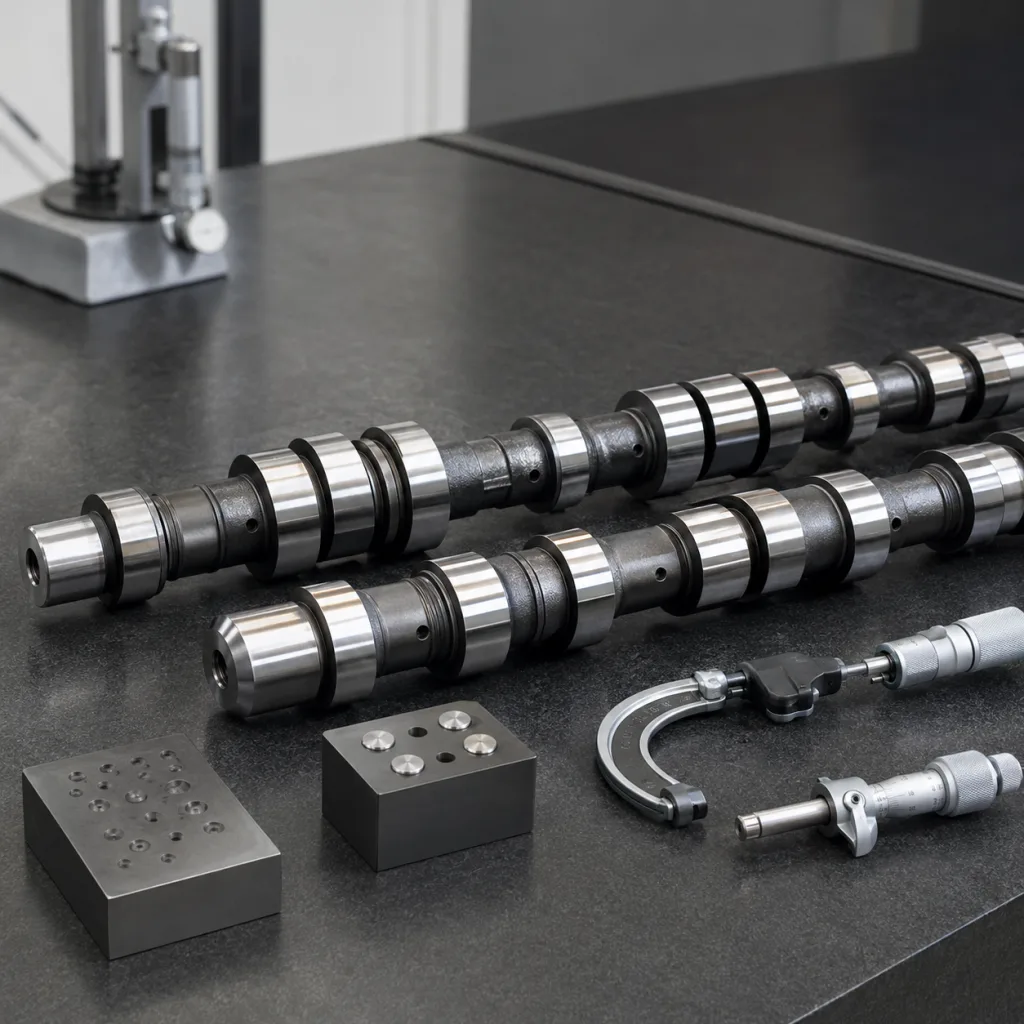
Vernier/CMM measurement
Journal diameter
Within agreed drawing tolerance
Micrometer, roundness tester
Lobe lift
Intake/exhaust profile match
Cam profile measuring machine
Lobe phasing
Correct angle against datum
Rotary fixture or CMM
Runout
Controlled across journals
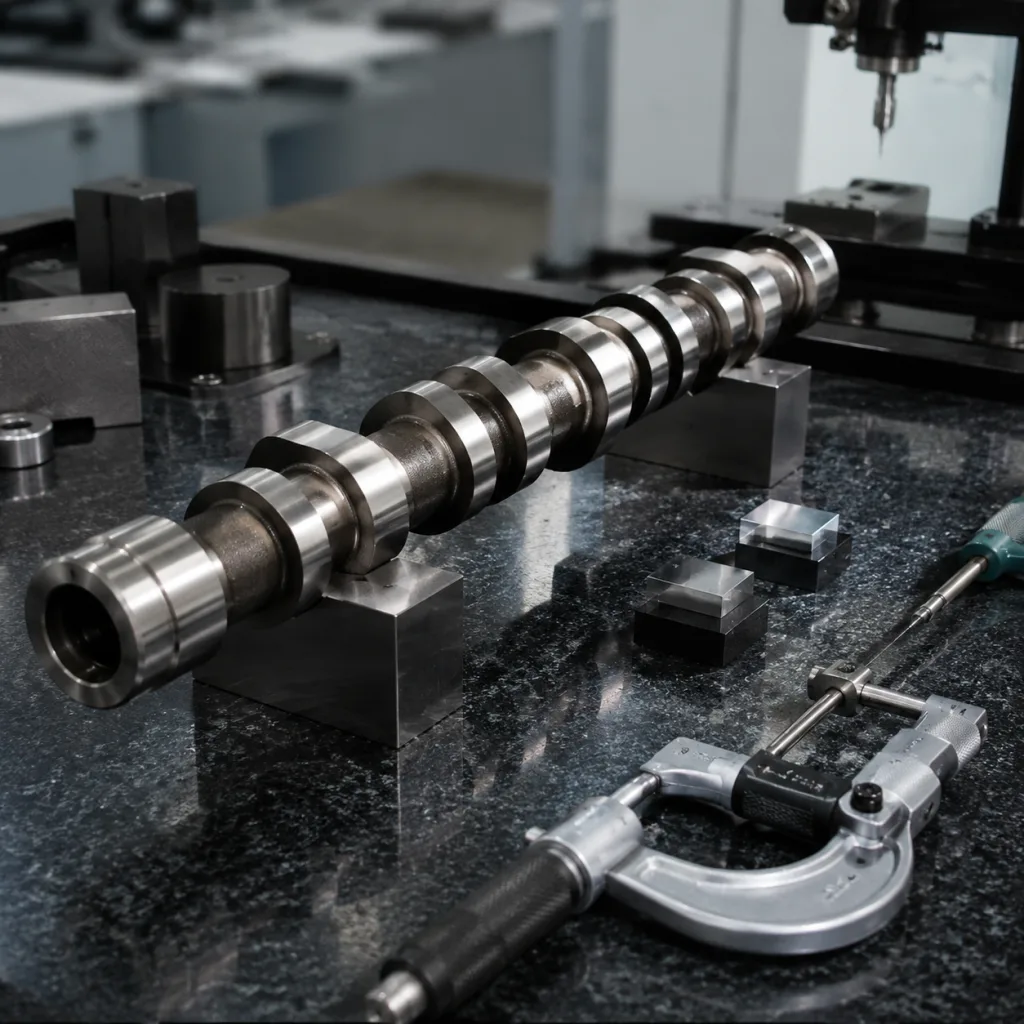
V-block and dial indicator
Surface hardness
Stable wear resistance
Rockwell or Vickers test
Oil hole position
Aligns with lubrication path
Visual and gauge inspection
Sensor trigger feature
Correct ECU signal pattern
Fixture and sample comparison
</tr></thead><tbody> </tbody></table>Material selection depends on the original design route and load conditions. Common aftermarket routes include chilled cast iron, ductile iron, forged steel, and machined steel billet. The correct option should be chosen by application duty, expected volume, machining allowance, follower or rocker contact design, and heat-treatment requirement. Substituting material without a validation plan can change wear behaviour against followers, tappets, rocker arms, or hydraulic lash components.
Heat treatment and surface finish deserve the same attention as base material. A camshaft can meet nominal dimensions but still fail if lobe hardness varies, journal finish is too rough, or post-machining cleaning leaves abrasive particles in oil passages. Buyers should define acceptance criteria for hardness, surface roughness, runout, and cleanliness in the sourcing specification rather than leaving them as supplier assumptions.
Driventus controls camshaft machining through process inspection at turning, grinding, drilling, heat treatment, final cleaning, anti-rust treatment, and packing stages. Buyers can review our quality system for information on IATF 16949:2016 and ISO 9001:2015 management controls.
Validation testing buyers should request
A replacement camshaft must be assessed as a functional engine component. The validation package should confirm that the part can maintain timing accuracy, lubrication integrity, surface durability, and sensor compatibility through expected service conditions. For new or high-volume programmes, the buyer should review test evidence before releasing mass shipment.
Recommended validation evidence includes:
First article inspection report against drawing or approved sample
Material certificate with chemical composition and heat number where applicable
Hardness report for lobes and journals after heat treatment
Cam profile report showing lift curve and angular position
Runout and straightness records from final inspection
Surface roughness measurement for journals and lobes
Magnetic particle inspection or other crack detection where specified
Salt spray or packaging corrosion checks for export shipments where relevant
Batch traceability code linking production date, furnace batch, and inspection lot
For engines equipped with variable valve timing, additional attention should be paid to phaser interface accuracy, thrust control, and oil-control features. Incorrect oil hole alignment, excessive end play, or inaccurate phaser mounting geometry may create delayed timing response, rough idle, reduced performance, or diagnostic trouble codes after installation.
Packaging validation is also part of the quality plan for export supply. Camshafts are long, machined parts with finished journals and lobes, so they need separation, rust prevention, and carton strength suitable for sea freight, air freight, and warehouse handling. A technically correct part can still become a warranty problem if it reaches the installer with corrosion, impact marks, or mixed labels.
Published management standards such as IATF 16949:2016 and ISO 9001:2015 do not replace part-specific validation, but they provide a framework for process control, corrective action, supplier management, calibration, and record retention. For chemical compliance in export markets, buyers may also require declarations aligned with REACH (EC) No 1907/2006.
Common replacement risks in distribution channels
Camshaft complaints are costly because the part is installed deep inside the engine. A return may involve labour claims, oil contamination questions, timing component damage, diagnostic uncertainty, and disagreement over root cause. Importers and repair-chain buyers should therefore screen suppliers for failure prevention, not just unit cost.
Frequent mismatch points
The most common commercial and technical risks include:
Intake and exhaust camshafts packed under the same interchange note
Sensor trigger wheel pattern not matching the target ECU strategy
Lobe profile appearing similar by visual inspection but failing angular measurement
Journal diameter within nominal size but poor roundness or surface finish
Oil passages blocked by machining debris or inadequate washing
Thrust face geometry causing excessive end play or binding
Insufficient rust prevention for sea freight and long warehouse storage
Weak carton labelling that causes pick-and-pack errors
Incoming inspection checklist
For first shipments, buyers should inspect a statistically meaningful sample before release to branches. Check label data, casting or forging features, critical diameters, runout, lobe height, oil holes, sensor trigger design, rust prevention, and packaging condition. If the programme covers several Sonata engine generations, separate SKU labels and clear position marking for intake and exhaust units help prevent warehouse and workshop errors.
Inspection should also confirm that the documents match the parts received. Batch codes on cartons, part labels, and inspection reports should connect to the same production lot. Where multiple suppliers are used for the same application, buyers should avoid mixing unverified camshafts under one SKU unless interchange, profile, hardness, and packaging have been confirmed.
A supplier should be able to provide corrective action reports when defects occur. The report should identify containment, root cause, permanent correction, verification, and affected batch range. This is especially important for multi-location repair chains where the same SKU may be installed across several regions within days.
Sourcing specification for procurement teams
A clear request for quotation reduces the risk of receiving a low-cost part that cannot pass installation, inspection, or warranty review. For camshaft for Hyundai Sonata replacement sourcing, the RFQ should define the technical scope, validation expectations, packaging requirements, and commercial controls.
Include the following in the sourcing file:
Annual volume forecast and first order quantity
Target markets: EU, UK, US, Canada, Australia, Brazil, or other regions
Engine codes, model years, and camshaft positions
Approved sample, 2D drawing, or 3D data where available
Required material route and heat-treatment specification
Critical-to-quality dimensions and inspection frequency
Packaging format: neutral box, distributor brand, or bulk pack
Traceability label requirements and barcode format
Required documents: inspection report, material certificate, compliance declaration
Warranty handling process and response time expectations
Commercial terms should not be separated from technical risk. A very low quotation may exclude profile measurement, full cleaning, stronger packaging, or batch-level traceability. Buyers should compare suppliers on total landed risk: claim exposure, inspection burden, launch reliability, and ability to repeat the same specification across future shipments.
Driventus supports standard aftermarket supply and custom manufacturing for buyers that require private-label packaging, drawing-based production, or controlled specification changes. For new programmes, an engineering review should confirm whether an existing part can be used or whether tooling, fixture changes, profile development, or additional validation are required.
How Driventus manages camshaft supply
Driventus is a vertically integrated Chinese manufacturer of engine and powertrain components based in Taizhou, Zhejiang. The product range includes camshafts, pistons, crankshafts, gaskets, water pumps, turbochargers, and related engine parts for aftermarket and B2B supply.
For camshaft programmes, our process can include sample reverse engineering, drawing review, material selection, machining process design, heat-treatment control, grinding, drilling, washing, anti-rust protection, final inspection, and export packing. Packaging is specified according to shipment route and warehouse conditions, with attention to corrosion prevention, label clarity, and part separation during transit.
Buyers sourcing for replacement channels should use a controlled approval path before mass shipment. A practical sequence is fitment data review, sample confirmation, first article inspection, pilot order, field feedback review, and scheduled production. This reduces the risk of launching an unverified SKU across a distributor network and gives both teams a clear record of what was approved.
For ongoing supply, Driventus can support batch traceability, inspection documentation, private-label packing, and engineering communication for specification questions. This is useful for distributors managing several engine families, repair networks standardising warranty processes, and importers building regional stock programmes.
Driventus does not claim approval or endorsement by any vehicle manufacturer. Driventus is an independent aftermarket manufacturer; brand names are referenced for fitment only. If your team is preparing a Sonata camshaft programme, you can request a quote with engine data, sample photos, drawings if available, and target order volume.
Frequently asked questions
Provide model year, market, engine code, camshaft position, timing interface, sensor trigger design, and any buyer-provided OE cross-reference. Photos and samples help confirm oil holes, thrust faces, journals, trigger features, and lobe arrangement.
Sometimes, but interchange must be verified by engine code and physical features. Similar engines may use different lobe profiles, phaser interfaces, oil-feed positions, or sensor trigger patterns. Do not rely on model name alone for procurement.
Request first article inspection, material certificate, hardness report, profile measurement, runout data, surface roughness records, and batch traceability. For regulated markets, buyers may also require compliance declarations aligned with REACH (EC) No 1907/2006.
For camshaft sourcing, send engine data, sample photos, drawings if available, and estimated annual volume. Driventus can review fitment and manufacturing feasibility through /contact.html