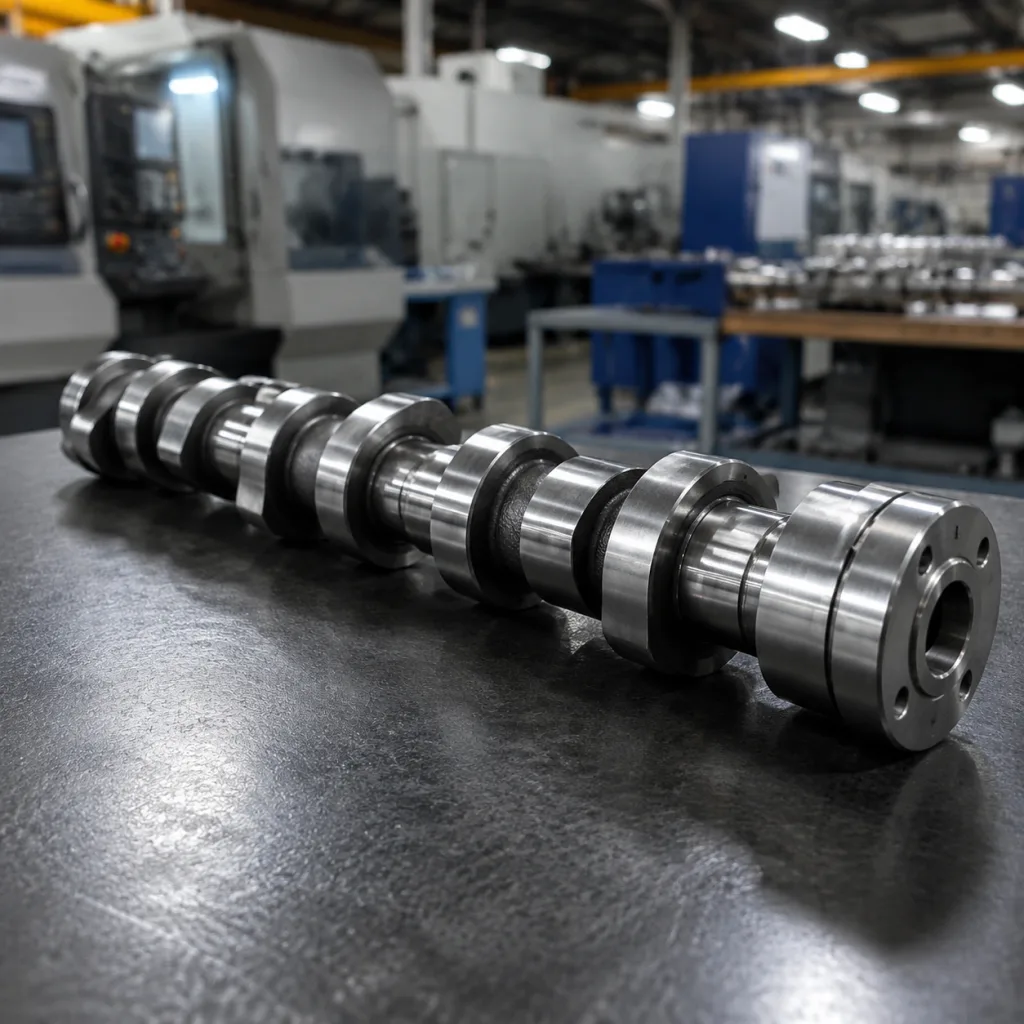
How to Verify Camshaft Phaser Quality: Buyer Checklist
Camshaft phaser quality directly affects valve timing accuracy, cold-start behaviour, oil control, emissions consistency, and long-term durability. For procurement teams, verification should cover geometry, actuation response, cleanliness, and documentation before parts enter production or warehouse stock. A phaser can look acceptable in a visual check and still fail on locking pin function, vane clearance, or hydraulic leakage, so incoming inspection needs a repeatable method rather than a simple pass/fail glance. Driventus is an independent aftermarket manufacturer; brand names are referenced for fitment only. This article gives buyers, quality engineers, and import managers a practical process to verify supplier claims against measurable criteria, published standards, and OE cross-reference data. The same approach works for replacement programmes, private label sourcing, and controlled OEM supply chains.
What to check first on incoming camshaft phasers
Begin with identity, traceability, and dimensional match. Confirm the part number, application range, and OE cross-reference against the approved bill of materials before you look deeper into the lot. For each shipment, verify the batch code, production date, and packaging integrity before opening cartons so you can preserve chain-of-custody records.
Use a simple incoming checklist:
Part number and OE reference match the approved application
Unit count matches the purchase order and packing list
Surface finish is even, with no burrs, dents, or impact marks
Oil passages, ports, and dowel features are clear and free of debris
Retaining hardware, seals, and instructions are complete where specified
If the part is sourced as a replacement unit, compare critical interfaces against the original sample or drawing revision. Check bolt circle, sprocket position, locking feature engagement, and overall stack height. A mismatch at this stage usually points to the wrong revision, a labeling error, or process drift in machining or assembly. For buyers, a practical first-pass rule is to sample at least 5 units from the first carton and 2 units from every subsequent carton in the lot, then expand to 100% inspection only if any critical feature is out of spec.
Dimensional checks that matter
A phaser can pass appearance inspection and still create timing error if the control surfaces are out of tolerance. Focus on the dimensions that affect timing stability, oil pressure response, and chain alignment, since those are the areas most likely to create field complaints.
Check point
Why it matters
Typical method
Bore and journal dimensions
Affects fit, oil film, and runout
Micrometer, bore gauge
Face runout
Influences chain alignment and NVH
Dial indicator on fixture
Axial play
Controls timing stability and wear
Feeler gauge or comparator
Vane and housing clearance
Affects response and leakage
CMM or functional measurement
Locking pin travel
Affects cold-start lock engagement
Bench actuation test
</tr></thead><tbody> </tbody></table>Record results against the engineering drawing, not a generic target. If the supplier cannot provide a controlled drawing revision, treat the lot as high risk because you cannot prove the inspection basis. For international supply, ask for inspection records tied to IATF 16949:2016 and ISO 9001:2015 process controls. Those certifications do not replace part-level validation, but they do show the factory has a documented system for traceability, corrective action, and repeatable measurement.
For a usable buyer spec, define acceptance in numeric terms before order release: face runout no greater than 0.03 mm TIR, axial end play within the drawing limit or typically 0.02 to 0.08 mm depending on design, and critical bore or journal diameters held to the print tolerance, often in the ±0.01 to ±0.03 mm range on precision interfaces. If a supplier quotes only “standard tolerance,” insist on the actual limit stack and inspection method.
Functional tests for timing response and leakage
The most useful verification is a functional test under controlled oil pressure and temperature. A bench rig should confirm movement, lock and unlock behaviour, and leakage rate over the operating range specified by the application, since timing response is what the engine ultimately depends on.
Recommended checks include:
1. Measure initial lock state at rest. 2. Apply oil pressure in staged increments. 3. Confirm commanded advance and retard movement. 4. Check response time and repeatability across multiple cycles. 5. Hold pressure and measure internal leakage or drift.
For a buyer-facing acceptance spec, require the supplier to state the test oil viscosity, test temperature, and pressure profile. A practical starting point is room-temperature function check, then hot-oil verification at 80 to 100 °C with pressure steps such as 0.2 MPa, 0.4 MPa, and 0.6 MPa, or the application-specific range. Measure response time to full stroke, and set a lot rule such as no visible hesitation, no sticking, and no more than 2% phase drift during a 10-minute hold at rated pressure. If the design includes a locking pin, confirm positive lock at zero pressure and release at the specified breakaway pressure with repeatability across at least 10 cycles.
For durability screening, ask for endurance data using published test methods where applicable, such as SAE J2527 for corrosion exposure on related components and REACH (EC) No 1907/2006 substance compliance for material declarations. For emissions-related programme work, align verification with the vehicle system requirements, and where applicable reference ECE R-83 for the broader powertrain context. Do not accept a supplier claim based on a single cycle demonstration; phasers need cycle stability, not one-off movement. A credible validation package should show at least 500 to 1,000 functional cycles for sample approval and a much higher endurance run, often 50,000 cycles or more, for new tooling or new material sets.
Materials, cleanliness, and assembly controls
Material quality is not only about base metal grade. It also includes heat treatment, surface hardness, seals, springs, pins, and the cleanliness of the assembled unit. Contamination is a frequent cause of sticking vanes, delayed response, and unstable phase control, so cleanliness deserves the same attention as geometry.
Verify the following before release:
Heat treatment records for the rotor and housing
Surface hardness and case depth where specified
Seal material compatibility with engine oil and temperature
Magnetic debris control after machining and assembly
Final cleaning standard, including filtered rinse or air blow-off
Ask for material declarations that support REACH (EC) No 1907/2006. For buyers serving multiple markets, it is useful to keep one compliance pack with test reports, inspection sheets, and traceability records. If the phaser includes rubber or polymer seals, verify ageing performance under heat and oil exposure, since seal hardening can later appear as phase drift, pressure loss, or slow return-to-lock behaviour.
A practical cleanliness gate is to require zero visible chips, no ferrous pickup on a 1.0 mm magnetic probe after final clean, and no trapped debris in oil galleries or locking-pin pockets. For heat-treated components, ask for hardness evidence in the stated range, commonly around 30 to 45 HRC depending on the alloy and design, with case depth or effective depth specified on the drawing. If the supplier uses phosphate, nitriding, or anti-wear coatings, require the coating specification, thickness target, and corrosion test data so the finish is not treated as a cosmetic feature.
Supplier documentation and approval gates
A reliable approval file should be specific enough that a second inspector can repeat the same checks. Avoid vague supplier statements such as “meets OE quality” unless they are backed by test data, controlled revisions, and clear approval criteria.
Request these documents before first shipment approval:
Control plan and process flow
First article or PPAP-style dimensional report
Functional test record for lock, advance, and retard movement
Material certificate and traceability summary
Corrective action procedure for non-conforming lots
If you are comparing multiple sources, ask each supplier to show the same evidence set. This makes pricing decisions more realistic because you can separate cosmetic suppliers from those capable of controlled output. Driventus also supports custom manufacturing for controlled programmes, and buyers can review our catalog or the broader engine components range when building a sourcing list. For internal QA alignment, link the part release workflow to your quality system before placing repeat orders.
To make the approval gate operational, require these buyer-side thresholds: sample size tied to lot size using AQL 1.0 for major characteristics and zero tolerance for critical failures such as wrong part number, locking malfunction, or missing seals; first-article approval signed off before mass shipment; and a corrective-action turnaround of 24 hours for containment and 5 to 10 business days for root-cause feedback. A supplier that cannot provide those response times is usually a poor fit for time-sensitive production or service stock.
Practical acceptance rule for procurement teams
Use a three-gate acceptance rule: identity, dimensions, and function. A lot should pass all three before it moves into stock, and each gate should leave behind a record that supports later review.
Gate 1: Identity Match part number, application, packaging, and traceability.
Gate 2: Dimensions Confirm all critical dimensions against the approved drawing and fixture checks.
Gate 3: Function Verify movement, locking, leakage, and repeatability on a bench test.
This approach works well for distributors, repair-chain buying teams, and OEM sourcing groups because it reduces false acceptance without making incoming inspection overly complex. It also creates a defensible record if a later field issue appears. If a supplier cannot support the checks, isolate the lot and escalate before use. For new sourcing programmes, use the same checklist during sampling, pilot orders, and production release. When you need a formal response, request a quote with the part number, annual volume, and target validation scope.
For commercial decision-making, tie quality to sourcing terms. Ask for MOQ, tiered price breaks, and lead time separately for sample, pilot, and production quantities so you can compare true landed cost. A practical structure is sample MOQ of 1 to 5 pieces for verification, pilot MOQ of 20 to 50 pieces for fitment and process validation, and production MOQ sized to the forecasted consumption window, often 100 to 500 pieces for aftermarket programs or higher for OEM programs. Request a price ladder at 100, 500, 1,000, and 5,000 units, plus a written lead time for each tier. For stocked items, buyers should expect a shorter lead time after repeat order confirmation than for new tooling or private-label packaging, and any quotation should state whether the clock starts at PO receipt, deposit receipt, or artwork approval. This lets procurement compare suppliers on the same basis instead of on headline unit price alone.
Frequently asked questions
Use enough cycles to show stable motion and repeatability across the test window. Many buyers set a minimum bench cycle count in the supplier spec, then add longer endurance testing for new programmes. A practical buyer baseline is 10 functional cycles for incoming verification, 500 to 1,000 cycles for sample approval, and 50,000 cycles or more for durability validation on new designs.
Incorrect dimensional control or sticking during actuation is common. Cleanliness issues, seal defects, and locking pin problems also appear frequently when suppliers skip process control. In practice, a phaser may fail because axial play is too high, because debris slows the vane, or because the lock pin does not release consistently at the specified pressure.
No. IATF 16949:2016 and ISO 9001:2015 show process discipline, but each phaser lot still needs dimensional and functional verification before approval.
If you need a controlled sourcing package or sample verification plan, send your application details and target volume through /contact.html.