Camshaft for Volkswagen Beetle Replacement: OE Match Guide
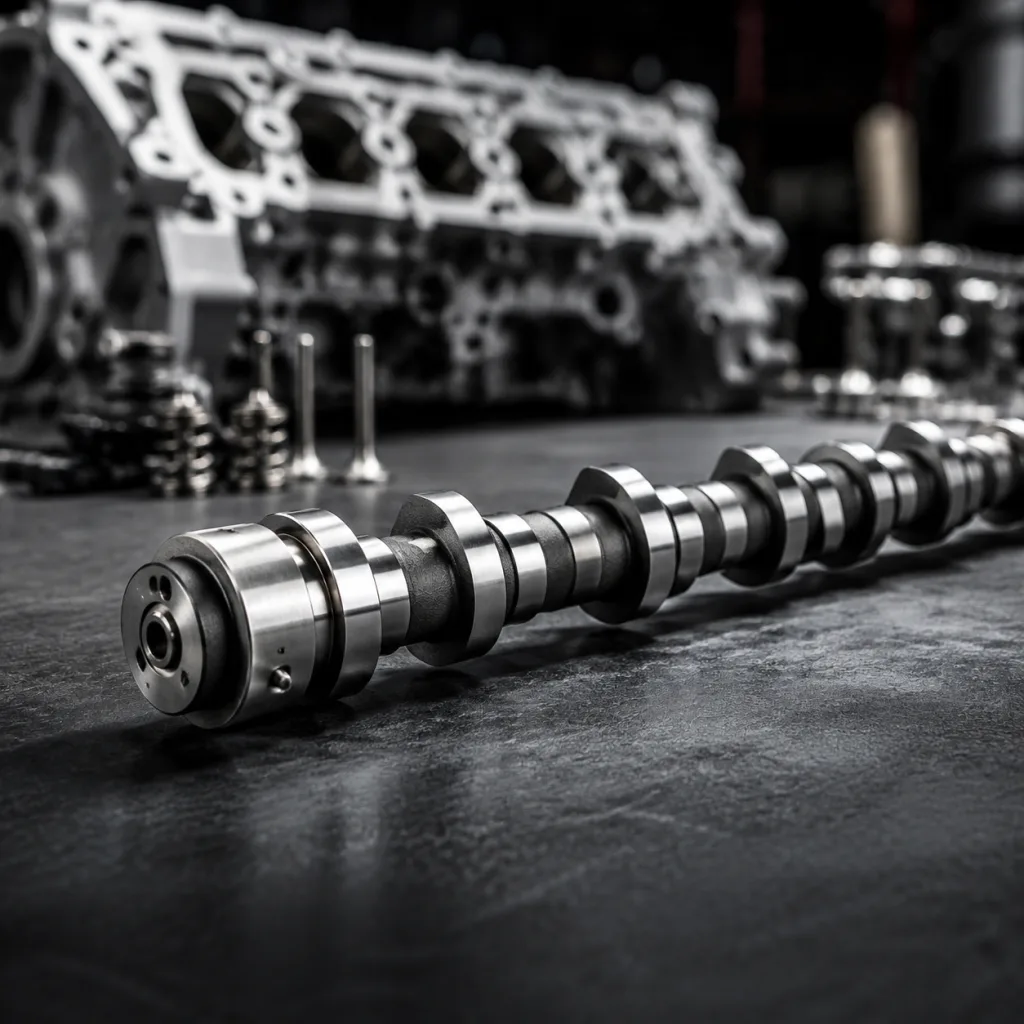
Choosing a camshaft for Volkswagen Beetle replacement starts with a hard question: does the part truly match the engine, or only the model name? For procurement teams, the risk sits in the details — engine code, valve timing, journal size, lobe lift, thrust control, and surface condition. Driventus supplies aftermarket camshafts under controlled production systems aligned with IATF 16949:2016 and ISO 9001:2015. Driventus is an independent aftermarket manufacturer; brand names are referenced for fitment only. Before you place an order, verify the OE cross-reference, request measured inspection data, and confirm the finish and heat-treatment specification. That approach reduces installation risk and helps prevent comebacks tied to timing mismatch, wear, or poor dimensional control.
Start with the fitment gate, not the model name
A Volkswagen Beetle badge is not enough to approve a camshaft. The replacement must be checked against the engine build, because small differences in cam geometry can change idle quality, emissions, and valve-to-piston clearance.
For a camshaft for Volkswagen Beetle replacement, confirm:
Overall length and bearing journal diameters
Lobe profile, lift, and timing phasing
Thrust face position and end-play control
Drive interface, including gear or chain features
Material grade and heat-treatment condition
If an OE reference is available, keep it on the purchase record, for example `OE 06A107065`. Do not treat adjacent engine codes as interchangeable just because the vehicle name is the same.
Where replacement projects fail
Most sourcing problems show up after the part arrives. The common failure modes are predictable:
The camshaft fits physically but the lobe profile is wrong.
Journal wear or tolerance drift creates oil-clearance issues.
Base-circle variation changes valve lash and timing behavior.
Thrust dimensions are off, so end-play falls outside spec.
The part has no batch traceability, so defects cannot be isolated.
These are not cosmetic issues. They can trigger hard starting, rough idle, accelerated wear, and in the worst case, valve damage. A low quote does not help if the engine build cannot be validated.
What to compare across supplier quotes
Do not compare price alone. Compare proof. The most useful sourcing frame is below.
Factor
Lower-risk choice
Higher-risk choice
OE cross-reference
Provided and checked
Missing or vague
Inspection data
Lot-specific report supplied
Generic spec only
Material traceability
Heat or batch traceable
No batch linkage
Packaging
Corrosion-protected
Bulk packed
Technical support
Fitment review available
Sales-only response
</tr></thead><tbody> </tbody></table>For multi-location repair chains and distributors, the best offer is usually the one with stable revisions, clear change control, and repeatable replenishment — not the lowest first-price quote.
Inspect these dimensions before you buy
Ask for a dimensional report before release, not after receiving a claim. The inspection items below are the ones that usually matter most.
Check item
Why it matters
Typical evidence
Journal diameter
Controls bearing fit and oil clearance
Micrometer report
Lobe height and lift
Affects valve opening and duration
CMM or profile record
Overall length
Confirms block compatibility
Caliper or gauge report
Thrust width
Sets end-play range
Go/no-go or measured data
Runout
Reduces vibration and timing variation
Dial indicator record
</tr></thead><tbody> </tbody></table>For replacement programmes, specify the tolerance band in the purchase order and request sample approval against the production lot. If the camshaft is part of a broader engine programme, alignment with the relevant OEM services file can also be reviewed through custom manufacturing.
Material and finish choices that affect wear life
A replacement camshaft lasts or fails based on substrate and surface condition as much as on fitment. Common production routes include chilled cast iron, billet steel, and forged steel, depending on duty cycle and cost target.
Buyers should specify:
Case hardness or surface hardness target
Lobe finish roughness after grinding
Phosphate, nitriding, or equivalent anti-wear treatment
Cleanliness limits for machining residue and abrasive contamination
Packaging that prevents rust during sea freight and warehouse storage
Older Beetle engines can have tighter lubrication margins than modern engines, so finish quality directly affects break-in behavior. Ask for hardness and metallurgical data tied to the batch number, not just a generic product description. Driventus can support programme-level documentation through our quality system.
What validation should the supplier prove?
A credible supplier should show controlled validation, not just sample fitment. Useful tests include:
Dimensional inspection on first article and production lots
Surface hardness verification
Magnetic particle or crack inspection where applicable
Runout and concentricity checks
Functional fitment in a controlled engine build
Oil-wet wear observation during endurance evaluation
Programme documentation may reference IATF 16949:2016 for automotive process control, ISO 9001:2015 for quality management, and REACH (EC) No 1907/2006 where restricted substances matter. For wear-screening work, SAE J2527 is often cited when a comparable durability protocol is needed. The goal is simple: confirm the part behaves like the original under load, not only on a dry bench.
How to structure the buying decision
Use a simple decision sequence when sourcing a camshaft for Volkswagen Beetle replacement:
1. Confirm the engine code and OE cross-reference. 2. Review the supplier’s dimensional data. 3. Check material, hardness, and surface finish. 4. Verify traceability, revision control, and packaging. 5. Approve sample fitment or lot submission before volume release.
This sequence helps separate usable parts from parts that merely look compatible. If the OE reference is obsolete or the application is niche, our catalog can help check adjacent engine components, and you can request a quote for programme pricing.
Sourcing terms that lower risk after the order is placed
Commercial terms should reflect the technical risk of the part. Confirm MOQ, lead time, sample policy, and change control before release. If you are building a wider engine assortment, the related engine components range may help consolidate purchasing across camshafts, valves, gaskets, and water pumps.
Useful sourcing questions:
Is the part produced to a locked drawing or customer sample?
Can the supplier support custom manufacturing for special lift, hardness, or coating requirements?
What is the first-piece approval process?
How are revision changes communicated?
What packing standard is used for export shipments?
Driventus is an independent aftermarket manufacturer; brand names are referenced for fitment only.
Frequently asked questions
Match the OE reference, engine code, overall length, journal diameter, lobe profile, and thrust dimensions. Ask for a lot-specific dimensional report before purchase.
No. Beetle fitment varies by engine family and revision. Always verify the engine code and OE cross-reference before ordering.
Request a dimensional inspection report, hardness data, material traceability, and quality system evidence such as IATF 16949:2016 or ISO 9001:2015.
If you need an OE-equivalent camshaft programme or a replacement cross-reference review, send your target spec and volume through /contact.html.