Fuel pump replacement cost is more than the invoice price of the pump. For distributors, fleet operators and multi-location repair chains, the real figure includes labour time, tank access risk, warranty exposure, diagnostic work, freight, inventory carrying cost and return handling. A low purchase price can become expensive if pressure output is unstable, connectors do not match the harness, sender values are wrong, or the module leads to repeat tank removal. This guide breaks down the main cost drivers for electric in-tank fuel pumps and pump modules, with practical checkpoints for procurement teams comparing aftermarket supply options. It is written for B2B buyers sourcing replacement pumps for petrol and diesel light vehicles, not for retail consumers. Driventus manufactures engine and powertrain components in Taizhou, Zhejiang, and supplies aftermarket distributors, OEM/Tier-1 programmes and repair-chain customers in 60+ countries.
Cost Components Buyers Should Separate
A replacement job combines the part, installation time and commercial risk. Procurement teams should separate these items before comparing suppliers, because each cost is influenced by a different decision.
Cost component
Typical driver
B2B sourcing relevance
Pump or module unit price
Motor design, pressure rating, sender type, strainer, housing material
Direct purchasing cost and margin planning
Labour time
Tank access, corrosion, fuel-line clips, module locking ring
Repair-chain productivity and claim cost
Diagnostics
Pressure testing, voltage-drop checks, scan-tool work
Reduces false replacement and no-fault returns
Freight and duty
Shipment mode, country of origin, packaging density
Landed cost calculation for importers
Warranty allowance
Failure rate, fitment accuracy, return policy
Affects annual programme profitability
Inventory cost
SKU breadth, MOQ, demand volatility
Important for wholesalers and regional warehouses
</tr></thead><tbody> </tbody></table>For a repair chain, the installed job value may be several times the pump purchase price. For a distributor, the hidden cost is often slow inventory rotation or returns caused by weak application data. Both cases benefit from clean OE part-number cross-reference management, drawing-controlled dimensions and stable electrical performance.
Typical Price Ranges and Why They Vary
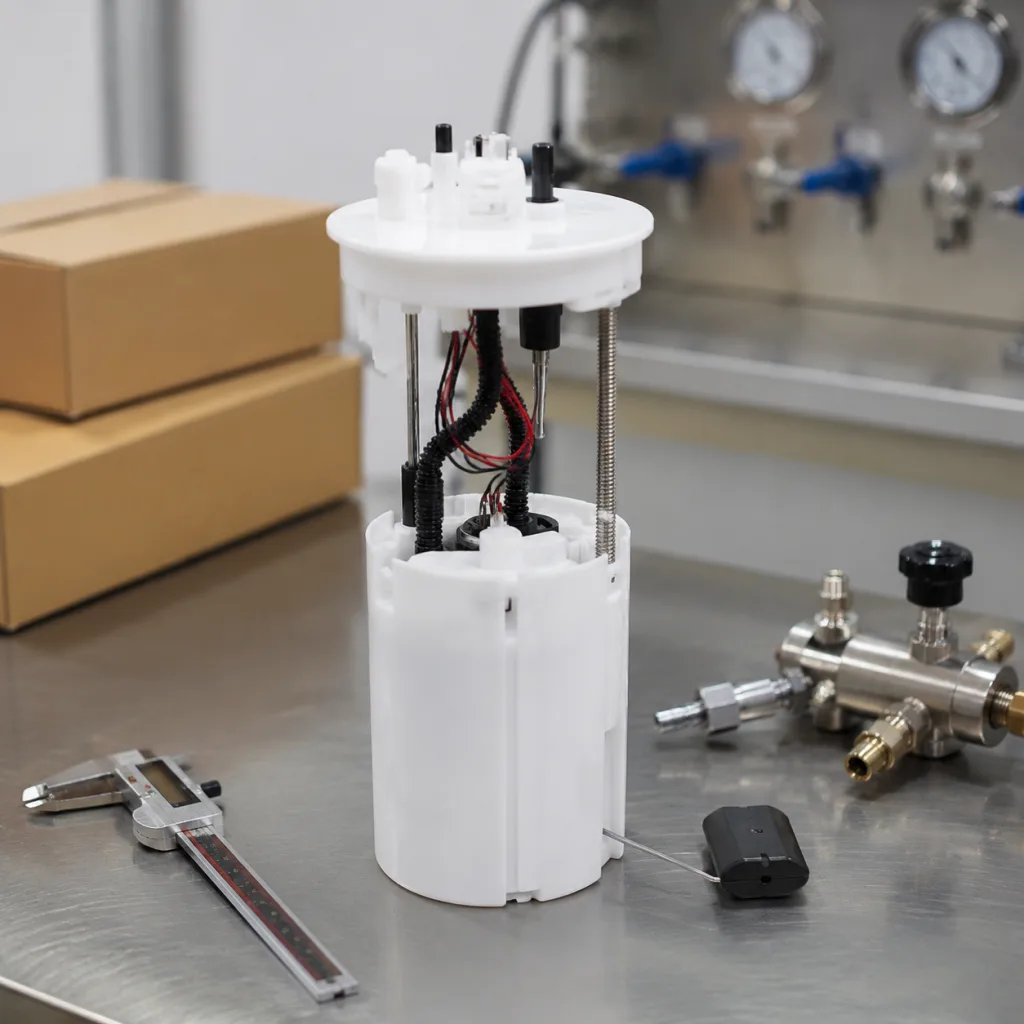
Fuel pump replacement cost varies by vehicle architecture and by the format supplied: bare pump, pump kit, hanger assembly or complete module. A complete module usually costs more up front, but it can reduce installation variables because the reservoir, pressure regulator, level sender, seals and housing are supplied as an assembled unit.
Replacement format
Relative part cost
Installation risk
Common procurement use case
Bare electric pump
Low
Higher, because original carrier and hoses are reused
Price-sensitive aftermarket lines with trained installers
Pump and strainer kit
Low to medium
Medium, depending on hose, terminal and strainer compatibility
Fast-moving older applications
Complete fuel pump module
Medium to high
Lower, if dimensions, connectors and sender values match
Repair chains and warranty-sensitive distributors
Custom programme module
Quoted by project
Controlled by validation plan
OEM, Tier-1 or private-label programmes
</tr></thead><tbody> </tbody></table>Pricing also changes with pressure and flow specification. A pump for a port-fuel-injection system may have different requirements from a low-pressure supply pump feeding a gasoline direct-injection or diesel high-pressure system. Buyers should not approve substitution based only on external appearance. Required checks include outlet pressure, free-flow rate, current draw, connector polarity, sender resistance curve, seal diameter, flange height and tank indexing position.
For broad-line distribution, start with demand data and failure frequency. High-volume SKUs can support tighter packaging, dedicated tooling and larger production batches. Low-volume long-tail SKUs need different MOQ, replenishment and safety-stock assumptions.
Quality Factors That Affect Lifetime Cost
The lowest quoted unit price does not always produce the lowest programme cost. Fuel pumps work in a demanding environment that includes fuel immersion, heat, vibration, pressure cycling and possible contamination from tank deposits. Small specification deviations can create noise, delayed starts, low-pressure faults, hard-start complaints or inaccurate fuel-level readings.
Key specification items to request from a supplier include:
Rated voltage and operating voltage range.
Nominal pressure and relief-valve setting.
Flow rate at defined voltage and pressure.
Current draw limit at rated load.
Fuel-level sender resistance range, where applicable.
Connector type, terminal plating and polarity control.
Strainer mesh specification and material compatibility.
Seal material, selected for petrol, ethanol blends or diesel compatibility.
End-of-line test records for pressure, flow, noise and leakage.
Driventus manages production under IATF 16949:2016 and ISO 9001:2015 frameworks. For export markets, procurement files may also need material and chemical declarations linked to REACH (EC) No 1907/2006 where applicable. Emissions regulations such as ECE R-83 apply at vehicle level, so replacement component suppliers should avoid unsupported vehicle approval claims. The relevant purchasing control is component consistency, traceability and fitment accuracy, not a claim of vehicle manufacturer endorsement.
Driventus is an independent aftermarket manufacturer; brand names are referenced for fitment only.
How Distributors Can Control Warranty Exposure
Many pump returns are not caused by a defective new pump. Common causes include blocked tank strainers, contaminated fuel, poor ground connections, overheated wiring, incorrect diagnosis of a relay or pressure-regulator fault, and reusing damaged seals. For a B2B seller, those cases still consume margin through freight, testing and customer service time.
A practical warranty-control process should include three layers:
1. Application control: Verify engine code, production date, tank layout, connector shape and sender resistance range before shipment. 2. Installer documentation: Include replacement notes covering tank cleaning, filter renewal, seal replacement, voltage checks and priming procedure. 3. Return testing: Inspect for fuel contamination, measure resistance, run pressure/flow testing and document no-fault-found results.
Procurement teams should confirm whether the supplier can provide batch traceability, test data and corrective action reporting. A formal 8D response is valuable when a pattern appears across markets. Packaging also matters: pump modules can be damaged if float arms are compressed, locking tabs are unsupported or seals deform during sea freight.
For buyers building private-label programmes, Driventus can support custom manufacturing, including drawing review, sample validation, packaging requirements and controlled change management.
Specification Checklist for RFQs
A clear RFQ reduces rework and prevents false savings. Instead of asking only for a quote against a generic model name, provide the technical and commercial details needed to confirm fitment, performance and landed cost.
RFQ item
What to provide
Why it matters
Vehicle application
Market, engine, fuel type, production range
Prevents regional tank or connector mismatch
Cross-reference
OE-style reference if available
Improves application mapping without claiming OE approval
Pump format
Bare pump, kit, hanger or module
Changes price, tooling and packaging
Performance data
Pressure, flow, voltage and sender curve
Confirms functional equivalence
Annual volume
Forecast by SKU and destination
Determines batch planning and MOQ
Compliance needs
REACH, material declaration, labelling rules
Supports import and customer files
Packaging
Bulk, neutral box, private label, pallet standard
Affects damage rate and landed cost
Quality records
PPAP-like documents, inspection reports, test plan
Supports buyer audit and claim review
</tr></thead><tbody> </tbody></table>Buyers can review related powertrain and fuel-system items in our catalog. For supplier qualification, review our quality system, including certification scope and manufacturing controls. Early technical alignment is especially important where one visual part family covers multiple pressure ratings, connector layouts or sender curves.
Estimating Landed Programme Cost
For importers and chains, the correct comparison is not ex-works unit price. A landed programme model should include pump price, packaging, inland transport, international freight, insurance, duty, customs fees, domestic distribution, inventory financing and forecast warranty cost.
Then compare that figure with expected sales velocity and gross margin. A pump module that costs slightly more may still be cheaper across the programme if it reduces installation time, fitment errors and warranty returns. Conversely, a bare pump may be the right choice for mature repair markets where technicians are trained and the vehicle parc is older.
For repair chains, include bay time. A repeat tank removal can erase the saving from a cheaper component. For wholesalers, include slow-moving SKU cost. Consolidating similar applications without validating pressure, connector and sender differences can increase returns and weaken customer trust.
Driventus supplies B2B customers with controlled production, export documentation and batch traceability from Taizhou, Zhejiang. To discuss target SKUs, annual volume, MOQ, lead time and validation requirements, request a quote.
Frequently asked questions
For an installed repair, labour and repeat-job risk are often larger than the pump price. For distributors, the main drivers are landed cost, SKU accuracy, warranty rate and inventory turnover. Buyers should compare complete programme cost rather than unit price only.
Often yes, especially for repair chains and warranty-sensitive channels. A complete module can reduce installation variables because the housing, sender, regulator, strainer and seals are supplied as one assembly. The decision should be based on vehicle age, technician skill, warranty history and target margin.
Request certification scope for IATF 16949:2016 and ISO 9001:2015, dimensional checks, pressure and flow test data, material declarations where needed, batch traceability and application cross-reference files. For private-label supply, also request packaging specifications and change-control procedures.
If you are comparing fuel pump programmes for distribution, repair-chain supply or private-label sourcing, send Driventus your SKU list, forecast volume and technical requirements. Start a technical and commercial review at /contact.html