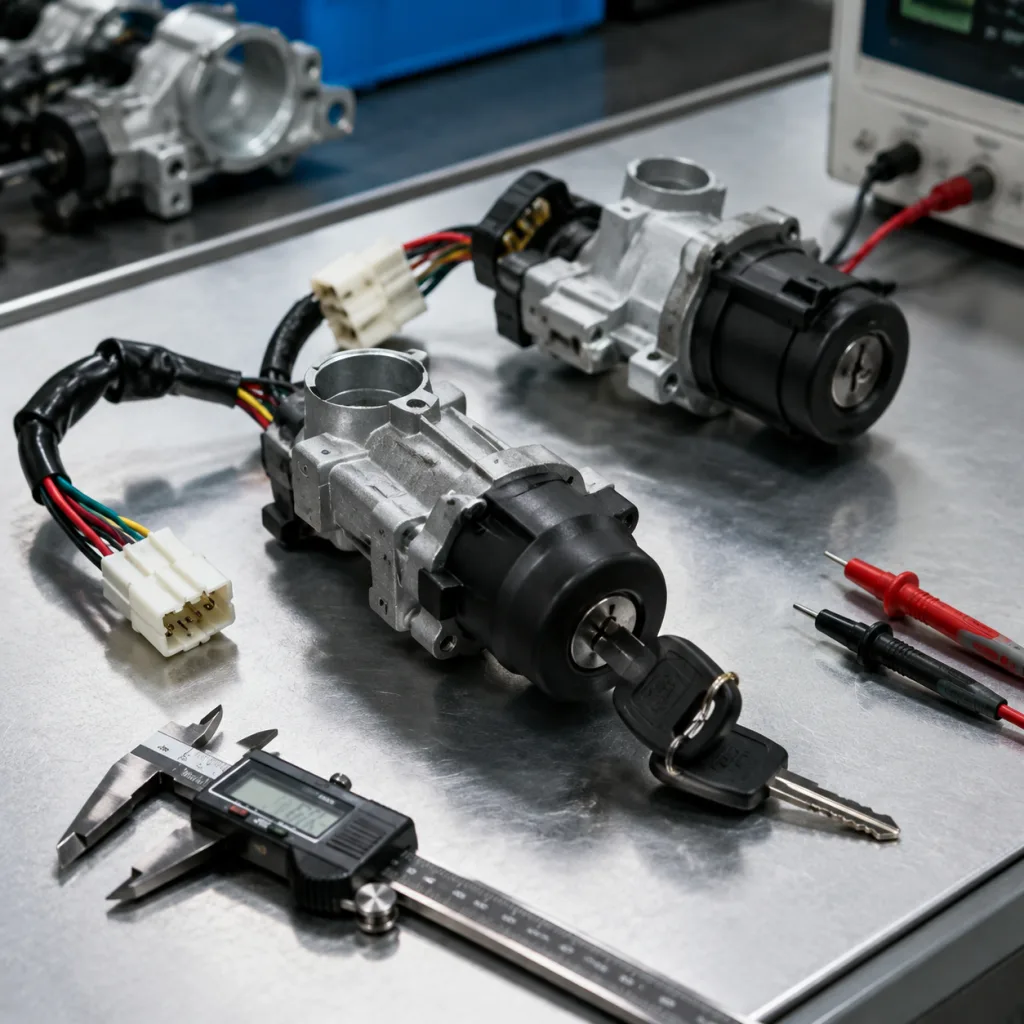
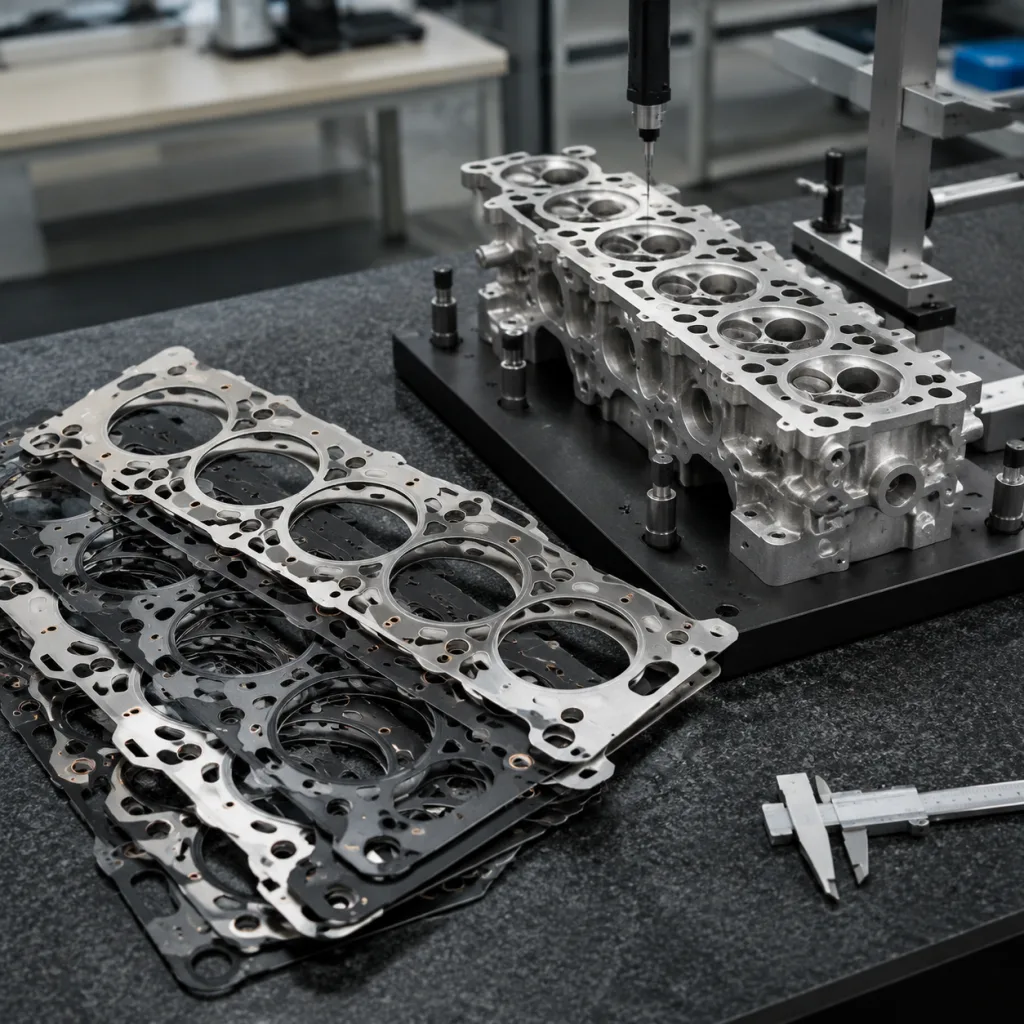
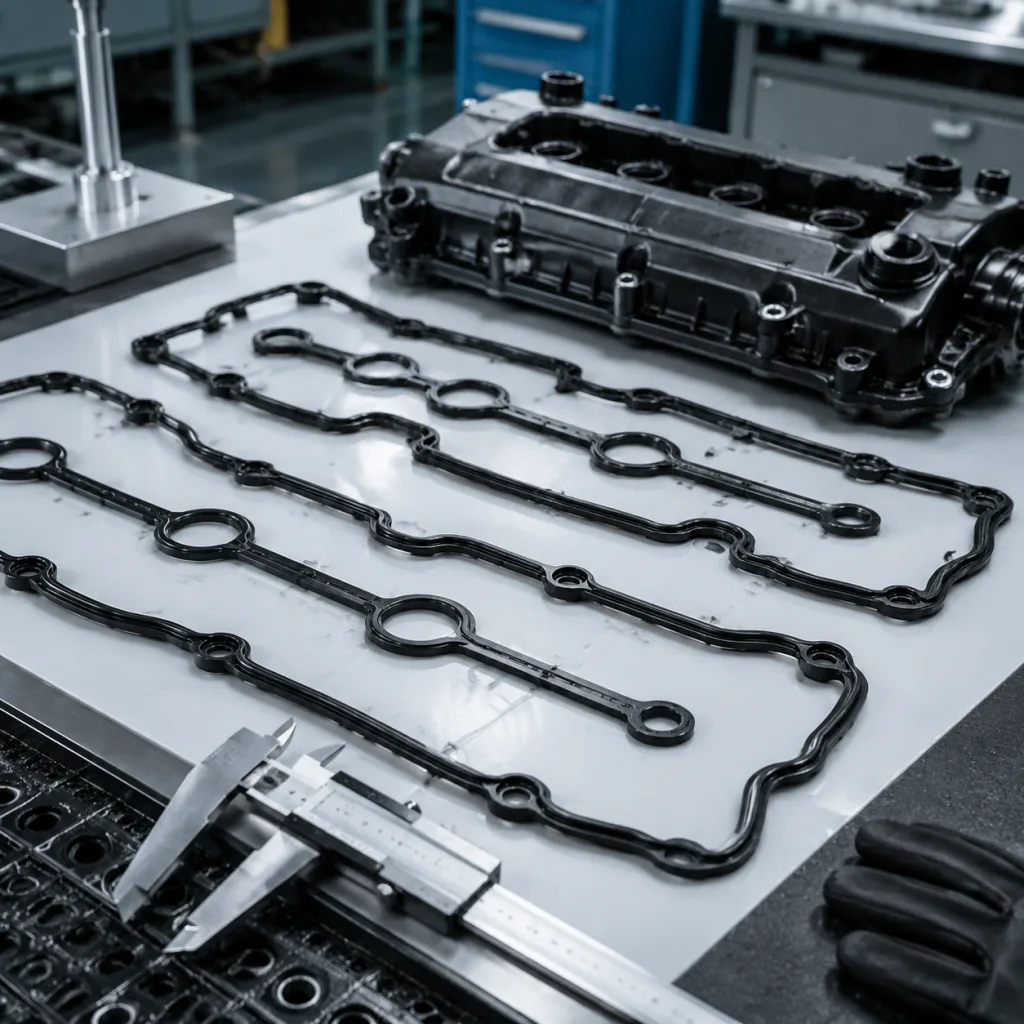
An engine mount fix is usually a replacement decision, not a field repair. For distributors, repair chains, and sourcing teams, the risk extends beyond post-installation noise or vibration. The larger commercial issue is stocking a mount that matches a catalogue application but fails on dimensions, rubber hardness, bonding strength, or installed behavior in real workshops. Engine mounts are safety-adjacent powertrain parts: they control engine movement, isolate vibration, and help protect connected systems such as exhaust joints, hoses, driveshafts, and brackets. A reliable replacement programme should therefore begin with OE-equivalent geometry, controlled rubber compound properties, consistent metal forming or casting, and documented inspection. This guide explains how procurement teams can specify, validate, and source replacement engine mounts from an independent aftermarket manufacturer. Driventus is an independent aftermarket manufacturer; brand names and OE references are used for fitment identification only.
When replacement is the correct repair path
A worn engine mount may appear as idle vibration, gear engagement shock, visible engine lift under load, exhaust knocking, or a clunk during acceleration and deceleration. Hydraulic mounts may also show fluid leakage. Because these symptoms can overlap with misfire, driveshaft, gearbox, exhaust, or suspension faults, repair networks should not replace mounts based only on customer descriptions.
For B2B buyers, the main challenge is repeatable diagnosis across multiple locations. A replacement engine mount should be specified when workshop inspection confirms one or more of the following conditions:
Rubber cracking through the load path, not only surface checking
Metal sleeve separation or rubber-to-metal bond failure
Collapsed height outside service expectation
Hydraulic fluid leakage on fluid-filled designs
Broken limiter, bracket, stud, or threaded insert
Excessive engine roll compared with the service benchmark
Bonded rubber mounts are not normally repairable in the field. Adhesives, fillers, or re-tightening cannot restore the original rubber modulus, compression height, damping behavior, or bonding area. A correct engine mount fix depends on installing a replacement mount that matches the original load path, bracket geometry, and isolation function.
OE-equivalent fitment requirements
Procurement teams should treat fitment as a controlled engineering requirement, not only a catalogue claim. A mount can look correct but still create installation problems if bolt centres, bracket angles, sleeve length, stop positions, or installed height drift from the reference sample.
Driventus uses OE part-number cross-references where applicable, such as OE 06A… or OE 11251… families, to help distributors map applications. These references support fitment identification only and do not imply vehicle manufacturer approval, endorsement, or original equipment supply status.
Fitment item
What to verify
Procurement risk if missed
Bolt-hole centre distance
Checked by fixture or CMM against reference sample
Angle, offset, and stop position compared with OE sample
Engine roll limit changes and NVH complaints
Rubber void pattern
Same functional load direction and stiffness intent
Idle vibration or harsh take-off feel
Hydraulic chamber layout
Matched where the OE design uses fluid damping
Poor low-frequency isolation or leakage risk
</tr></thead><tbody> </tbody></table>For importers and programme managers, the approval sample should be measured before purchase order release rather than after bulk production. A sealed reference sample is also useful for future batch comparison, warranty review, and supplier change-control discussions.
Materials and validation for rubber-metal mounts
Most engine mounts combine stamped steel, cast aluminium, rubber, and bonding systems. The material mix varies by platform, engine weight, torque reaction, heat exposure, and mount position. Natural rubber is common where fatigue resistance and vibration isolation are required. EPDM may be used where heat, ozone, or environmental resistance is the priority, but compound choice must follow the original function of the part rather than a generic material preference.
A credible replacement programme should define measurable checks instead of relying on visual similarity. Driventus manufacturing and inspection are managed under IATF 16949:2016 and ISO 9001:2015 principles. Material declarations can also be reviewed against REACH (EC) No 1907/2006 for EU market access where relevant.
Validation area
Typical control method
Buyer evidence to request
Rubber hardness
Shore A measurement on compound or controlled part area
Batch inspection record
Rubber-to-metal bonding
Peel, pull, or destructive section checks
Test report or production control plan
Static stiffness
Compression or displacement under defined load
Curve or acceptance range
Dynamic behaviour
Frequency-based vibration test where required
Laboratory result for sampled part
Corrosion resistance
Salt spray or coating thickness checks
Coating specification and inspection record
Dimensional repeatability
Gauge, fixture, or CMM inspection
First article inspection report
</tr></thead><tbody> </tbody></table>For high-volume repair chains, static stiffness and installed height are especially important because both affect workshop outcomes. A mount that is dimensionally correct but too soft can increase engine roll and stress adjacent parts. A mount that is too hard may reduce customer satisfaction because idle vibration transfers into the cabin.
Sourcing controls for distributors and repair chains
An engine mount programme should be sourced with the same discipline used for other powertrain components. The part has a direct effect on perceived vehicle quality, and installers quickly identify poor fit, incorrect hardware interfaces, or abnormal vibration after installation.
Recommended sourcing controls include:
Application mapping: confirm vehicle model, engine code, transmission type, production range, and mount position before launch.
Reference sample control: compare production samples with OE and approved aftermarket samples.
Packaging validation: protect brackets, studs, hydraulic chambers, and rubber edges from deformation during sea freight.
Traceability: mark carton and batch information so warranty returns can be linked to production lots.
Warranty review: separate true mount defects from installation error, collision damage, torque procedure issues, or failed adjacent parts.
Forecast planning: align MOQ and shipment timing with repair-chain demand and distributor replenishment cycles.
Buyers can review our catalog for engine and powertrain ranges, including rubber-metal parts and related engine components. For programmes that require drawings, special compounds, private label packaging, or application development, Driventus can support custom manufacturing from sample analysis through production validation.
Inspection checklist before approving a supplier
Supplier approval should combine technical evidence, manufacturing review, and commercial controls. A low unit price does not offset repeated labour claims, customer dissatisfaction, or returns caused by poor fit, early rubber cracking, or bond separation.
Approval checkpoint
Minimum expectation
Why it matters
Certification
IATF 16949:2016 and ISO 9001:2015 scope relevant to production
Confirms structured process control and corrective action methods
Incoming material control
Rubber, metal, bonding agent, and coating records
Reduces batch variation
Tooling and fixtures
Dedicated forming, bonding, and inspection fixtures
Improves dimensional repeatability
Sample submission
Dimensional report, material checks, and packaging sample
Reduces launch risk
Change control
Notification for compound, tooling, process, or sub-supplier changes
Prevents unapproved variation after launch
Corrective action
8D or equivalent issue response method
Supports repair-chain warranty management
</tr></thead><tbody> </tbody></table>Driventus operates from Taizhou, Zhejiang, with vertically integrated engine and powertrain component manufacturing. Our quality system supports batch traceability, inspection records, and documented corrective action. For buyers importing into the EU, UK, US, Canada, Australia, or Brazil, supplier documentation should be reviewed before container-level orders are placed.
Commercial specification for an engine mount fix programme
The fastest way to stabilise a replacement programme is to define the commercial and technical specification together. If the buyer only provides a vehicle list, the supplier may quote a visually similar part without understanding the acceptance criteria, validation evidence, packaging needs, or target service conditions.
A practical RFQ package should include:
Target application list and market region
OE cross-reference family, using formats such as OE 06A… or OE 11251… when available
Mount position: left, right, front, rear, upper, lower, or gearbox side
Transmission type and engine variant where relevant
Annual forecast, launch quantity, and replenishment pattern
Required packaging: neutral, distributor brand, repair-chain kit, or bulk pack
Inspection requirements: dimensions, hardness, stiffness, bonding, and coating
Documentation needs for customs, compliance, and quality approval
For replacement programmes, Driventus can support sample reverse engineering, drawing confirmation, prototype review, pilot production, and batch supply. The objective is not only to complete one engine mount fix at workshop level, but to reduce repeat claims across many installation points and keep the range commercially stable over time.
Frequently asked questions
Bonded rubber-metal and hydraulic mounts are normally replaced, not repaired. Field adhesives or fillers cannot restore original stiffness, installed height, damping behavior, or bond strength. A replacement part should match the OE-equivalent geometry, load path, and rubber properties.
Request dimensional reports, rubber hardness records, bonding validation, coating checks, sample packaging review, and evidence of process control under IATF 16949:2016 and ISO 9001:2015. For EU supply, review material compliance against REACH (EC) No 1907/2006 where applicable.
No. OE cross-references such as OE 06A… or OE 11251… are used for fitment identification and catalogue mapping only. They do not indicate approval, endorsement, or supply to any vehicle manufacturer.
If you are building or replacing an engine mount range, share your application list, samples, and forecast. Driventus can review fitment, validation, packaging, and supply options when you [request a quote](/contact.html).