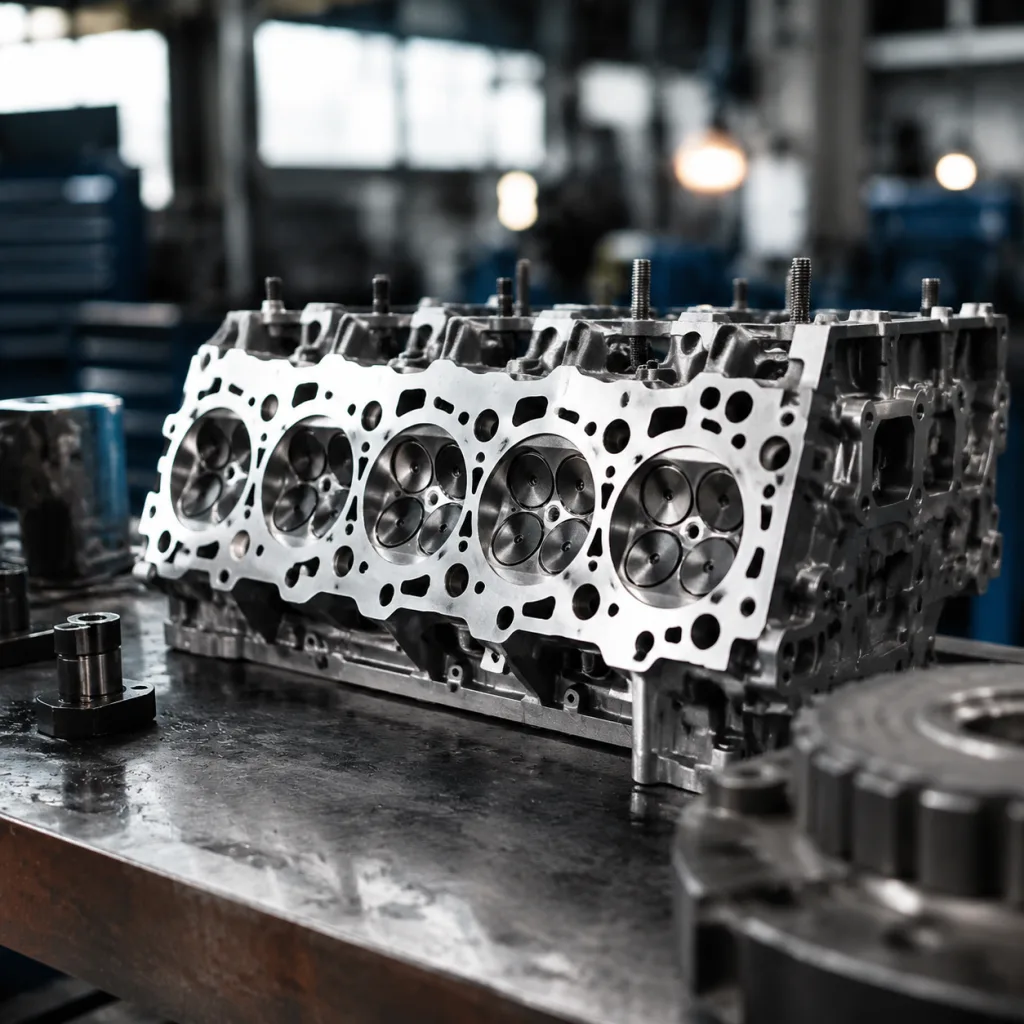
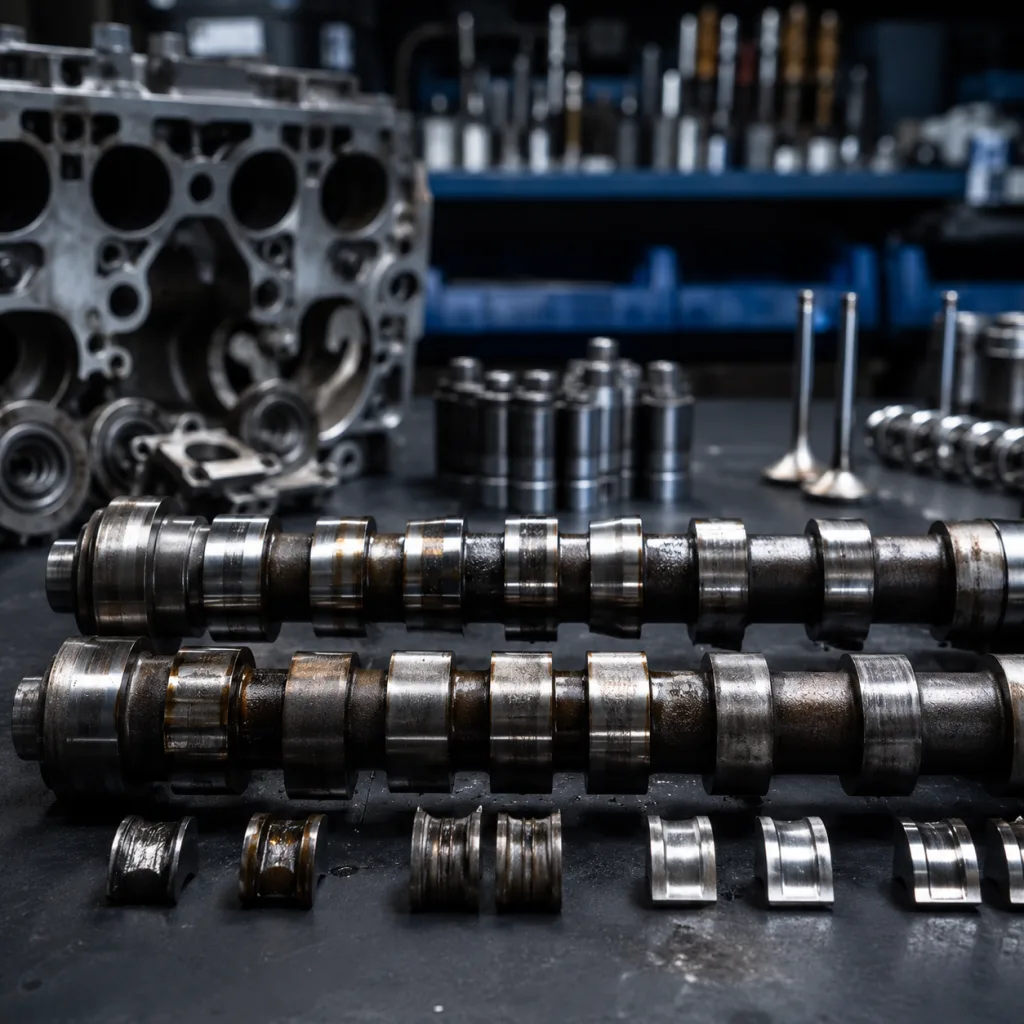
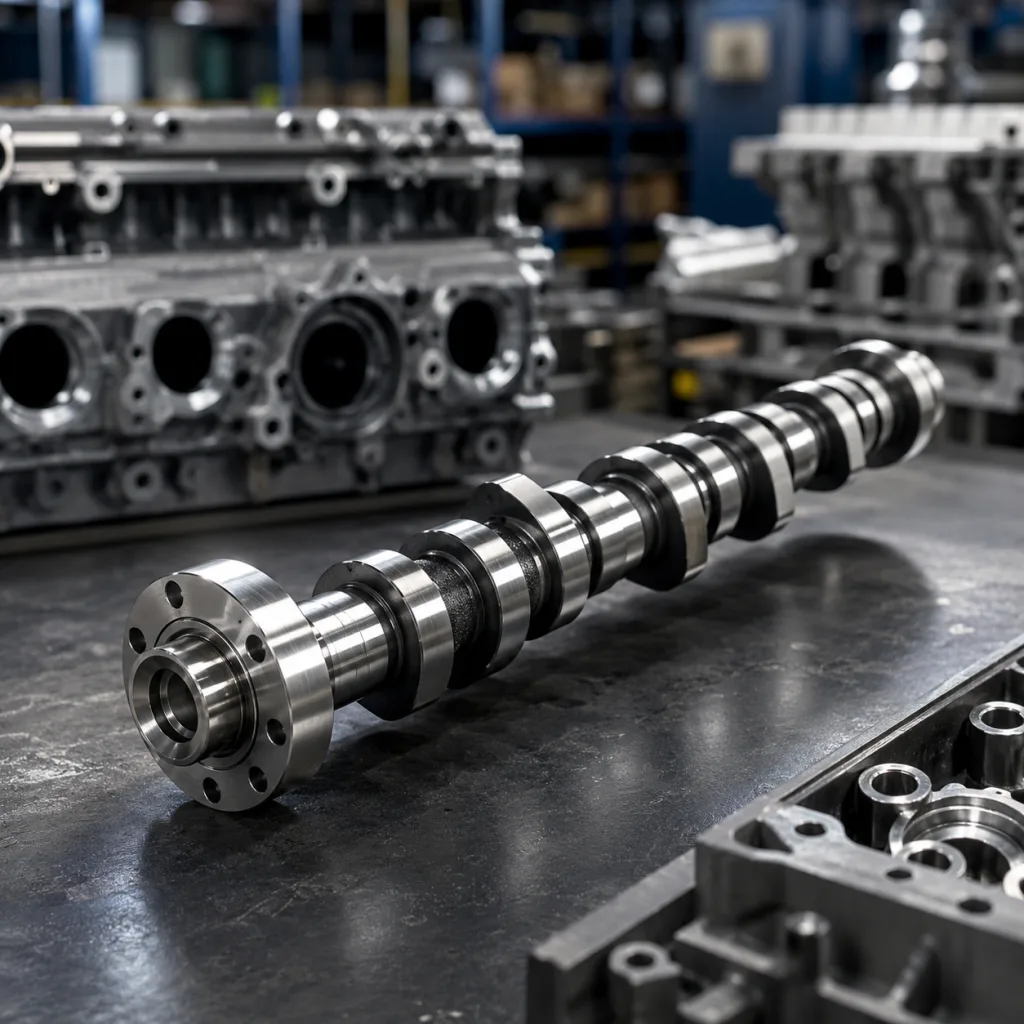
An engine ticking noise does not automatically mean an engine bearing has failed, but bearing wear needs early attention because damage accelerates quickly once the oil film is compromised. For procurement teams, repair chains, fleet workshops, and engine rebuilders, the practical challenge is separating valvetrain noise, injector pulse, exhaust leakage, timing drive wear, oil starvation, and true bearing damage before parts are ordered. Main and connecting rod bearings can present as a sharp tick at idle, a heavier rhythmic knock under load, or a noise that changes with oil temperature and pressure. Excessive clearance, overlay fatigue, journal scoring, or debris in the oil circuit can turn a brief cold-start tick into repeat failure if the root cause is not corrected. Driventus is an independent aftermarket manufacturer; brand names are referenced for fitment only. This guide explains the symptom pattern, inspection sequence, specification checks, and sourcing controls used to diagnose an engine ticking noise engine bearing concern and reduce avoidable warranty returns. For part selection, see our catalog, and for custom dimensions and private-label supply, review our quality system and custom manufacturing options.
What an engine ticking noise can mean
A ticking sound is a symptom, not a diagnosis. In engine service, the noise can come from a hydraulic lifter, injector, exhaust leak, timing chain guide, piston pin, accessory drive, or an engine bearing that has lost the correct oil film. The first step is to identify where the sound is strongest, when it appears, and how it responds to rpm, load, oil temperature, and oil pressure.
A light tick at the top of the engine is often associated with valve lash, hydraulic tappet bleed-down, cam follower wear, or injector operation. A sharper tick from the lower block or sump area, especially one that becomes heavier when the throttle is snapped or the engine is placed under load, deserves immediate bearing inspection. Rod bearing noise is often more rhythmic and load-sensitive than injector noise, while main bearing noise can be duller and may be accompanied by low hot idle oil pressure.
Typical bearing-related patterns include:
Tick that becomes louder with load or rpm increase
Noise that changes after oil temperature rises and oil viscosity drops
Low oil pressure at hot idle or delayed pressure rise after start-up
Metallic debris in the oil filter, sump, or oil pickup screen
Copper, lead-colored, or aluminum bearing material visible during inspection
Noise that is strongest at the crankcase, sump rail, or lower block with a stethoscope
History of oil starvation, incorrect oil grade, overheating, or recent engine repair
The sound description alone should not drive procurement. A ticking engine bearing concern should be confirmed through oil pressure testing, debris inspection, and dimensional measurement. If the sound is deep and rhythmic, the fault is more likely to be a rod bearing or main bearing than a top-end component. If the sound is very light and follows injector pulse, the bearing should still be considered where oil pressure is low or contamination is present, but it may not be the first cause.
How bearing wear creates ticking or knock
An engine bearing supports the crankshaft on a thin hydrodynamic oil film. Under correct conditions, the crankshaft journal does not run directly on the bearing shell; it is separated by pressurized oil, correct clearance, journal geometry, and stable housing alignment. When clearance increases beyond specification or the oil film breaks down, the crankshaft can impact the bearing shell during load reversal and combustion events. That impact may begin as a tick and develop into a knock as bearing material wears away.
Bearing wear usually starts with one or more system problems: oil contamination, oil starvation, incorrect viscosity, excessive fuel dilution, overheating, crankshaft misalignment, housing bore distortion, or debris left after a prior failure. A new bearing fitted into a damaged rod big end, distorted main tunnel, or scored crankshaft journal will not solve the underlying cause. This is why an engine ticking noise engine bearing diagnosis must include both the bearing shell and the parts that control its oil film.
Common bearing failure modes
Failure mode
What it does
Typical observation
Overlay fatigue
Top layer cracks, flakes, or wipes away under repeated load
Fine metallic debris in oil and dull or patchy shell surface
Seizure or smear
Oil film collapses and material transfers between journal and shell
Scored journal, discolored shell, heat marks, and rough surface finish
Excess clearance
Crankshaft impacts the bearing shell during combustion and load reversal
Tick at idle, louder knock under load, and low hot oil pressure
Edge wear
Misalignment, bore distortion, bent rod, or incorrect assembly loads one side of the shell
Localized wear at shell edges or uneven polish pattern
Embedded debris
Hard particles enter the oil film and become trapped in the bearing overlay
Scratches following crank rotation and particle marks in the shell
Corrosion or chemical attack
Degraded oil, coolant contamination, or aggressive combustion by-products attack the bearing surface
Staining, pitting, and uneven surface loss
</tr></thead><tbody> </tbody></table>For rebuilders and sourcing teams, the important point is that a ticking noise does not mean the bearing itself is the only damaged part. The crankshaft journal, connecting rod big end, main housing bore, oil pump, oil cooler, oil galleries, and lubrication system must be inspected together. If contamination remains in the oil circuit, even a correctly specified bearing set can fail quickly after installation.
Inspection sequence before ordering replacement bearings
A structured inspection reduces avoidable returns, incorrect orders, and repeat repairs. Before replacement bearings are purchased, the workshop should confirm whether the engine needs standard shells, undersize shells for a reground crankshaft, oversize outside diameter shells for a corrected housing bore, or a complete bearing set after contamination. Procurement should request measurement data rather than relying only on vehicle application or engine code.
Recommended inspection sequence:
1. Verify oil level, oil grade, oil condition, and service history, including any overheating, low-pressure warning, oil pump replacement, or previous crankshaft work. 2. Check hot and cold oil pressure against the engine specification using a mechanical gauge where possible, not only the dashboard warning lamp. 3. Cut open the oil filter and inspect the media for non-ferrous bearing material, ferrous crankshaft debris, sludge, and signs of coolant contamination. 4. Listen with a stethoscope or chassis ear at the sump, lower block, timing cover, cylinder head, valve cover, and accessory drive to separate bottom-end noise from top-end or external sources. 5. Disable cylinders one at a time where the engine design and diagnostic procedure allow; a rod bearing noise may change when combustion load is removed from the affected cylinder. 6. Remove the sump and inspect bearing shells for polish, scoring, copper show-through, aluminum transfer, heat marks, and uneven wear across the shell width. 7. Measure crankshaft journals for diameter, taper, ovality, surface finish, and scoring with calibrated micrometers. 8. Measure housing bores and connecting rod big ends for roundness, alignment, cap shift, and distortion using calibrated bore gauges. 9. Compare oil clearance against the engine builder’s target and OE repair data, then document whether the crankshaft is standard, undersize, or outside service limit.
If the engine has already run with low oil pressure, replace the affected bearings and inspect the crankshaft for taper, ovality, and surface damage before reassembly. If metallic debris is present, clean or replace the oil cooler, flush oil galleries according to the repair method, and inspect the pump and pickup. Ordering bearings before these checks can lead to the wrong shell grade, incorrect clearance, and a second failure that looks like a parts problem but began as an unresolved lubrication or machining issue.
Replacement choices and specification checks
Selecting the correct bearing is a dimensional and material-control exercise. For procurement, the main checks are shell size, locating feature, axial width, tang position, oil hole alignment, groove design, and coating or overlay type. The application listing is only the starting point; the final choice must match the measured crankshaft journal, housing bore, and repair stage of the engine.
Key specification points to confirm:
Standard, undersize, or oversize journal match after measurement or crankshaft machining
Axial width, crush height, side relief, and thrust face requirements where applicable
Material system: tri-metal, aluminum-tin, copper-lead, or application-specific overlay where applicable
Groove pattern, oil hole count, oil hole position, and chamfer clearance for the crank journal radius
Shell back finish, locating tang position, and cap orientation compatibility
Thrust bearing design, flange width, and crankshaft end float specification for main bearing sets
Engine family, revision level, and OE 06A... / 11251... cross-reference where the application uses that convention
Material selection should reflect the engine duty cycle. A passenger vehicle rebuild, commercial fleet engine, high-load turbocharged engine, and industrial application may place different demands on fatigue strength, embedability, conformability, and seizure resistance. If the crankshaft has been reground, the bearing undersize must match the actual machined diameter, and the journal fillet radius must clear the shell chamfer. If the housing bore has been resized, confirm whether standard outside diameter shells remain suitable.
Driventus manufactures engine and powertrain components to IATF 16949:2016 and ISO 9001:2015 controlled processes. Where a sourcing team needs a non-standard dimension, alternative overlay, specific packaging format, or market-specific cross-reference, our custom manufacturing service can support engineering samples, private label, and serial production alignment. For repeat orders, provide engine code, OE reference, journal measurements, housing bore measurements, annual volume, packing requirements, and destination market so the specification can be locked before production.
Procurement controls that reduce repeat failures
Repeat bearing failures often come from weak incoming control, unclear specifications, contamination, or incomplete repair data rather than from the bearing alone. A buyer or purchasing engineer should confirm the supplier’s traceability, coating control, dimensional inspection, surface finish requirements, and packaging cleanliness before volume orders are released. This is especially important for distributors and rebuild programs where one incorrect batch can affect multiple workshops or export markets.
Check for:
Batch traceability to material heat, production lot, inspection record, and packing date
Dimensional inspection records with stated tolerances for wall thickness, width, crush, oil holes, and profile features
Material and overlay confirmation, including controlled plating or coating thickness where used
Clean-room or controlled packing to reduce abrasive contamination before installation
Corrosion protection for sea freight, long storage, and humid destination markets
Packaging that prevents shell movement, edge damage, and mixed-size confusion during handling
Validation against applicable engine duty cycle, lubricating oil conditions, and thermal load
Clear cross-reference management when OE numbers, aftermarket numbers, and regional application data differ
Incoming inspection should include more than counting boxes. Sampling plans should verify shell markings, dimensional consistency, surface condition, oil hole alignment, and packing cleanliness. For engine bearing sets, confirm that upper and lower shells are not mixed where the design uses different grooves, materials, or oil feed features. Where repair chains use multiple branches, label standard and undersize stock clearly to prevent installation errors.
For export markets, confirm compliance documentation where required, including REACH (EC) No 1907/2006 for restricted substances in the EU. For durability programs, ask whether the supplier uses internal validation aligned to application conditions and recognized test methods such as SAE J2527 where relevant to surrounding powertrain components. Our quality system page explains the controls used from incoming material to final packing, helping sourcing teams connect supplier documentation with the practical causes of engine ticking noise engine bearing claims.
When to replace the bearing set instead of one shell
If one bearing has failed from oil loss, debris, incorrect clearance, or crankshaft damage, replacing only the visibly damaged shell is usually a short-term fix. The damaged shell is often the most obvious result of a system problem that has also affected adjacent journals, the oil pump, the oil cooler, and oil galleries. In most rebuild cases, the full set should be replaced on the affected circuit, and the complete engine bearing set should be renewed if contamination has circulated through the lubrication system.
Replace the full set when:
The oil filter contains metallic debris or bearing overlay material
Multiple journals show scoring, heat damage, or abnormal polish patterns
The crankshaft has been reground, polished, or replaced
The engine has run after low oil pressure, oil starvation, or severe overheating
There is no reliable record of prior repair dimensions or shell grade selection
The oil cooler, turbocharger oil feed, or lubrication galleries may have carried debris
Main bearing wear and connecting rod bearing wear are both visible during teardown
A fleet or remanufacturing program requires consistent warranty control across engines
A single-shell repair may be considered only when the root cause is clearly isolated, the crankshaft journal and housing bore remain within specification, the oil system is clean, and the remaining bearings show normal wear. Even then, the risk should be weighed against labor cost and warranty exposure. In commercial repair and export supply, replacing the set is often more economical than reopening the engine.
After installation, verify oil clearance, micrometer and bore gauge readings, plastigage results where appropriate, cap orientation, torque procedure, crankshaft end float, oil pump condition, and priming before first start. Rotate the crankshaft by hand after assembly and confirm oil pressure before allowing extended running. This is the point where sourcing discipline matters as much as fitment. Review our catalog for engine components, or use our request a quote page if you need a specific OE cross-reference, lot volume, custom dimension, or export schedule.
Frequently asked questions
Yes. A worn main bearing or rod bearing can tick at idle or under load, especially when oil pressure is low, clearances are excessive, or the oil film has broken down. The sound should be confirmed by oil pressure testing, debris inspection, and dimensional measurement, not guessed from noise alone.
If a bearing has failed from debris, oil starvation, incorrect clearance, or crank damage, replacing the full set on the affected circuit is usually safer. Many rebuilds also require crankshaft inspection, polishing, or regrinding before new shells are fitted.
Ask for dimensional inspection data, batch traceability, material specification, coating or overlay control records, and quality controls aligned to IATF 16949:2016 and ISO 9001:2015. For EU shipments, confirm REACH documentation where applicable.
If you need engine bearings by OE reference, custom dimensions, or export supply support, request a quote at /contact.html