lower engine gasket set · 2026-06-19

Engine Stalling at Idle: Lower Engine Gasket Set Diagnosis

Engine stalling at idle rarely starts with the lower end of the engine. The first checks are still fuel pressure, ignition quality, intake leaks, idle-air control, battery voltage, ECU fault codes, and throttle or idle relearn status. But when those checks do not explain the complaint, mechanical sealing deserves a closer look.

A lower engine gasket set can influence idle indirectly. Leakage, poor seating, wrong sealant use, or missing ancillary seals may disturb crankcase pressure, PCV flow, oil vapour control, coolant separation, or sensor cleanliness. The result can look like a fuel-trim problem, a vacuum leak, a contaminated throttle body, or a load-compensation fault.

For distributors, repair-chain buyers, and sourcing engineers, the issue is not only “can this gasket cause stalling?” It is “will the kit fit the exact engine, seal after heat cycling, include every small part the technician needs, and arrive the same way in every shipment?” This article links the workshop diagnosis of engine stalling at idle lower engine gasket set concerns with the sourcing controls that reduce returns. Driventus is an independent aftermarket manufacturer; vehicle brand names and OE references, where used, are for fitment identification only.

Decision Framework: When the Lower Gasket Set Belongs in an Idle-Stall Diagnosis

A lower engine gasket set is not the default suspect when an engine stalls at idle. It becomes relevant when conventional checks are clean, when crankcase pressure behaviour is abnormal, or when the symptom appeared after lower engine service.

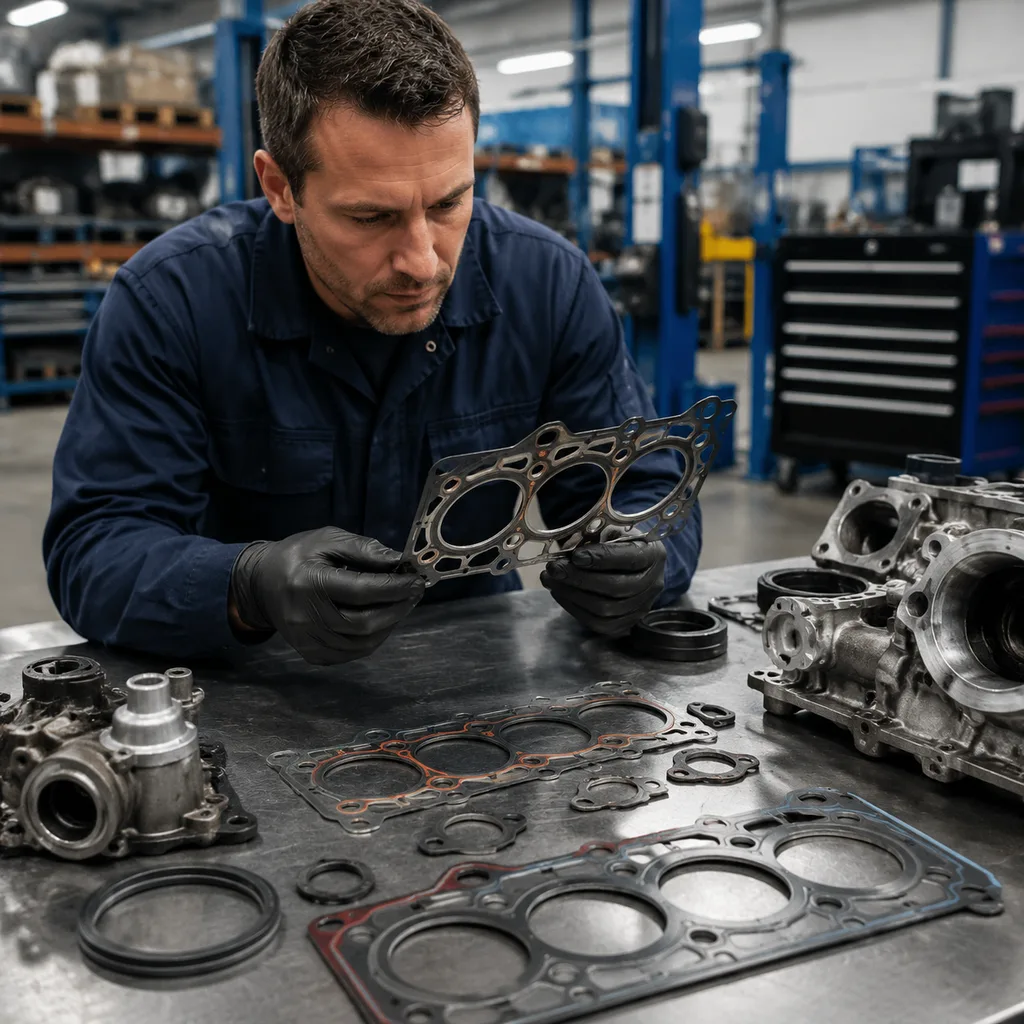
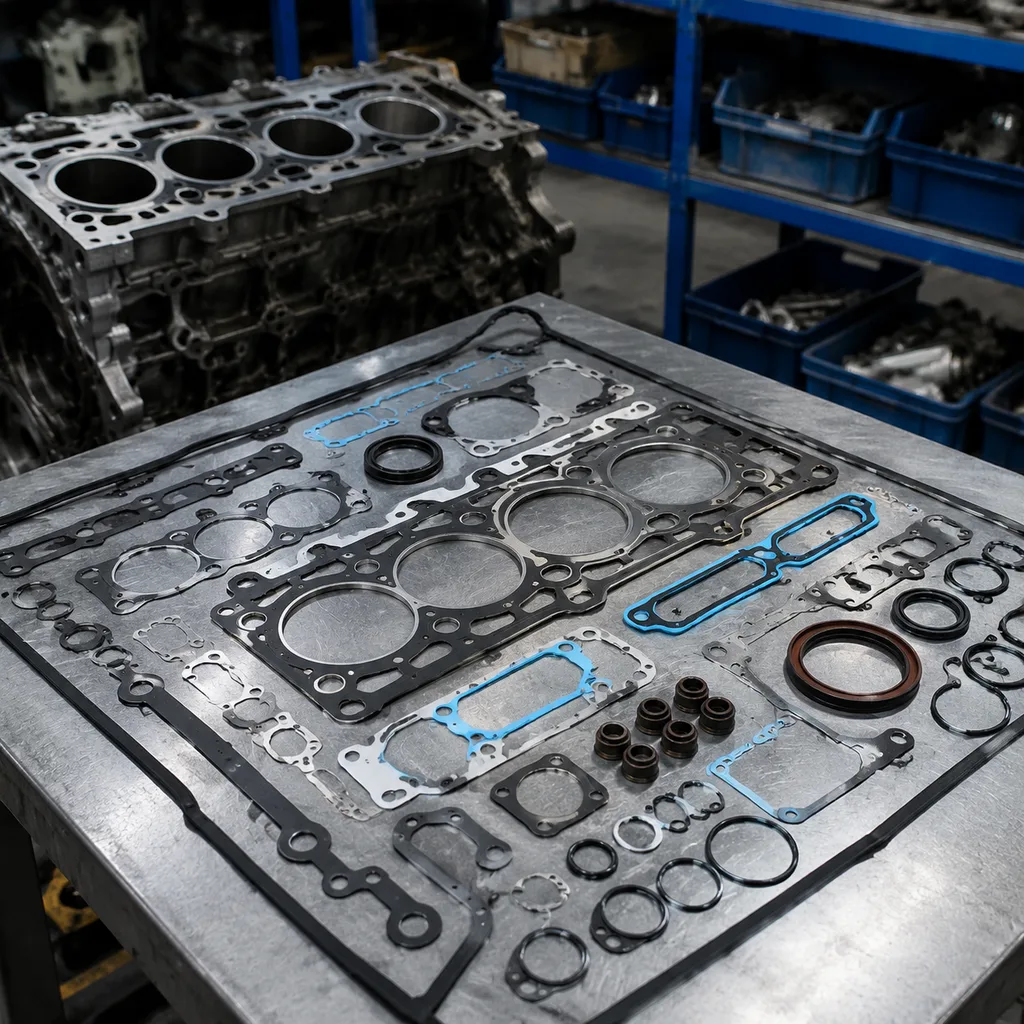
Depending on the engine design, the set may include sealing parts for the oil pan or sump, lower crankcase joints, timing cover lower sections, oil pump housing, rear main seal carrier, pickup tube, drain-related seals, and associated covers. These components sit far from the throttle plate, but they can still create conditions that idle-control systems struggle to correct.

Use this decision logic:

  • Start elsewhere first: Confirm ignition, fuel delivery, intake sealing, compression, charging performance, ECU codes, throttle condition, EGR operation, and idle relearn status.
  • Move to crankcase behaviour: Check whether idle quality changes with PCV load, oil-cap removal, hot soak, or accessory load. Do not rely on the oil-cap test alone.
  • Look for service history: If stalling began after oil pan, timing cover, rear seal carrier, or oil pump housing work, inspect seating, sealant, hose routing, and any sensor or harness disturbed during the job.
  • Separate seepage from failure: Light oil staining is common on older lower joints. Active leakage, repeatable pressure deviation, fluid mixing, or a direct timing relationship with the idle fault is stronger evidence.
  • Verify against specifications: Battery voltage, charging output, idle-speed target, fuel trims, and crankcase pressure limits should be checked against the vehicle manufacturer’s data, not estimated.

Typical passenger-vehicle reference points may include battery voltage near 12.4–12.8 V engine off and roughly 13.5–14.7 V charging. Warm idle targets often sit around 650–850 rpm, but diesel, turbocharged, hybrid-assist, high-load, and emissions-specific calibrations vary. Crankcase vacuum or pressure limits vary even more by engine family.

The practical rule: investigate the lower engine gasket set when the evidence points to sealing, pressure control, contamination, or a post-repair change. Do not replace it simply because the engine stalls.

Failure Modes: How a Lower Engine Seal Can Create an Idle Complaint

Lower engine sealing problems usually create idle issues through secondary effects. That is why they are easy to miss and easy to over-blame.

Key failure modes include:

  • Crankcase pressure imbalance: A damaged lower crankcase, sump, timing cover, or carrier seal can disturb ventilation flow. On engines with sensitive PCV control, that may shift manifold pressure, alter fuel trims, and cause a hot idle to hunt or stall.
  • Unmetered air through related paths: Some ventilation and lower-cover designs tie crankcase sealing to intake-side control. A leak may not behave like a classic intake-manifold leak, but the ECU may still see unstable air or pressure behaviour.
  • Oil vapour carryover: Poor sealing or abnormal crankcase pressure can increase oil mist in the intake stream. Deposits on the throttle body, MAP sensor, mass-airflow sensor, oxygen sensors, or intake valves can slow response and reduce idle stability.
  • Oil and coolant separation loss: Lower interfaces can sit near galleries or coolant-adjacent joints. Internal leakage may change oil viscosity, create sludge, increase friction, or produce roughness that resembles misfire at low speed.
  • Sealant-related restriction: Excess RTV can squeeze inward, detach after curing, and restrict oil pickup screens, small galleries, or drainback paths. The idle complaint may then be mechanical or lubrication-related rather than air-fuel related.
  • Load-compensation limits: A marginal idle may only stall when A/C, cooling fans, steering assistance, alternator load, or gear engagement is added. Abnormal crankcase or PCV flow can push the control system outside its correction range.
  • Post-service assembly faults: A shifted gasket, debris under the rail, wrong bead height, over-tightened fasteners, crossed PCV hoses, or a disconnected sensor can create a complaint that did not exist before the repair.

For warranty review, this distinction matters. A material fault, a kit-content error, a wrong application, and an installation fault all need different corrective actions. Treat “engine stalling at idle lower engine gasket set” as a linked symptom-and-system investigation, not as a single-part diagnosis.

Symptom Matrix: Match Idle Behaviour to Evidence Before Ordering Parts

A structured symptom matrix prevents unnecessary lower engine gasket replacement when the real cause is throttle adaptation, intake leakage, weak fuel delivery, ignition breakdown, EGR malfunction, wiring, or software. It also gives distributors and repair networks cleaner evidence for warranty analysis.

</tr></thead><tbody> </tbody></table>A useful diagnostic sequence is short, repeatable, and documented:

1. Read ECU fault codes, pending codes, and freeze-frame data before clearing anything. 2. Check battery voltage, charging output, ground points, and idle relearn status after recent service. 3. Compare short-term and long-term fuel trims at idle, under accessory load, and around 2,500 rpm. 4. Smoke-test intake and crankcase-related paths, including PCV connections. 5. Inspect the lower engine perimeter for active oil leakage, coolant tracking, dust trails, or washed-clean areas. 6. Measure crankcase pressure with a manometer. 7. Review repair history, gasket source, sealant use, tightening sequence, and ventilation hose routing. 8. Compare live idle speed with the application target for the exact engine code.

If stalling started only after lower engine work, check assembly first: gasket seating, excess RTV, blocked pickup screens, crossed or disconnected PCV hoses, disturbed grounds, unplugged sensors, and any part removed for access. Many “gasket failures” begin as installation errors.

Symptom Matrix: Match Idle Behaviour to Evidence Before Ordering Parts

Pre-Replacement Gate: Evidence That Justifies Opening the Lower End

Do not open the lower engine because of dampness alone. Many lower joints show old residue without causing idle instability. Replacement is easier to justify when the evidence links sealing condition to pressure control, fluid condition, or a repeatable idle symptom.

Before approving a lower engine gasket set replacement, check these points:

  • Joint flatness: Inspect the oil pan rail, timing cover face, lower crankcase interface, and carrier housings for distortion. Lightweight aluminium parts can warp after overheating, impact damage, or over-tightening. A practical shop limit of about 0.10–0.15 mm across the sealing span may trigger correction, but the service manual takes priority.
  • Surface condition: Remove old gasket material without gouging the mating face. Aggressive abrasive discs can embed particles, round sealing edges, and reduce long-term sealing performance.
  • Fastener condition: Stretched, corroded, contaminated, or incorrect bolts change clamp load. Follow the specified torque sequence, angle steps, and replacement-bolt rules. Small lower-cover fasteners may fall in the 8–25 N·m range, while structural fasteners can be much higher.
  • Sealant control: Many lower engine kits require sealant only at corners, split lines, or timing-cover joints. Too much RTV can squeeze into oil passages. Where specified, bead size is often only 2–4 mm; skin time may be 15–30 minutes, with full cure taking several hours before fluid fill.
  • PCV and breather routing: Confirm that hoses, separators, check valves, and breather passages are clean and correctly connected.
  • Fluid condition: Inspect oil for coolant, fuel dilution, sludge, or metallic debris. Check coolant for oil film or unexplained loss.
  • Component alignment: Some covers locate sensors, pulleys, or seal carriers. Misalignment can create leakage, belt noise, crankshaft seal wear, or sensor air-gap issues.
  • Post-cleaning verification: Degrease the area, run the engine, and note whether wetting returns within 10–15 minutes of idle or only after a heat-soak cycle.

For fleet and chain-repair operations, keep the evidence with the repair record: photos before disassembly, after cleaning, and after installation; torque procedure; sealant type or batch; scan data before and after repair; and technician notes. Those details shorten warranty debates and make supplier analysis more accurate.

Kit Specification Deep-Dive: What Buyers Should Lock Before Purchase

Lower engine gasket set content changes by engine family, production date, emissions package, oil-pan design, timing-cover design, and repair scope. Missing small seals are a common cause of workshop improvisation. Reused compressed O-rings and washers raise comeback risk.

Define the bill of materials before ordering. Confirm whether the kit includes or excludes:

  • Oil pan or sump gasket, or a clearly stated formed-in-place sealant requirement
  • Lower timing cover gasket, perimeter seal, or moulded profile where applicable
  • Oil pump housing gasket, O-ring, or pressure-port seal where required
  • Rear main seal carrier gasket, flange seal, or related fastener seals
  • Pickup tube O-ring, drain plug washer, level-sensor seal, and ancillary lower seals
  • Crankshaft front or rear seal inclusion status if the programme covers broader lower-end service
  • Material type, such as NBR, ACM, FKM, silicone, coated steel, fibre composite, or multi-layer metal
  • Thickness tolerance, bead height, hole position, and cut accuracy for bolt holes, oil passages, coolant passages, and dowel locations
  • Batch code, production date, inspection status, and packing list on each carton or inner pack
  • Neutral packaging, private-label packaging, or customer-specified labelling
  • Application data covering engine code, model year range, and supersession notes
  • Target shelf life and storage conditions, especially for elastomers and RTV-specified kits stored in hot warehouses

Acceptance standards should be measurable. Examples include carton counts matching the approved BOM, 100% presence of critical seals, no visible edge damage, dimensional conformance to drawing, correct labels, and protected flat packing for thin gaskets.

Driventus manufactures engine sealing components under controlled process documentation. Our production and inspection approach is aligned with IATF 16949:2016 and ISO 9001:2015 requirements, including incoming material checks, die-cut or mould inspection, in-process sampling, final visual inspection, and traceable packing. Buyers can review related engine products in our catalog and engine-component families at /products/engine-components.html.

If your programme requires PPAP, first article inspection, sample approval, or private-label packaging validation, define it before mass release. Otherwise, the quoted unit price may not include the validation workload your channel actually needs.

Kit Specification Deep-Dive: What Buyers Should Lock Before Purchase

Supplier Comparison: Material, Validation, and Traceability Questions

Two lower engine gasket sets can look similar on a bench and behave very differently after heat cycling. The difference is usually compound control, cut accuracy, bead consistency, packaging, and repeat-order discipline.

Use supplier comparison around evidence, not claims:

Symptom at idle Possible lower-engine sealing link Inspection method Procurement note
Hot idle drops, hunts, then stallsCrankcase pressure leakage or PCV disturbanceSmoke test, crankcase vacuum/pressure test, scan-tool fuel trimsVerify gasket compression recovery and oil resistance
Oil seepage near sump, timing cover, or carrierGasket creep, incorrect bead height, fastener relaxation, distorted railUV dye, clean-and-run inspection, torque auditCheck dimensional match, bead profile, and anti-stick packaging
Rough idle after gasket serviceSeal misalignment, trapped debris, excess RTV, uneven clamp loadVisual inspection, borescope where accessible, service-history reviewRequire clear kit contents, installation notes, and batch traceability
Milky oil, rising coolant loss, or sludgeFluid-path sealing failure or incorrect sealant at coolant-adjacent jointCooling-system pressure test, oil analysis, leak-path inspectionConfirm material compatibility with glycol coolants and hot oil
Idle changes when oil cap is removedAbnormal crankcase pressure or restricted ventilationManometer test at dipstick tube or oil filler, PCV inspectionValidate PCV-related gasket interfaces and supplied ancillary seals
Stall occurs only with A/C or electrical loadECU compensation affected by unstable air or crankcase flowLoad test at idle, scan live data, compare fuel trims under loadReview application fitment and sealing geometry for the exact engine variant

</tr></thead><tbody> </tbody></table>For braking products, standards such as SAE J2527 may be relevant, but they do not apply to engine gasket performance. For engine sealing procurement, focus on quality management controls, material validation, drawing discipline, fitment verification, and consistency between approved samples and mass production.

A practical review asks four questions: What method was used? What sample size was tested? What pass/fail limit applied? Which engine family or gasket geometry was represented? Without those details, test summaries are hard to compare.

Driventus maintains a documented quality system for production control and can support custom manufacturing for drawings, samples, private-label kits, and application-specific lower engine gasket set programmes.

Driventus does not claim approval or endorsement by any vehicle manufacturer. OE part-number cross-references, when used, are for identification and fitment mapping only.

For buyer evaluation, start with a sample pack against a defined target. If the programme needs 100 sets for pilot service trials, request 3–5 validation samples first, then a pre-production lot, then a locked BOM for the first mass shipment. This sequence helps catch missing seals, packaging issues, and fitment errors before workshop rollout.

Workshop Playbook: Controls That Prevent Repeat Idle-Stall Returns

A good gasket can still fail in a weak process. Multi-location repair chains are especially exposed because the same part may be installed under different habits, tools, cleaning methods, and documentation standards.

Use a controlled replacement playbook:

1. Confirm engine variant, engine code, production date range, and kit contents before teardown. 2. Compare every removed gasket, O-ring, washer, and seal with the replacement part. 3. Clean mating faces with non-damaging tools and approved solvents. 4. Inspect for scratches, corrosion, gouges, warped rails, damaged dowels, and thread problems. 5. Check fastener length, condition, and replacement requirements before assembly. 6. Apply sealant only where specified, in the correct bead size, and within the allowed working time. 7. Use calibrated torque tools and follow the specified tightening pattern, staged torque values, and angle steps. 8. Allow sealant cure time where required before filling oil or coolant or starting the engine. 9. Refill with the correct oil and coolant specification, then bleed systems as required. 10. Recheck idle fuel trims, crankcase pressure, PCV operation, and leakage after warm-up. 11. If formed-in-place sealant is required, verify bead continuity at corners and around bolt holes before assembly continues. 12. Quarantine cartons with crushed corners, missing labels, open inner bags, or distorted thin gaskets. 13. Save scan-tool data, photos, torque notes, sealant details, and technician comments before and after repair.

If the vehicle still stalls after replacement, do not keep tightening bolts or replacing the same gasket. Continue diagnosis through intake air leaks, throttle adaptation, EGR function, injector balance, fuel pressure, compression, cam/crank correlation, exhaust restriction, charging stability, ECU software, and relearn procedures.

For importers and distributors, Driventus can provide sample evaluation, carton labelling, fitment review, private-label packing, and batch traceability for aftermarket programmes. To discuss current lower engine gasket set demand or application-specific requirements, request a quote.

Frequently asked questions

Yes, but usually indirectly. A leaking or poorly installed lower engine seal can disturb crankcase pressure, increase oil vapour, affect PCV operation, or contribute to contamination that changes idle control. Fuel, ignition, intake leaks, charging voltage, throttle adaptation, and ECU faults should still be checked first.

Useful evidence includes the oil or coolant leak location, smoke-test results, crankcase pressure readings, fuel-trim data, photos of the joint, service-history notes, and confirmation that PCV routing is correct. This helps separate gasket failure from installation issues or unrelated idle-control faults.

Yes. Driventus supports aftermarket distributors and repair-chain sourcing teams with gasket kit manufacturing, fitment mapping, neutral or customer packaging, sample review, and traceable production batches under IATF 16949:2016 and ISO 9001:2015 aligned controls.

If you are reviewing lower engine gasket set supply for distribution, workshop networks, or private-label programmes, Driventus can support sample review, fitment checks, and quotation. Contact our team at /contact.html

Request a Quote
Factor Why it matters What to request from supplier
Oil resistanceSwelling, softening, or shrinkage can reduce clamp load and create seepageMaterial declaration and immersion test data
Coolant and glycol resistanceCoolant exposure can attack unsuitable elastomers or coatingsCompatibility statement and ageing data in coolant media
Compression setPoor recovery creates leakage after heat cycling and clamp-load relaxationCompression set results by material batch or approved compound
Heat ageingLower covers and seal carriers see sustained temperature exposureAgeing test conditions, duration, temperature, and acceptance criteria
Cut and mould toleranceMisaligned holes can tear during installation or block fluid passagesDimensional inspection report, drawing control, and sample approval records
Bead profile or coating consistencyUneven sealing features can cause local leaks under low clamp loadCross-section checks, coating specification, and process controls
TraceabilityNeeded for warranty analysis, containment, and repeat-order consistencyLot code, date code, carton-level records, and retention-sample policy
Chemical complianceRequired for many import and distribution programmesREACH (EC) No 1907/2006 declaration where applicable
Packaging protectionDistorted, stuck, or contaminated gaskets may fail before installationFlat packing method, moisture protection, separator sheets, and carton strength
Heat rangeMaterials that are fine in ambient storage may fail in service if the formulation is weakContinuous and peak temperature ratings for each compound
Dimensional stabilityRepeat orders must fit the same way across production lotsCp/Cpk or comparable process capability data for critical dimensions
Seal-life validationBuyers need evidence beyond appearanceHeat-cycle, oil-immersion, and clamp-load retention test summaries