An idle stall usually starts as an air, fuel, ignition, sensor, voltage, or idle-control problem. The engine block belongs in the conversation only when the evidence points to mechanical sealing or structure: low compression, coolant entering a cylinder, oil-coolant mixing, vacuum leakage at block-related interfaces, bore wear, a distorted deck after overheating, or damaged threads that reduce head-gasket clamp load. For repair chains, distributors, and procurement teams, the question is commercial as much as technical: fix it with a gasket, machining, thread repair, or ancillary work—or source a replacement engine block, short block, or long block to reduce comeback risk. This article treats engine stalling at idle engine block cases as a decision process, not a parts guess. Driventus manufactures engine and powertrain components in Taizhou, Zhejiang, under IATF 16949:2016 and ISO 9001:2015 systems, supplying aftermarket distributors, OEM/Tier-1 buyers, and multi-location repair operations.
Triage First: When an Idle Stall Is Not a Block Problem
A stall at idle is a symptom. Do not turn it into a block order too early.
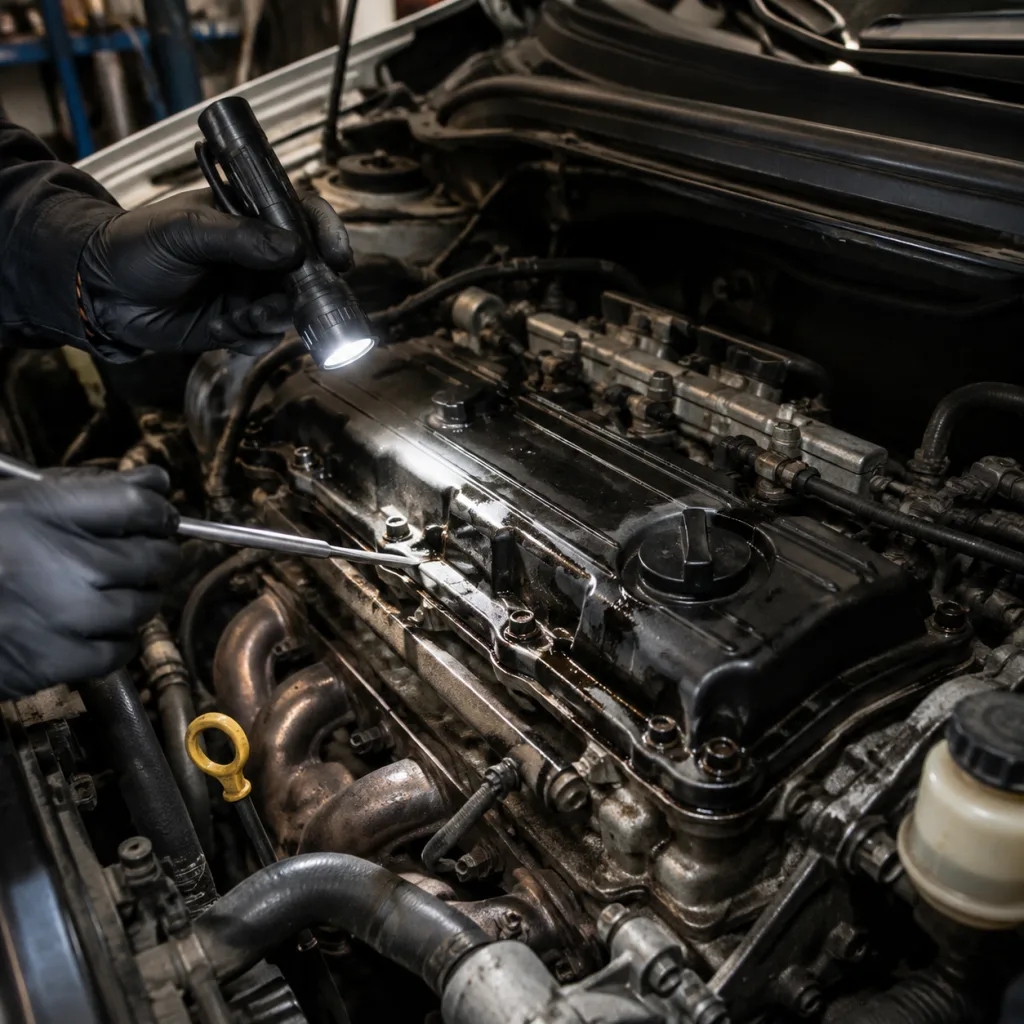
Start by defining the event. Reproduce the stall at a controlled idle speed, often 650–850 rpm for many gasoline passenger engines and 700–900 rpm for many light-duty diesel applications. Log coolant temperature, intake air temperature, fuel trims, misfire counters, battery voltage, MAP/MAF values, and commanded idle position while the fault is happening.
Capture these details before any teardown:
Does the engine stall cold, warm, after hot-soak, or at all temperatures? Record coolant temperature in °C.
Does it stall after throttle release, during gear engagement, with A/C load, under electrical load, or while idling in neutral?
Is restart immediate, delayed, or only possible with throttle input?
Are DTCs current, pending, historical, or absent? Save freeze-frame data before clearing anything.
Do misfire counters rise on one cylinder, one bank, or across all cylinders?
Are coolant level, oil level, oil condition, and crankcase pressure stable over a measured distance or engine-hour interval?
Is there a history of overheating, coolant loss, hydrolock, poor maintenance, detonation, incorrect coolant concentration, or head-gasket repair?
Has the engine recently had timing work, injector replacement, head removal, or overheating repairs?
Most idle stalls still come from ordinary causes: throttle body deposits, idle air control faults, MAF error, vacuum leaks, EGR leakage, fuel pressure instability, injector imbalance, weak ignition, poor grounds, low charging voltage, or crank/cam signal faults. Test these first. As a basic gate, confirm charging voltage around 13.5–14.7 V with the engine running, fuel pressure within the maker’s stated range, and no unmetered-air condition indicated by abnormal trims before authorising engine disassembly.
Move the block into the suspect list only when the stall lines up with compression loss, coolant in the combustion chamber, oil-coolant cross-contamination, cylinder wall scoring, abnormal crankcase pressure, or deck flatness deviation after thermal damage. For sourcing and warranty teams, weak evidence creates expensive disputes. A replacement block should be backed by dry and wet compression readings, leak-down percentages, cooling-system pressure-decay results, bore dimensions, deck flatness data, surface-condition notes, contamination evidence, and photos of physical defects.
Failure Modes: How the Block Can Make a 700 rpm Engine Quit
The block does not command idle speed. It causes idle trouble when it can no longer support combustion sealing, fluid separation, crankshaft alignment, or gasket clamping. At idle, the crankshaft has little reserve energy. A cylinder that feels only slightly weak at 2,500 rpm can become a dead contributor at 700 rpm when the A/C compressor, alternator, power steering, or transmission load comes in.
Block-related condition
What happens at idle
How to prove it
Typical procurement action
Worn, tapered, or scored cylinder bore
Low or uneven compression; cylinder-specific misfire at idle
Compression test, leak-down test, borescope, dial bore gauge at top/middle/bottom in thrust and non-thrust axes
Short block or engine block replacement
Warped deck surface
Head gasket sealing loss; coolant or compression leakage
Repair with approved insert if allowed; replace if unreliable
</tr></thead><tbody> </tbody></table>A failed gasket by itself does not convict the block. Check deck flatness, corrosion around coolant passages, thread pull-out, erosion near fire rings, bore condition, and overheating marks. Many workshops use working flatness warnings around 0.03–0.05 mm across short spans and 0.05–0.10 mm over the full deck, but the engine maker’s service limit overrides generic values. MLS gaskets often need a smoother, more controlled finish than older composite gaskets, commonly around Ra 0.4–1.2 µm depending on gasket design.
Material changes the risk profile. Aluminium blocks need special attention to thread integrity, hardness loss after overheating, and insert repair quality. If bolt torque rises inconsistently, torque-angle readings scatter, or a bolt keeps turning without clamp increase, a gasket-only repair is not safe. Cast iron blocks shift attention toward corrosion, freeze-plug areas, and crack propagation around water jackets. Driventus is an independent aftermarket manufacturer; brand names and OE references are used for fitment identification only.
Shop Workflow: Prove the Mechanical Fault Before the Purchase Order
A good workflow protects the customer, the branch, and the buyer. It moves from low-cost checks to dimensional proof before anyone orders a block.
1. Clear the non-block suspects
Before opening the engine, verify:
Battery voltage and charging stability at idle; log voltage with headlights, blower, rear defogger, and A/C engaged.
Throttle body cleanliness, adaptation status, and idle control response after service reset where applicable.
Intake leaks, including PCV hoses, intake manifold seals, brake booster line, dipstick tube seals, and oil cap sealing.
Fuel pressure at idle, during throttle snap, and after key-off where residual pressure matters; record the value and decay time.
Injector balance and spray pattern where equipment permits; a cylinder-to-cylinder delivery difference of more than about 5–10% can mimic compression loss.
Engine coolant temperature, manifold pressure, oxygen sensor, and mass airflow data for plausibility.
Cam/crank synchronisation and timing-chain or belt condition if symptoms suggest timing drift.
If these systems pass and the idle fault remains cylinder-specific, temperature-related, or load-sensitive, continue.
2. Measure compression and leakage
Run a dry compression test with a fully charged battery, open throttle where required, disabled fuel/ignition, and equal cranking duration per cylinder. Many healthy gasoline engines show roughly 10–14 bar (145–200 psi). Comparison matters more than the absolute number: more than 10–15% variation is usually a warning, and more than 20% calls for further testing. Diesel compression limits are higher and application-specific, so use the service manual.
Run a wet test when readings are low. If a cylinder improves significantly after adding a small measured amount of oil, often 5–10 ml, suspect ring or bore sealing loss. If it does not improve, consider valve leakage, head gasket failure, deck distortion, or a crack in the head or block.
Leak-down testing shows the escape path. Use regulated shop air, commonly 80–100 psi test pressure, and test near top dead centre on the compression stroke:
0–10% leakage: generally strong sealing on many engines.
10–20% leakage: serviceable to marginal depending on mileage and application.
20–30% leakage: likely to affect idle quality if cylinder-specific.
Above 30% leakage: high probability of misfire, low torque contribution, and stall under load.
Read the direction of the leak:
Air from the intake: intake valve leakage.
Air from the exhaust: exhaust valve leakage.
Air from the crankcase or oil filler: piston ring, piston, or bore issue.
Bubbles in coolant: head gasket leakage, deck sealing failure, or cracked head/block.
Air between adjacent cylinders: gasket fire-ring failure or deck/head surface problem.
3. Match the numbers to the complaint
Mechanical evidence must fit the symptom. A single low cylinder with misfire counts on that cylinder supports a local sealing problem. Coolant pressure rise during cranking, unexplained coolant loss, or white exhaust smoke strengthens the case for coolant entering the chamber. Milky oil can indicate coolant contamination, but short-trip condensation should be ruled out with a warm oil sample and cooling-system pressure test.
For repeated engine stalling at idle engine block suspicion, attach the evidence to the repair order: compression by cylinder, leak-down percentage and leakage path, cooling pressure start/end values over 10–30 minutes, borescope images, and the technician’s repairability judgement. Procurement and warranty teams can then choose a bare block, short block, or complete engine assembly from our catalog with less guesswork.
Spec Deep-Dive: What to Measure After the Head Comes Off
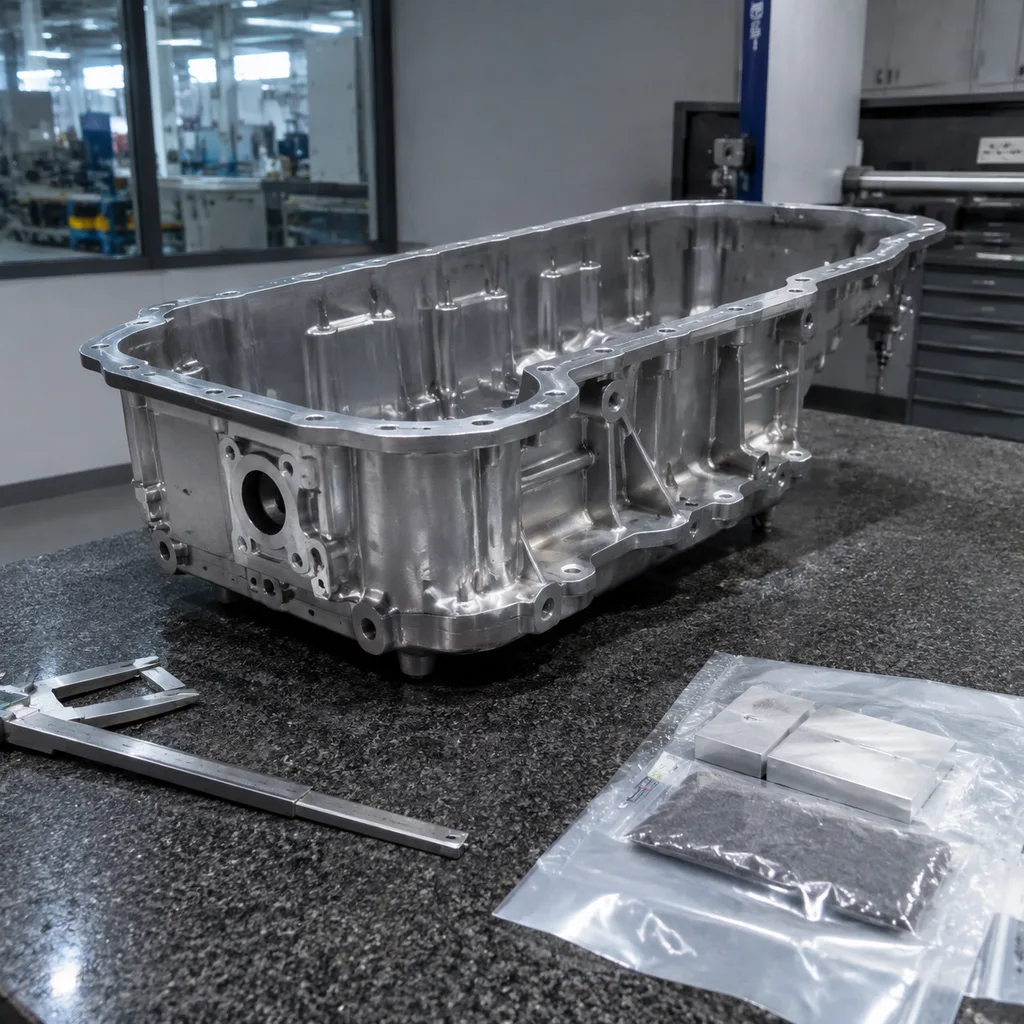
Once the cylinder head is removed, the job changes. Visual inspection is not enough. Clean the block first; carbon, gasket residue, sealant beads, and coolant scale can hide defects and distort measurements.
Use this measurement list as the core of the block review:
Deck flatness: inspect longitudinally, transversely, and diagonally using a precision straightedge and feeler gauge. Typical working reject ranges are often above 0.05 mm on small spans or 0.10 mm overall, but use the engine-specific limit.
Surface finish: confirm gasket-compatible roughness, especially for MLS head gaskets. Many MLS applications target roughly Ra 0.4–1.2 µm with no deep chatter marks, abrasive grooves, or low spots around fire rings.
Bore diameter: measure near the top, middle, and lower sections of each cylinder in two axes, usually thrust and non-thrust directions, with a calibrated dial bore gauge or air gauge.
Taper and out-of-round: compare measured values with the service limit. Practical warning values are often 0.03–0.05 mm for taper or ovality on many light-duty engines, while performance and diesel applications may require tighter judgement.
Cylinder wall condition: check for scoring, glazing, rust, cavitation, ridge wear, and evidence of piston seizure. Vertical scoring you can catch with a fingernail is rarely a safe gasket-only repair.
Thread condition: inspect head bolt holes, main cap threads, accessory mounting points, and any previous insert repairs. Confirm depth, perpendicularity, and clean thread engagement; bottomed bolts can mimic torque without clamping.
Coolant and oil gallery integrity: conduct pressure or dye testing where leakage, porosity, or cracking is suspected. Pressure-test values depend on design, but many cooling-side checks are performed around cap pressure plus margin, commonly 1.0–1.5 bar, while supplier production tests may use higher controlled pressures.
Main bearing alignment: review cap fit, bearing wear marks, tunnel geometry, and signs of cap movement. Uneven bearing wipe, fretting at caps, or tight crank rotation after assembly indicates alignment risk.
Corrosion and erosion: inspect coolant passages, fire-ring areas, freeze-plug zones, and gasket sealing lands. Pitting that crosses a fire ring or fluid passage sealing line is a high-risk defect.
Cleanliness: verify that oil and coolant passages are free from abrasive residue, sealant fragments, metal chips, blasting media, and machining debris. For volume supply, specify capped galleries, washed passages, and residue limits in the purchase agreement.
Overheating complicates everything. A block may look usable and still fail flatness, hardness, or thread-pull expectations. Surface preparation is another common failure point. Aggressive grinding can reduce deck height, change texture, expose porosity, or leave a surface that will not hold a gasket. Multi-location repair networks should use a standard checklist with numeric pass/fail fields so branches do not make different decisions on the same defect.
When replacement is required, match more than the engine code. Confirm material, deck height, bore configuration, oil gallery routing, coolant passage layout, sensor bosses, mount locations, transmission interface, dowel positions, crank sensor trigger arrangement, oil pan interface, and accessory mounting points. Driventus can support application-specific engine component supply and custom manufacturing where drawings, samples, or validated specifications are available.
RFQ Reality Check: Buying a Block That Will Not Create the Next Stall
For B2B procurement, the technical file behind the part matters as much as the casting. An engine block is a structural component and a sealing foundation. A low-cost unit without dimensional control can create repeat idle misfire, oil leakage, bearing noise, head gasket failure, coolant loss, or premature wear. Define the RFQ before arguing about price.
Request these documents and controls:
IATF 16949:2016 and ISO 9001:2015 certification scope.
Material specification and heat treatment record where applicable; for aluminium blocks, state alloy grade and heat-treatment condition.
Casting inspection plan, including porosity control, X-ray or section checks where specified, and pressure testing where required.
Critical dimension report for deck, bore, main tunnel, threaded holes, mounting features, dowel holes, gasket interfaces, oil galleries, and sensor bosses.
Machining process controls for datum location, tool wear, surface finish, coolant concentration, fixture clamping, and in-process inspection frequency.
Cleaning and contamination control process for oil galleries, coolant passages, and threaded holes.
Packaging method to protect machined faces, cylinder bores, dowel locations, and threaded features; ask for VCI bagging, bore protection, deck covers, thread plugs, and export cartons or crates where needed.
Batch traceability, inspection records, and warranty claim procedure with response time, evidence requirements, and credit/replacement rules.
Compliance statements where relevant, including REACH (EC) No 1907/2006 for EU market chemical obligations.
Your RFQ should also state annual forecast, first-order quantity, target market, packaging format, inspection standard, delivery term, and whether the order is for bare blocks, semi-finished blocks, fully machined blocks, short blocks, or assembled long blocks. MOQ follows casting lot size, machining setup, inspection load, and packaging. For aftermarket block projects, practical MOQs may be 20–50 pieces for validated repeat items, 100–300 pieces for new machining batches, and higher where new tooling, fixtures, or casting development is needed. Sample orders may be possible, but unit price is usually higher because setup, inspection, and export packing are spread over fewer units.
Price normally comes from casting weight and yield, alloy or iron cost, machining cycle time, tool consumption, pressure/leak testing, surface treatment if required, inspection labour, scrap allowance, packaging, and inland/export freight. Split lead time into stages: 7–15 days for engineering review when drawings and samples are complete, 30–60 days for sampling on an existing platform, 60–120 days for new tooling or fixture work, and 25–45 days for repeat production after deposit and specification freeze. Add sea freight, customs clearance, and regional warehousing to the delivery plan.
Driventus operates a documented quality system aligned with automotive production controls. For engine blocks and related engine components, this includes incoming material checks, machining process control, dimensional inspection, leakage testing where applicable, cleanliness control, and final packaging checks.
Use OE part-number cross-references carefully. References such as OE 06A… or OE 11251… can help identify fitment families, but the purchasing specification still needs casting features, machining version, sensor provisions, emission-market variation, transmission compatibility, and regional application. Do not source a replacement block solely from a partial reference or a visual match.
Repair, Machine, or Replace? A Practical Decision Matrix
A low-compression idle stall does not automatically mean a new block. The decision depends on damage type, service limits, labour rate, vehicle value, downtime, parts availability, machining capability, and warranty exposure. Compare total job cost, not part price alone: diagnosis time, teardown, machining, gaskets, bolts, fluids, cleaning, vehicle bay occupancy, rework probability, and customer downtime all matter.
Decision path
Suitable when
Risks to control
Gasket replacement only
Deck and head flatness are within limit; no cracks, thread damage, or bore defects are found
Repeat failure if overheating, detonation, cooling-system blockage, or clamping issue remains
Machining and reuse
Material thickness, deck height, and surface finish can remain within specification
Cracks, severe scoring, porosity, unrecoverable thread failure, deck distortion, or alignment defects are confirmed
Incorrect variant selection, contamination, handling damage, or inadequate packaging protection
</tr></thead><tbody> </tbody></table>A useful fleet rule: replace rather than repair when the expected comeback cost is greater than the saving from machining. If machining saves 15–25% on the parts invoice but adds 2–4 days of downtime and leaves a measurable repeat-gasket risk, a validated short block may be cheaper in real operating cost. If the deck is only slightly out of tolerance and the machine shop can document final flatness, surface finish, and deck height, machining may be the stronger commercial choice.
For distributors, stocking should follow application coverage, known failure modes, inspection feedback, customs lead times, and regional demand—not one urgent inquiry. Separate fast-moving repair items from slow variants. Keep validated high-failure blocks or short blocks in regional inventory, source slow variants against confirmed orders, and use forecast-based blanket orders where MOQ pressure is high. Buyers can review related blocks, pistons, gaskets, water pumps, crankshafts, and other engine components through our catalog, including engine-component categories at /products/engine-components.html.
If your network is seeing repeated engine stalling at idle engine block failures across one application family, build a case file. Include failed samples, mileage data, fuel type, service history, thermal history, coolant condition, DTC records, compression/leak-down results, bore and deck measurements, and inspection photos. That evidence separates product specification issues from field maintenance, overheating, fuel quality, installation, or calibration causes.
Frequently asked questions
Yes, but indirectly. A cracked, warped, porous, or worn block can reduce compression, allow coolant into a cylinder, affect head gasket sealing, or disturb crankshaft alignment. At idle, the engine has less reserve torque, so these mechanical faults can lead to misfire and stalling.
Complete electronic diagnostics, air and fuel checks, dry/wet compression testing, leak-down testing, coolant pressure testing, bore measurement, deck flatness inspection, thread inspection, and visual checks for cracks, corrosion, porosity, and overheating damage. Replacement should be supported by measured evidence, not only symptoms.
Driventus supplies independent aftermarket engine components using fitment references and buyer specifications. We do not claim vehicle manufacturer approval. Brand names and OE references are used for fitment identification only.
If you need block inspection criteria, fitment confirmation, MOQ guidance, or supply options for a recurring idle-stall application, send drawings, samples, photos, annual forecast, or reference data to request a quote at /contact.html