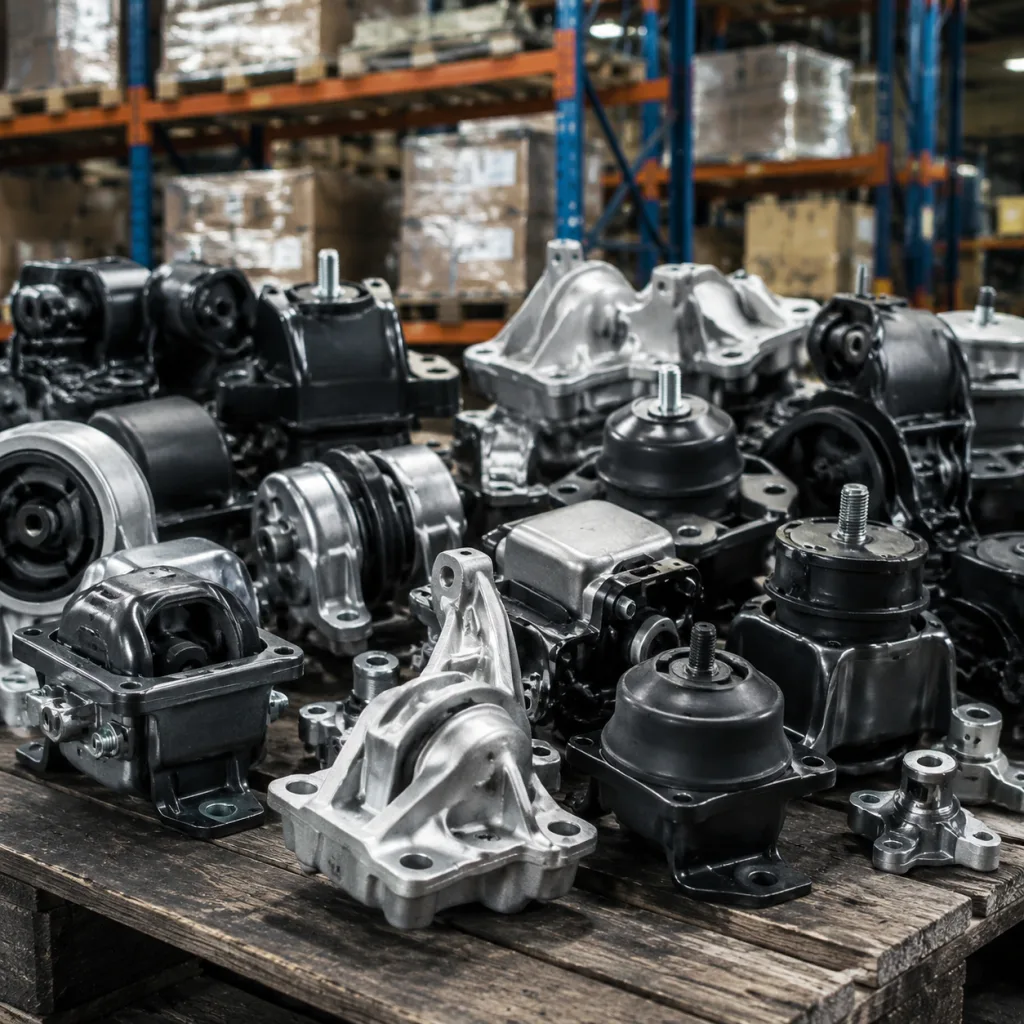
Buying engine mount Jeep wholesale is not a catalog-matching exercise. It is a risk decision: will the mount locate the powertrain correctly, control vibration, survive heat and oil exposure, and install without fighting the technician?
The costly failures are usually predictable. A vague RFQ leads to wrong hardness, bracket drift, poor rubber-to-metal bonding, sleeve movement, carton damage, or a mount that fits the bolt holes but transmits idle shake. Warranty labour can then exceed the part cost.
This article gives importers, aftermarket distributors, wholesalers, OEM service suppliers, and repair-chain buyers a practical sourcing framework for Jeep engine mounts from China. It covers fitment definition, material and bonding controls, MOQ planning, factory evidence, landed-cost comparison, export paperwork, and warehouse-ready packaging.
Driventus manufactures engine and powertrain components in Taizhou, Zhejiang, and exports to 60+ countries under IATF 16949:2016 and ISO 9001:2015 controlled processes. Driventus is an independent aftermarket manufacturer; vehicle brand names are referenced only to describe fitment compatibility and do not imply approval, endorsement, or affiliation.
Start With a Fitment Decision, Not a Price Sheet
Before asking for final pricing, decide exactly what the mount must fit and how the SKU will be sold. Jeep applications can include hydraulic mounts, solid rubber mounts, torque struts, and transmission-side mounts. Small changes in engine family, drivetrain, production year, or mount position can change stiffness, bracket geometry, sleeve location, and installed orientation.
For a serious RFQ, provide sample parts where possible. Add 2D drawings, 3D data, six-side photos, critical dimensions, installed orientation, and OE-style cross-references if available. Treat any OE-style number as a fitment clue, not proof. It should be verified against samples, drawings, or buyer-approved fitment data. Driventus does not claim approval or endorsement by any vehicle manufacturer.
A useful wholesale specification answers these points:
Application list by model, engine code, transmission type, drivetrain, and production year range
Mount position: left, right, front, rear, upper torque strut, lower torque strut, or transmission mount
Mount construction: hydraulic, solid rubber, rubber-metal bonded, or bracket assembly
Rubber type: natural rubber, EPDM, CR, NBR blend, or oil-resistant compound as required by the location
Rubber hardness target, normally Shore A with tolerance such as 55±5, 60±5, or a sample-matched range
Metal bracket material, insert material, coating type, corrosion target, and minimum plating or coating thickness if specified
Static load, dynamic stiffness, rebound control, compression set, and durability targets where available
Barcode, carton label, pallet label, country-of-origin text, private-label artwork, and warehouse receiving format
Commercial terms: MOQ, annual volume, lead-time, payment terms, Incoterms, sample policy, and rolling forecast support
Then split the list by demand. A first programme often uses 50–300 pieces per fast SKU, 20–100 pieces per medium SKU, and sample or trial quantities for low-demand applications, subject to availability, tooling status, and packaging needs. New tooling or private-label packaging usually requires a higher commitment because mould cost, fixture setup, artwork control, and first-article validation must be recovered across the order volume.
This early sorting prevents a common mistake: two mounts look similar in a catalog photo, but behave differently under torque, heat, and road load. Driventus can review existing part lists against our catalog and advise whether the programme fits standard aftermarket supply or requires custom manufacturing.
Failure Modes That Should Shape the Specification
A Jeep engine mount is both a vibration isolator and a structural locating part. Rubber controls stiffness and damping. Metal brackets, sleeves, studs, and bonded inserts hold the powertrain in position during acceleration, braking, cornering, towing, and off-road shock.
Cheap mounts usually fail in visible ways: rubber-to-metal separation, sleeve movement, bracket corrosion, compression set, oil swelling, heat hardening, cracked rubber, stripped threads, or bolt holes that force installation. The specification should attack these risks directly. Do not write “good rubber” or “OE quality” and expect consistent results.
Where no drawing exists, approve a golden sample. Define which dimensions are critical to fitment and which performance points are benchmarked against that sample.
Failure risk
Control point to specify
Why it matters
Idle vibration or harshness
Shore A target with agreed tolerance, commonly ±5 Shore A
Balances isolation with movement control
Excess engine movement
Dynamic stiffness tested at agreed preload, frequency, and amplitude, or benchmarked to sample
Maintains NVH and torque reaction control
Rubber peeling from bracket
Bond validation by durability, pull, peel, or destructive section review
Prevents early tearing under load
Sagging powertrain position
Compression set limit after heat and compression exposure
Reduces misalignment and driveline knock
Rust before or after installation
Zinc plating, electrophoretic coating, paint, or defined finish with salt-spray target
Controls corrosion in storage, transit, and service
Installation rejection
Critical holes, sleeves, studs, and bracket faces controlled to drawing or sample
Reduces labour claims and returns
Thread damage
Go/no-go gauge inspection, thread protection, and torque-relevant checks where required
Prevents failed installation
Heat-related hardening
Heat-ageing check, often 70–100°C depending on specification
Limits cracking and stiffness drift near engine-bay heat
Oil swelling
Compound selected for splash-zone exposure and checked for swelling or softening
Protects support and durability
Transit damage
Individual bag or box, protected threads, master carton, export pallet, and weight limit
Prevents bracket impact, rubber abrasion, and label errors
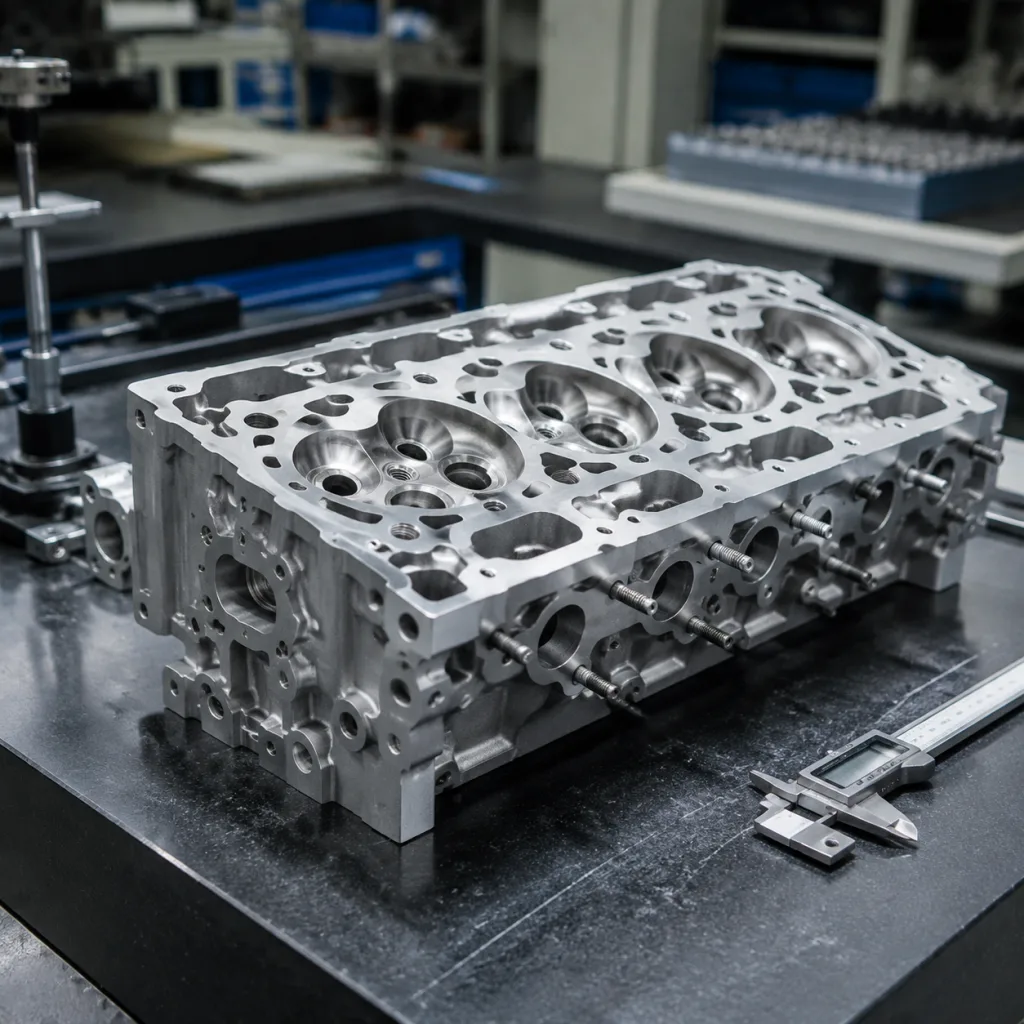
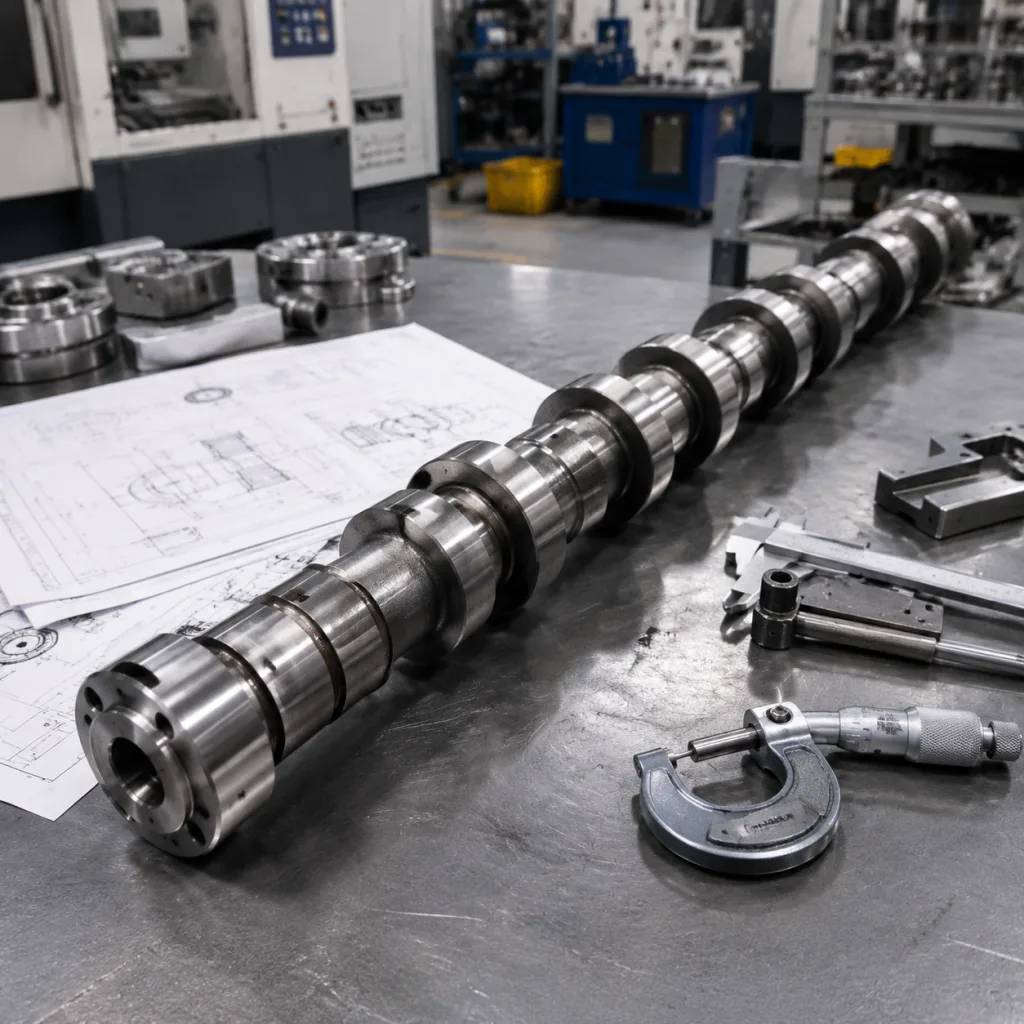
</tr></thead><tbody> </tbody></table>Dimensional control should not treat every feature equally. Tighten functional points such as bolt-hole location, sleeve inner diameter, stud position, and bracket datum faces. Allow wider cosmetic tolerance only where it does not affect installation or performance. Many aftermarket programmes require 100% checks on threads, studs, assembly orientation, and obvious defects, plus sampling inspection for hardness, key dimensions, coating appearance, and packaging accuracy.
The supplier file should also state management-system and compliance references. Driventus operates under IATF 16949:2016 and ISO 9001:2015. For EU-bound shipments, importers may request material declarations or REACH-related statements under Regulation (EC) No 1907/2006, depending on customer policy and article composition.
Build the MOQ Plan Around SKU Velocity
A stable wholesale programme needs more than a purchase order. It needs a production and inventory logic. The factory should control, or have approved control over, tooling, rubber compound preparation, metal stamping or casting, surface treatment, bonding, assembly, inspection, and export packing. Clear process ownership reduces uncontrolled subcontracting and makes corrective action faster.
Ask questions that expose the operating model:
What is the MOQ per SKU, per shipment, per carton style, and per private-label artwork version?
Can slow-moving SKUs be consolidated with faster-moving engine or transmission mounts?
Which SKUs are standard catalog items, semi-standard items, or new-tooling projects?
What price breaks apply at sample, trial, pallet, LCL, and container quantities?
How are first-article samples measured, tested, and approved before mass production?
What inspection records are supplied with each batch or shipment?
Can labels, cartons, barcodes, and pallet marks be private-labelled for distributors?
Are pallet dimensions, carton weights, and stacking heights suitable for EU, UK, US, Canada, Australia, or Brazil warehouse systems?
How does the factory handle forecast changes, urgent replenishment, discontinued applications, and engineering changes?
For standard engine mount Jeep wholesale orders, mixed-SKU consolidation can widen coverage without burying cash in slow movers. Quote by SKU family and demand class. Fast movers can support sharper pricing and larger batch production. Slow movers often carry higher unit prices because setup, inspection, packaging, and warehouse handling are spread over fewer pieces.
Compare offers on the same basis. EXW, FOB, CIF, and DDP are not interchangeable. Inland freight, export handling, insurance, duty, local delivery, customs brokerage, and inspection cost can change the landed result.
Planning ranges are usually 7–15 days for available samples, 25–45 days for standard catalog production after deposit and artwork approval, and 45–90 days or more for new tooling, trial moulding, fitment review, and validation. Private-label cartons, new barcodes, custom pallet marks, or customer-specific inspection reports add time if artwork and data are not approved before production starts.
For new part development, include every gate: sample review, measurement, tool design, trial moulding, bonding validation, durability checks, packaging approval, and pre-shipment inspection. Driventus can support low-volume trial orders for selected SKUs before a distributor commits to a container programme, subject to availability and production schedule. Buyers with annual forecasts should share monthly call-off expectations, launch dates, safety-stock rules, and shipment mode so mixed-SKU consolidation is planned before stockouts happen.
Audit the Factory Like a Warranty Claim Is Coming
Supplier claims need records behind them. Engine mounts are safety-adjacent powertrain components because failure can affect driveline movement, hose clearance, exhaust alignment, shift feel, and customer-perceived NVH. For repair chains and private-label distributors, inconsistent quality creates installation complaints that are expensive to investigate once parts reach the field.
Useful audit evidence includes:
IATF 16949:2016 and ISO 9001:2015 certificates within validity dates and matching the production site scope
Process flow chart, control plan, work instructions, and inspection checklist for the quoted part family
Rubber compound traceability, batch identification, mixing records, and shelf-life controls where applicable
Incoming inspection records for metal inserts, brackets, studs, sleeves, rubber, adhesive, and purchased hardware
Bonding process controls, including surface preparation, blasting or cleaning method, adhesive handling, curing conditions, and storage life
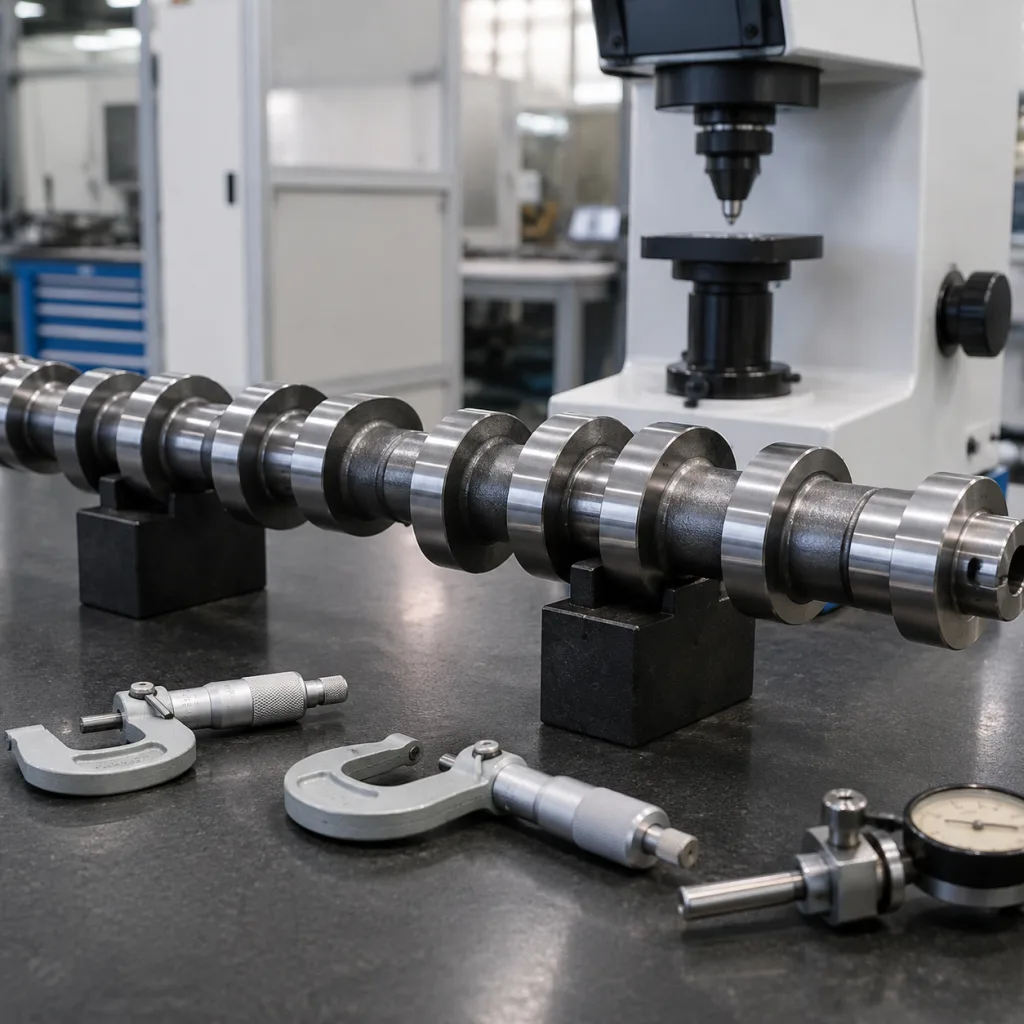
Hardness test records, dimensional inspection reports, gauge calibration status, and go/no-go thread gauge logs
Salt spray or corrosion test records where required by specification, with coating type and test duration identified
Durability, compression, static load, or comparative test records where agreed for the programme
Final inspection standard, AQL level if used, sampling size, defect classification, and release authority
Packaging drop, stacking, or transit verification for export shipments where needed
Non-conformance handling, containment, corrective action, rework-control procedure, and customer complaint closure records
Driventus maintains a documented quality system covering incoming inspection, in-process checks, final inspection, and traceability. During a factory audit, verify that inspection gauges match the drawing, operators follow controlled work instructions, adhesive and rubber materials are stored correctly, curing conditions are recorded, and rejected parts cannot re-enter approved stock.
For rubber-metal bonded parts, spend time at the bonding process. Look at surface preparation before adhesive application, adhesive pot life or storage control, contamination prevention, and operator ability to identify left/right or position-specific assemblies without relying only on memory.
For multi-location repair chains, batch consistency often beats the lowest unit price. Unstable mounts create repeat labour, customer dissatisfaction, and avoidable warranty debate. Define the warranty review process before the first shipment: part photos, installation notes, mileage, failure mode, batch number, and return-sample requirements. This keeps claims evidence-based and helps separate product defects from incorrect fitment, collision damage, improper installation, or unrelated powertrain faults.
Choose the Sourcing Route by Control Level
Importers can buy Jeep engine mounts through trading companies, direct manufacturers, or local distributors. None is automatically wrong. The right route depends on order size, technical risk, documentation needs, and how much control the buyer needs over repeat supply.
Sourcing route
Advantages
Limitations
Best fit
Trading company
Broad range, fast quotation, lower administrative load
Limited process control, weaker traceability, variable source factories
Small exploratory orders or mixed accessory ranges
Direct manufacturer
Better technical access, tooling control, batch records, corrective action support
Requires clearer specifications, forecasting, and supplier management
Wholesale engine mount programmes and private-label supply
Hybrid distributor model
Local stock, shorter domestic delivery, simplified returns
Higher landed cost and less visibility into the source factory
Urgent replenishment or low-volume repair-chain demand
</tr></thead><tbody> </tbody></table>For long-term category supply, total landed cost matters more than ex-works price. Include defect rate, warranty labour exposure, packaging damage, delay risk, inspection cost, customs documentation, exchange-rate exposure, and inventory carrying cost. A mount that is 8% cheaper at purchase can be more expensive if it creates fitment complaints, carton damage, inconsistent damping, or repeat replacements.
Normalize quotes before comparing them. Use the same Incoterm, currency, MOQ, carton specification, label version, inspection requirement, payment term, production lead time, sample cost, tooling ownership, and spare-parts support. If Supplier A quotes 200 pieces per SKU at FOB and Supplier B quotes 50 pieces per SKU at EXW, the lower line price may not produce the lower landed cost after domestic trucking, customs handling, warehouse receiving, and overstock risk.
Direct manufacturer sourcing works best when the buyer can share a clear part list, target volumes, fitment data, label requirements, and acceptance criteria. Trading support may still be useful for broad exploratory sourcing, but rubber-metal powertrain mounts benefit from process visibility and repeatable batch control.
For engine mount Jeep wholesale programmes, ask one direct question: who owns the corrective action if a batch arrives with bracket misalignment, rubber hardness drift, wrong labels, or packaging damage? The answer reveals more than the price sheet.
Lock the Paperwork Before Production Starts
Import documentation should not be assembled after the container is ready. Requirements vary by destination market, customer type, and distribution channel, but the supplier should provide consistent commercial, packing, and technical files that match the buyer’s compliance process.
A typical export file may include:
Commercial invoice and packing list with SKU, quantity, carton count, gross weight, net weight, and shipment terms
HS code confirmation for buyer review and customs broker verification
Material declaration or REACH-related statement where applicable
Batch inspection report, final inspection summary, or first-article report for new parts
Loading photos, pallet list, carton count, seal number, and gross/net weight details
Private-label packing specification, barcode file, country-of-origin text, and warehouse label format if required
Tooling, drawing, or sample-approval record for custom-developed items where applicable
For marketplace-free B2B distribution, fitment data quality matters as much as export paperwork. Maintain cross-references, model-year coverage, engine information, drivetrain notes, mount position, supersession history, and exclusion notes in a controlled database. Any OE-style reference used internally should be checked against samples, drawings, or validated fitment data before publication.
Receiving teams should define carton and pallet rules early. Common requirements include scannable barcode labels, part number on two carton sides, consistent master-carton quantity, thread protectors for exposed studs, moisture protection for sea freight, pallet height limits for racking, and safe carton weight limits. If the order uses private-label packaging, artwork approval should cover print colour, label size, country-of-origin wording, warning text if required, and future revision control.
Driventus can review distributor fitment tables, align carton labels with warehouse requirements, and discuss MOQ, sample policy, available SKUs, private-label packaging, and audit documentation. To start a sourcing review, buyers can request a quote with their part list, target market, annual forecast, target landed-cost range, and packaging requirements.
Frequently asked questions
MOQ depends on SKU demand, tooling status, packaging type, label requirements, and whether the order uses standard catalog parts or custom development. As a working range, fast-moving standard SKUs may be planned at 50–300 pieces, medium movers at 20–100 pieces, and slow movers by trial quantity or mixed-SKU consolidation, subject to availability. Driventus can confirm MOQ after reviewing the part list, target market, and forecast volume.
Yes. Private-label cartons, labels, barcodes, and pallet marks can be discussed for qualified B2B orders. Artwork, legal markings, country-of-origin text, fitment data, barcode format, carton quantity, and warehouse label formats should be approved before mass production to reduce customs, receiving, or distribution delays.
No. Driventus is an independent aftermarket manufacturer; vehicle brand names are referenced for fitment identification only. Parts are supplied for aftermarket replacement or customer-defined programmes and are not claimed as approved, endorsed, or sponsored by any vehicle manufacturer.
For current Jeep engine mount availability, MOQ, lead-time, samples, private-label packaging, tolerance review, or audit documentation, contact the Driventus sales engineering team at /contact.html