engine mount · 2026-06-07

Engine Mount Isuzu OEM Supplier: Sourcing Guide

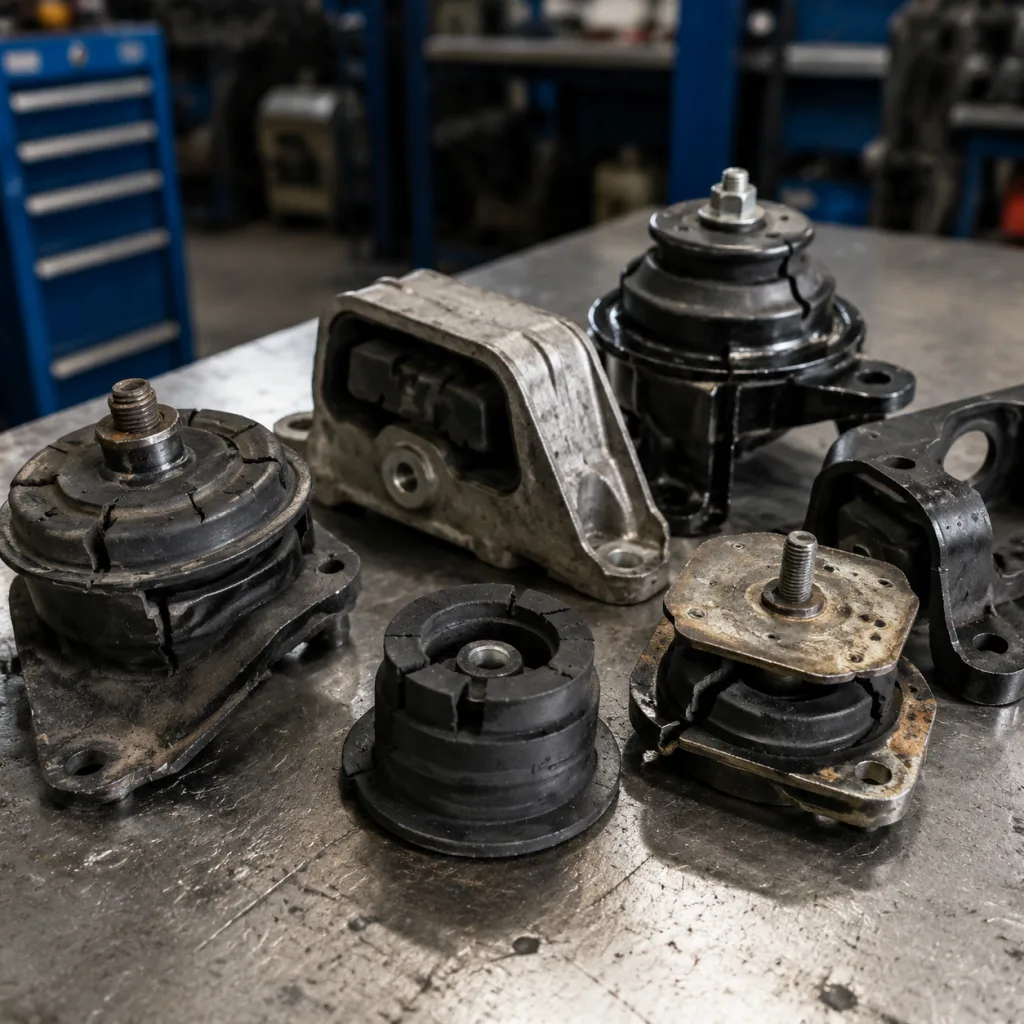
When buyers search for an engine mount Isuzu OEM supplier, the first concern is not only price. Engine mounts are load-bearing vibration isolation parts, and small deviations can create installation problems, excessive engine movement, noise and vibration complaints, or early failure. The most common sourcing risks are dimensional mismatch, weak rubber-to-metal bonding, inconsistent rubber hardness, poor corrosion protection, and delivery schedules that cannot support repeat replenishment.

A qualified sourcing decision should therefore cover fitment, material validation, production control, packaging, documentation, and traceability. Procurement teams need a supplier that can match OE-style installation requirements, hold critical tolerances, document testing, and respond to audit requests from aftermarket, OEM, or Tier-1 supply chains. Driventus is an independent aftermarket manufacturer; brand names are referenced for fitment identification only and do not imply endorsement or affiliation.

Driventus manufactures engine and powertrain components in Taizhou, Zhejiang, and exports to more than 60 countries. Production is managed under IATF 16949:2016 and ISO 9001:2015, with material and compliance controls aligned to customer specifications and applicable market rules, including REACH (EC) No 1907/2006 where relevant. The guide below explains what buyers should verify before sample approval or volume orders, including drawings, MOQ, lead time, validation evidence, and cross-reference control.

What procurement teams should verify first

Start with fitment control. A mount can look correct in a catalog photo and still fail in the workshop if the bracket geometry, bolt-hole position, stud angle, installed height, or engine-side offset is even slightly wrong. For an engine mount Isuzu OEM supplier, the first review should combine application data, part number history, measured dimensions, and actual sample photos.

Key checks:

  • Confirm the OE cross-reference using the buyer’s stated application and existing OE reference; use formats such as 06A107065-style references only when the buyer has already provided them
  • Measure overall dimensions, stud pitch, centre distance, bracket offset, and installed height
  • Review rubber compound specification, hardness range, and ageing resistance requirements
  • Confirm metal insert, bracket material, weld condition, and corrosion protection
  • Check rubber-to-metal bonding quality and whether the bonded area is fully controlled during production
  • Verify batch traceability, label format, carton marks, and private-label requirements

A reliable supplier should provide dimensional drawings, inspection records, and photos of the actual production part, not only a generic catalog image. If the order covers mixed fleets or multiple regional markets, ask whether one tooling set supports all requested applications or whether market-specific variations exist. This early check prevents sample approval based on appearance alone and reduces the risk of fitment claims after launch.

Why certification matters for repeat orders

For high-volume buyers, certification is more than a marketing claim. It is a process-control framework that helps reduce variation from one batch to the next. Under IATF 16949:2016 and ISO 9001:2015, buyers can expect structured document control, corrective action tracking, incoming inspection, in-process verification, final inspection, and lot identification.

Our quality system supports:

  • Incoming material inspection for steel, rubber compounds, and purchased components
  • In-process checks on moulded rubber geometry, bonded interfaces, and critical dimensions
  • Final inspection before packing, including visual appearance and packaging confirmation
  • Lot traceability to support customer audits and claims review
  • Record retention for repeat orders, engineering changes, and supplier evaluation files

If your organisation supplies distributors, repair chains, or vehicle programmes, request evidence of the control plan, inspection frequency, gauge method, and nonconformance handling process. Ask how the supplier segregates nonconforming parts, how corrective actions are documented, and whether production records can be linked to a shipment batch. In procurement terms, this is the difference between a transactional shipment and a supply base that can support repeat programmes with predictable quality.

Typical engine mount specifications buyers compare

Engine mount sourcing is specification-driven. Before approving a sample, buyers usually compare the part drawing, material specification, measured sample data, and packaging plan. The table below outlines common fields used in supplier comparison.

</tr></thead><tbody> </tbody></table>Do not approve only on the basis of material names or hardness numbers. The mount’s performance depends on the combination of rubber formulation, bonding process, bracket design, and installed geometry. If your programme requires special bracket thickness, revised rubber formulation, market-specific labelling, or private-label packaging, use custom manufacturing for the engineering review stage.

Lead time, MOQ, and audit readiness

Procurement teams often need a supplier that can support both pilot orders and recurring replenishment. For an engine mount Isuzu OEM supplier, the practical questions are whether tooling already exists, how MOQ is calculated, how long sampling takes, and whether the plant can pass buyer audits before scale-up.

What to confirm before issuing a PO:

  • MOQ by part number, packaging style, and private-label requirement
  • Sample lead time compared with mass production lead time
  • Existing tooling status, tooling ownership, and responsibility for modifications
  • Production capacity for recurring monthly or quarterly releases
  • Warehouse location, export carton size, pallet configuration, and container loading plan
  • Whether the plant can support a remote audit, document audit, or on-site audit
  • Availability of commercial documents, packing lists, certificates, and market-specific compliance files

Driventus manufactures in China and supports export programmes for aftermarket distributors, OEM / Tier-1 suppliers, and multi-location repair chains. If you need to consolidate adjacent components, see our catalog and engine components. Buyers should also confirm carton marks, palletisation details, Incoterms, and export documentation suitable for EU, UK, US, Canada, Australia, Brazil, and other destination-market requirements. Clear answers at this stage prevent delays caused by packaging changes, missing documents, or unconfirmed tooling assumptions.

Validation tests commonly requested by buyers

A qualified engine mount should be supported by validation evidence, especially for fleet, distributor, or private-label programmes where warranty exposure matters. The exact test plan depends on the application, installation position, vehicle duty cycle, and customer specification, but buyers often request the following:

  • Static load confirmation against the specified engine weight and mount orientation
  • Vibration and durability testing under representative road or bench conditions
  • Heat ageing to confirm rubber performance retention after thermal exposure
  • Oil resistance testing where contamination from engine oil or fluids is expected
  • Salt spray or corrosion testing for brackets, inserts, and exposed steel parts
  • Dimensional inspection before and after thermal cycling or durability testing
  • Visual inspection for cracks, rubber separation, deformation, or coating failure

Published standards may be referenced where appropriate, such as SAE J2527 for accelerated weathering when rubber exposure is relevant, and REACH (EC) No 1907/2006 for restricted substance compliance in the EU. In many cases, the buyer will also define customer-specific endurance criteria instead of relying only on a public standard. The supplier should state the test method, sample quantity, test conditions, acceptance criteria, and result summary on the report. If a test is performed internally, ask whether third-party testing can be arranged when required for customer approval.

How Driventus supports sourcing programmes

Driventus supports procurement teams that need a stable supply base for engine and powertrain parts. We are a vertically integrated manufacturer based in Taizhou, Zhejiang, with production control designed for export supply, repeat orders, and buyer documentation requirements.

Common buyer needs we support:

  • OE-style fitment matching for replacement programmes
  • Part number review and cross-reference confirmation based on buyer-supplied data
  • Private-label packaging for distributors and regional brands
  • Sample-to-PO transition support, including dimensional data and inspection records
  • Drawing-based revisions for custom or application-specific requirements
  • Lot traceability for claims handling and shipment follow-up
  • Export documentation and packaging coordination for multi-market supply

Driventus is an independent aftermarket manufacturer; brand names are referenced for fitment only. If you are consolidating suppliers or replacing inconsistent sources, begin with a structured part number review. Send the target OE reference, application details, annual volume, destination market, and packaging requirement. We can then review feasibility, confirm available documentation, and advise whether existing tooling, custom development, or sample verification is the right next step. For a faster response, request a quote with the target OE reference, annual volume, packaging requirement, and destination market.

Frequently asked questions

Yes. Share the application, dimensions, and OE reference you already use, and we can review fitment before sampling. We do not claim manufacturer approval, endorsement, or brand affiliation.

Ask for dimensional drawings, material specifications, inspection records, packaging details, traceability information, and available test reports. For regulated markets, request REACH-related compliance documentation where relevant.

Yes. We support drawing-based and sample-based development for private-label and OEM-style programmes, subject to engineering review, tooling feasibility, validation requirements, and order volume.

If you are qualifying a new engine mount source, send the OE reference, target volume, destination market, and packaging needs, and we will review the fitment and supply plan. Start here: /contact.html

Request a Quote
Item Typical buyer requirement Why it matters
MaterialNatural rubber, NR/SBR, or customer-specified blendAffects vibration isolation, durability, and heat performance
Rubber hardnessCommonly 50–70 Shore A, depending on applicationToo soft can allow excess movement; too hard can increase NVH
Metal componentCarbon steel or treated steel insert/bracketInfluences load capacity, installation strength, and corrosion life
Dimensional tolerancePer drawing, often ±0.5 mm to ±1.0 mm on critical featuresHelps prevent installation and alignment issues
Bond strengthValidated by internal or customer-specified test methodReduces the risk of rubber-to-metal separation under engine load
Surface finishZinc plating, phosphate, paint, or coating as specifiedProtects the bracket and exposed metal surfaces during service
PackagingBulk, inner box, export carton, or customer private labelSupports warehouse handling, distribution, and brand presentation
TraceabilityLot number, production date, or shipment batch controlHelps manage claims, audits, and replenishment quality