Engine misfire repair cost is not a single number. It shifts with the failure mode, how quickly the fault is isolated, and whether the fix is a simple ignition swap or a deeper repair involving fuelling, sealing, or compression loss. For parts buyers, that distinction matters more than the first invoice. The wrong replacement can create repeat visits, warranty claims, and lost workshop time. Driventus is an independent aftermarket manufacturer; brand names are referenced for fitment only. This guide breaks down how to estimate cost, where repairs commonly fail, what to check before ordering parts, and how to source replacements that hold up in repeat service.
Cost Drivers: What Actually Moves the Bill
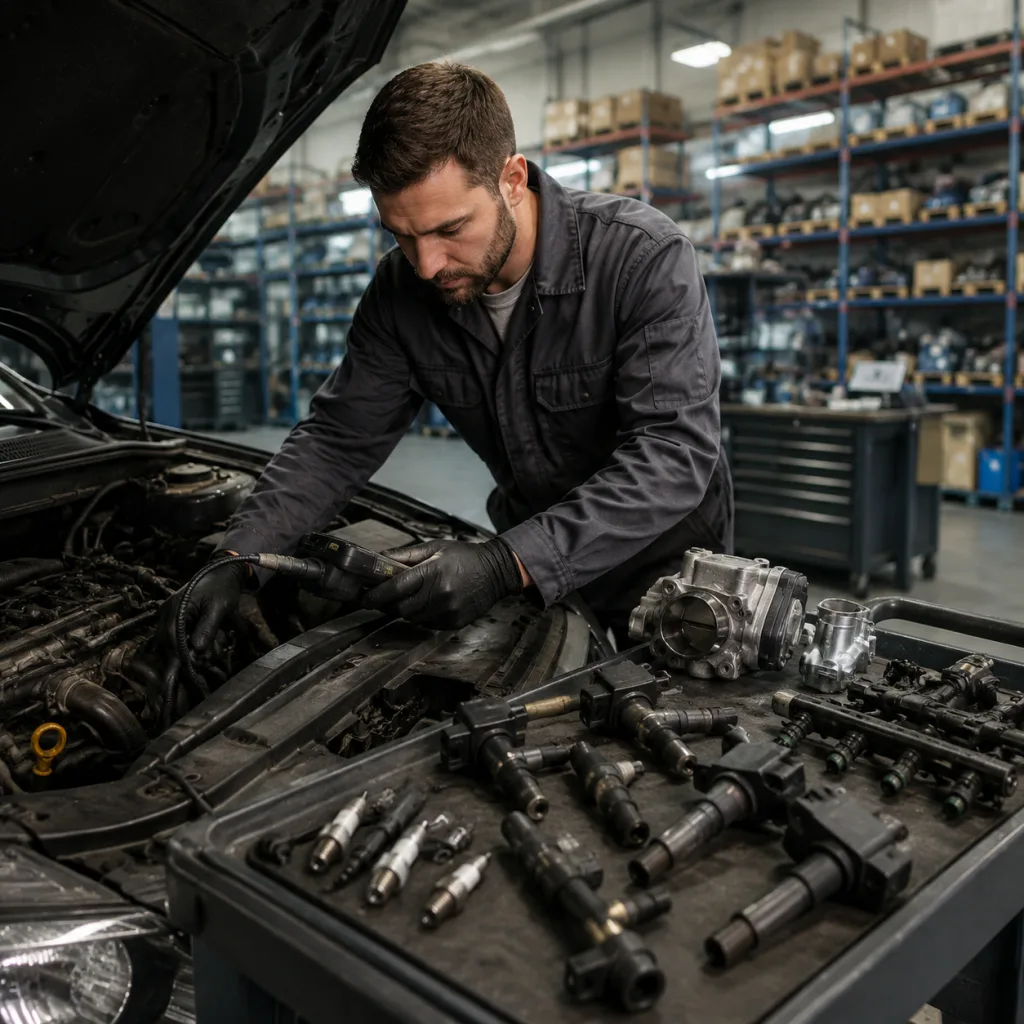
Engine misfire repair cost usually comes from four buckets: diagnosis time, access labour, part price, and any secondary damage found during inspection. On modern engines, labour often outweighs the part itself because coils, plugs, injectors, and sensors are buried under intake modules, covers, or turbo hardware.
Typical cost drivers
Number of cylinders affected: one-cylinder faults are usually cheaper than random or multi-cylinder misfires.
Root cause depth: ignition faults are faster to resolve than compression loss or timing-related problems.
Part stack: plugs, coils, injectors, gaskets, and hoses may be replaced together when wear is linked.
Access complexity: transverse engines, cowl packaging, and turbo layouts can add 0.5–2.5 labour hours before the first part comes off.
A simple ignition repair often sits in the 1.0–2.0 hour labour band. Intermittent or multi-cylinder faults can run 2.0–4.0 hours before the repair even becomes clear. If the first part change misses the root cause, the real cost rises through repeat labour, not just the original invoice.
Symptom or Root Cause? A Fast Triage Check
The smartest repair path starts with the symptom pattern, not a generic parts list. Rough idle, hesitation under load, flashing MIL, and cold-start stumble can each point to a different system.
Symptom pattern
Common cause
Inspection focus
First move
Rough idle
Plug wear, coil weakness, vacuum leak
Plug gap, coil output, smoke test
Replace worn ignition parts
Hesitation under load
Coil breakdown, fuel delivery issue
Misfire counters, fuel trims
Check ignition and injector balance
Random misfire
Air leak, sensor signal, wiring fault
Harness, connectors, intake seals
Electrical and leak inspection
Single-cylinder misfire
Plug, coil, injector, compression loss
Swap test, leak-down, compression test
Isolate cylinder-specific cause
Misfire with coolant loss
Head gasket or intake gasket fault
Coolant test, pressure test
Mechanical inspection before parts
</tr></thead><tbody> </tbody></table>A cold-start misfire with positive fuel trim often points toward air leak or injector imbalance. A load-related misfire that worsens above 2,500 rpm is more often ignition or fuel delivery related. If the real issue is compression loss or a sealing defect, replacing plugs or coils alone is false economy.
Step-by-Step: Diagnose Before You Order Parts
Use a structured sequence so the repair order matches the fault.
1) Scan and confirm
Read DTCs, freeze-frame data, and misfire counters. Confirm whether the fault is constant, load-related, or random across cylinders. Record engine temperature, RPM, and fuel trim values at capture; those numbers often point to cold-only, heat-related, or load-related faults.
2) Check ignition first
Inspect spark plugs for wear, oil fouling, incorrect heat range, and electrode damage. Verify coil condition, boot integrity, and connector fit. Once the gap opens beyond spec or the insulator is cracked, replacement is usually cheaper than extended testing.
3) Verify fuelling
Check injector balance, fuel pressure, and short- and long-term fuel trims. A lean cylinder can mimic ignition failure. As a rough reference, a healthy warm idle often sits near 0% fuel trim, and sustained correction beyond about ±8% to ±10% deserves deeper air-leak or delivery checks.
4) Rule out air leaks
Inspect PCV hoses, intake gaskets, and brake booster lines. Small leaks create persistent trim faults and misfires. A smoke test is usually the fastest confirmation method, and visible smoke at a gasket, hose joint, or throttle-body seal should be treated as a repair lead.
5) Test compression and sealing
If the fault stays on one cylinder, run compression and leak-down tests. Low compression changes the repair scope completely. As a rough benchmark, cylinders should generally be within 10% of each other; a single cylinder more than about 15% down warrants mechanical inspection before ordering parts.
For procurement teams, this sequence changes the bill of materials. An ignition-only job may need plugs and a coil pack. A sealing-related job may need a gasket set, valve cover gasket, or intake manifold gasket in addition to labour.
Parts Comparison: Which Items Usually Land on the Quote
The part mix depends on whether the fault is ignition, fuelling, or mechanical. For aftermarket sourcing, the priorities are dimensional fit, heat resistance, and stable electrical or sealing performance.
Part family
Role in repair
Sourcing checks
Spark plugs
Restore spark quality
Thread, reach, heat range, gap
Ignition coils
Restore high-voltage output
Connector keying, dwell compatibility
Fuel injectors
Restore spray pattern and flow
Resistance, flow tolerance, seal kit fit
Gaskets
Stop vacuum or coolant leaks
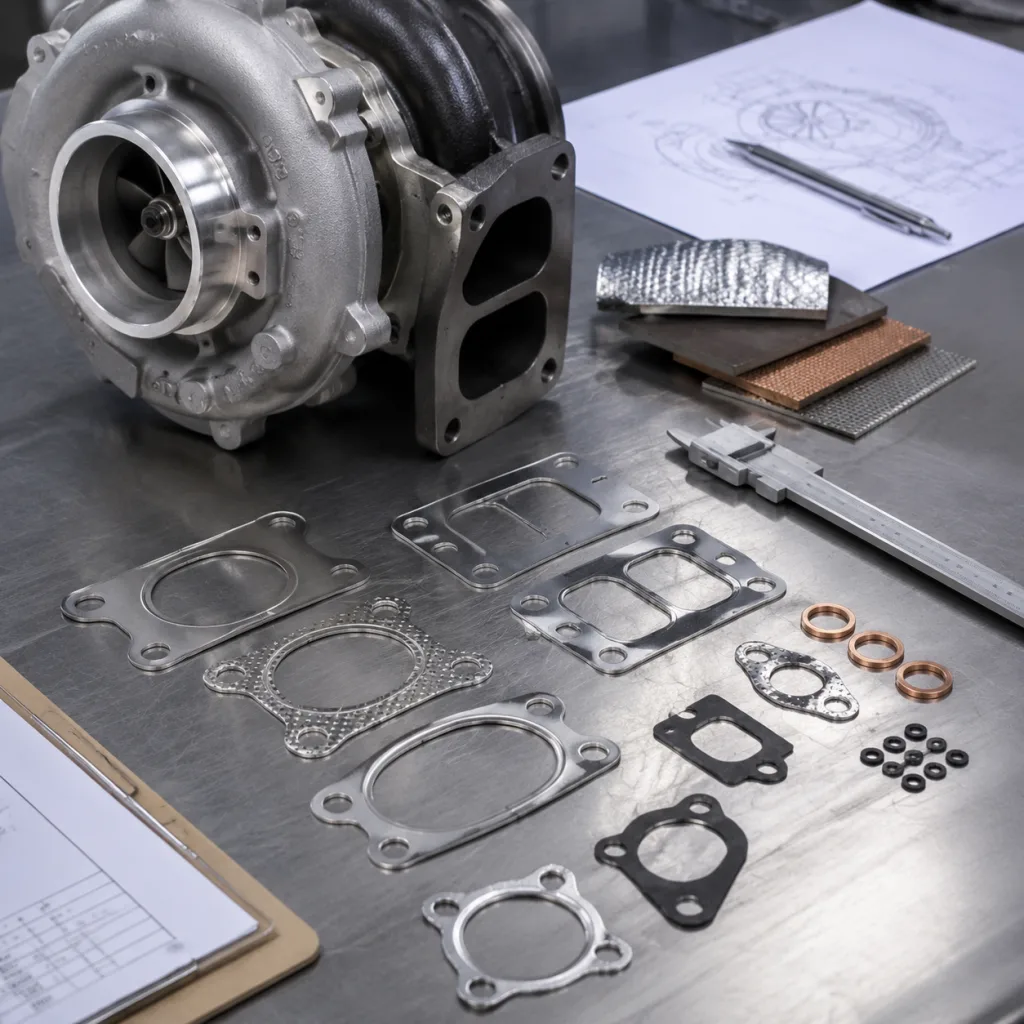
Material, thickness, bead geometry
Sensors
Support ECU correction logic
Signal type, harness interface
</tr></thead><tbody> </tbody></table>Spark plugs are usually the lowest unit-cost item, but they still need exact OE dimensions. Coil sourcing should verify connector geometry, mounting ears, primary resistance, and thermal class. Injector sourcing needs tighter controls: static flow, spray pattern, coil resistance, and seal pack compatibility all matter because a small deviation can shift one cylinder rich or lean.
If a repair network stocks these items, it can reduce downtime and avoid repeat bay occupation. For broader sourcing, see our catalog and our quality system.
Failure Modes: When a Simple Fix Is the Wrong Fix
Misfire repairs become expensive when the first assumption is wrong. A fresh plug will not solve a leaking intake. A new coil will not restore a cylinder with low compression. That is where cost control fails.
Common failure modes include:
Ignition-only diagnosis on a sealing fault
Replacing one worn part while the matched partner is already near end of life
Ignoring wiring intermittents that only show up hot or under vibration
Overlooking injector imbalance that mimics a weak spark
Releasing the vehicle before the misfire counter and trims stabilize
A comeback often costs more than the original fix because it adds repeat diagnosis, repeat labour, and customer dissatisfaction. In practice, the cheapest repair is the one that closes the fault the first time.
Quality and Sourcing: What Buyers Should Specify
For diagnostic-driven repairs, part consistency matters as much as nominal fitment. A coil with unstable output, a gasket with uneven compression set, or an injector with poor flow repeatability can bring the fault back.
Driventus operates under IATF 16949:2016 and ISO 9001:2015 systems. For emissions-related applications, material and chemical compliance should also be checked against REACH (EC) No 1907/2006 where applicable. When a repair overlaps with engine calibration or emissions performance, validation may also reference ECE R-83 in relevant vehicle contexts.
What buyers should verify
Dimensional match to OE fitment references, such as OE 06A107065 when a cross-reference is supplied.
Material specification for heat, oil, fuel, and coolant exposure.
Traceability by batch or lot for warranty control.
End-of-line testing, including leak, pressure, or electrical checks as relevant.
Packaging and labelling that support warehouse accuracy.
Test limits and acceptance criteria, such as coil output stability, injector flow tolerance, and gasket compression set.
A practical sourcing specification should also include measurable tolerances. Buyers often request plug gap within OE spec, injector flow matching within a narrow percentage band, and gasket thickness held tightly enough to preserve sealing load across the thermal cycle. If a standard part does not match the required envelope, custom manufacturing can reduce redesign time for programme-specific repairs or fleet applications.
Scenario: When Replacement Strategy Beats Piecemeal Repair
A repair should move from one-off troubleshooting to planned replacement when the same fault repeats, the vehicle has high mileage, or labour access is expensive. In those cases, the lowest total cost often comes from replacing the known wear item set together rather than staging the job in pieces.
For parts buyers, the decision usually comes down to total landed cost, not unit price. A low-cost plug or coil that needs a second visit is more expensive than a better-controlled part that solves the fault on the first repair. As a working rule, if labour is 2x or more the part cost, there is a strong case to bundle wear items when inspection shows they are all near end of life.
This matters for repair chains and distributors that need fast turnaround. A stocked kit of plugs, coils, seals, and related gaskets can reduce comebacks and simplify purchasing. MOQ planning also matters: low-volume repair programs may accept higher unit prices to hold minimal inventory, while fleet or workshop networks usually benefit from tiered pricing once annual consumption reaches the next break point. Typical sourcing logic is to set a small trial MOQ for validation, then move to a larger production MOQ once fitment and failure-rate data are confirmed.
Lead time should be tied to the repair schedule. If the job is bay-critical, buyers often need a supplier able to quote stock items with same-day or 24–72 hour dispatch, while custom or application-specific parts may require longer tooling and sample approval windows. For sourcing support, request a quote with engine code, OE reference, annual volume, target MOQ, and required delivery window.
Frequently asked questions
Labour usually dominates, especially when diagnosis and access are difficult. The part price can be low, but repeat labour from an incorrect first repair quickly raises the total. On multi-layer jobs, access time and scan-based diagnosis can easily exceed the first replacement part cost.
Not always. Replace both when testing shows wear, weak output, or contamination on the same cylinder bank. If the fault points elsewhere, confirm the root cause first. A practical rule is to replace them together when the plugs are near service limit, the coil has weak output, or the same cylinder has repeated misfire counts after swapping parts.
Yes. Use the OE reference supplied by your team, such as OE 06A107065, and we can review fitment, material, and application details. Driventus is an independent aftermarket manufacturer; brand names are referenced for fitment only.
If you need a parts list or a quotation for a misfire-related repair programme, send the OE reference and application details here: /contact.html