Procurement teams searching for an engine block Volkswagen OEM supplier usually need more than a casting quote. They need proof of metallurgy, machining stability, PPAP-style documentation, export readiness, and fitment control across repeat batches. This guide explains how Driventus approaches Volkswagen-fit engine block supply for B2B buyers in the EU, UK, US, Canada, Australia, and Brazil. It covers factory audit priorities, material and machining controls, MOQ structure, lead-time planning, and documentation expectations for distributors, wholesalers, repair chains, and OE-tier sourcing teams. Driventus is an independent aftermarket manufacturer; vehicle brand names are used only to identify fitment. We do not claim approval, endorsement, or affiliation with any vehicle manufacturer. Buyers can review [our catalog](/products.html), confirm product family coverage, and use this guide as a practical checklist before issuing an RFQ.
What Buyers Should Verify Before Sourcing
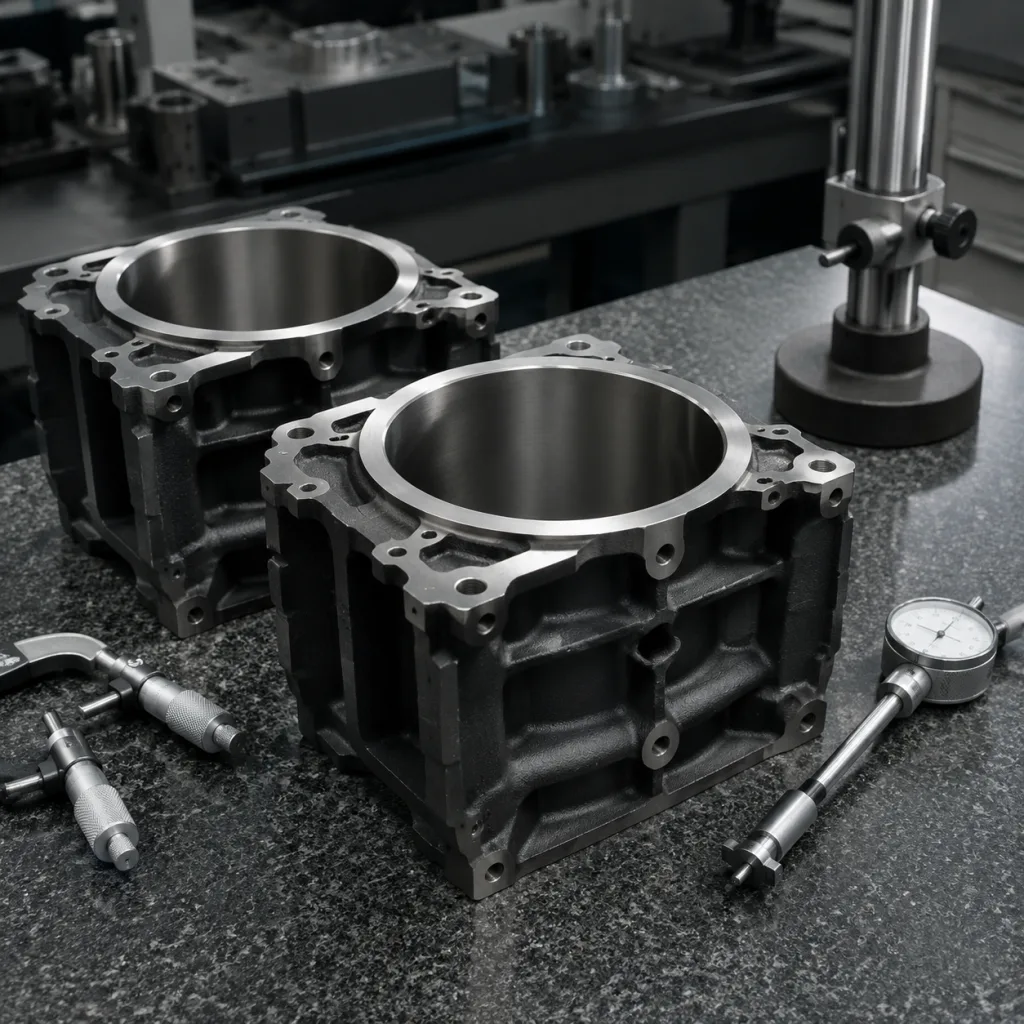
An engine block is a high-liability component, not a commodity casting. A dimensional deviation of 0.03 mm in a critical bore, deck, or bearing feature can affect compression sealing, oil pressure, bearing life, coolant flow, and warranty exposure. For Volkswagen-fit programmes, buyers should confirm how the supplier controls casting, heat treatment, CNC machining, washing, final inspection, and export packaging before discussing volume orders.
Core sourcing checks include:
Confirm whether the supplier manufactures or directly controls casting and machining, rather than only trading finished stock.
Request evidence of IATF 16949:2016 and ISO 9001:2015 certification scope, including site and process coverage.
Review process flow diagrams, control plans, and inspection records for the exact engine block family being quoted.
Confirm material grade, hardness range, porosity control, leak-test method, and handling of nonconforming castings.
Ask whether OE part-number cross-references are used only for fitment mapping, such as OE 06A… conventions where legally applicable.
Validate export experience for the destination market, including labelling, palletisation, corrosion protection, and customs documentation.
A credible supplier should be able to discuss reject rates, machining datum strategy, gauge calibration, and traceability without relying on catalogue language alone. For wider engine component coverage, buyers can also review our catalog and related engine categories.
Material, Machining, and Validation Requirements
Volkswagen-fit engine blocks may use grey cast iron, compacted graphite iron, or aluminium alloy depending on engine generation, displacement, and application. The purchase specification should not describe the part only by vehicle model or engine code. It should define material, casting process, machining references, surface finish, cleanliness, pressure testing, and inspection frequency.
Typical procurement specification points:
Control item
Typical requirement to define in RFQ
Buyer verification method
Casting material
Grey cast iron, compacted graphite iron, or aluminium alloy per application
Mill certificate and incoming test record
Cylinder bore geometry
Diameter, roundness, cylindricity, and finish
CMM and bore gauge report
Deck flatness
Application-specific tolerance checked across defined points
Surface plate or CMM record
Main bearing tunnel
Alignment, diameter, and concentricity
Line-bore inspection report
Oil and coolant passages
No blockage, controlled burr level, verified cleaning
Air flow, visual, and washing records
Leak integrity
Pressure decay, immersion, or equivalent validated test
Batch test record
Traceability
Heat, batch, operator, process, and inspection linkage
Laser mark or batch code system
</tr></thead><tbody> </tbody></table>Driventus aligns production control with its quality system, including incoming inspection, in-process checks, and final release criteria. Certification to IATF 16949:2016 and ISO 9001:2015 supports process discipline, but buyers should still audit the specific production line, fixture strategy, gauge plan, and measurement capability for the quoted block family.
Environmental and chemical compliance may also matter for importers. Where relevant, RFQs can reference REACH (EC) No 1907/2006 for substance declarations. Engine blocks are not brake friction parts, so standards such as SAE J2527 are not applicable unless the same buyer is separately evaluating brake components.
MOQ, Lead Time, and Capacity Planning
A useful supplier discussion separates existing tooling, modified tooling, and new development. Each route creates different MOQ, validation, and lead-time expectations. Buyers should also distinguish sample orders, pilot production, first commercial batches, and recurring container programmes so the factory can reserve casting, machining, inspection, and packing capacity correctly.
For standard Volkswagen-fit aftermarket engine blocks with existing tooling, Driventus typically plans commercial supply around batch production rather than one-piece retail fulfilment. MOQ depends on casting weight, machining cycle time, packaging format, inspection workload, and whether the buyer requires private labelling or mixed-container consolidation. For a new or modified block, tooling cost, sample validation, fixture preparation, and production ramp-up must be built into the sourcing calendar.
Practical planning ranges to discuss during RFQ:
Existing tooling sample: commonly 2–6 weeks after technical confirmation and payment arrangement.
Pilot batch: commonly 45–75 days depending on machining capacity, inspection load, and packaging requirements.
New tooling or design adaptation: commonly 90–150 days including pattern, fixture, sample machining, and validation.
Repeat orders: planned against monthly or quarterly forecasts to reduce casting queue and CNC scheduling risk.
Packaging: individual protective packaging, export wooden pallets, corrosion protection, or distributor-ready cartons should be agreed before quotation.
Import managers should share a 6–12 month forecast where possible. Forecast visibility helps reserve foundry and CNC capacity, reduces shipment-delay risk during peak production periods, and allows packaging materials to be prepared before regional repair seasons.
Documentation for Factory Audits and RFQs
Sourcing teams often compare suppliers by unit price, but engine block programmes should be decided on total risk. Documentation quality is one of the clearest indicators of manufacturing control. An engine block Volkswagen OEM supplier search should include a structured RFQ pack and an audit request before any volume commitment, especially when the programme serves distributors, warranty-sensitive repair networks, or OE-service channels.
Recommended RFQ documents from the buyer:
Target application list and annual volume by part family.
Drawing, sample, or approved dimensional benchmark where legally available.
Required OE cross-reference format, using generic or fitment-only references where applicable.
Packaging, labelling, barcode, carton, and pallet height requirements.
Destination port, Incoterms preference, compliance expectations, and required certificates.
Warranty handling process, claim evidence requirements, and expected response time.
Recommended supplier documents to request:
IATF 16949:2016 and ISO 9001:2015 certificates with current validity and correct site scope.
Process flow chart and control plan covering casting, machining, washing, inspection, and packing.
Material certificate, hardness report, and heat or batch traceability record.
CMM report for critical dimensions and gauge records for production checks.
Leak test report, cleanliness record, and nonconformance handling procedure.
Packaging drop, stacking, or transport protection method where required by the buyer.
Driventus supports audit-oriented discussions for distributors, wholesalers, repair chains, and OE-tier sourcing teams. Buyers that need drawings, tooling changes, private specifications, or engineering review can review custom manufacturing before submitting the RFQ.
Commercial Fit for Distributors, Tier Suppliers, and Repair Chains
Different buyer types need different supply models. A distributor may prioritise range coverage, margin control, and predictable landed cost. A Tier-1 or OE-service supplier may require tighter documentation, change control, and engineering review. A multi-location repair chain may need consistent availability, clear fitment mapping, low return rates, and packaging that reduces workshop handling damage.
</tr></thead><tbody> </tbody></table>For Volkswagen-fit engine block sourcing, buyers should avoid suppliers that cannot clearly separate genuine OE, remanufactured, and independently manufactured aftermarket supply. That distinction matters for customs declarations, warranty communication, customer-facing catalogues, and brand-risk management. Driventus supplies independent aftermarket components and can discuss private-label, neutral-label, and batch-traceability options. Vehicle brand names are referenced for fitment only.
The most efficient RFQs include annual demand, destination market, target applications, expected certification documents, packaging requirements, and whether the programme needs standard catalogue supply or engineering support.
How Driventus Structures Engine Block Supply
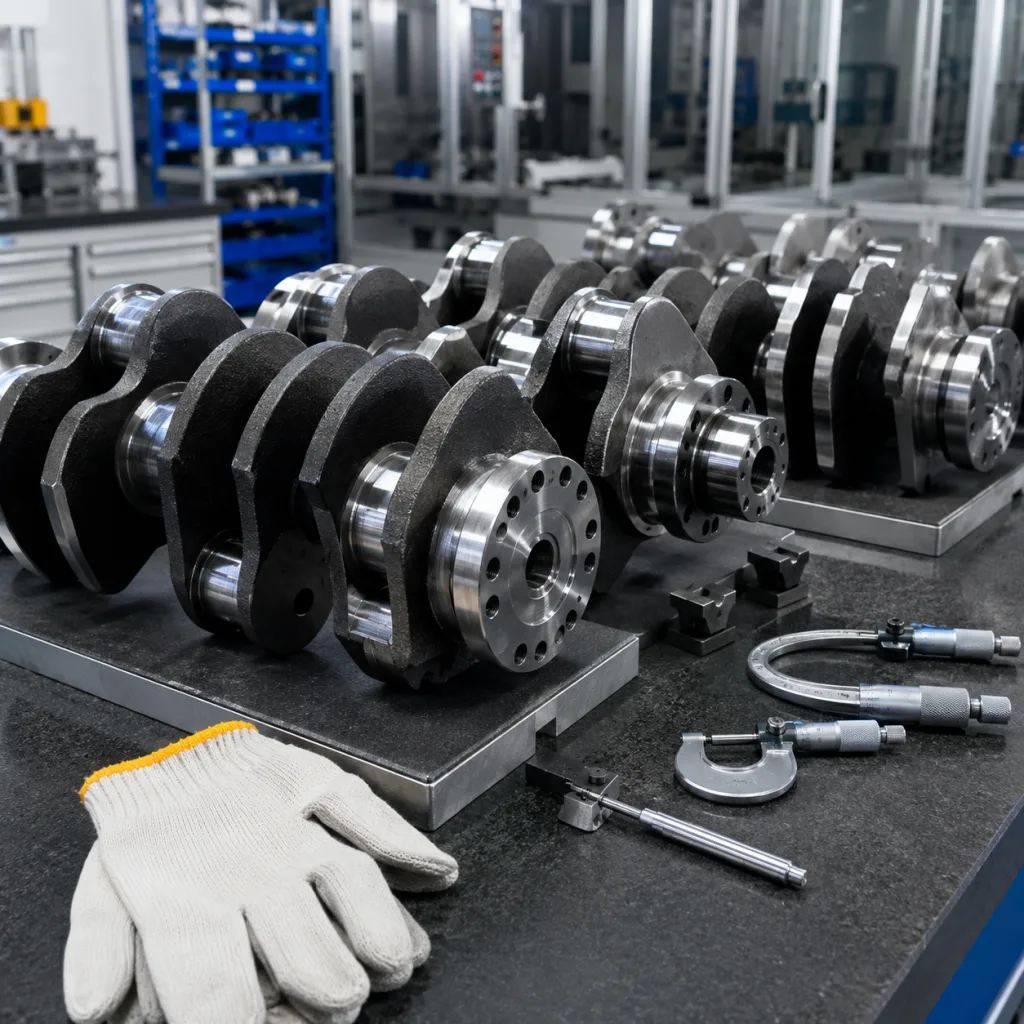
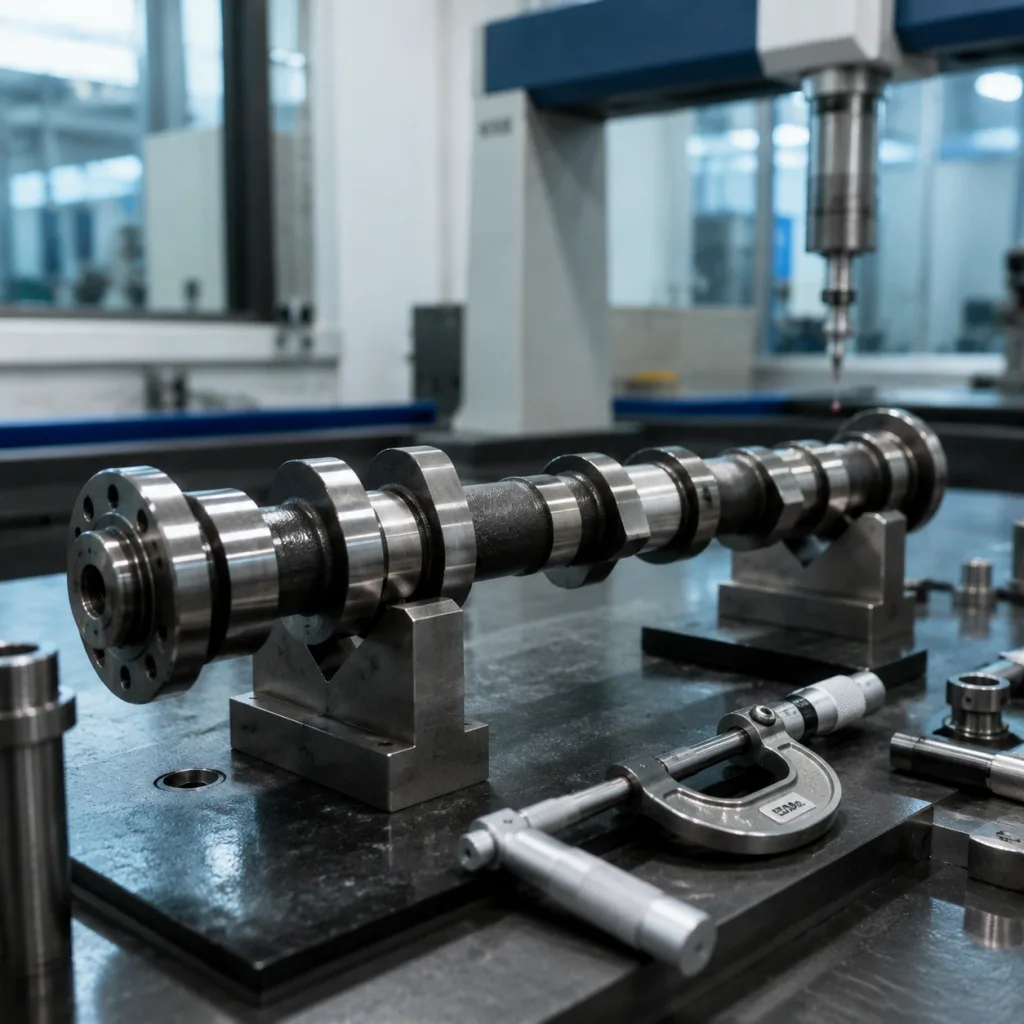
Driventus is based in Taizhou, Zhejiang, and manufactures engine and powertrain components including pistons, crankshafts, gaskets, water pumps, turbochargers, and engine blocks. Vertical integration helps coordinate casting, machining, inspection, traceability, and export packing under one production plan. This is important when buyers need consistent geometry across repeat batches rather than short-term spot purchases from mixed sources.
For Volkswagen-fit engine block programmes, Driventus can support:
Application and fitment review against buyer-supplied references.
Existing tooling quotation where available.
Engineering review for samples, drawings, or modified specifications.
Batch-level traceability and inspection reports.
Export documentation for shipments to Europe, North America, Australia, and Brazil.
Consolidation with related engine components where commercially practical.
The preferred sourcing sequence is technical confirmation, quotation, sample approval, pilot batch, then scheduled repeat production. This sequence helps avoid full-volume commitments before critical dimensions, packaging, labelling, and documentation are aligned. Buyers ready to compare supply options can request a quote with part family, target annual volume, destination country, target order timing, and any required certification documents.
Frequently asked questions
No. Driventus supplies independently manufactured aftermarket components for fitment applications. Brand names are referenced for fitment only, and no vehicle manufacturer approval, endorsement, or affiliation is claimed.
Provide application details, annual volume, destination country, required documentation, packaging needs, target timing, and any drawing, sample, or legal OE cross-reference available. This helps confirm tooling, MOQ, lead time, and validation scope.
Yes. Audit discussions can cover IATF 16949:2016 and ISO 9001:2015 certification, process flow, control plans, material inspection, machining records, leak testing, traceability, nonconformance handling, and export packing controls.
For a structured quotation, share your target applications, annual volume, destination market, timing, packaging needs, and documentation requirements. Driventus can review the programme and respond with practical sourcing options at /contact.html