Engine Block Subaru Wholesale Sourcing Notes
Engine block Subaru wholesale buying fails when it starts with a price cell and ends with an unclear part. For distributors, remanufacturers, and repair-chain programmes, the real decision is whether the supplier can hold casting quality, machining geometry, fitment control, documentation, and export packing across repeat orders.
A usable block must match the intended engine family and keep bore, deck, main tunnel, oil-gallery, and mounting geometry inside the agreed tolerance plan. It also needs records that support receiving inspection, warranty review, and future replenishment—not just a verbal claim that the part is “standard”.
Driventus Auto Parts manufactures engine and powertrain components in Taizhou, Zhejiang, and exports to more than 60 countries. Our production and quality processes are structured around IATF 16949:2016 and ISO 9001:2015 requirements. For Subaru-fit engine block programmes, we support wholesale discussions with drawings, material data, sample approval plans, packaging specifications, MOQ logic, and factory-audit documentation. Driventus is an independent aftermarket manufacturer; brand names are referenced for fitment only.
Start With the Block Decision, Not the SKU Name
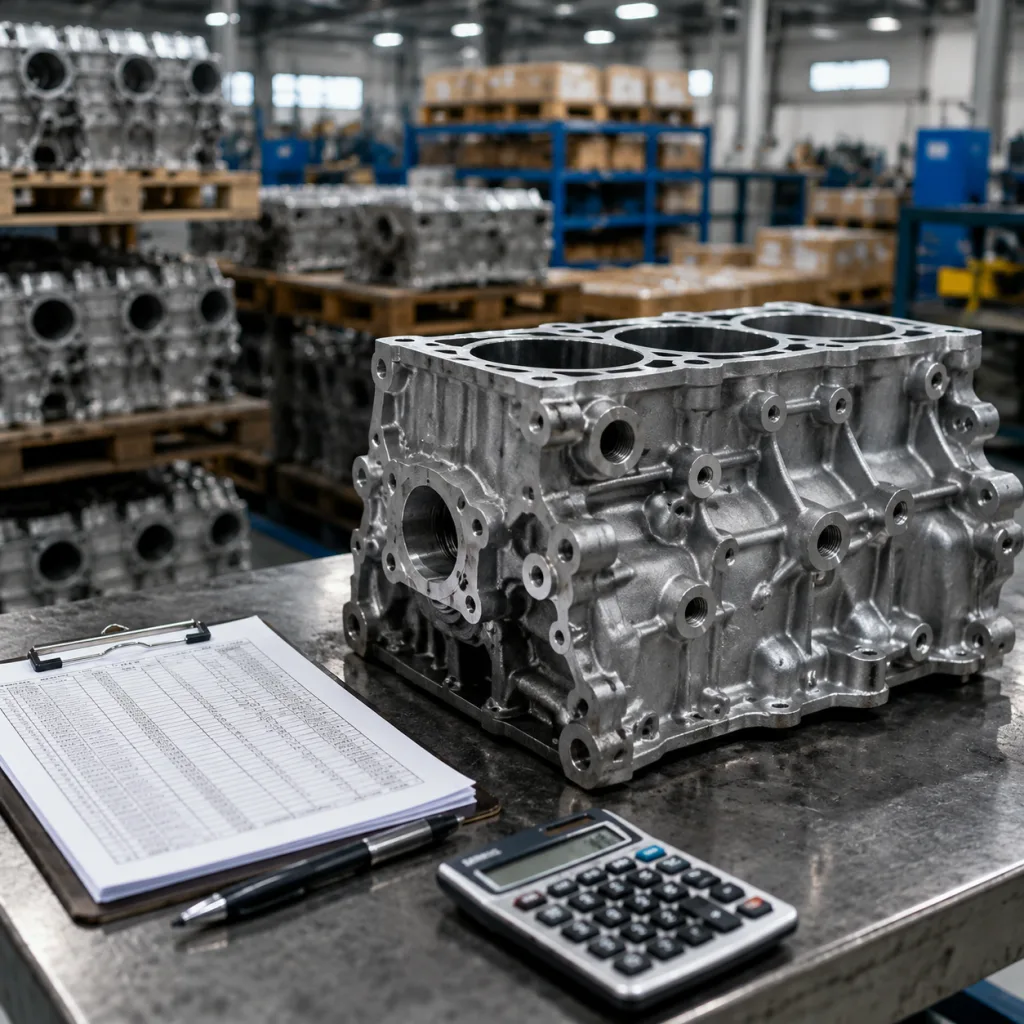
Subaru-fit engine block demand usually comes from three buying situations: rebuilders that control final machining, regional warehouse distributors that need repeatable resale stock, and fleet repair networks that want fewer assembly surprises. Each group may ask for the same “Subaru block” and mean a different product.
Before any engine block Subaru wholesale quotation, define the physical programme first. Confirm engine code, displacement, deck type, material, machining level, bore size, liner or sleeve design, oil-gallery layout, and whether the requirement is bare, semi-finished, or ready for the buyer’s assembly process. If that scope is missing, two quotations can look comparable while covering different work.
A practical specification separates the engine family from the commercial SKU. It normally includes engine family reference, 2.0 L or 2.5 L displacement, open-deck or semi-closed-deck style where relevant, aluminium or grey-iron construction if specified, bore diameter target, deck-height datum, main-journal tunnel requirement, and whether plugs, dowels, gallery plugs, or machining protectors are included.
Driventus can discuss engine block supply as a standard aftermarket item, a drawing-controlled part, or a private-label programme. Buyers can review related powertrain parts in our catalog and engine-specific categories at engine components.
Choose the sourcing model before negotiating price:
- Bare casting: supplied after casting, heat treatment where applicable, shot blasting or cleaning, and preliminary inspection; the buyer controls final machining, honing, and final plug installation.
- Machined bare block: critical bores, decks, oil galleries, main bearing features, threaded holes, dowel locations, and mounting faces machined to agreed specifications.
- Semi-finished block: machining allowance retained on bores or decks, commonly 0.10–0.30 mm depending on the buyer’s final honing or resurfacing process.
- Short-block component set: block supplied with related internal components where the programme requires a bundled kit for assembly or resale.
- Custom drawing-controlled block: produced against buyer drawings, samples, or agreed reverse-engineered data through custom manufacturing.
Control identification by buyer SKU, engine family, configuration note, and revision status. Informal market names are useful in conversation but weak in purchasing records. If an OE-style cross-reference is needed, use a validated, generic catalogue format approved by the buyer’s catalogue team. A cross-reference supports identification; it is not manufacturer approval or endorsement.
Where Engine Block Programmes Usually Fail
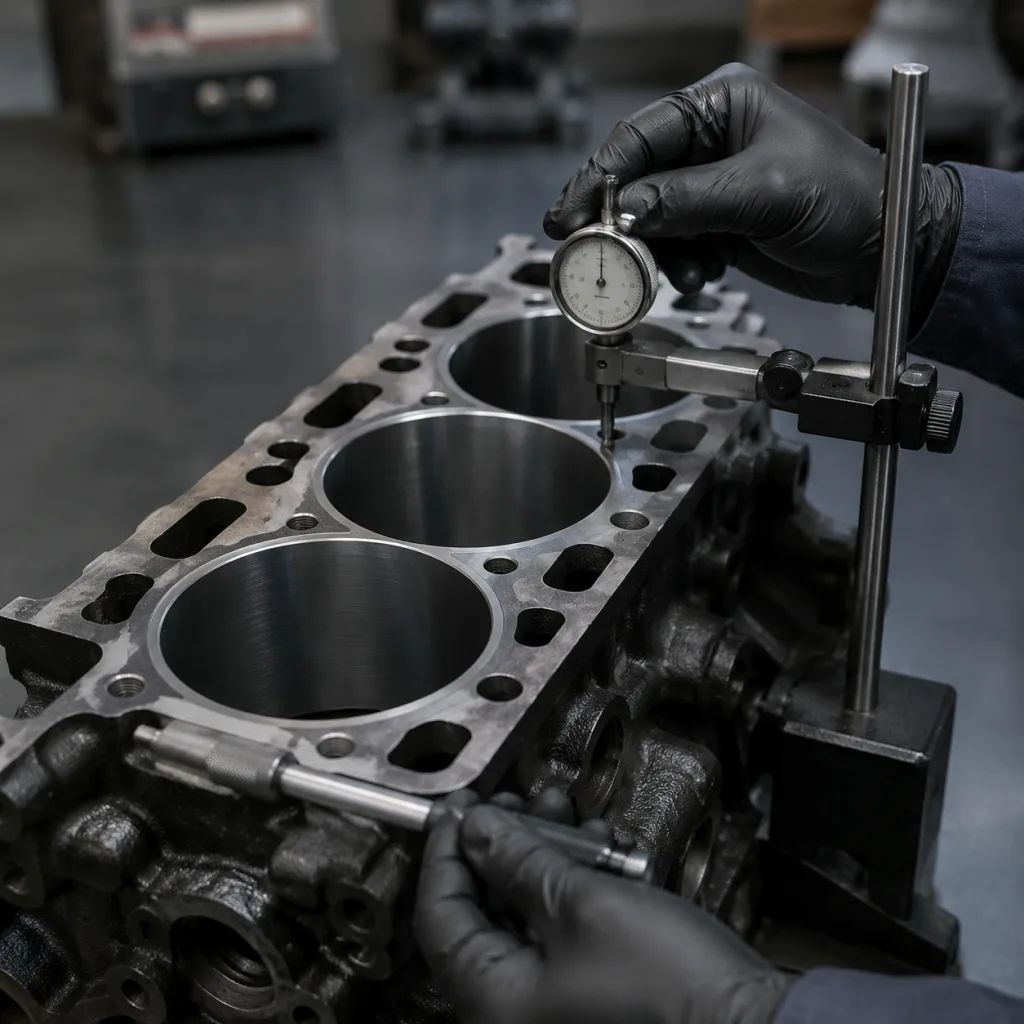
Most block problems are not dramatic at first glance. They hide in bore alignment, deck flatness, main bearing tunnel error, porosity near water jackets, unclean oil galleries, weak thread control, or trapped blasting media. A low unit price cannot recover the cost of teardown labour, customer downtime, and warranty arguments.
The table below turns those failure modes into procurement controls. Final values depend on the drawing, alloy grade, machining route, gasket system, and buyer specification.
| Control item | Typical procurement requirement | Verification method |
|---|---|---|
| Casting material | Grey cast iron or aluminium alloy per agreed drawing; heat/lot identity maintained | Spectrometer report, heat/lot record |
| Hardness or heat condition | Controlled to drawing or approved sample range, often checked per casting lot | Hardness tester, material report |
| Cylinder bore geometry | Diameter, roundness, taper, and cylindricity controlled; common procurement tolerance target is ±0.01–0.03 mm when final-machined | CMM, bore gauge, roughness tester |
| Bore surface finish | Honed or semi-finished to buyer process; Ra commonly specified around 0.4–1.6 µm depending on ring and liner plan | Roughness tester, visual standard |
| Deck surface | Flatness and finish suitable for specified gasket type; flatness targets often fall around 0.03–0.08 mm across the deck where drawing allows | CMM or surface plate, Ra measurement |
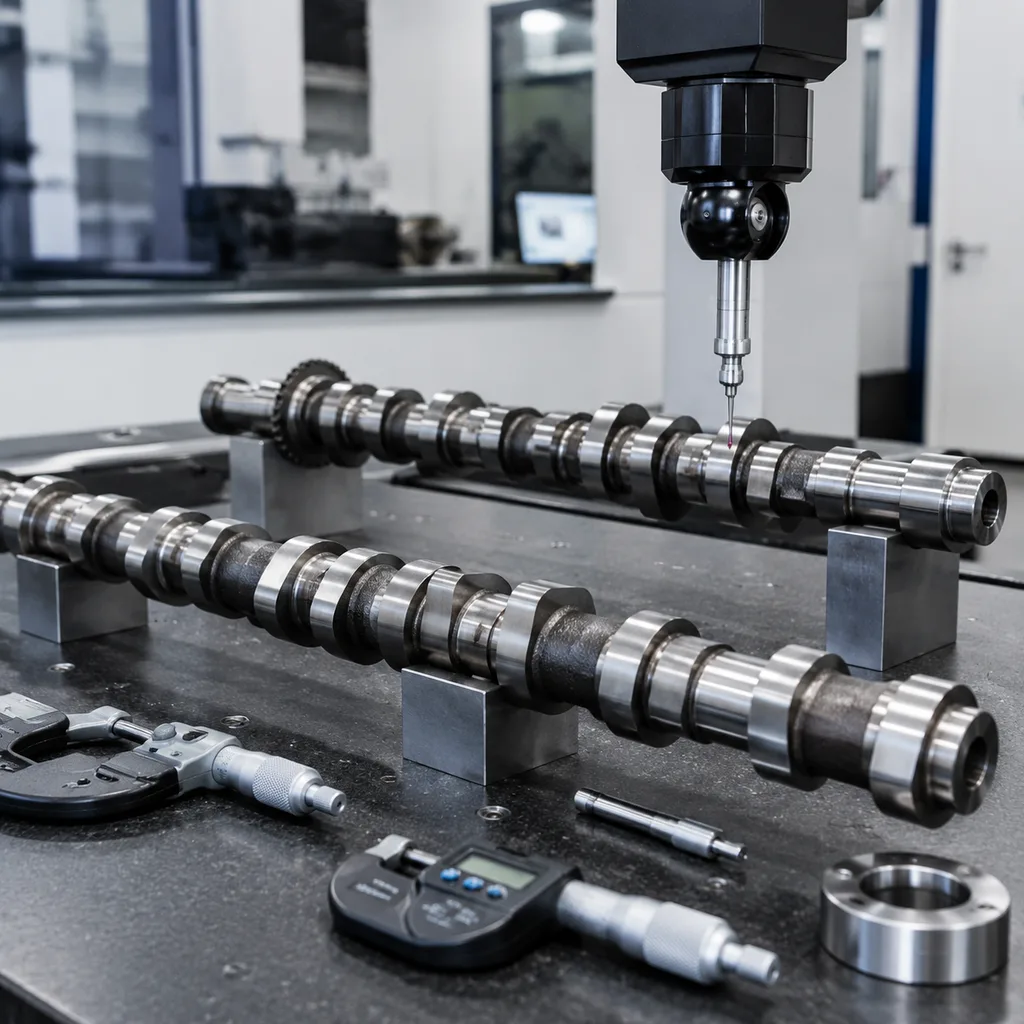
| Main bearing tunnel | Alignment, diameter, and roundness within approved tolerance stack; typical final-machined control may be within 0.01–0.02 mm | Line-bore gauge, CMM |
| Oil and coolant passages | No blockage, flash, sand, chips, burrs, or loose residue; gallery cleaning confirmed before plugs are fitted | Visual inspection, air test, cleaning record |
| Threaded holes | Depth, pitch, perpendicularity, and location verified, with no pulled threads or heavy burrs | Thread gauge, fixture check |
| Leak integrity | Water jacket and oil gallery sealing confirmed; common pressure-test windows are 0.3–0.6 MPa for 30–120 seconds unless drawing states otherwise | Pressure or vacuum test |
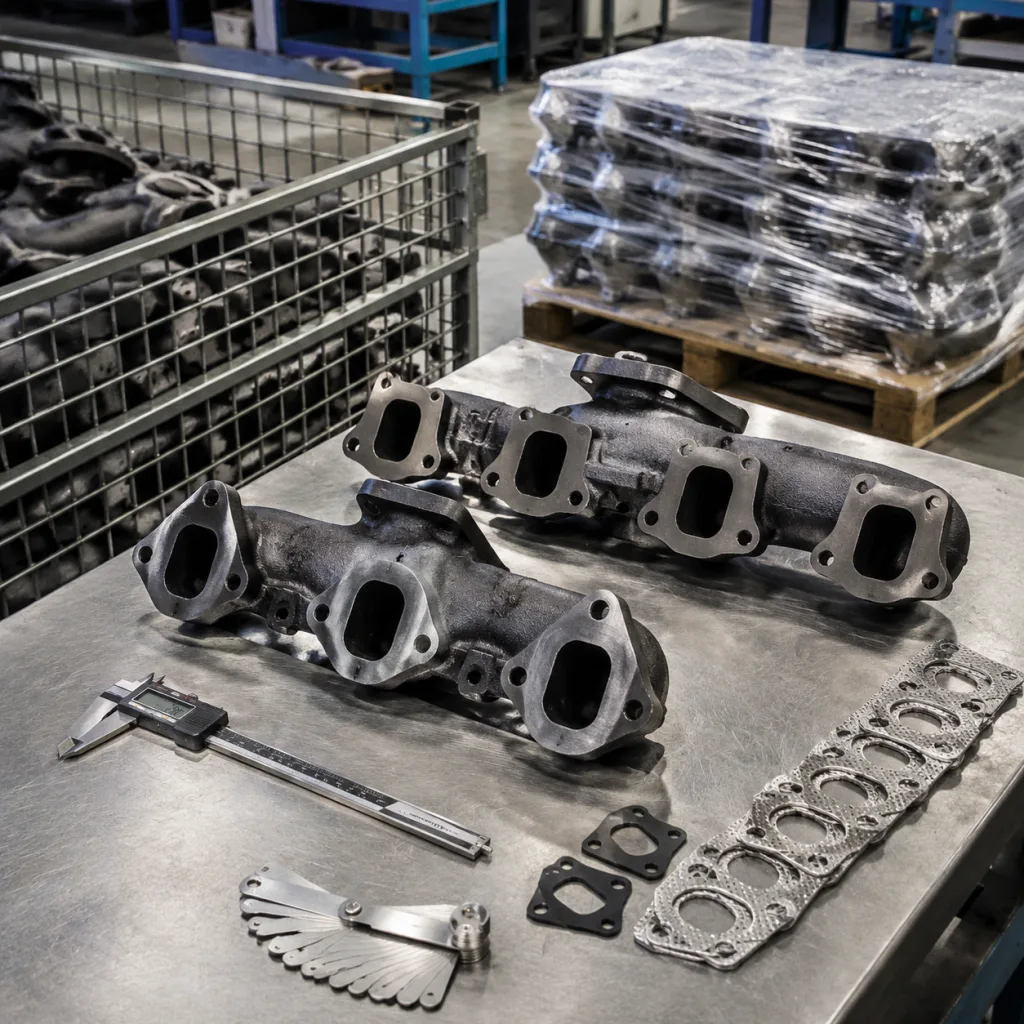
| Packaging protection | Anti-rust oil or VCI, caps for machined holes, deck and bore protection, export carton or plywood crate | Packaging inspection |

| Criterion | Why it matters | Buyer verification |
|---|---|---|
| Casting capability | Controls porosity, shrinkage, wall consistency, and structural repeatability | Audit foundry process, scrap rate, and defect records |
| Machining accuracy | Determines assembly fit, sealing, bore alignment, and bearing alignment | Review CMM, line-bore, bore-gauge, and fixture reports |
| Cleaning discipline | Reduces risk from chips, sand, burrs, and residue in oil or coolant passages | Review washing, air-blow, plug-before-pack, and inspection records |
| Leak-test control | Confirms water jacket and gallery integrity before shipment | Check pressure, hold time, calibration, and rejected-part records |
| Traceability | Supports containment if a batch issue occurs | Check lot coding, traveller cards, inspection status, and shipment records |
| Certification | Shows system-level quality discipline | Confirm IATF 16949:2016 and ISO 9001:2015 scope |
| Engineering support | Reduces development risk for sample-based projects | Review drawing review, feasibility notes, and APQP-style records |
| Packaging | Prevents corrosion, deck damage, bore contamination, and crate failure in ocean freight | Inspect crate design, VCI or anti-rust method, and machined-face protection |
| Export experience | Reduces customs, labelling, document, and routing errors | Confirm shipment history to target markets and document samples |
| After-sales response | Affects warranty containment and corrective action speed | Review 8D timing, photo evidence rules, and corrective-action procedure |