engine block · 2026-06-08

Engine Block Porsche Manufacturer China: Sourcing Guide

Procurement teams searching for an engine block Porsche manufacturer China supplier usually need more than a casting source. They need verified materials, stable CNC machining, dimensional evidence, traceability, export packaging, and careful handling of fitment references. This guide explains how to evaluate Chinese manufacturers for Porsche-fitment aftermarket distribution, Tier-1 programmes, and repair-chain supply. It covers the sourcing controls that matter most: MOQ, lead time, audit evidence, machining tolerances, inspection records, packaging, and compliance documents. Driventus manufactures engine and powertrain components in Taizhou, Zhejiang, and exports to more than 60 countries. We support B2B buyers with sample development, pilot orders, and repeat production under IATF 16949:2016 and ISO 9001:2015 systems. Driventus is an independent aftermarket manufacturer; Porsche and other brand names are used only for fitment identification.

Sourcing Scope for Porsche-Fitment Engine Blocks

An engine block programme should begin with fitment and engineering scope, not only target price. Buyers need to define whether they require complete machined blocks, semi-finished castings, or custom development based on samples and drawings. For Porsche-fitment applications, importers typically organise references by engine family, displacement, bore size, deck height, oil and coolant passage layout, and mounting interfaces. If OE part-number cross-references are used, they should be supplied by the buyer and treated as fitment references, not as claims of vehicle-maker approval.

Driventus can review samples, 2D drawings, 3D models, and inspection reports to confirm manufacturability before quotation. Relevant products can be reviewed through our catalog and the broader engine component range at /products/engine-components.html.

A practical sourcing brief should include:

  • Application range: model years, engine code, displacement, bore and stroke
  • Supply form: raw casting, semi-machined block, or fully machined block
  • Material requirement: grey cast iron, compacted graphite iron, or aluminium alloy where applicable
  • Machining datum scheme: crankshaft centreline, deck face, cylinder bore axis, and main bearing tunnel
  • Order plan: sample quantity, pilot batch, annual forecast, and delivery destination
  • Required documents: PPAP elements, material certificate, dimensional report, and packaging specification

Factory Audit Points for Chinese Engine Block Suppliers

A credible engine block supplier should be able to show process control from casting through final inspection. A trading company may coordinate the order, but procurement teams should still know which facility performs casting, heat treatment, CNC machining, washing, leak testing, and export packing. The audit should confirm both capability and routine discipline: machines on the floor are useful only when supported by records, calibrated gauges, controlled work instructions, and traceable batch release.

Key audit questions include:

</tr></thead><tbody> </tbody></table>Driventus operates under a documented quality system aligned with automotive production controls. Buyers can request audit documents, sample inspection formats, calibration evidence, and production flow charts before committing to tooling or a long-term blanket order.

Materials, Machining, and Validation Requirements

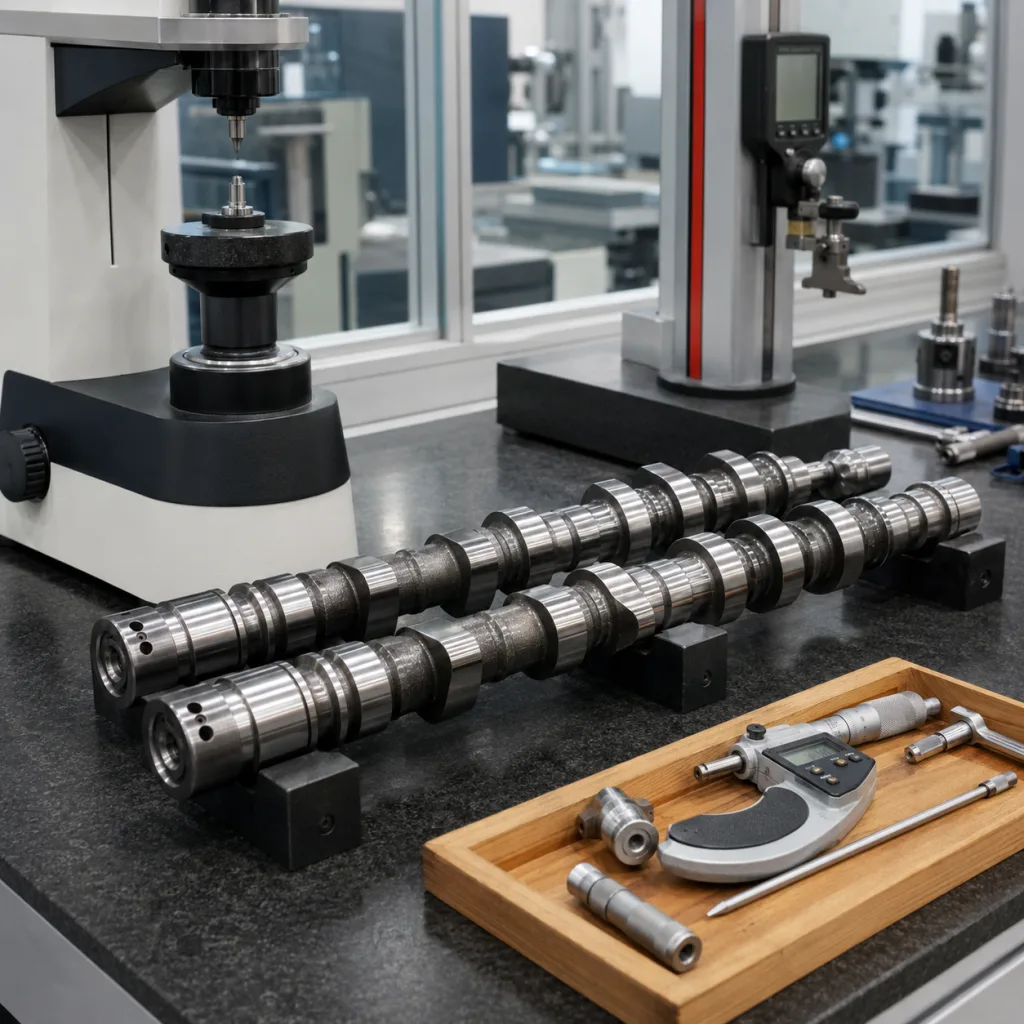
Engine block performance depends on material stability, casting integrity, and machining accuracy. For cast iron blocks, typical supplier controls include tensile strength testing, hardness checks, microstructure review, and controlled cooling. For aluminium blocks, buyers should confirm alloy designation, heat treatment condition, sleeve material where applicable, thread insert requirements, and corrosion protection after machining.

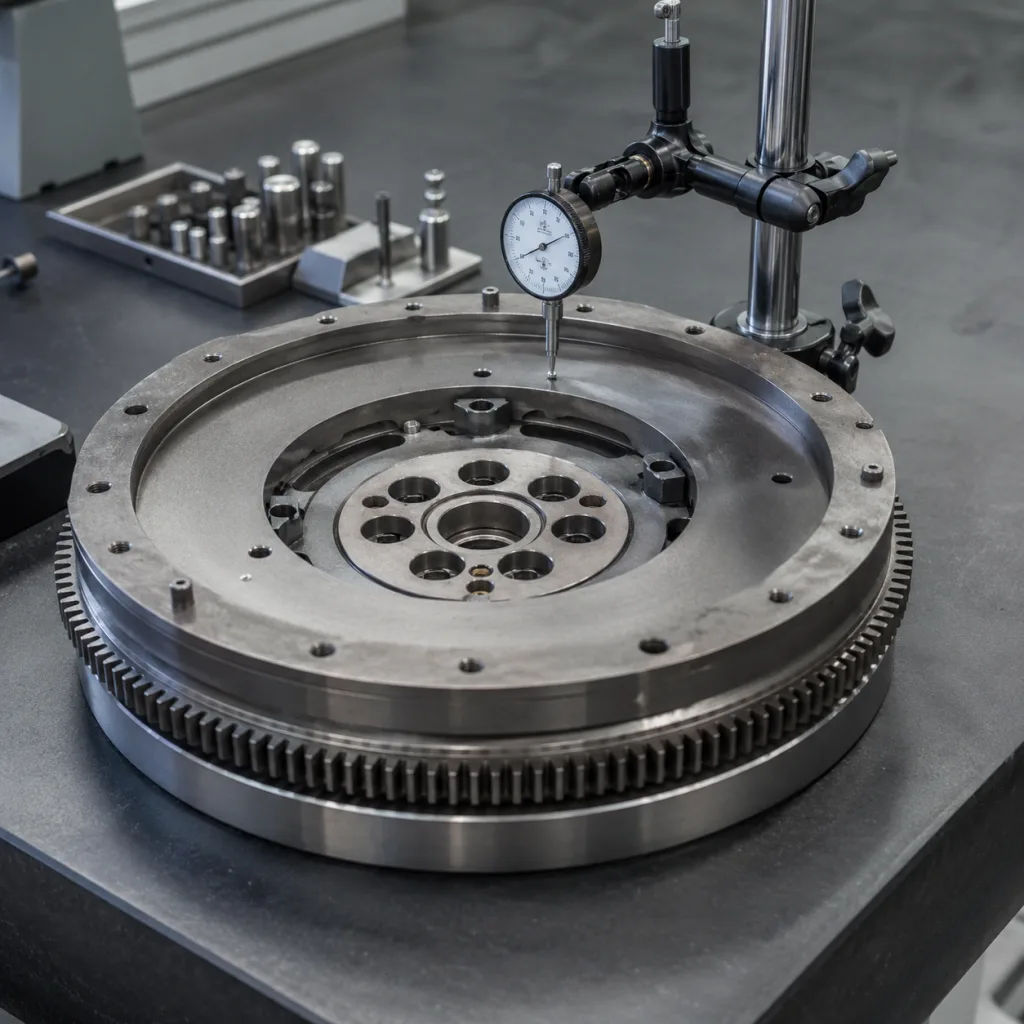
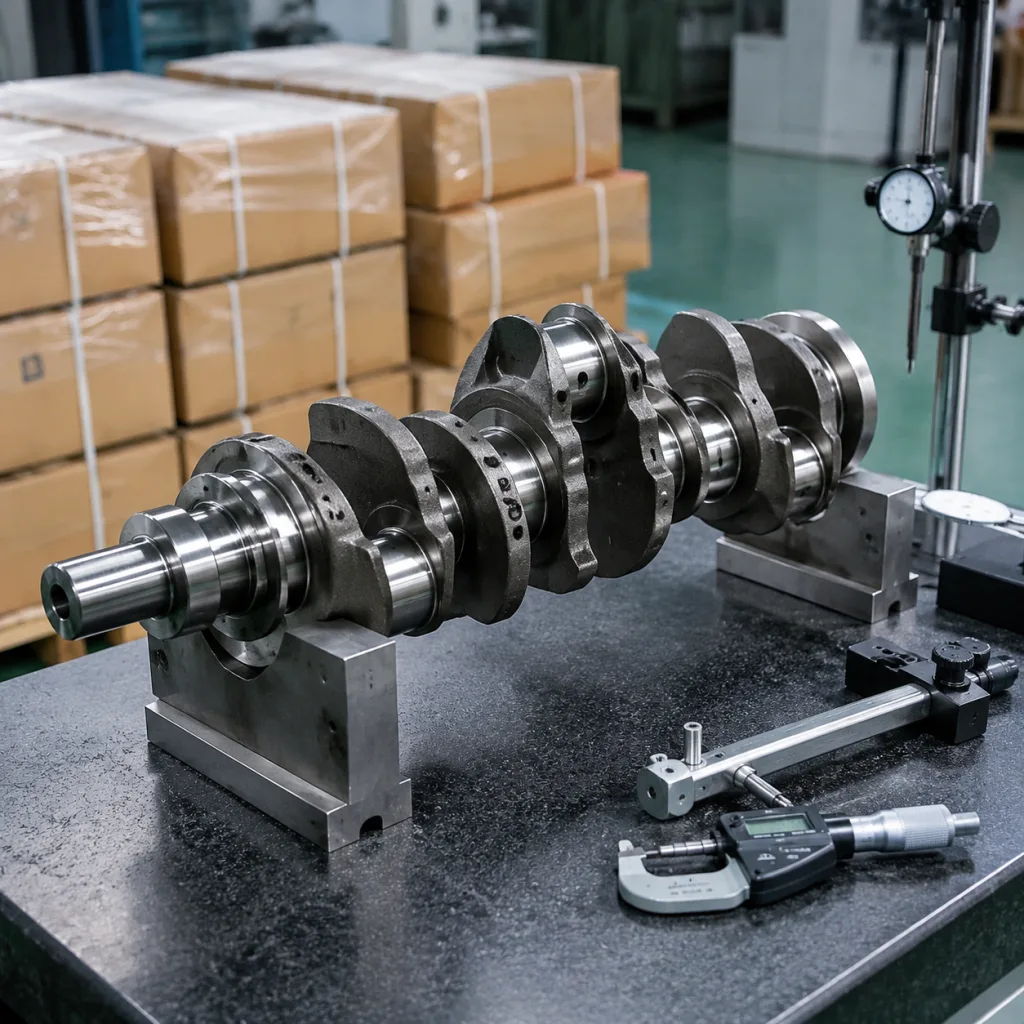
A procurement specification should not rely on visual inspection alone. The critical features are functional interfaces: cylinder bores, main bearing tunnel, deck face, oil galleries, coolant passages, bellhousing face, mounting bosses, and threaded holes. Even small deviations in these areas can create sealing issues, bearing misalignment, coolant leakage, oil pressure problems, or assembly delays.

Typical inspection items for a machined engine block include:

  • Cylinder bore diameter: measured at multiple depths and clock positions
  • Bore roundness and cylindricity: controlled according to drawing requirement
  • Deck flatness: verified after final machining and cleaning
  • Main bearing tunnel alignment: checked against crankshaft centreline datum
  • Surface roughness: measured on deck face and sealing interfaces
  • Thread quality: checked with calibrated gauges for specified positions
  • Oil and coolant passage integrity: verified by pressure or flow testing
  • Cleanliness: controlled to prevent machining chips in galleries

For validation planning, buyers may request dimensional layout reports, material test certificates, hardness records, pressure test results, cleanliness evidence, and sample build feedback. For series production, control plans and inspection frequency should be agreed before purchase order release. Compliance requirements may include REACH (EC) No 1907/2006 for markets where chemical substance declarations are required.

MOQ, Lead Time, Tooling, and Commercial Controls

MOQ and lead time vary by supply form. A stocked aftermarket reference can move faster than a new casting programme, while a fully custom engine block requires engineering review, pattern or mould development, machining fixture design, trial production, inspection, and validation. Buyers should separate prototype timing from production timing so quotation expectations remain realistic.

Typical sourcing ranges are shown below. Final figures depend on geometry, material, machining depth, tooling status, documentation level, and inspection requirements.

Audit area What to verify Why it matters
CertificationIATF 16949:2016 and ISO 9001:2015 certificates with valid scopeConfirms automotive quality management coverage
Casting controlMelt records, mould control, sand testing, and defect logsReduces porosity, shrinkage, and inclusion risk
Machining capabilityCNC boring, honing, decking, line boring, and thread machiningControls alignment and sealing surfaces
Inspection equipmentCMM, bore gauges, roughness tester, hardness tester, pressure test benchSupports dimensional evidence for each batch
TraceabilityBatch number, heat number, operator record, inspection statusEnables containment if a defect is reported
Export packagingAnti-corrosion protection, impact control, pallet strengthPrevents transit damage in sea freight and air freight

</tr></thead><tbody> </tbody></table>Commercial control should cover more than unit price. Import managers should confirm Incoterms, carton and pallet dimensions, HS code guidance, spare packaging allowance, inspection responsibility, warranty handling process, and the point at which goods are considered accepted. For repeat supply, Driventus can support custom manufacturing with drawings, samples, reverse engineering data, and agreed inspection criteria.

Payment terms, tooling ownership, tooling maintenance, sample approval status, and engineering change control should be written into the purchase documentation. Buyers should also specify whether batch inspection reports are required with every shipment or only during pilot production.

Quality Documentation for Importers and Tier-1 Buyers

For B2B engine block sourcing, documentation is part of the product. A distributor may need batch traceability, carton labelling, and consistent packing records. A Tier-1 buyer may require process flow, FMEA, control plan, PPAP-style submission, and evidence that special characteristics are controlled. A repair-chain buyer may prioritise repeat fitment accuracy, packaging durability, and stable availability across multiple locations.

Useful documents to request before production include:

  • Business licence and export qualification documents
  • IATF 16949:2016 and ISO 9001:2015 certificates with scope review
  • Process flow chart from casting to packing
  • Control plan covering critical dimensions and inspection frequency
  • Material certificate and hardness report format
  • CMM or dimensional report template
  • Pressure test and cleanliness control method
  • Packaging drawing or photo record
  • Nonconformance and corrective action process

The strongest documentation package is practical, not decorative. It should connect each critical feature to a process step, inspection method, acceptance rule, and responsible team. Driventus does not claim approval or endorsement by any vehicle manufacturer. Porsche and other brand names, when used, are only for fitment identification and procurement communication.

How to Shortlist an Engine Block Supplier in China

A structured shortlist reduces sourcing risk. Price comparison is useful only after the technical scope is equal. Buyers should compare suppliers by manufacturing depth, inspection capability, export experience, engineering response quality, and willingness to provide evidence before payment.

A recommended evaluation sequence is:

1. Send the fitment list, samples, drawings, and target annual volume. 2. Ask the supplier to confirm whether the block is existing, modified, or new development. 3. Review certification scope, process capability, and inspection equipment. 4. Request a feasibility response covering material, machining, MOQ, lead time, and tooling. 5. Order samples or a pilot batch with dimensional reports. 6. Perform incoming inspection and trial assembly before volume release. 7. Agree batch documentation, labelling, packaging, and corrective action timing.

For EU, UK, US, Canada, Australia, and Brazil importers, the strongest supplier is usually the one that explains the process clearly, provides evidence quickly, and keeps the same control plan after the first order. Buyers evaluating an engine block Porsche manufacturer China search result should ask for production records, inspection formats, and sample approval steps before negotiating container volumes.

Frequently asked questions

Yes. Driventus supports B2B supply for aftermarket distributors, wholesalers, OEM/Tier-1 projects, and repair-chain programmes. Labelling, carton format, palletisation, and batch traceability can be agreed during quotation and sample approval.

Send the engine code, displacement, material requirement, target supply form, annual forecast, destination port, and any drawings, samples, or inspection reports. If OE cross-references are required, provide the exact references for fitment confirmation.

No. Driventus does not claim approval or endorsement by Porsche or any vehicle manufacturer. Driventus is an independent aftermarket manufacturer; brand names are referenced for fitment only.

For drawings, samples, MOQ planning, or audit documents, contact Driventus to [request a quote](/contact.html).

Request a Quote
Programme type Typical MOQ Typical lead time Buyer notes
Existing reference, machined block20–50 units45–75 daysBest for distributors testing demand
Semi-machined block30–80 units50–80 daysRequires buyer-side finishing capability
New casting with custom machining50–150 units90–150 daysRequires tooling, sample approval, and pilot run
Annual supply agreementForecast-basedScheduled releasesSuitable for wholesalers and repair chains