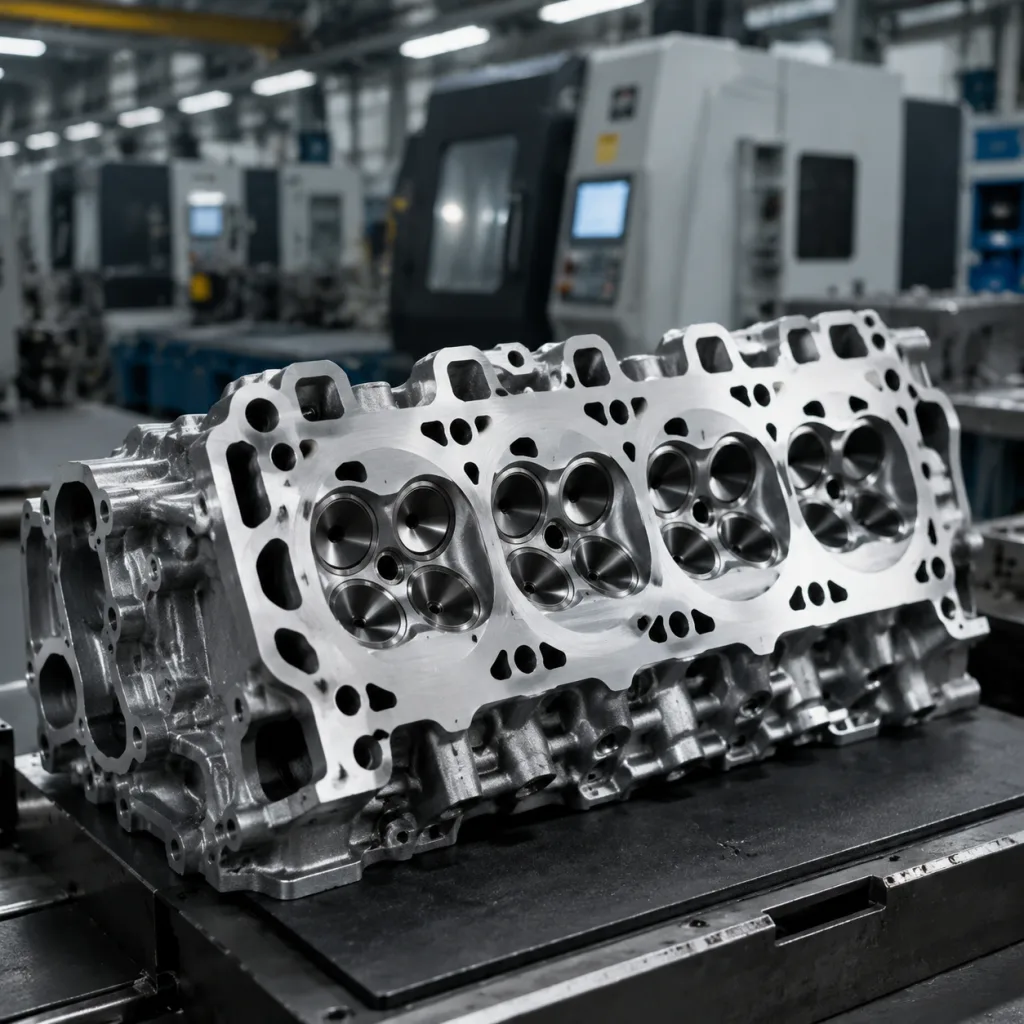
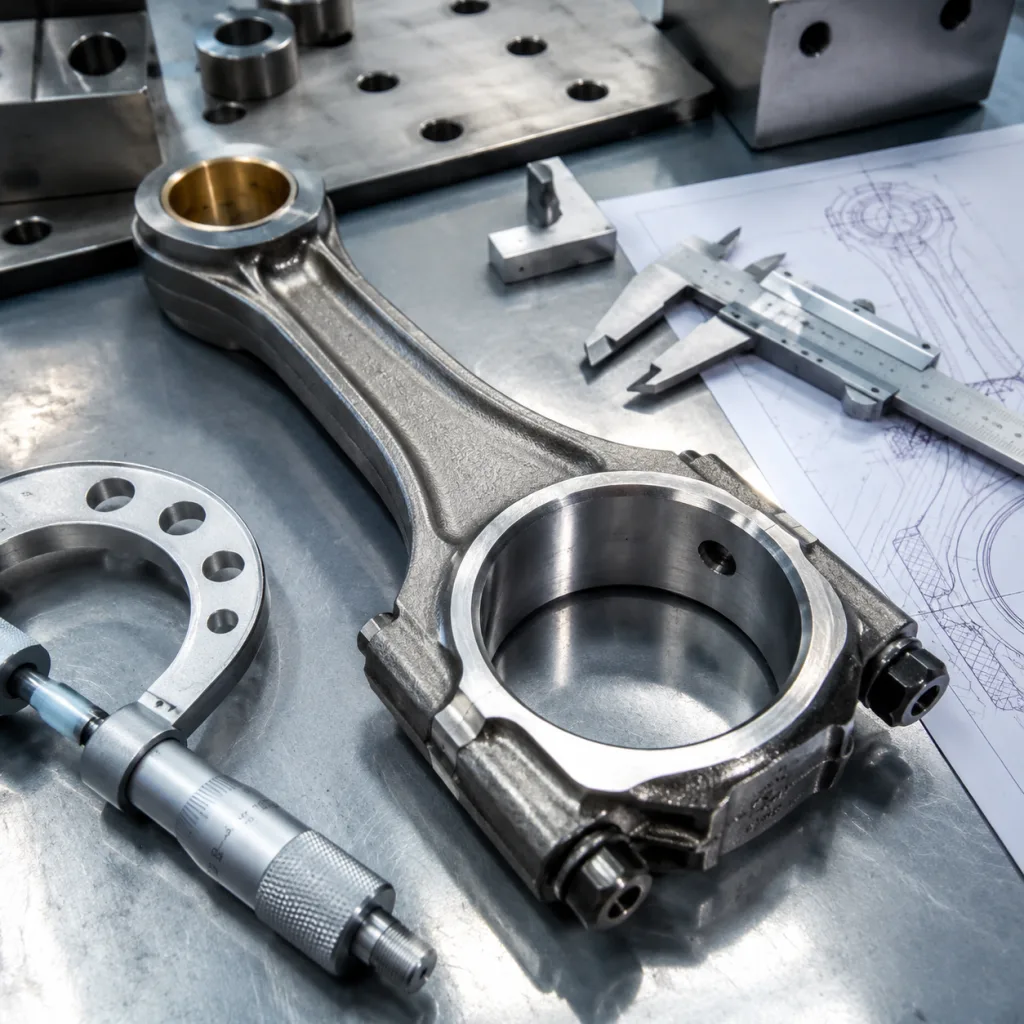
Choosing a dual mass flywheel Genesis manufacturer China partner is not a catalogue exercise. The part may look simple from the outside, but the buying risk sits in the details: damper rate consistency, rotational free play, axial clearance, friction-face runout, ring-gear position, residual unbalance, grease control, bearing fit, packing strength, and traceability back to steel, springs, bearings, machining, and assembly records.
Driventus Auto Parts manufactures engine and powertrain components in Taizhou, Zhejiang, for B2B customers in Europe, North America, Australia, Brazil, and other aftermarket regions. We support distributors, wholesalers, repair-chain supply teams, and OE service-channel projects that need controlled batch quality, workable MOQ planning, export packaging, and inspection records useful in real claim reviews.
This article is written as a buyer’s decision tool rather than a generic sourcing guide. It covers how to define the scope, where DMF projects usually fail, what to inspect, how to audit a Chinese factory, how to structure commercial terms, and how Driventus supports sample-to-repeat supply. Driventus is an independent aftermarket manufacturer; vehicle brand names are used only for fitment reference.
Start With the Fitment Decision, Not the Catalogue Match
A dual mass flywheel sits between the engine crankshaft and clutch system. Its job is to absorb torsional vibration, reduce gearbox shock, and support smoother clutch engagement. For Genesis applications, that function depends on more than a part number. A correct sourcing brief should identify the engine code, gearbox type, clutch diameter, starter ring gear specification, pilot bearing interface, crankshaft bolt pattern, bolt grade, dowel position, friction-face height, and accepted interchange references.
Photos help. Broad fitment lists do not prove production readiness.
A useful buyer file normally includes 12–20 measurable points from an approved sample or drawing, such as:
Centre bore ID
Crank bolt PCD
Number and diameter of bolt holes
Ring gear OD and tooth count
Ring gear axial position
Overall height
Clutch cover PCD
Dowel diameter and projection
Friction-face OD/ID
Step height
Pilot bearing depth
Assembly mass
For higher-risk references, record rotational free play angle, axial clearance, friction-face runout, mounting-face runout, and residual unbalance on the approved sample before releasing a pilot run. These values become the practical reference when a later claim mentions gear rattle, start-up knock, clutch judder, or difficult engagement.
Driventus supports aftermarket and service-part programmes where buyers provide samples, drawings, test criteria, or cross-reference data. If an OE-style reference uses a broad format such as OE 11251… or OE 06A…, it should be checked against VIN data, regional catalogues, and the buyer’s own application database before ordering. We do not claim approval, affiliation, or endorsement by any vehicle manufacturer.
Common procurement scenarios include:
Distributor stock for Asian vehicle applications in the EU, UK, US, Canada, Australia, and Brazil
Repair-chain replenishment with carton labelling, barcode rules, and batch traceability
Private-label packaging for wholesalers and buying groups
Engineering-to-sample development for low-volume or hard-to-source references
Consolidated shipments with other engine and powertrain components from our catalog
The RFQ should state exactly what is being quoted: complete dual mass flywheel assembly, flywheel-and-clutch kit, flywheel-only shipment, or service kit with bolts and pilot bearing. That choice affects landed cost, warranty exposure, carton size, warehouse handling, HS-code review, installer expectations, and claim assessment.
Where Genesis DMF Sourcing Projects Usually Break Down
Most weak sourcing projects do not fail because the supplier cannot make one sample. They fail because the buyer and factory never define what must stay repeatable in production.
A dual mass flywheel Genesis manufacturer China project should therefore begin with process capability. Dual mass flywheels require controlled assembly preload, stable grease volume, calibrated damping elements, accurate friction surfaces, repeatable rotational balance, and clean handling of bearings and spring packs. If one of those controls drifts, the market may see start-up rattle, vibration, clutch judder, hard engagement, abnormal overrun noise, or early workshop complaints.
Driventus normally structures new Genesis application projects in three stages:
1. Sample confirmation — verify dimensions, fitment, function, and reference data. 2. Pilot batch — check whether the process can repeat under small-scale production conditions. 3. Repeat-order production — move into planned replenishment after packaging, inspection records, and field response are proven.
MOQ is application dependent. It is affected by the casting or forging route, spring pack, ring gear, machining workload, tooling status, annual forecast, and whether private-label cartons or special barcoding are required.
Sourcing item
Typical planning range
Buyer verification point
Data review and feasibility
3–7 working days after complete RFQ file
Confirm vehicle data, sample status, drawing revision, and target quantity
Sample development
30–60 days after data confirmation
Sample, drawing, or approved reference part required; longer if new tooling is needed
Sample quantity
1–5 pieces per reference
Complete dimensional, functional, and installation checks before pilot order
Pilot order
50–200 pieces per reference
Review dimensional report, free play/end play check, and balance data before shipment
Repeat MOQ
Usually 100–300 pieces per active reference, application dependent
Confirm packaging, label, raw-material lot, and forecast stability
Mixed shipment planning
Often practical from 1 pallet to LCL/FCL scale
Combine with other heavy powertrain items to reduce freight per unit
Mass production lead time
45–75 days after deposit and packaging approval
Check material availability, machining queue, balance capacity, and production slot
Private-label packaging approval
7–15 days after artwork confirmation
Approve barcode, label language, carton burst strength, pallet height, and marks
Export documentation
Commercial invoice, packing list, bill of lading, certificate of origin when required
Confirm HS code, Incoterms, destination-market declarations, and importer requirements
</tr></thead><tbody> </tbody></table>Price is usually driven by material weight, machining cycle time, damper system cost, bearing and grease specification, inspection intensity, packaging, and order frequency. A low-volume engineered reference may cost more because casting preparation, fixtures, validation, and inspection time are spread over fewer units.
For larger distributors, blanket orders with scheduled releases can reduce stock-out risk and stabilise factory planning. A practical model is pilot approval first, then monthly or quarterly call-offs based on sell-through. For smaller wholesalers, mixed-container planning may work better, especially when flywheels ship with water pumps, gaskets, pistons, crankshafts, timing components, or other powertrain parts.
Separate trial demand from confirmed replenishment. The factory cannot plan tooling, steel, packaging, inspection labour, or balance capacity accurately if the forecast is only a guess.
Spec Deep-Dive: The Measurements That Decide Field Performance
Dual mass flywheels are safety-adjacent drivetrain components. A failure can affect drivability, clutch release, noise levels, and power transfer. Buyers should ask for inspection records that connect the approved sample to the production batch. Verbal assurances are not enough.
Driventus operates under IATF 16949:2016 and ISO 9001:2015 based quality management principles; more details are available on our quality system page.
Key validation and inspection controls include:
Dimensional inspection: crank bolt circle diameter, centre bore, ring gear position, friction surface height, clutch cover mounting pattern, dowel locations, pilot bearing interface, and overall height. Critical locating features are often controlled within ±0.02–0.05 mm when the application requires it. Non-critical external dimensions may use wider tolerances agreed in the control plan.
Rotational free play check: angular movement verified against application-specific limits to reduce abnormal noise or driveline harshness. Do not apply one generic value across all DMF references.
Axial clearance check: controlled to reduce rattle, clutch engagement issues, and premature wear. The approved value should be recorded on the first article and monitored during production with go/no-go or dial-indicator methods.
Dynamic balance: measured at operating-relevant rotational speeds with retained batch records. For many aftermarket DMF programmes, buyers should require residual unbalance data per piece or per agreed sampling plan, plus machine calibration status.
Runout and flatness: friction face and mounting face checked to reduce judder risk and improve clutch contact consistency. Common buyer targets are roughly 0.05–0.10 mm, but final limits should follow the drawing and approved sample.
Surface and hardness checks: friction surface roughness, ring gear tooth profile, tooth hardness, and case depth where applicable. Ring gear hardness and heat-treatment records should be linked to the lot, especially in high-start-cycle service markets.
Damper assembly control: spring free length, spring rate, seat condition, grease type, grease weight, rivet condition, bearing fit, and preload checked according to the agreed control plan.
Material traceability: steel, cast iron, spring, bearing, grease, fastener, and friction-surface records linked to batch number and production date.
Packaging drop and vibration checks: used for export cartons and palletised shipments to reduce freight damage, including corner crush, carton abrasion, corrosion, and ring gear impact.
If formal production part approval documentation is required, Driventus can discuss PPAP-style files, control plans, process flow diagrams, failure mode and effects analysis, gauge R&R or other measurement system analysis, material certificates, first article inspection reports, and capability data for selected critical characteristics.
Agree on documentation depth before quotation. More reporting means more sampling time, engineering review, inspection workload, and cost.
Compliance topics may include REACH (EC) No 1907/2006 for restricted substances in the EU supply chain and customer-specific material declaration formats. If clutch-related components are supplied as part of a kit, confirm destination-market requirements for the complete assembly, not only the flywheel.
Audit the Factory Like You Are Investigating a Future Claim
A useful audit answers one question: if a field complaint appears six months later, can the supplier trace the part and prove what happened?
For Genesis dual mass flywheel sourcing, the audit should connect incoming material control, machining stability, assembly discipline, calibration status, final inspection, packaging control, and nonconforming product handling. Do not only review certificates in an office. Walk the process. Match carton labels to batch records, balance reports, machining data, assembly lots, and incoming material inspection.
Minimum audit questions
Are drawings, samples, specifications, and change records controlled by revision, approval date, and customer sign-off?
Are spring packs, bearings, grease, fasteners, castings, and ring gears traceable by batch, supplier, and inspection status?
Are CNC programmes, fixtures, tool offsets, and first-piece approvals controlled before production continues?
Is assembly torque controlled with calibrated tools and recorded where required, including torque range, tool ID, and operator?
Are grease type and grease weight controlled by part number, lot, and dispensing method rather than visual judgement?
Are balance machines calibrated, maintained, and linked to inspection records by date, operator, machine, and part reference?
Is 100% functional inspection applied to rotational free play, end play, or abnormal noise where the application requires it?
Are critical dimensions checked with gauges or fixtures suitable for repeat production, not only handheld calipers?
Are nonconforming parts physically segregated and recorded with disposition, rework approval, and reinspection evidence?
Are cartons labelled with part number, batch number, quantity, gross weight, net weight, destination marking, and country of origin?
Is there a defined containment process for customer complaints and suspected batch issues within 24–48 hours of notification?
Can the factory provide corrective action reports with root-cause evidence, photos, 5-Why or fishbone analysis, and verification of effectiveness?
Red flags during supplier evaluation
Quotation without verified fitment data, technical comparison, or sample review
No clear separation between prototype, pilot, and mass-production records
Balance reports not tied to batch, date, operator, machine, or serial information
Uncontrolled substitution of springs, grease, bearings, fasteners, or ring gears to reduce cost
Claims of universal interchange where dimensions, damper rates, or ring gear positions differ
No retained master sample or no sign-off process for the production reference part
Export packaging that ignores ocean freight humidity, carton compression, forklift handling, and pallet movement
Warranty promises without an inspection method, evidence standard, return policy, or response timeline
For design changes, private-label supply, or engineered-to-sample development, Driventus can support custom manufacturing with agreed drawings, tolerance controls, quality gates, sample retention, pilot-run approval, and customer-specific inspection plans.
Build the Purchase Order Around Risk, Not Only Price
A dual mass flywheel is a precision drivetrain assembly, not a commodity casting. Landed cost includes testing, packing density, claim rate, pallet strength, documentation, cash tied up in MOQ, and installer confidence. A low unit price becomes expensive if dimensional consistency drifts, balance data is missing, private-label cartons fail in transit, or packaging damage causes returns before installation.
A strong RFQ should include:
Genesis model, engine, gearbox, production year range, drive configuration, and target market
OE cross-reference only when already verified by the buyer, for example OE 11251…
Annual forecast, first-order quantity, pilot quantity, expected reorder frequency, and target launch date
Required branding: neutral, Driventus, or buyer private label
Carton specification, pallet height limit, barcode format, label language, country-of-origin marking, and retail shelf requirements
Destination port, Incoterms, preferred consolidation plan, and whether shipment is LCL, 20 ft, 40 ft, or mixed container
Required quality documents: inspection report, balance data, material declaration, first article report, or PPAP-style file
Warranty handling rules, claim evidence, return procedure, labour policy, and technical review timeline
Driventus can quote under common export Incoterms such as FOB Ningbo or Shanghai, and can discuss CIF or other arrangements depending on order scale, shipping route, and destination. Payment terms, tooling cost, sample charges, inspection scope, and private-label artwork approval are confirmed case by case.
When comparing quotations, separate the ex-works product price from packaging, document preparation, inspection requirements, bank charges, inland freight, ocean freight, duty, VAT/GST, and local warehousing cost.
Packaging deserves early review. DMFs are dense machined assemblies with surfaces that must be protected from corrosion, impact, and carton collapse. A typical export solution uses VCI or anti-rust oil on machined surfaces, a plastic bag or wrap, moulded pulp or foam support, a double-wall carton, clear handling marks, and pallet strapping or wrapping. Heavier references may require reinforced inner supports so the ring gear and friction face do not absorb impact during LCL handling.
Import risk control should also define claim evidence. Useful evidence normally includes carton photos, label photos, installation vehicle data, mileage at installation, failure mileage, noise or vibration description, clutch kit used, technician notes, and returned sample availability. If the buyer expects 8D reports, replacement credits, or batch containment within a specific time window, those terms should be written into the purchase order or supply agreement before shipment.
For distributors carrying multiple drivetrain references, start with a controlled pilot shipment before a broad catalogue launch. First-batch field feedback confirms application coverage, carton durability, installer notes, demand accuracy, claim evidence quality, and documentation needs for repeat orders.
Q&A: How Driventus Moves a Genesis DMF Project From RFQ to Repeat Supply
What does Driventus actually support? Driventus manufactures powertrain components for B2B customers that need repeatable quality, clear documentation, and coordinated export supply. For Genesis dual mass flywheel programmes, our team can review application data, confirm manufacturability, define inspection points, and prepare quotations for sample, pilot, or repeat-order supply.
What makes the sourcing path measurable? The project should move through approved sample, controlled pilot, documented inspection, stable packaging, and repeatable replenishment. Each step should leave evidence: dimensions, functional checks, batch numbers, packaging approval, and shipment records.
Which technical points can be reviewed? Driventus can discuss free play, axial clearance, runout, balance, ring gear position, surface finish, hardness, interface dimensions, and buyer-supplied application references. Where the buyer provides an approved reference part, sample comparison reports can cover critical dimensions and functional checks.
What records are available for pilot batches? Pilot-batch inspection records can include batch number, inspection date, selected measured characteristics, and agreed functional checks before shipment release. Reporting depth should be confirmed during quotation.
Can packaging and private label be handled together? Yes. Export packaging can be designed for sea freight, pallet handling, humidity exposure, and warehouse storage. Private-label carton and label support can include barcode rules, carton marks, label language, and artwork confirmation before mass production.
Can DMFs be shipped with other parts? Often, yes. Consolidation with other engine and drivetrain parts can improve shipment efficiency and reduce freight cost per unit, especially for distributors building mixed powertrain orders.
How are field issues handled? Corrective action depends on documented evidence, batch traceability, inspection records, and returned-part review where available. Clear claim rules should be agreed before shipment.
A practical project timeline is: RFQ and technical-file review, sample confirmation, quotation, pilot-order approval, production, pre-shipment inspection, export documentation, and post-arrival feedback. Buyers can speed up the process by sending the approved sample or drawing together with forecast, quality-document requirements, packaging standard, and target Incoterm in the first enquiry.
Driventus is an independent aftermarket manufacturer; brand names are referenced for fitment only. We do not state or imply vehicle manufacturer endorsement. Buyers can review broader engine and powertrain coverage through our catalog and then request a quote with the part list, forecast, destination, target launch date, and quality-document requirements.
Frequently asked questions
Send the vehicle model, engine, gearbox, production years, target market, sample photos, key dimensions, and any verified OE-style reference such as OE 11251…. Useful dimensions include centre bore, crank bolt PCD, ring gear tooth count, overall height, clutch cover PCD, dowel position, friction-face OD/ID, and pilot bearing interface. Annual forecast, first-order quantity, packaging requirements, Incoterms, and required inspection documents are also needed.
Yes, private-label cartons and labels can be discussed for distributor and repair-chain programmes. Artwork, barcode rules, carton strength, pallet format, label language, country-of-origin marking, and corrosion-protection method should be approved before mass production. MOQ and lead time may change if custom cartons, labels, or retail packaging are required.
No. Driventus is an independent aftermarket manufacturer; brand names are referenced for fitment only. Products are supplied according to agreed specifications, inspection records, and buyer-approved application data, without stating or implying vehicle manufacturer endorsement.
If you are evaluating a dual mass flywheel supplier for Genesis applications, send your part list, target OE references, annual forecast, pilot quantity, packaging standard, destination port, Incoterms, and documentation requirements. Our sourcing team can review the project and respond with practical next steps at /contact.html