Camshaft for Buick Encore Aftermarket Replacement Guide
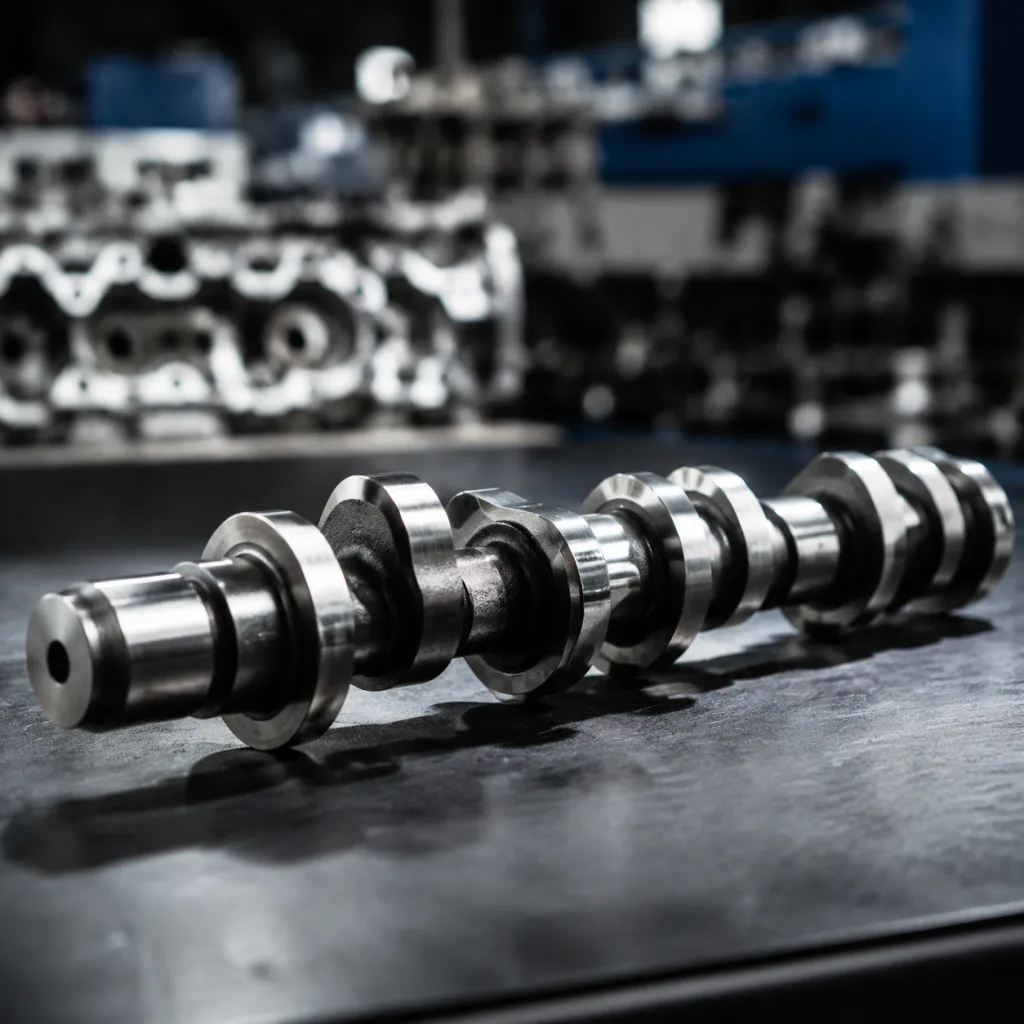
Buying a camshaft for Buick Encore aftermarket replacement is not a catalogue exercise. The part has to sit correctly in the cylinder head, but that is only the first pass. It also has to reproduce the original valve-timing geometry, journal sequence, drive-end interface, phaser or sprocket connection, oil-control details, and camshaft position sensor reference features for the exact engine variant.
For procurement teams, the risk is simple: a camshaft can look right and still create comeback repairs. Wrong angular reference, poor hardness control, blocked oil holes, excessive runout, weak labelling, or loose interchange data can turn a low unit price into diagnostic trouble codes, installer confusion, premature wear, and warranty handling costs.
Buick Encore camshafts are commonly sourced for repair chains, engine rebuilders, regional distributors, and private-label programmes. A strong buying file should define fitment, critical dimensions, inspection limits, sample approval quantity, MOQ, target landed cost, packaging, and lead time before tooling or production is released.
Driventus manufactures engine and powertrain components in Taizhou, Zhejiang, with IATF 16949:2016 and ISO 9001:2015 certified processes. This article gives buyers a practical way to evaluate OE-equivalent camshafts for Buick Encore service applications and to separate a controlled aftermarket programme from a risky part-number match.
Decision framework: prove the engine variant before approving the part number
Start with the engine, not the badge. Buick Encore vehicles have been sold in different markets and model years with small-displacement turbocharged petrol engines, and camshaft variants can differ by intake/exhaust position, timing-drive system, phaser interface, sensor target geometry, and oil-feed layout. A catalogue photo is not evidence of fit.
Use a hard stop rule: if the engine code, camshaft position, drive interface, or sensor/phaser reference is uncertain, do not release a bulk PO. Ask for a drawing, master sample comparison, measured interchange report, or pre-production sample first.
A buyer-side fitment screen should confirm:
Engine displacement and engine code supplied by the customer, installer, or existing catalogue record
Intake or exhaust camshaft position, stated on the PO and carton label
Model year range and destination-market specification
Camshaft phaser, sprocket, slot, key, or pin interface type
Journal count and journal diameter sequence from drive end to rear end
Overall length, thrust-face location, and end-float control features
Lobe count, lobe lift, base circle diameter, and phase relationship
Camshaft position sensor trigger feature location and angular reference
Oil gallery, feed hole, or oil-control geometry where applicable
Packaging label content, including application, position, part number, barcode, and batch traceability
OE-equivalence in the aftermarket means the replacement part is designed to match the fit, function, and performance requirements of the original application. It does not mean the part is supplied by, endorsed by, or approved by the vehicle manufacturer. Where a customer provides an OE-format cross-reference such as OE 06A… or OE 11251…, Driventus treats it as a fitment reference and verifies the physical specification against drawings, samples, or measured data. Driventus is an independent aftermarket manufacturer; brand names are used for fitment identification only.
Spec deep-dive: dimensions that decide whether the camshaft works
Visual inspection catches dents and obvious machining errors. It does not prove valve timing, follower compatibility, oil control, or sensor synchronisation. A replacement camshaft may bolt in and still cause start-up noise, accelerated follower wear, oil-pressure concerns, or cam/crank correlation fault codes if the lobe profile, journals, or trigger features are outside tolerance.
The controls below are typical aftermarket checkpoints for precision-ground camshafts. Final limits must be confirmed against the approved drawing, master sample, and application because an OE-equivalent intake camshaft and exhaust camshaft can carry different profile and phaser requirements.
Feature
Typical control point
Practical buyer limit to define
Overall length
End-to-end length and thrust-face location
Drawing nominal, commonly controlled within ±0.05–0.10 mm depending on datum scheme
Journal diameters
Complete diameter sequence from drive end to rear end
Each journal measured individually; common grinding tolerance ±0.005–0.015 mm where specified
Journal roundness and cylindricity
Roundness, taper, and cylindricity after final grinding
Often ≤0.005–0.010 mm for roundness/cylindricity on functional journals
Cam lobe lift
Peak lift from base circle to nose
Confirm per lobe; typical inspection tolerance ±0.02–0.05 mm unless drawing requires tighter
Base circle diameter
Compatibility with follower or hydraulic adjuster
Match approved sample/drawing; variation can affect lash and adjuster position
Lobe phase angle
Angular relationship to datum, drive end, or trigger feature
Define degree tolerance; many programmes control within ±0.5°–1.0° cam angle
Drive interface
Slot, key, pin, phaser, or sprocket detail
Verify width, depth, diameter, angular datum, and burr-free assembly fit
Sensor target feature
Position, shape, and angular relationship
CMM or fixture check required; wrong angle can trigger cam/crank correlation DTCs
Oil feed features
Hole location, passage cleanliness, and flow path
Verify diameter, position, deburring, and blocked-hole inspection
Surface finish
Ground journal and lobe roughness
Journals/lobes commonly specified around Ra 0.2–0.8 μm depending on mating design
Hardness and case depth
Material- and process-specific values
Define HRC/HV range and case depth; require report by batch, not only annual certificate
Runout/straightness
Between centres or V-block inspection
Typical final runout target ≤0.03–0.05 mm unless drawing specifies otherwise
</tr></thead><tbody> </tbody></table>For distributor quotations, drawing-based specifications reduce argument. They give both buyer and supplier objective acceptance criteria. If a buyer does not have a drawing, Driventus can review sample parts, installer measurements, interchange data, and catalogue fitment information through custom manufacturing.
A useful first-article file includes five inspected samples, a critical-dimension report, hardness readings, runout data, lobe-profile overlay, packing photo, and label proof before the first production order is confirmed.
Manufacturing route: where camshaft quality is won or lost
Material choice matters, but the process sequence matters just as much. Camshafts may be produced from cast iron, forged steel, or machined steel billets depending on engine design, loading, production volume, and target cost. For Buick Encore aftermarket replacement supply, the chosen material and surface process must match the follower design, lubrication conditions, and expected service environment.
A typical steel or cast camshaft route includes blank sourcing, incoming material inspection, rough turning, centre-hole preparation, oil-passage drilling where required, CNC machining of drive and datum features, heat treatment or induction hardening, straightening, semi-finish grinding, finish grinding of journals and lobes, deburring, washing, anti-rust treatment, final inspection, and packed-goods audit.
The order is not administrative detail. Heat treatment can move the shaft. Grinding can expose surface issues. Washing can decide whether abrasive residue reaches the engine.
Key production controls should include:
Incoming material verification against approved specifications, with heat number or batch reference
Casting or forging inspection before machining for cracks, porosity, laps, and machining allowance
CNC turning, drilling, and machining of datum features, with first-piece sign-off at shift start
Precision grinding of journals, lobes, thrust faces, and reference surfaces using dressed wheel controls
Heat treatment, induction hardening, or other surface hardening where specified
Straightening and runout inspection after thermal processing
Lobe-profile inspection and comparison with approved master data
Final washing to remove abrasive, chips, and metallic residue from lobes, journals, and oil holes
Anti-corrosion protection for sea freight, warehouse storage, and inland distribution, typically using VCI bag or rust-preventive oil
Lot identification linking finished parts to inspection and production records
Not every camshaft field failure is caused by the camshaft. Poor lubrication, contaminated oil, incorrect timing installation, reused worn followers, and mismatched parts can all create wear or noise. Still, buyers can reduce supply-side exposure by requiring batch traceability, hardness reports, runout records, surface-finish data, profile inspection results, and cleanliness checks. Driventus maintains process controls under its quality system, aligned with IATF 16949:2016 and ISO 9001:2015 requirements for automotive production management.
For export markets, compliance documentation should be addressed before shipment planning. EU buyers may need supplier information supporting REACH (EC) No 1907/2006 chemical-substance obligations. Other markets may require country-of-origin details, material declarations, tariff-code confirmation, fumigation-free pallet statements, or customer-specific restricted-substance forms.
Step-by-step approval plan before bulk release
A camshaft for Buick Encore aftermarket replacement should be validated before volume ordering, especially for repair-chain, distributor, or private-label supply. The approval plan does not need to repeat every original vehicle manufacturer development test. It does need to prove that the part matches the intended application and can be installed without predictable service problems.
A practical route is:
1. Review 1–2 reference samples or drawings for feasibility. 2. Produce 5–10 pre-production samples for dimensional, functional, and packaging approval. 3. Release a pilot production lot where the customer or programme risk requires it. 4. Move to repeat production only after acceptance criteria, labelling, and inspection records are locked.
High-volume programmes should define the sampling plan before the PO. Many buyers use AQL-based final inspection plus 100% checks on high-risk features such as oil-hole blockage, visible surface damage, and part-number/position labelling.
Recommended pre-production or pre-shipment checks include:
1. Sample dimensional report Measure all critical-to-fit dimensions against the approved drawing, master sample, or agreed inspection plan. Include journal diameters, overall length, thrust location, drive feature, and sensor reference geometry.
2. Lobe profile scan Confirm lift curve, base circle, ramp geometry, nose radius, and angular relationship to the datum feature. Require overlay comparison to approved master data, not only peak-lift measurement.
3. Runout inspection Verify straightness across journals after grinding and any thermal processing. State fixture method, inspection points, and maximum permitted runout.
4. Hardness and case-depth testing Confirm the specified surface condition on lobes, journals, and other functional areas where required. The report should identify test method, location, and batch.
5. Drive and sensor feature verification Check phaser, sprocket, slot, pin, or key details together with camshaft position sensor reference geometry. Use a CMM, dedicated angle fixture, or functional gauge where appropriate.
6. Trial installation Fit the sample with the correct caps, followers, phaser, timing components, seals, and cover clearances. Confirm hand rotation, end float, cover clearance, and timing mark relationship.
7. Oil passage and cleanliness check Confirm feed holes or control passages are open, correctly located, deburred, and free from grinding residue. Use air flow, borescope, probe, or washing validation as suitable.
8. Functional engine or rig test where required Use application-specific test plans for high-volume or high-risk programmes. At minimum, confirm no abnormal noise, no visible oil starvation, no interference, and no cam/crank correlation fault after installation.
Acceptance criteria should be agreed before purchase order release. This prevents disputes based on subjective inspection after arrival and gives the supplier a clear basis for production control. Buyers consolidating camshafts with gaskets, timing kits, water pumps, pistons, crankshafts, or other repair parts can review related product families in our catalog and the engine component section at /products/engine-components.html.
Failure modes: what field claims usually reveal
Camshaft warranty claims rarely have a single obvious cause. A failed repair may include installation errors, worn mating parts, old oil contamination, an incorrect timing-chain setup, or an application mismatch. Procurement teams cannot control every workshop variable. They can control supplier evidence, labelling clarity, and claim traceability.
Common complaint patterns include:
Start-up ticking or knocking: may relate to oil pressure, hydraulic adjusters, bearing clearance, journal finish, blocked oil holes, or delayed oil supply after installation.
Cam/crank correlation fault codes: may indicate incorrect phaser position, sensor target location, timing-chain installation error, stretched timing components, or the wrong camshaft variant.
Rapid lobe wear: may result from contaminated oil, follower incompatibility, poor lubrication, insufficient surface hardness, rough finish, or an incorrect break-in procedure where applicable.
Oil leakage after repair: often points to gasket, seal, cover, or fastener installation rather than the camshaft body itself.
Low power, rough idle, or misfire complaints: can come from incorrect valve timing, vacuum leaks, engine management faults, damaged sensors, or a camshaft profile that does not match the application.
For multi-location repair chains, labels should make installer error harder. State camshaft position and application clearly. Where intake and exhaust camshafts look similar, carton markings, part numbers, and barcode data must be unambiguous.
A useful label format includes brand/private label, internal SKU, interchange reference, intake/exhaust position, engine code or application note, quantity, production date, batch number, and scannable barcode. For distributors, batch coding and carton traceability allow faster containment if a claim pattern appears.
A practical claim file should include mileage at installation, vehicle identification details where available, engine code, oil grade and viscosity, oil change evidence, timing component condition, fault codes, photographs, installation notes, and the batch number from the packaging. If possible, request the returned camshaft, followers, timing components, and oil-condition notes as one claim set. That information helps separate manufacturing defects from application errors and gives both buyer and supplier a fair basis for corrective action.
Sourcing scenario: building a Buick Encore camshaft programme with Driventus
A buyer approaches Driventus with a target camshaft for Buick Encore aftermarket replacement. The fastest path is not to ask for price first. It is to define the programme: target application, engine code, intake or exhaust position, annual volume, approval route, packaging format, destination market, and inspection level. Once those points are clear, unit price, MOQ, and lead time become realistic rather than speculative.
Driventus supplies engine and powertrain components for B2B customers in the EU, UK, US, Canada, Australia, Brazil, and other export markets. For a camshaft replacement programme, the commercial and engineering review normally covers annual volume, application range, sample approval route, packaging format, inspection level, documentation requirements, and destination-market compliance needs.
MOQ, unit price, packaging, and lead time are connected. Existing catalogue-type camshafts may allow a lower-quantity trial order. Custom or private-label production usually requires a higher MOQ to cover setup, fixtures, labels, and inspection. As a working planning range, buyers should expect sample preparation in about 2–4 weeks when data and blanks are available, first production in about 45–75 days after approval for new or controlled programmes, and repeat production in about 30–60 days depending on volume, packaging, and sea-freight schedule. Actual price depends on material route, heat treatment, machining complexity, inspection level, order quantity, packaging, and documentation.
Typical sourcing information requested from buyers includes:
Target application, model year range, and destination market
Engine code or existing catalogue reference
Intake or exhaust camshaft requirement
OE-format cross-reference if already used in your system, such as OE 06A… or OE 11251…
Available drawing, master sample, installer measurement, or competitor interchange record
Annual forecast and first order quantity, with target MOQ and reorder quantity
Target EXW/FOB/CIF price range or landed-cost requirement if available
Required carton label, barcode, private-label design, inner bag, rust protection, and pallet format
Import documentation, material declaration, certificate of origin, or restricted-substance requirements
Required inspection report format, sampling level, and critical-characteristic list
Sample approval procedure, test plan, and timing expectations
Driventus can support catalogue supply or drawing-based production depending on the programme. For repair-chain and distributor customers, stable interchange data, repeatable packaging, batch traceability, and responsive claim handling are often as important as unit price. For OEM and Tier-1 related projects, the engineering team can review drawings, PPAP-style documentation requirements where applicable, and production feasibility through custom manufacturing.
Driventus is an independent aftermarket manufacturer; brand names are referenced for fitment identification only.
Frequently asked questions
Confirm the engine code, model year, intake or exhaust position, drive interface, phaser or sprocket details, and sensor reference features. Do not rely only on the model name. If available, provide the existing catalogue reference, sample part, drawing, or OE-format cross-reference for dimensional checking.
Yes. Driventus can discuss carton design, barcode labels, batch traceability, inspection reports, pallet format, and export documentation for distributor programmes. Packaging and label requirements should be confirmed before sample approval and purchase order release.
Typical documents include dimensional inspection reports, material confirmation, hardness results, case-depth data where applicable, runout records, lobe-profile inspection, batch traceability, and packaging inspection records. Requirements can be aligned with IATF 16949:2016 and ISO 9001:2015 purchasing controls.
If you are evaluating a camshaft for Buick Encore aftermarket replacement or building a broader engine parts programme, share your fitment list, forecast, target MOQ, sample approval plan, packaging format, and inspection requirements. You can [request a quote](/contact.html).