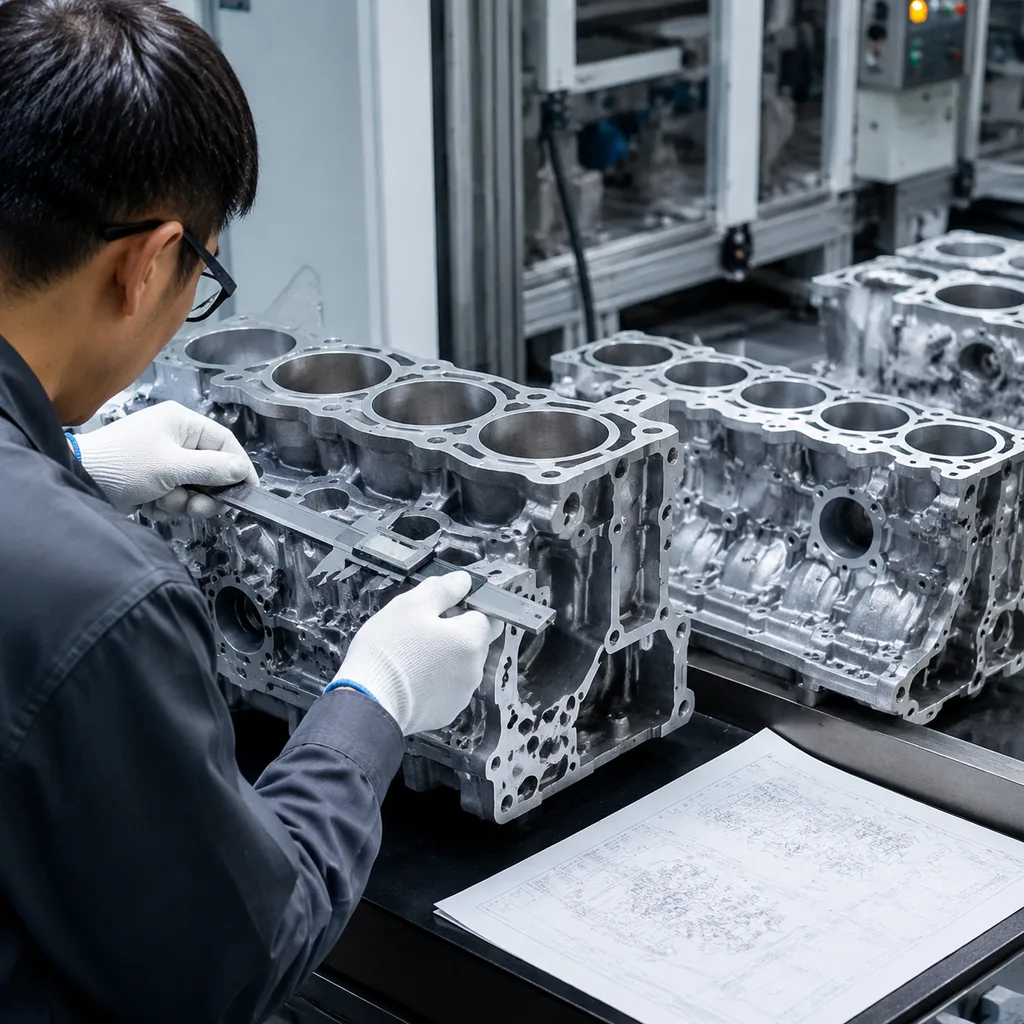
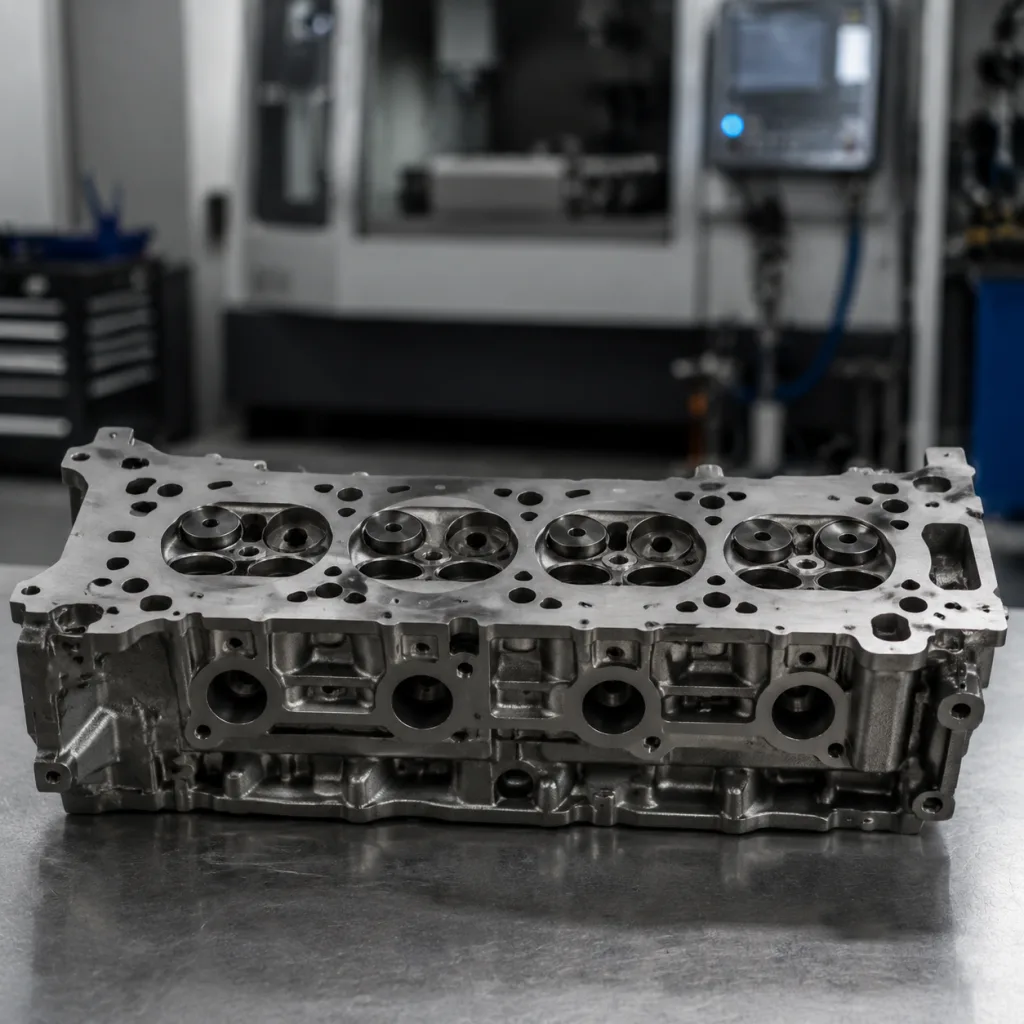
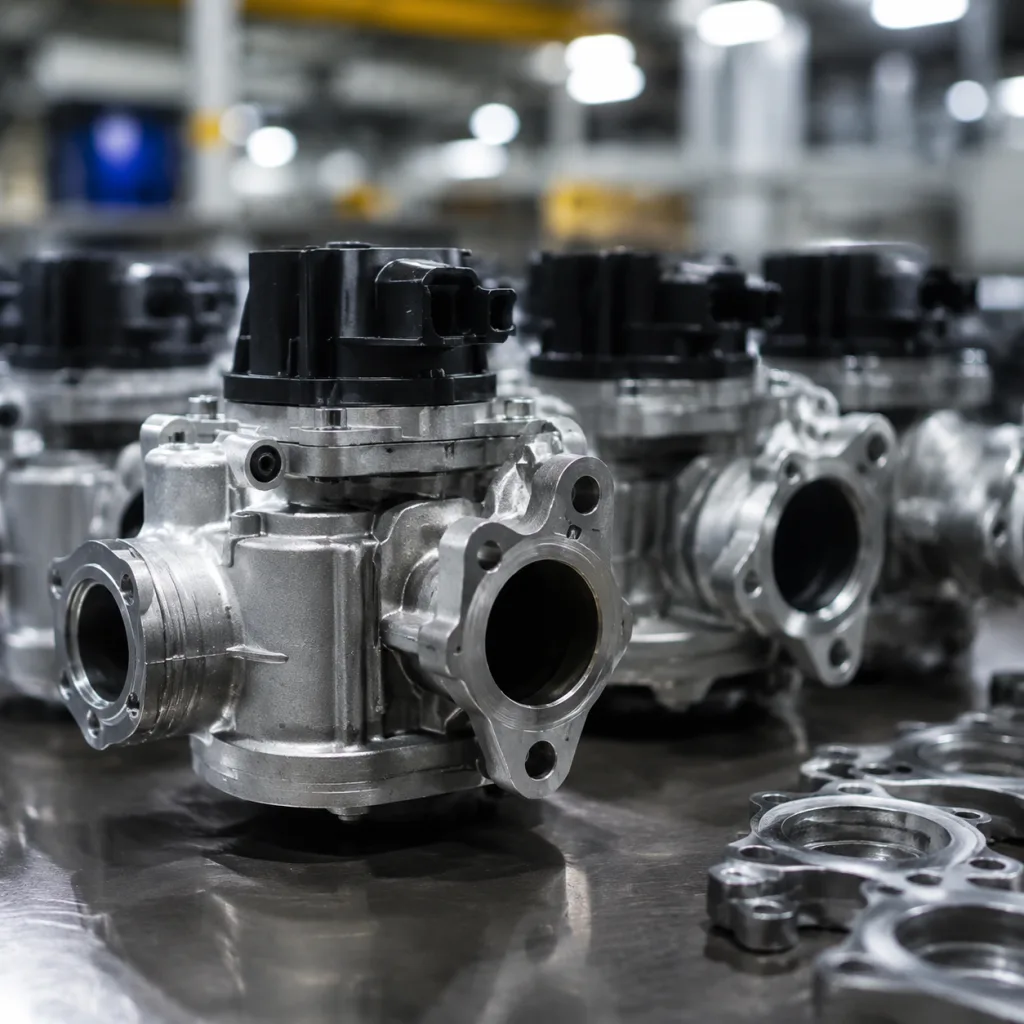
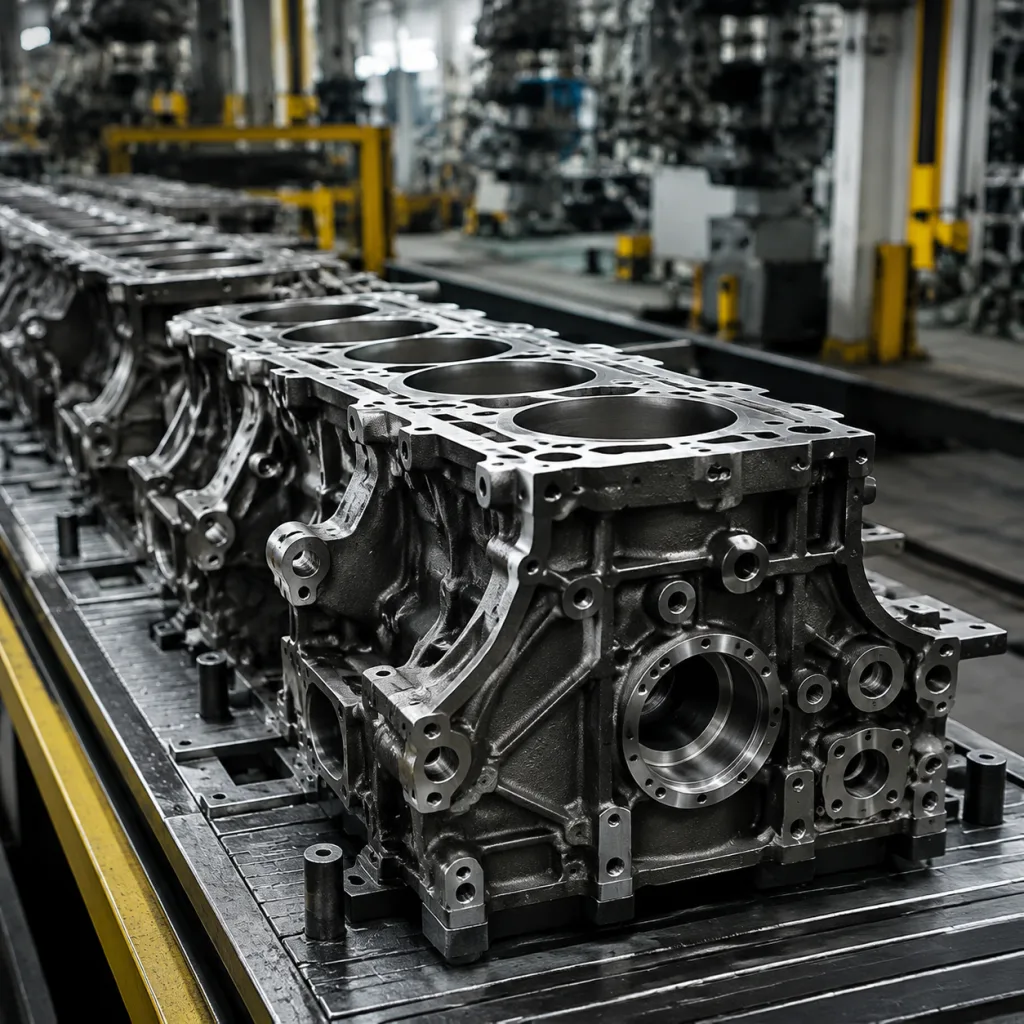
A low casting price can become expensive fast: poor bore stability, misaligned main tunnels, contaminated oil galleries, cracked decks, delayed launch samples, or pallets of parts that need sorting after arrival. That is why selecting an engine block OEM supplier should be treated as a risk-control decision, not a routine RFQ exercise.
Driventus Auto Parts manufactures engine and powertrain components in Taizhou, Zhejiang, for distributors, OEM and Tier-1 programmes, and repair chain supply. Engine block programmes are managed under IATF 16949:2016 and ISO 9001:2015 processes, with project documentation aligned to buyer requirements.
This article is written for sourcing engineers, category managers, and technical buyers qualifying cast iron or aluminium engine block supply. It focuses on the evidence to request, the failure modes to prevent, and the commercial terms that keep repeat orders stable.
Driventus is an independent aftermarket manufacturer; brand names are referenced for fitment only.
Start With a Go/No-Go Supplier Screen
Before price negotiation, decide whether the supplier is even worth quoting. An engine block is a structural pressure, thermal, and alignment component. It must maintain cylinder geometry, crankshaft bore alignment, deck flatness, oil galleries, coolant passages, threaded interfaces, and sealing faces through machining, washing, export packing, transport, and engine assembly.
A first-pass capability package should answer one question: can this factory control the full process, or is it only trading a casting?
Request the following before deeper commercial discussion:
Business licence and export registration
IATF 16949:2016 and ISO 9001:2015 certificates, including scope and expiry date
Process flow chart from raw material to final packing
Control plan covering casting, heat treatment where applicable, CNC machining, washing, inspection, and packaging
Material specification and chemical composition range
Sample inspection report with datum scheme and gauge method
Packaging standard for sea freight and mixed-SKU consolidation
Typical MOQ, tooling cost, and launch lead-time statement
Also check how the supplier handles confidentiality agreements, drawing control, engineering change control, and part-number cross-reference mapping. If an aftermarket equivalent is developed against an existing application, references may be recorded in generic OE format such as OE 06A… or OE 11251… for fitment identification only. They should not be presented as vehicle manufacturer approval.
Match the Block Type to the Manufacturing Risk
The material route drives the supplier qualification plan. Grey cast iron, compacted graphite iron, and aluminium alloy do not fail in the same way, and they do not require the same process controls.
</tr></thead><tbody> </tbody></table>Driventus reviews material, casting process, and machining sequence against the buyer’s drawings and functional requirements. Typical controlled features include main bearing tunnel alignment, cylinder bore position, deck surface flatness, head bolt thread depth, oil gallery cleanliness, and coolant passage integrity.
Do not accept “CNC machined” as a complete capability statement. Ask for the machine list, fixture concept, datum strategy, and measurement method. For higher-volume programmes, review CMM reports, SPC records on critical dimensions, and fixture maintenance frequency. The best engine block OEM supplier can explain not only what it machines, but how it prevents drift across batches.
Plan the Launch Backwards From Production Approval
Engine block timing is often misunderstood because buyers ask one lead time when the project actually has several. Prototype casting, fixture development, first article inspection, pilot production, packaging approval, and stable repeat supply each have their own constraints.
Work backwards from the date production approval is needed. Then separate the project into three sourcing scenarios:
Existing developed item: MOQ often starts from pallet or batch quantity, subject to finished stock and machining plan
Modified existing item: engineering review, trial sample, and dimensional report are required before order release
Fully custom item: new tooling, foundry trial, CNC fixture development, PPAP-style documentation, and packaging approval are normally required
Several factors can move the schedule after quotation: casting campaign availability, machining capacity, CMM queue, leak-test setup, export packaging, and sea freight cut-off. Spare parts service also needs early planning. If the buyer expects recurring orders, annual forecast and safety stock logic should be discussed before the first shipment.
A useful RFQ includes target annual volume, launch quantity, required incoterm, port of discharge, packaging preference, drawing revision, and inspection requirements. Driventus can review available references through our catalog, and buyer-specific programmes can be discussed through custom manufacturing.
For OEM-style supply, a realistic launch plan is more valuable than an aggressive promised date. Skipping validation steps can lead to sorting, rework, delayed engine assembly, or field claims.
Audit the Failure Modes, Not Just the Certificates
A certificate proves a management system exists. It does not prove the engine block process is under control today. When annual volume or warranty exposure is significant, audit the operations that create the most expensive failures: casting integrity, machining accuracy, measurement reliability, cleanliness, and export protection.
Process audit points that matter
Incoming metal and alloy traceability
Furnace temperature and melt treatment records
Sand core storage, handling, and dimensional control where applicable
Casting defect classification and scrap analysis
Heat treatment records if required by material specification
CNC machine capability, tool life control, and offset approval process
CMM programme control and calibration status
Leak testing method and acceptance criteria for oil and coolant galleries
Washing process, drying process, and residual contamination checks
Rust prevention or corrosion protection for machined cast iron surfaces
Final audit area with labelled nonconforming material control
Export packaging drop, moisture, and stacking considerations
The documentation should link back to the certified system, not sit in a separate folder created for visitors. Driventus operates a documented quality system aligned with IATF 16949:2016 and ISO 9001:2015. For regulated markets, buyers may also request material declaration support related to REACH (EC) No 1907/2006, depending on the product, coating, and destination market.
Close the audit with owners, corrective actions, and due dates. If the supplier cannot show how defects are detected, contained, and prevented, approval should wait.
Build a Documentation File That Can Survive Repeat Orders
Documentation is not only for launch approval. It protects the buyer when the next order is placed six months later, when a drawing changes, or when a field complaint needs traceability.
A standard engine block project file may include:
2D drawing and 3D model revision register
Material certificate or batch composition record
Process flow chart
PFMEA where requested by the buyer
Control plan and inspection plan
First article inspection report
CMM report for critical-to-function dimensions
Hardness test report and microstructure report where specified
Leak test record for oil and coolant circuits
Cleaning or contamination control report when required
Packaging specification with carton, pallet, and corrosion protection details
Traceability label format and batch coding rule
The revision register is especially important. A small change to a machining datum, thread depth, surface finish callout, or packaging method can create major downstream issues if old and new requirements are mixed.
For aftermarket programmes, OE part-number cross-references need strict wording. A block may be mapped to a fitment reference such as OE 06A… for catalogue alignment, but that does not mean the vehicle manufacturer has approved the part. Fitment data, drawings, and physical sample checks remain the buyer’s responsibility before market release.
Driventus is an independent aftermarket manufacturer; brand names are referenced for fitment only.
Compare Offers by Landed Risk, Not Unit Price
The cheapest quote is rarely the lowest-cost option if inspection, packaging, rework, freight, duty, warehousing, and claim handling are ignored. Engine blocks are heavy, dimensionally sensitive, and costly to replace after arrival. A reliable commercial comparison should include both price and exposure.
Item
What to define before PO
Why it matters
MOQ
Batch size by part number and mixed-SKU policy
Affects cash flow and inventory risk
Lead time
Sample, pilot, and mass production timing
Prevents launch schedule gaps
Tooling ownership
Payment, maintenance, storage, and transfer rights
Reduces future sourcing disputes
Inspection level
Critical dimensions, leak testing, and sampling plan
Aligns quality expectations
Packaging
Pallet type, corrosion protection, and carton marking
Reduces transit damage
Claims process
Evidence required, response time, and credit method
Controls warranty administration
</tr></thead><tbody> </tbody></table>Ask directly where capacity may become tight. Main bearing tunnel boring, deck milling, final washing, and CMM inspection are common bottlenecks. A transparent engine block OEM supplier will identify these constraints during planning, allowing the buyer to set forecasts, safety stock, or phased releases.
For RFQs, Driventus recommends sending drawings, annual volume, target market, required documentation, and any audit format at the beginning. This reduces repeated clarification and produces a more reliable quotation. Buyers can request a quote with part information and forecast volume.
Frequently asked questions
Provide drawings or samples, target annual volume, material requirement, machining scope, required inspection documents, packaging preference, destination port, and any OE-style fitment reference such as OE 06A… if relevant. A forecast helps confirm tooling, MOQ, and lead time.
Yes. Driventus supplies B2B engine and powertrain components for aftermarket distributors, OEM and Tier-1 programmes, and repair chain supply. Documentation, inspection level, and validation scope are agreed per project under IATF 16949:2016 and ISO 9001:2015 processes.
No. OE cross-references are used for fitment identification and catalogue mapping only. Driventus is an independent aftermarket manufacturer; brand names are referenced for fitment only. Any buyer-specific approval must be based on drawings, samples, testing, and contractual requirements.
If you are qualifying an engine block OEM supplier, Driventus can review drawings, samples, MOQ, lead time, and documentation requirements. Send your project details to /contact.html