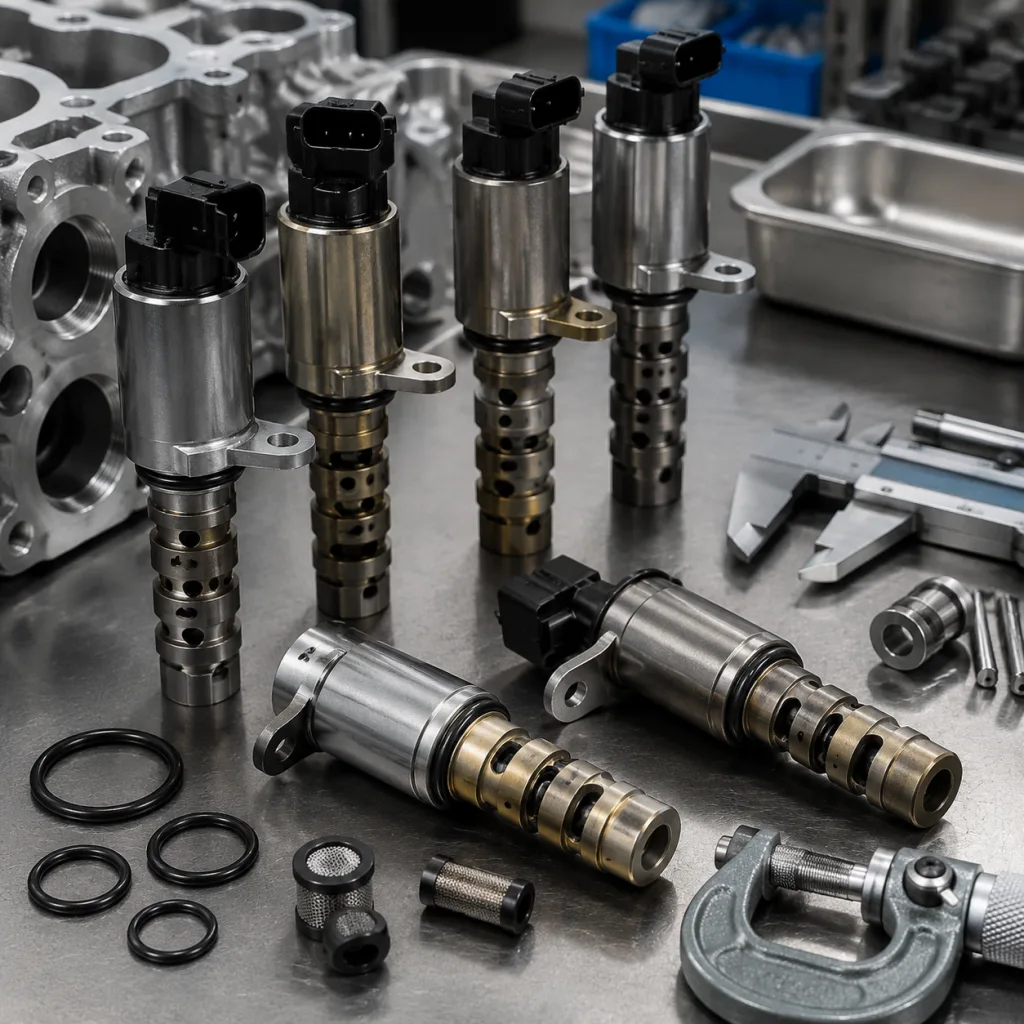
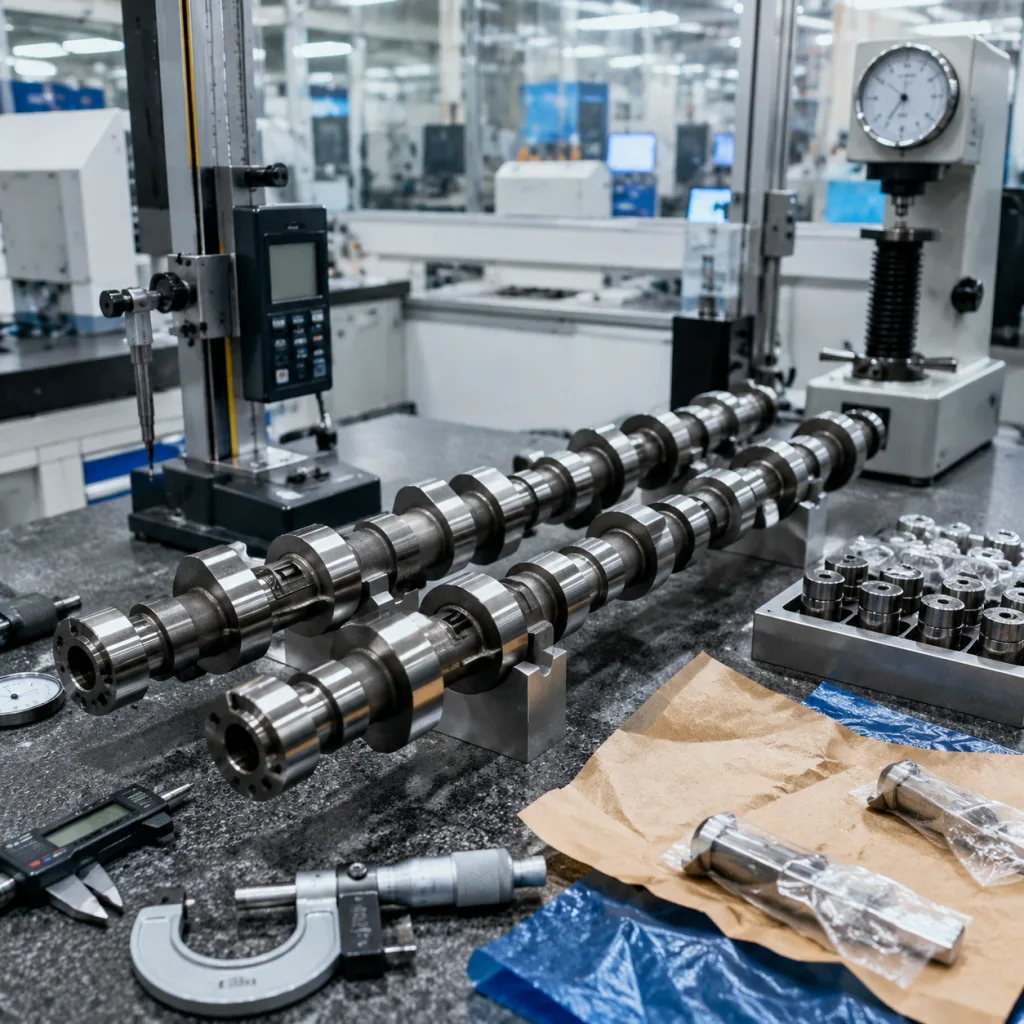
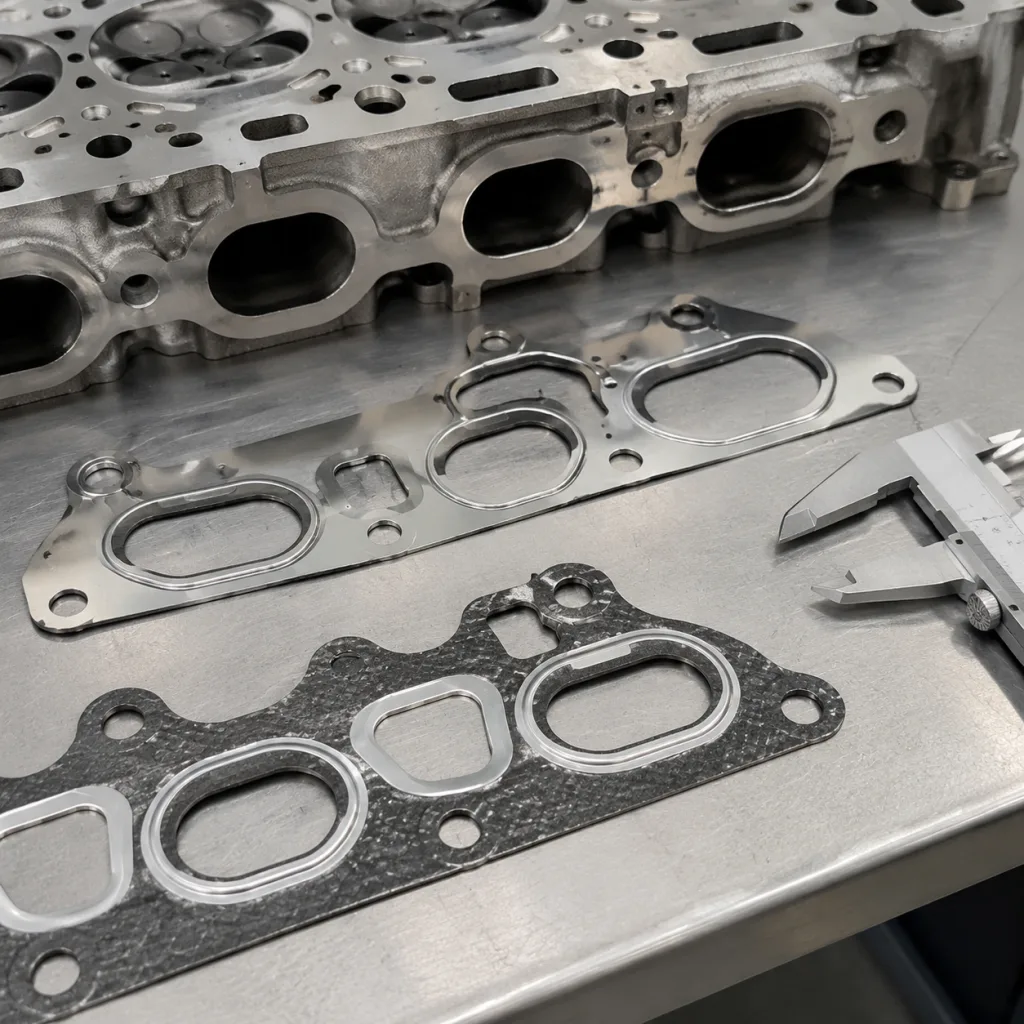
Choosing an engine block Nissan supplier is not a catalogue exercise. It is a decision about casting control, machining repeatability, inspection discipline, documentation and continuity of supply. A low quote means little if bore geometry drifts, deck flatness varies, coolant jackets leak, or the second shipment does not match the approved sample.
For distributors, repair-chain buyers and OEM programme teams, the real risks sit in predictable places: metallurgy, casting integrity, main bearing alignment, threaded-hole accuracy, pressure testing, cleanliness and export packing. Lock these down before price comparison. Bore diameter tolerance, deck flatness, main tunnel alignment, pressure-test criteria, residual-chip limits and corrosion protection all affect warranty exposure after installation.
Driventus manufactures engine and powertrain components in Taizhou, Zhejiang for export markets including Europe, North America, Australia and Brazil. Our product scope covers cast and machined engine blocks, pistons, crankshafts, gaskets, water pumps and related assemblies. Driventus is an independent aftermarket manufacturer; brand names are referenced for fitment only. This guide gives procurement teams a practical way to qualify a Nissan-fit block supplier, structure an RFQ, check MOQ and lead-time assumptions, and audit the factory before volume orders.
Decision Gate: Can This Supplier Repeat the Approved Block?
Start with proof of process, not catalogue photos. An engine block depends on casting control, heat treatment where specified, CNC machining, pressure testing, cleaning, dimensional inspection and packing. The first question is simple: does the supplier control these steps well enough to make the same block again next month?
Clarify whether casting, machining and testing are in-house or split across subcontractors. Outsourced castings are not automatically a problem, but they change the risk profile. The supplier still needs casting-lot release rules, hardness checks, defect disposition, supplier corrective action and traceability back to each batch.
For B2B programmes, the qualification file should include:
Business licence and export registration for the manufacturing entity
IATF 16949:2016 and ISO 9001:2015 certificates, with valid scope and issuing body details
Process flow chart covering casting receipt, machining, cleaning, inspection, packing and shipment
Control plan for bore, deck, main tunnel, oil galleries, threaded holes and datum surfaces
Material certificate format showing grade, chemical composition limits and hardness range, such as grey cast iron or aluminium alloy where specified by drawing
Sample inspection report with actual measured values, not only pass/fail marks
Pressure-test record showing test medium, pressure, hold time and leakage acceptance limit
Traceability method by batch, casting lot, machining date, operator code or serial mark
Packing specification for sea freight, pallet stacking, corrosion prevention and mixed-container loading
Driventus aligns engine component production with its documented quality system. For import managers, this matters because drawing revision, inspection plan and non-conformance procedure must stay consistent across repeat orders. One good sample proves fitment at a point in time. It does not prove long-term capability.
Before production approval, ask for a full dimensional report from a first-off sample and a pilot-run batch summary. The summary should show accepted quantity, rejected-piece count, defect type and corrective action. If the supplier cannot explain why parts were rejected, they are not yet controlling the process.
Spec Deep-Dive: Numbers to Freeze Before the RFQ
Do not send only a vehicle model name. Nissan-fit engine blocks vary by displacement, fuel type, deck height, bore spacing, mounting pattern, sensor provision and regional emission configuration. The same model line may carry different engines across markets and production years.
A usable RFQ normally includes engine code, target market, year range, transmission application, emission configuration and any OE cross-reference format already used in the buyer’s system, such as OE 11251… where applicable. Without this data, the supplier may quote the nearest catalogue item instead of the required block.
RFQ item
Why it matters
Evidence to request
Engine code and displacement
Confirms bore layout, oil feed and coolant architecture
Application sheet and drawing match
Block material
Affects weight, wear behaviour and machining method
Material certificate, grade and hardness range
Bore diameter and finish
Controls piston clearance and ring sealing
Dimensional report with actual bore size and Ra record
Bore roundness and taper
Prevents oil consumption and compression loss
Bore gauge map at top, middle and bottom positions
Deck flatness
Supports head gasket sealing
CMM, granite-table or flatness inspection data
Main bearing tunnel alignment
Affects crankshaft rotation and oil film stability
Line-bore inspection report with runout or alignment data
Oil and coolant passage integrity
Prevents internal leakage and pressure loss
Pressure test record with pressure and hold time
Thread and mounting points
Supports accessory and drivetrain fitment
Go/no-go gauge inspection record and torque-sensitive hole list
Cleanliness
Reduces bearing damage and early engine failure
Cleaning process record and residual-chip control method
Packing method
Reduces corrosion and transit damage
Export packing drawing or photo record
</tr></thead><tbody> </tbody></table>As a working benchmark, many buyers control critical machined features in the 0.01–0.05 mm range, deck flatness in the 0.03–0.08 mm range depending on block size and drawing, and bore surface roughness with a defined Ra/Rz value. These are not universal limits. Final tolerances must follow the agreed drawing, approved sample and purchase specification.
Certification helps, but it does not replace engineering limits. IATF 16949:2016 and ISO 9001:2015 define how a supplier controls requirements, documents inspections, manages non-conformities and implements corrective actions. They do not define every cylinder block dimension. Freeze the measurable numbers before quotation so the supplier prices the real machining, inspection and scrap risk.
Scenario Planning: MOQ, Lead Time and Replenishment Risk
MOQ is not a fixed number pulled from a price list. It changes with casting availability, machining fixture status, validation workload and packing configuration. A common aftermarket reference may have a lower MOQ because castings and fixtures are already active. A lower-volume engine family or customised version usually needs a higher MOQ because engineering review, pattern checks, fixture setup and sample validation must be spread across fewer units.
Use MOQ as a cost-allocation signal. A smaller batch carries more setup time, first-article inspection, packing approval and export handling cost per block.
Typical planning points for procurement teams include:
Sample order: commonly 1–5 units for fitment, dimensional and assembly validation
Pilot order: often 20–50 units to confirm packing, batch consistency and market feedback
Regular pallet order: often planned from 50–100 units where weight, part size and packing format allow
Regular container order: planned by pallet count, weight limit, destination inventory turn and mixed-SKU consolidation
New development lead-time: often 60–120 days when casting tooling, CNC fixtures or extra machining operations are required
Repeat order lead-time: often 30–60 days when the drawing, control plan, casting supply and packaging standard are frozen
Urgent replenishment: possible only when semi-finished castings, machining slots and export cartons are already reserved
Price usually moves with three variables: annual volume, batch size and validation burden. A pilot batch may carry sample pricing because setup and first-article inspection are spread across few units. A repeat order can be more competitive when the buyer confirms annual demand, consolidates shipment and freezes carton, label and documentation requirements. If one quote gives the same unit price for 10 blocks and 500 blocks, ask what has been simplified.
A responsible engine block Nissan supplier separates sample lead-time from production lead-time. A ready sample does not prove the factory has enough casting stock, machining capacity or export packing materials for a container shipment. Also check whether CNC capacity is dedicated to engine blocks or shared with other product lines during peak periods.
For rolling supply, use a practical forecast: 3 months firm demand plus 3–6 months indicative demand, reviewed monthly against sales and warranty feedback. Driventus supports standard aftermarket supply through our catalog, including related engine components. Where the buyer needs private-label configuration, revised machining detail or market-specific packing, our engineering team can review custom manufacturing requirements before quotation.
Audit Walkthrough: Follow One Block Through the Plant
A factory audit should answer one question: can the supplier reproduce the approved condition at volume? For cylinder blocks, the fastest way to find out is to follow one part from casting receipt to final packing. Do not spend the visit only on certificates and meeting-room presentations.
A practical audit normally takes 0.5–1 day for one product family. Focus on machining control, inspection discipline, cleanliness, traceability and final protection before shipment.
Audit teams should inspect the following areas:
Incoming casting inspection: visual defects, porosity checks where applicable, hardness verification and lot identification
CNC machining: fixture condition, tool life control, programme revision control, offset approval and first-piece sign-off
In-process checks: bore size, deck height, main tunnel, threaded holes and datum surfaces recorded at defined frequency, such as first piece, every 10–30 pieces and last piece where risk requires
Measurement room: calibrated bore gauges, height gauges, thread gauges, surface roughness testers and CMM access where required
Pressure testing: defined pressure, hold time, leakage acceptance criteria, fixture sealing method and record retention
Cleaning process: removal of chips, machining oil and abrasive residue from oil galleries, blind holes and coolant passages
Non-conforming product area: segregation, labelling, disposition authority and corrective action records
Final packing: rust prevention, internal protection, pallet strength, carton marking, moisture control and drop-handling controls
Gauge control deserves close attention. A supplier may own suitable equipment but still create risk if calibration is overdue, gauge repeatability has not been checked, or operators measure differently between shifts. For critical gauges, request calibration status, last calibration date, next due date and gauge R&R evidence where available.
During the audit, select one finished block at random. Trace it back to casting lot, machining batch, inspection record, pressure-test result and packing label. If the trail breaks, the buyer has found a traceability gap before it becomes a warranty dispute.
Where buyers operate under their own supplier approval manuals, share the audit checklist before the visit. The output should be a closed action list with owner, due date and evidence requirement, such as revised bore-gauge frequency, added packing corner protection, or clearer segregation of non-conforming castings.
Failure Modes: Documentation Gaps That Delay Clearance
Engine blocks are mechanical replacement components, but paperwork still decides whether a shipment clears smoothly and can be traced after arrival. Common problems are not dramatic: missing material links, unclear country-of-origin wording, inconsistent weights, pallet labels that do not match the packing list, or inspection records that cannot be tied to a batch.
Importers may need material declarations, packaging compliance data, country-of-origin documents and shipment-level inspection records. For EU buyers, chemical and material disclosure may connect to REACH (EC) No 1907/2006 where relevant to substances in articles or packaging. For the UK, US, Canada, Australia and Brazil, requested declarations differ by importer, customs broker and distribution channel. State them during RFQ, not after production.
Documentation commonly requested with shipment includes:
Commercial invoice, packing list and bill of lading details
Certificate of origin where required
Batch inspection report with actual dimensions for agreed critical points
Material certificate or material declaration linked to casting lot or batch number
Pressure test summary showing test condition and accepted quantity
Packing photos before container loading, including pallet labels and moisture protection
Traceability list by pallet, carton or part mark
Non-conformance and concession record if any deviation was accepted by the buyer
For smoother clearance, align HS code assumptions, country-of-origin wording, Incoterms, carton markings and net/gross weight before shipment booking. Packing data should state carton size, pallet size, units per pallet, total pallets, total gross weight and whether wooden packaging is fumigated or ISPM 15 compliant where required. These details reduce broker queries and help the buyer plan warehouse receiving.
Engine blocks do not carry emissions approval by themselves in the same way a complete vehicle or emission-control system may be assessed under regulations such as ECE R-83. A supplier should not claim vehicle manufacturer approval unless a formal approval exists and can be verified. Driventus is an independent aftermarket manufacturer; brand names are referenced for fitment only.
Commercial Comparison: Cheapest Quote vs. Controlled Landed Cost
Do not compare suppliers on ex-works unit price alone. A cheaper block becomes expensive when it needs rework, fails installation checks, arrives with corrosion, or shows transit damage on mounting points. The commercial agreement should convert technical expectations into written purchase controls.
For engine blocks, link the quotation to drawing revision, material grade, inspection level, packing method, Incoterms, payment terms and defect-handling rules. If those items are not written down, the buyer and supplier may be pricing different products.
Recommended controls include:
Agree the drawing revision, application list and approved sample before mass production
Define AQL or 100% inspection items for critical dimensions such as bore, deck, main tunnel, pressure test and key threaded holes
Include packaging approval in the purchase specification, including rust prevention period and pallet stacking limit
Require pre-shipment inspection reports for the first three production batches or until capability is stable
Clarify responsibility for visible transit damage, hidden machining defects, shortage and mixed-part shipment
Set a written corrective action process for repeat non-conformities, including containment, root cause, corrective action and verification date
Confirm spare capacity, casting stock policy and response time for urgent replenishment orders
Define warranty evidence requirements, such as installation photos, mileage, failure description and returned-part handling
A practical landed-cost review includes unit price, tooling or fixture amortisation, inspection cost, packing cost, inland freight, ocean or air freight, duty, broker charges, insurance, warehouse handling and expected defect reserve. Payment terms also affect exposure. A new supplier may require deposit plus balance before shipment, while an approved repeat programme may move toward more flexible terms after stable quality and delivery performance.
Avoid approving commercial terms before sample validation and packing approval are complete. For distributors, consolidating pistons, crankshafts, gaskets and blocks can reduce administrative cost when the supplier has stable export operations and consistent documentation. For OEM and Tier-1 buyers, programme discipline matters more: APQP-style planning, PPAP-style sample documentation where requested, and change-control rules should be discussed before nomination.
Driventus can provide quotation support based on application data, annual demand, target market and packing preference through request a quote.
Frequently asked questions
Provide engine code, displacement, year range, target market, material requirement, target tolerances if available, order quantity, annual forecast, packing preference and any existing cross-reference format such as OE 11251… if used in your system. Photos and sample parts help confirm machining details.
Yes. Private-label packing, carton marking and agreed documentation can be reviewed for distributor and repair-chain programmes. Custom machining or configuration changes require drawing review, sample validation, agreed MOQ and confirmed lead time before production.
No. Driventus is an independent aftermarket manufacturer; brand names are referenced for fitment only. Product suitability is controlled through drawings, sample approval, inspection records and buyer validation.
If you are comparing suppliers for Nissan-fit engine blocks, share your application list, target tolerances, annual volume, first order quantity and documentation requirements. Our team can review feasibility and respond with a practical quotation route at /contact.html