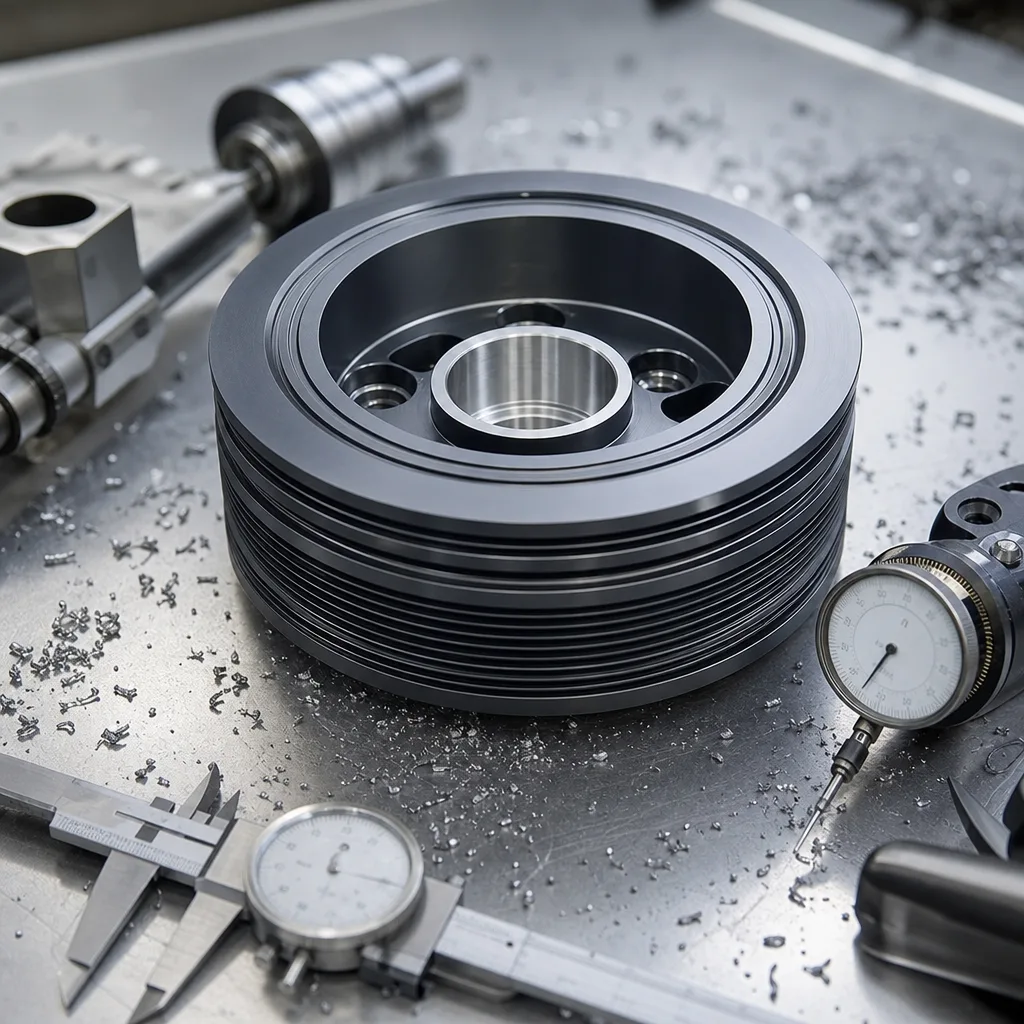
If you are building a sourcing file for an engine block Lexus application, price is only one variable. Buyers usually need repeatable machining, traceable materials, stable lead times, and a supplier that can support drawing control across more than one market. Driventus supplies engine and powertrain components from Taizhou, Zhejiang to B2B customers in the aftermarket, OEM, and repair-chain channels. Driventus is an independent aftermarket manufacturer; brand names are referenced for fitment only. For procurement teams, the practical test is simple: can the supplier match the required casting or machining route, document the result, and ship consistently under a controlled specification? The sections below cover the checks that matter before sampling, approval, and release to production.
What buyers should verify before sampling
Before you place a trial order, ask for the same documents you would require from any qualified engine block source. The goal is to reduce ambiguity before tooling, machining, and packaging are frozen.
Buyer check
What to request
Why it matters
Drawing revision control
Latest print, revision history, and approved deviation list
Prevents mismatch between the quotation and the shipped part
Material evidence
Heat or lot traceability, chemistry report, and foundry declaration
Confirms the substrate and limits mix-up risk
Dimensional proof
CMM report, bore map, flatness data, and inspection method
Shows whether the block can hold the required geometry
Packaging spec
VCI, rust protection, palletisation, and label format
Reduces corrosion and receiving errors in export lanes
</tr></thead><tbody> </tbody></table>If you need a broader range of related parts, review our catalog and the engine component range at engine components.
Materials and machining controls that affect fitment
For an engine block, the material is only the starting point. The buyer still needs control over bore geometry, deck condition, gallery cleanliness, and post-machining inspection. Many procurement teams set acceptance bands in the low-hundredths of a millimetre range, for example deck flatness at 0.05 mm or tighter and bore roundness or taper in the 0.01-0.03 mm range, then lock the final tolerance to the drawing.
Typical checks to include in the technical pack:
Foundry route and alloy declaration, including any heat-treatment step
Machining sequence for bores, decks, main bearing saddles, and threaded holes
Cleaning method for oil and coolant passages after machining
Surface finish requirement for gasketed interfaces
Leak or pressure testing where the water jacket design requires it
Final inspection records tied to the lot number and heat number
When the supplier can explain each step clearly, the risk of field returns drops materially.
Fitment control and OE cross-references
Lexus programmes often have multiple revisions within the same engine family, so fitment control has to go beyond the marketing name. The buyer should verify engine code, block casting number, revision level, sensor bosses, coolant passage layout, and the related OE cross-reference used in the interchange file.
A practical rule is to treat OE numbers as a verification tool, not a sales claim. For example, an OE 06A107065-style reference should be checked against the buyer's own catalogue, drawings, and vehicle application data before approval. That approach avoids over-reliance on a single part number when there are multiple revisions in circulation.
Driventus can support buyers with custom manufacturing when the project requires a non-standard machining route, a different plug arrangement, or market-specific packaging. The key is to freeze the fitment file first, then sample against that file.
Quality system and compliance pack
For supply chains serving the EU, UK, US, Canada, Australia, and Brazil, the documentation pack matters as much as the metal. Buyers commonly ask for traceability and process records aligned with IATF 16949:2016 and ISO 9001:2015. Those standards do not replace part validation, but they do show that the factory runs a controlled quality system.
A useful release pack for an engine block should include:
Material certificate and heat traceability
Dimensional inspection report with measured values
Control plan or inspection method statement
Nonconformance handling process
REACH (EC) No 1907/2006 declaration where the market requires chemical compliance evidence
If the engine block sits inside a larger regulated programme, some buyers also ask for supporting documents that align with the wider engine validation file, including references used in ECE R-83-related work. The point is not to overstate compliance, but to keep the documentation coherent from sample to shipment. See our quality system for the process structure behind those records.
MOQ, lead time, and programme setup
For procurement teams, the commercial model usually works best in two stages: a pilot lot for validation, then a scheduled release for the steady state. That structure lets you confirm machining consistency, packaging, and receiving quality before committing volume.
What to confirm at RFQ stage:
Minimum order quantity for trial and production lots
Tooling ownership, if any new fixture or gauge set is needed
Lead time for samples, first production, and repeat orders
Incoterms, carton count, pallet pattern, and export marking
Whether the supplier can support forecast-based replenishment
Driventus exports to more than 60 countries and works with distributor, OEM, and repair-chain buyers that need stable documentation and repeatable supply. If you are comparing factories, ask for the same reference set from each supplier so you can compare on geometry, process control, and landed cost rather than on sales language alone. That is usually the fastest route to a defensible sourcing decision.
Frequently asked questions
Send the drawing, engine code, target market, annual volume, required finish, and any OE cross-reference file. A clear RFQ reduces revision errors and helps the supplier price machining, inspection, and packaging correctly.
Yes, if the drawing and validation plan are frozen. Custom manufacturing can cover bore dimensions, deck height, hole patterns, cleaning steps, and packaging, but the fitment data must be confirmed before production.
At minimum, ask for material traceability, dimensional inspection data, and the applicable quality-system records. For regulated markets, add REACH declarations and any customer-specific compliance files required by the programme.
If you are comparing samples or setting up a new sourcing file, send the drawing, OE reference, and forecast volume through [request a quote](/contact.html).