crankshaft pulley · 2026-05-30

Crankshaft Pulley GMC OEM Supply Guide

Procurement teams sourcing a crankshaft pulley for GMC applications need a part that stays within dimensional limits, maintains belt alignment, and performs consistently across repeat lots. The key variables are not only outer diameter and groove count, but also hub geometry, runout, balance, coating, and packaging discipline. Driventus serves aftermarket distributors, OEM and Tier-1 buyers, and multi-location repair networks with controlled production and export-ready documentation. Driventus is an independent aftermarket manufacturer; brand names are referenced for fitment only. For buyers comparing suppliers, the real test is whether the factory can hold the print, document the process, and support stable replenishment without quality drift. This article sets out the sourcing criteria, common build options, validation steps, and commercial points that matter when you are qualifying a new supply line for engine and powertrain programmes.

What buyers should define before RFQ

A useful RFQ starts with the functional requirement, not just the vehicle name. For a GMC programme, specify the engine family, accessory drive layout, groove count, belt profile, hub bore, offset, and any damping or isolator requirement. If you have a sample part, include photos of the front face, rear face, key dimensions, and any visible wear pattern. If you have a drawing, send the revision level and the inspection method used to approve it.

For buyers comparing suppliers, the main questions are simple: can the factory repeat the same geometry, can it document the result, and can it ship the same part on the next order? Review our catalog for adjacent powertrain items, and use our quality system page to confirm how incoming material, in-process checks, and final inspection are controlled. For broader powertrain sourcing, engine components can help you align related part families under one supplier.

Key RFQ inputs:

  • OE application and engine code
  • Overall diameter, groove count, and belt section
  • Hub bore, keyway, and offset
  • Material preference and coating requirement
  • Annual usage, target MOQ, and requested lead time

Material and geometry options

Most sourcing decisions come down to mass, durability, cost, and packaging size. A higher-inertia pulley can help with belt stability on some programmes, while a lighter design may suit space-constrained engines. The correct answer depends on the customer print and the validation targets, not a generic rule.

</tr></thead><tbody> </tbody></table>Typical dimensional controls include total indicated runout, bore concentricity, groove position, and face flatness. For repeat production, many buyers ask for runout below 0.05 mm on the belt face and a balance grade agreed to the drawing or sampling plan. Those numbers are not universal, but they are realistic targets for a disciplined programme.

If your programme needs a non-standard offset, coating, or bore treatment, custom manufacturing is the right path.

Validation and quality control

A supplier for this part should be able to show process control, not just a finished sample. At minimum, buyers should expect documented control under IATF 16949:2016 and ISO 9001:2015, with material traceability, inspection records, and corrective-action discipline. Where material declarations are needed, REACH (EC) No 1907/2006 compliance should be supported with the correct paperwork for the market.

Typical checks for a pulley programme include:

  • Incoming verification of bar, casting, or forging material
  • Machining dimension checks at defined process steps
  • Runout measurement on the belt face and hub location
  • Dynamic balance verification to the agreed grade
  • Coating inspection for coverage, adhesion, and corrosion resistance
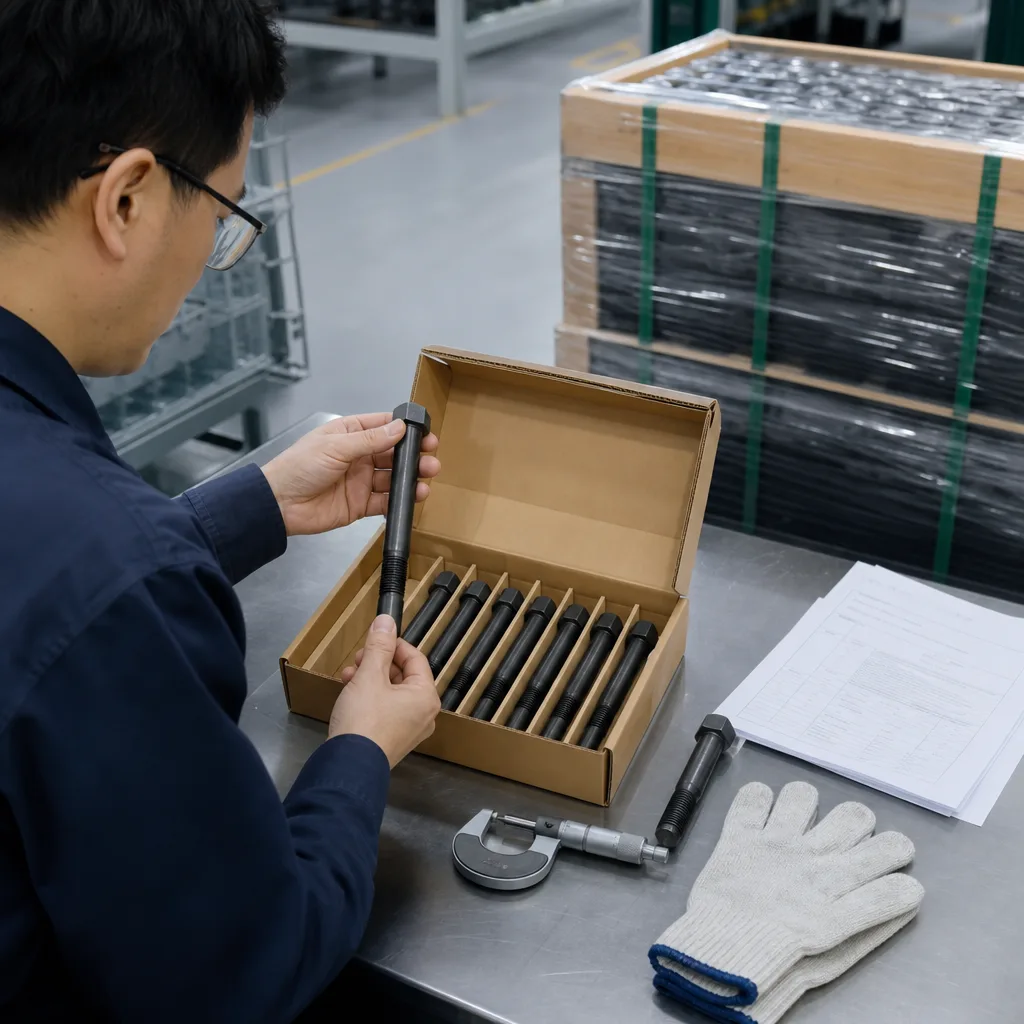
  • Packaging audits to prevent transit damage

For corrosion-related programmes, salt spray testing to ASTM B117 may be used when the print or buyer specification calls for it. For balance-critical applications, the important point is not only the test method, but also whether the factory can repeat the same result across batches. That is the difference between a sample part and a viable supply programme.

Custom manufacturing for OEM and aftermarket programmes

Many buyers do not need a catalogued part; they need a controlled equivalent that fits the same drive system and passes the same functional checks. In those cases, the best workflow is sample review, measurement, drawing reconciliation, and a production plan based on the agreed revision. That process is especially useful when the original part has been superseded, regionalised, or bundled into a wider engine kit.

Driventus can support reverse engineering from a physical sample, then confirm the final spec against the customer approval route before mass production. The objective is dimensional consistency, not cosmetic similarity. Driventus is an independent aftermarket manufacturer; brand names are referenced for fitment only.

A practical custom programme usually defines:

  • Sample inspection and measurement method
  • Material and coating selection
  • Tolerance stack-up on bore, offset, and groove geometry
  • First-article approval and sampling frequency
  • Label format, carton count, and pallet configuration

This is the right path when the order needs to be built to a BOM, to a private-label requirement, or to a regional packaging standard rather than a public catalogue listing.

MOQ, lead time, and export packaging

For distributors and repair networks, the commercial terms are as important as the part itself. MOQ should reflect tool status, machining complexity, coating steps, and whether the part is a repeat build or a new development. Standard repeat orders normally move faster than first-time production because the inspection method, material route, and packaging spec are already defined.

Lead time is driven by four practical factors:

  • Whether tooling already exists
  • Whether the material is in stock
  • Whether the part needs coating or damping validation
  • Whether final approval documents are already complete

Export packaging should protect bore surfaces, pulley faces, and coated edges from transit damage. VCI wrapping, individual cartons, reinforced master cartons, and pallet stretch-wrap are common for overseas shipments. For multi-location buyers, consistent barcode labels and carton counts reduce receiving errors and make replenishment simpler.

If you are consolidating supply across several regions, a supplier should be able to keep the same print, the same inspection records, and the same pack-out standard across repeat orders. That stability matters more than a one-time price break.

Frequently asked questions

Send the application, engine family, dimensions, material target, expected annual volume, and any sample or drawing. If you have a packaging spec or label format, include that too so the quote matches the actual supply requirement.

Yes. We can build to a customer drawing, a measured sample, or a confirmed BOM. Private label work can include carton artwork, barcode labels, and pallet requirements if those details are agreed in advance.

Typical documents include material certificates, inspection reports, traceability records, and quality system references. Where required, we can also support compliance paperwork for the target market and buyer audit requests.

Send your drawing, sample, or target annual volume and we will confirm fitment, pricing, and production timing. [Request a quote](/contact.html).

Request a Quote
Build option Best use case Procurement note
Cast iron pulleyCost-sensitive programmes with stable machining needsGood rigidity and mass; heavier shipping weight
Steel pulleyPackaging-sensitive applications and controlled mass targetsEasier to optimise weight; balance control becomes more important
Elastomer-isolated damper pulleyNVH-critical applications that need torsional dampingRequires bond integrity checks and heat resistance validation