engine block · 2026-06-08

Engine Block Jeep OEM Supplier Sourcing Guide

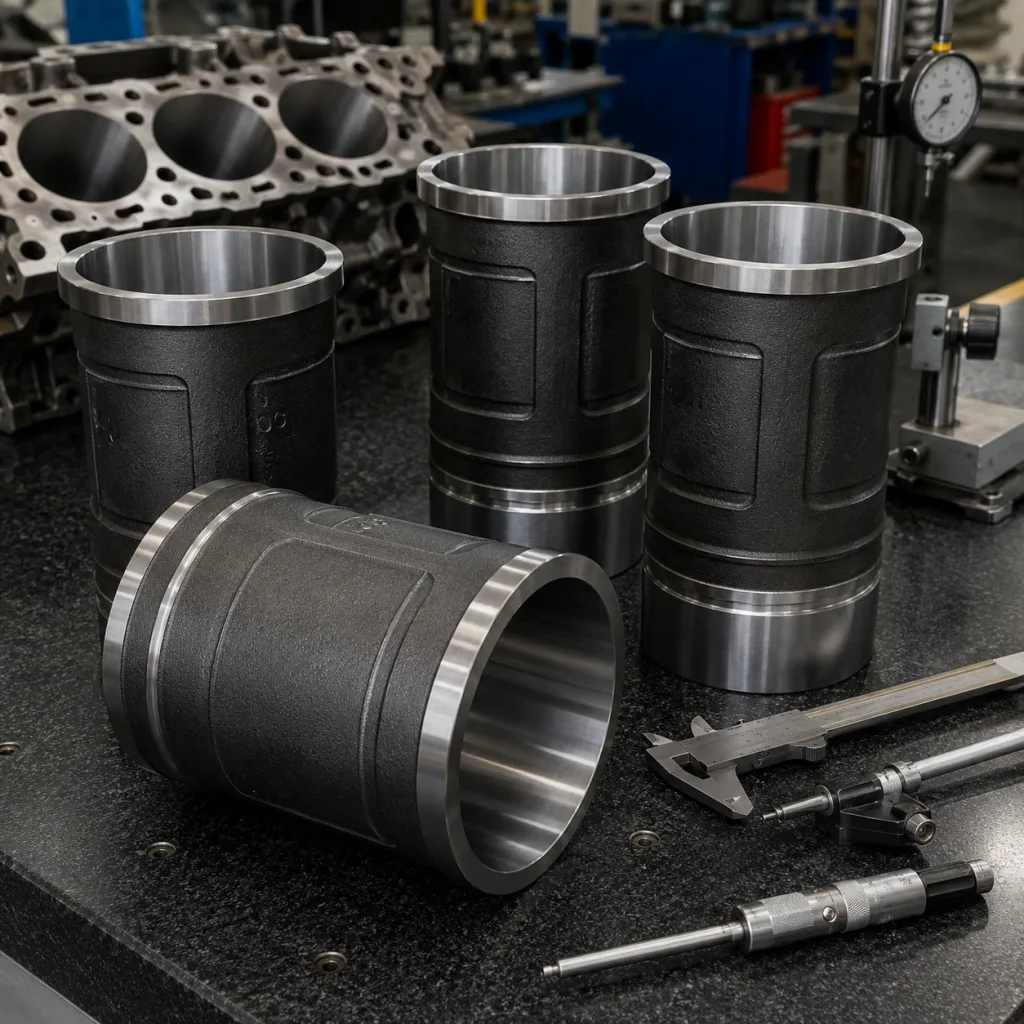
Sourcing an engine block for Jeep-fitment applications is a technical and supply-chain decision, not a simple price comparison. Procurement teams must confirm dimensional stability, metallurgy, machining accuracy, traceability, packaging protection and the supplier’s ability to support repeat orders across export markets. Driventus manufactures engine and powertrain components in Taizhou, Zhejiang, and supplies customers in more than 60 countries, with quality management aligned with IATF 16949:2016 and ISO 9001:2015. For importers, aftermarket distributors and programme buyers, the practical questions are clear: which bore and deck tolerances are controlled, how castings are inspected, what MOQ is realistic, how long sampling and validation take, and whether documentation is ready for customer audits. This guide explains the main sourcing checks for an engine block Jeep OEM supplier programme, covering supplier qualification, technical validation, logistics and commercial planning. Driventus is an independent aftermarket manufacturer; Jeep and other brand names are referenced for fitment identification only.

Supplier Qualification for Jeep-Fitment Engine Blocks

A supplier programme should start with part-family definition rather than a drawing request alone. Buyers normally need to confirm engine series, fuel type, bore size, deck height, oil gallery configuration, coolant passage layout, crankcase interface and expected service market. For Jeep-fitment applications, cross-reference data should be treated as fitment guidance, not vehicle manufacturer approval.

Driventus supports B2B sourcing teams with controlled manufacturing for cast and machined engine blocks, with related components available through our catalog and engine component families at /products/engine-components.html. Typical qualification inputs include a sample block, 2D drawing, 3D scan data, OE-style reference or buyer-owned technical specification.

When evaluating an engine block Jeep OEM supplier, procurement teams should request evidence in four areas:

  • Quality management: IATF 16949:2016 and ISO 9001:2015 scope, certificate validity and audit history.
  • Process capability: casting control, heat-treatment records where applicable, CNC machining capacity, cleaning process and final inspection method.
  • Traceability: batch coding, material records, inspection reports and nonconformance handling.
  • Export readiness: packaging specification, pallet labelling, carton strength, customs documentation and Incoterms support.

Factory audit questions should cover core shift, porosity, cylinder bore machining, main bearing tunnel alignment, deck-face control and threaded hole verification. A low unit price has limited value if the supplier cannot prove repeatable geometry from pilot lot to repeat shipment.

Technical Requirements Buyers Should Specify

Engine block purchasing requires clear tolerances because small deviations can affect compression sealing, crankshaft alignment, oil pressure and cooling performance. Buyers should avoid vague requirements such as “same as original” unless they are supported by drawings, master samples or an agreed inspection plan.

A practical request for quotation should include the following specification list:

  • Material grade and casting method, such as grey iron or aluminium alloy, depending on the application.
  • Cylinder bore diameter, bore spacing, surface finish and acceptable machining tolerance.
  • Deck flatness, deck surface roughness and gasket sealing-face requirements.
  • Main bearing tunnel diameter, coaxiality and cap-fit condition.
  • Oil gallery and coolant passage cleaning standard, including residual debris limits where required.
  • Thread size, depth and torque verification for critical mounting points.
  • Pressure or leak-test requirement for coolant and oil passages.
  • Packing method for machined faces, corrosion prevention and sea-freight protection.

Published standards can support the management system and validation framework, but they should be applied accurately. IATF 16949:2016 is relevant to automotive quality management. ISO 9001:2015 applies to general quality management. REACH (EC) No 1907/2006 may be relevant to chemical substances in coatings, rust preventives and packaging materials entering the EU. Emission standards such as ECE R-83 apply at vehicle type-approval level, not as direct approval of an engine block, so buyers should keep that distinction clear in technical files.

Driventus does not claim approval or endorsement by any vehicle manufacturer. Fitment references and brand names are used only to identify application coverage.

MOQ, Lead Time and Sampling Plan

Commercial feasibility depends on the maturity of the part family. A repeat-production block with existing tooling has a different timeline from a new development based on a sample or reverse-engineering data. Buyers should separate sampling, validation and mass production when planning launch dates.

</tr></thead><tbody> </tbody></table>MOQ is usually driven by casting batch size, machining setup time and packaging configuration. For established engine block programmes, importers may be able to start with a lower pilot order before moving to container-level replenishment. For new tooling, MOQ and lead time depend on pattern development, machining fixture preparation, sample approval and validation results.

As a general sourcing discipline, buyers should ask for lead time in three separate figures: sample lead time, first-production lead time and repeat-order lead time. This avoids confusion during launch planning and helps category teams compare suppliers fairly.

Quality System and Audit Evidence

For OEM, Tier-1 and distributor programmes, documentation is part of the product. A factory that cannot provide stable inspection evidence may become a supply risk even when early samples appear acceptable.

Driventus maintains an automotive-focused quality system supported by process control, incoming material checks, in-process inspection and final verification. For engine blocks, audit evidence should normally include material certification, hardness or mechanical-property checks where required, dimensional reports, leak-test records, cleaning verification and packaging inspection.

Buyers can request the following during supplier approval:

  • Current IATF 16949:2016 and ISO 9001:2015 certificates.
  • Control plan covering casting, machining, cleaning, inspection and packing.
  • Gauge calibration records for bore gauges, CMM equipment, thread gauges and pressure-test fixtures.
  • Sample inspection report with critical dimensions highlighted.
  • Nonconforming product procedure and corrective-action format.
  • Lot traceability method from casting batch to finished shipment.

For custom blocks, Driventus can support custom manufacturing based on buyer-owned specifications, samples or agreed development requirements. The strongest programmes define critical-to-quality dimensions before sampling, rather than adding them after a failed fitment trial.

Export Supply Considerations for EU, UK, US, Canada, Australia and Brazil

Engine blocks are heavy, high-value components with machined surfaces that require careful export handling. Procurement teams should review packaging before volume launch, especially for sea-freight routes with multiple handling points.

Key export checks include corrosion protection on machined faces, plastic or metal plugs for oil and coolant galleries, edge protection around deck surfaces, carton compression strength, pallet stability and moisture control. Labels should support warehouse identification without relying only on vehicle model names. Importers often need part number, batch code, quantity, gross weight, net weight, origin and customer reference on outer packaging.

Regulatory requirements vary by destination. REACH (EC) No 1907/2006 may apply to chemicals used in protective oils, coatings, adhesives or packaging materials for EU shipments. Buyers in the UK, US, Canada, Australia and Brazil may also require internal declarations, supplier questionnaires or market-specific labelling. Because engine blocks are components, compliance review should focus on materials, documentation, customs classification and any buyer-specific sustainability or restricted-substance requirements.

Currency, Incoterms and freight planning should be agreed early. FOB, CIF and EXW pricing can produce very different landed costs. For multi-location repair chains and distributors, the lowest factory price may not be the lowest supply cost if damage rates, slow replenishment or mixed packing create downstream expense.

How to Structure an RFQ

A clear RFQ reduces back-and-forth and improves quotation accuracy. In an engine block Jeep OEM supplier search, the buyer should state the application scope, annual demand, target order frequency, required documents and whether the product is intended for aftermarket distribution, an OE service channel or a private-label programme.

The RFQ should include any existing cross-reference format, using generic references when exact brand-owned numbers are not available. Buyers may cite an OE-style reference only when it is already part of known application data or buyer-controlled documentation. Purchasing teams should not add invented numbers to sourcing files.

A useful RFQ pack contains:

  • Application range and engine family.
  • Drawing, sample, 3D data or agreed reference block.
  • Target annual volume and initial trial quantity.
  • Required material and machining specifications.
  • Inspection report format and critical dimensions.
  • Packaging, labelling and pallet requirements.
  • Destination country, Incoterms preference and delivery schedule.
  • Required certificates, audit documents and restricted-substance declarations.

Driventus can review application data, confirm manufacturing feasibility and advise whether an existing programme or new development route is more suitable. For sourcing teams comparing several engine block Jeep OEM supplier options, this structured approach makes quality, cost and delivery risk visible before purchase orders are placed.

Frequently asked questions

Yes. Driventus supports B2B private-label and distributor programmes subject to part availability, MOQ, packaging requirements and buyer specification. Fitment references are used only for application identification, not vehicle manufacturer approval.

Buyers should request IATF 16949:2016 and ISO 9001:2015 certificates, a control plan, dimensional report, material records, leak-test records, packaging specification and batch traceability method. Audit depth should match programme risk and order volume.

No. Driventus is an independent aftermarket manufacturer; brand names are referenced for fitment only. The company can manufacture OE-equivalent or buyer-specified components but does not claim approval or endorsement by any vehicle manufacturer.

For application review, MOQ guidance, sampling documents or export quotation support, send your engine block RFQ and target market details to Driventus. You can [request a quote](/contact.html).

Request a Quote
Sourcing stage Typical buyer output Supplier output Procurement note
RFQ reviewApplication list, annual volume, target marketFeasibility check, indicative MOQ, price rangeConfirm whether tooling already exists
Sample orderDrawing, sample or cross-reference dataMachined samples, dimensional reportUse samples for fitment and assembly checks
ValidationTest protocol, acceptance limitsInspection data, leak test, material recordDefine who performs endurance testing
Pilot batchForecast and packaging requirementSmall production lot, batch traceabilityCheck carton, pallet and transit damage rate
Mass productionPurchase order and delivery scheduleRegular shipments and QC recordsMonitor lot consistency over time