Engine Block Hyundai Supplier: Sourcing Guide for Buyers
For procurement teams, choosing an engine block Hyundai supplier comes down to dimensional control, machining consistency, certification, and supply stability. A Hyundai programme adds a further layer of fitment discipline: the block has to match the engine family, bore spacing, deck height, main bearing geometry, oil gallery layout, and accessory interface points used in the target application. Driventus supplies engine blocks as an independent aftermarket manufacturer from Taizhou, Zhejiang, with IATF 16949:2016 and ISO 9001:2015 systems in place. We support aftermarket distributors, OEM and Tier-1 buyers, and repair networks that need repeatable supply rather than one-off replacement stock. Driventus is an independent aftermarket manufacturer; brand names are referenced for fitment only. For current part coverage, see [our catalog](/products.html), or send an RFQ through [request a quote](/contact.html).
What buyers should verify first
A clear spec sheet reduces quoting errors and avoids unnecessary sample churn. For Hyundai engine block sourcing, start with the engine code, OE reference if available, required machining state, and the intended market. Confirm whether the request is for a bare casting, a machined block, or a fully prepared unit, because those options change cost, lead time, and inspection scope. Buyers should also verify bore diameter, deck height, main journal dimensions, oil passage routing, and any sensor or bracket mounting points that affect assembly compatibility. If the programme is for export distribution, add packaging requirements, target annual volume, and any documentation needed for customs or downstream warranty control.
Manufacturing and quality controls
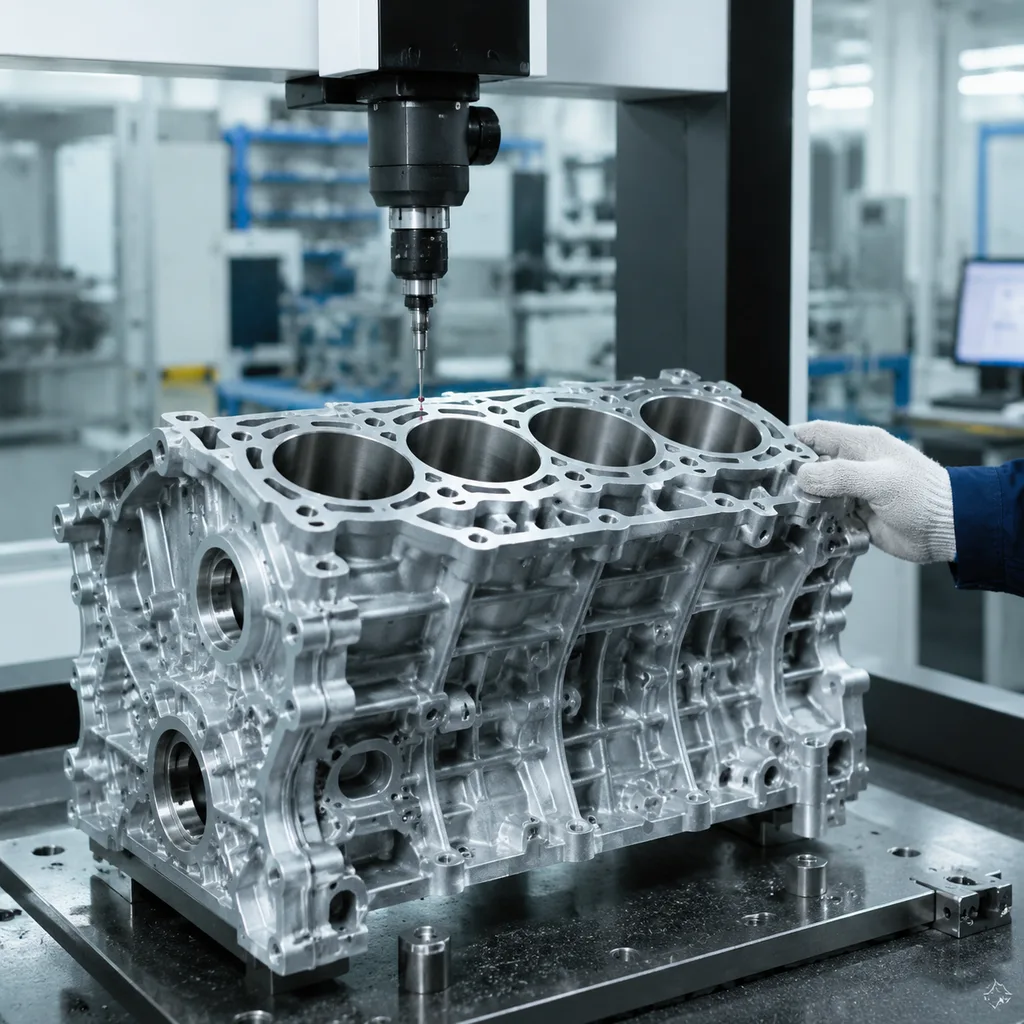
Published standards are relevant at the system level: IATF 16949:2016, ISO 9001:2015, and where applicable REACH (EC) No 1907/2006 for material compliance in EU-bound supply. In practice, buyers should look for a supplier that can show process control from casting through machining, not just a final inspection report. That includes dimensional checks on critical surfaces, traceability for batches, and consistent records for heat treatment, if used in the programme. For a Hyundai engine block, machining stability matters as much as metallurgy because small deviations in deck flatness or main bore alignment can create assembly or durability problems. A supplier with controlled fixtures, calibrated gauges, and documented inspection routines is better positioned to support recurring B2B orders.
Commercial factors that affect sourcing
Beyond technical fit, commercial terms often determine whether a supply programme stays workable. Buyers should compare MOQ, tooling or setup charges, sample policy, payment terms, and the supplier's ability to hold repeat lead times across multiple production cycles. Freight planning also matters: heavier engine blocks can move by sea, air, or mixed shipping depending on urgency, but the shipping mode should be matched to margin and inventory strategy. If your team manages regional stocking, ask whether the supplier can support split shipments or consolidated cartons for distribution channels. Stable pricing is also easier to manage when the quotation clearly separates part cost, machining cost, packaging, and any special documentation or private-label requirements.
Fitment, validation, and risk control
Fitment checks should happen before production release, not after the first shipment. A practical validation plan includes dimensional comparison against the OE sample or drawing, review of coolant and oil gallery locations, and confirmation that mounting and accessory interfaces match the intended engine family. For higher-volume programmes, buyers may also request first article inspection data, sample-block verification, and agreed acceptance criteria for critical dimensions. This is especially important when a part number is shared across markets but differs by engine code, emissions setup, or transmission pairing. Risk control improves when the RFQ defines the exact revision level, packaging label format, and change-notice expectations, so the supply team can avoid unplanned substitution.
When to choose standard stock or custom supply
Standard stock works best when the programme follows an established Hyundai application and the buyer needs faster availability with lower setup complexity. Custom supply makes more sense when the market requires private label packaging, special machining, programme-specific documentation, or a controlled revision of an existing block. Driventus is an independent aftermarket manufacturer; brand names are referenced for fitment only. For buyers building a long-term channel, the right choice often depends on whether the priority is immediate fill rate or tighter control over specification and branding. If the business case includes recurring volume, a customised supply plan can reduce downstream handling and make replenishment more predictable over time.
Frequently asked questions
Send the engine code, OE reference if available, quantity, target market, machining state, packaging needs, and any drawing or sample-block dimensions. A clear RFQ shortens quotation and sample lead time.
Yes. Procurement teams can request factory documentation, inspection records, and process information as part of supplier qualification. Audit scope depends on the programme and confidentiality terms.
Yes. We support custom machining, controlled packaging, and programme-specific documentation for qualified B2B accounts. Use the RFQ process to define the required specification.
If you are qualifying a Hyundai engine block programme, send your specification, target volume, and OE reference through /contact.html and we will respond with a sourcing proposal.
Request a Quote