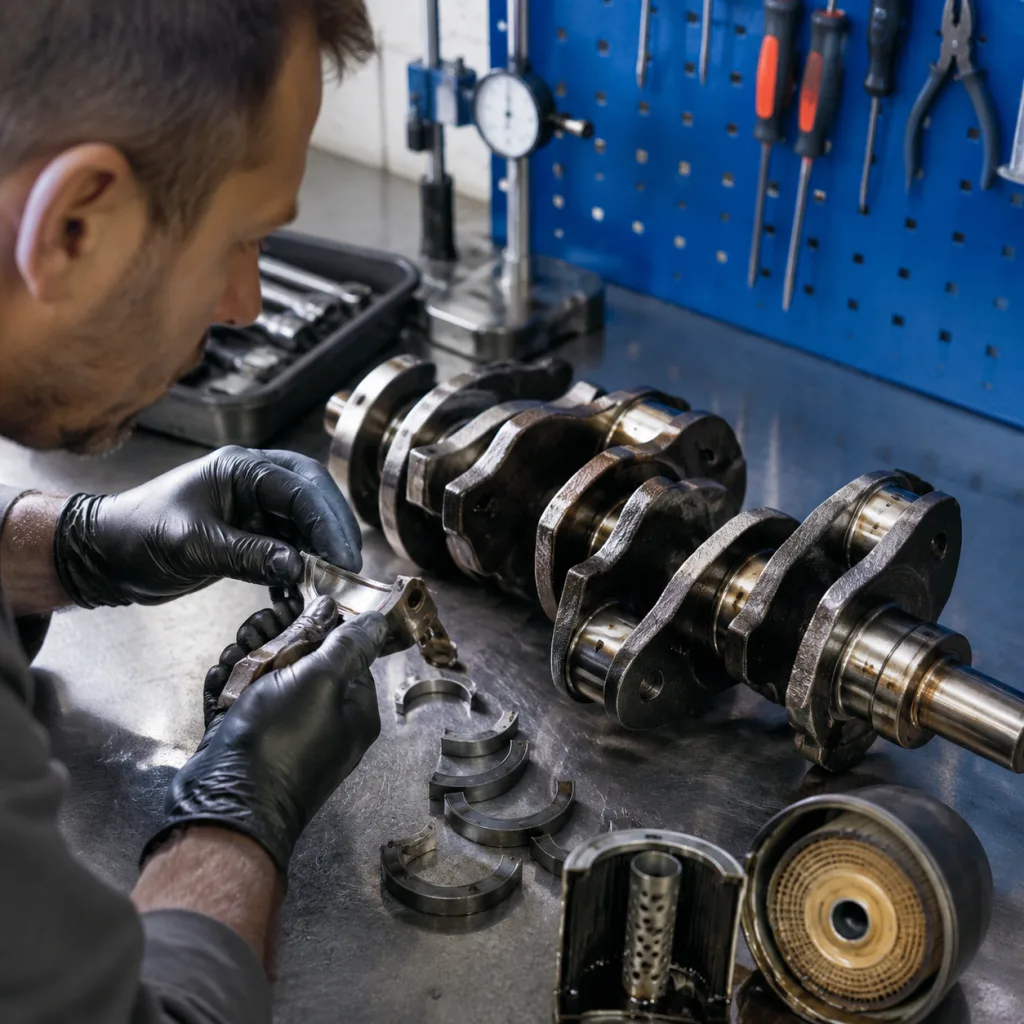
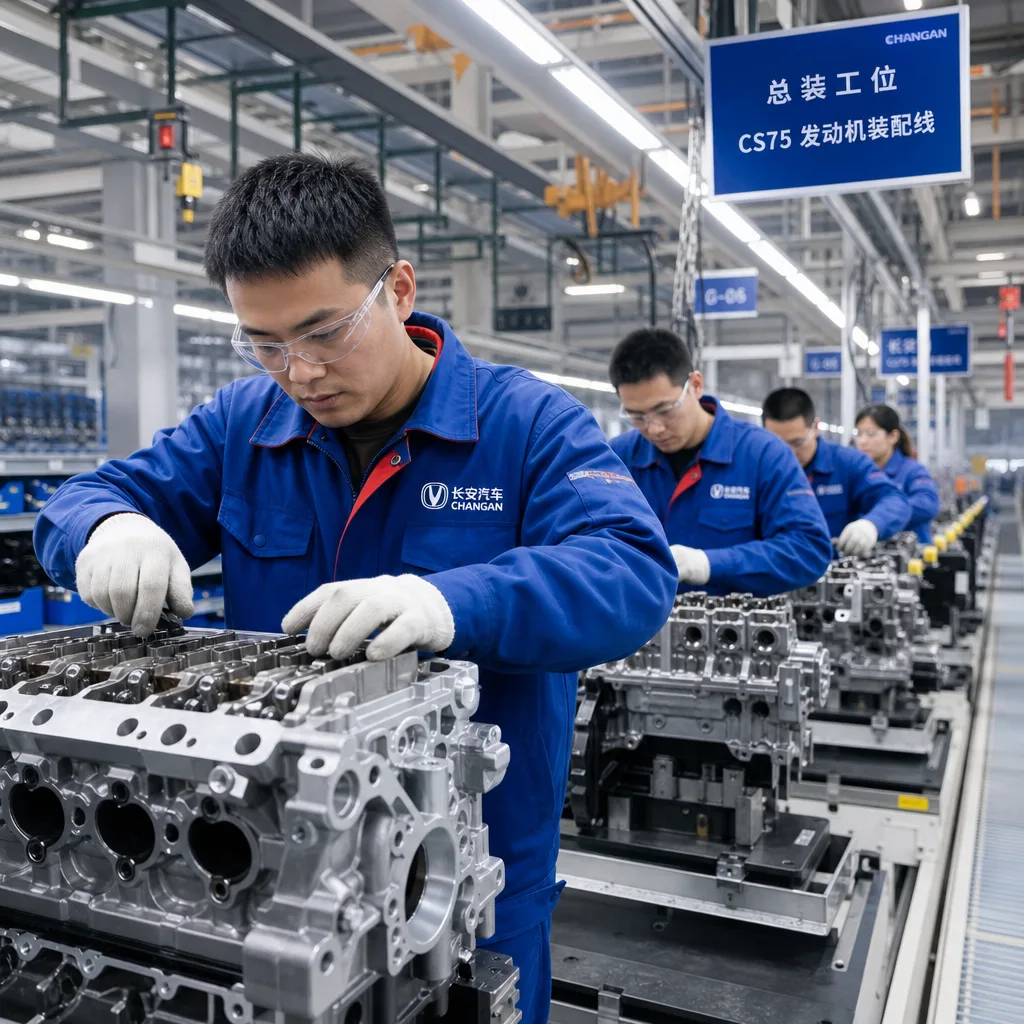
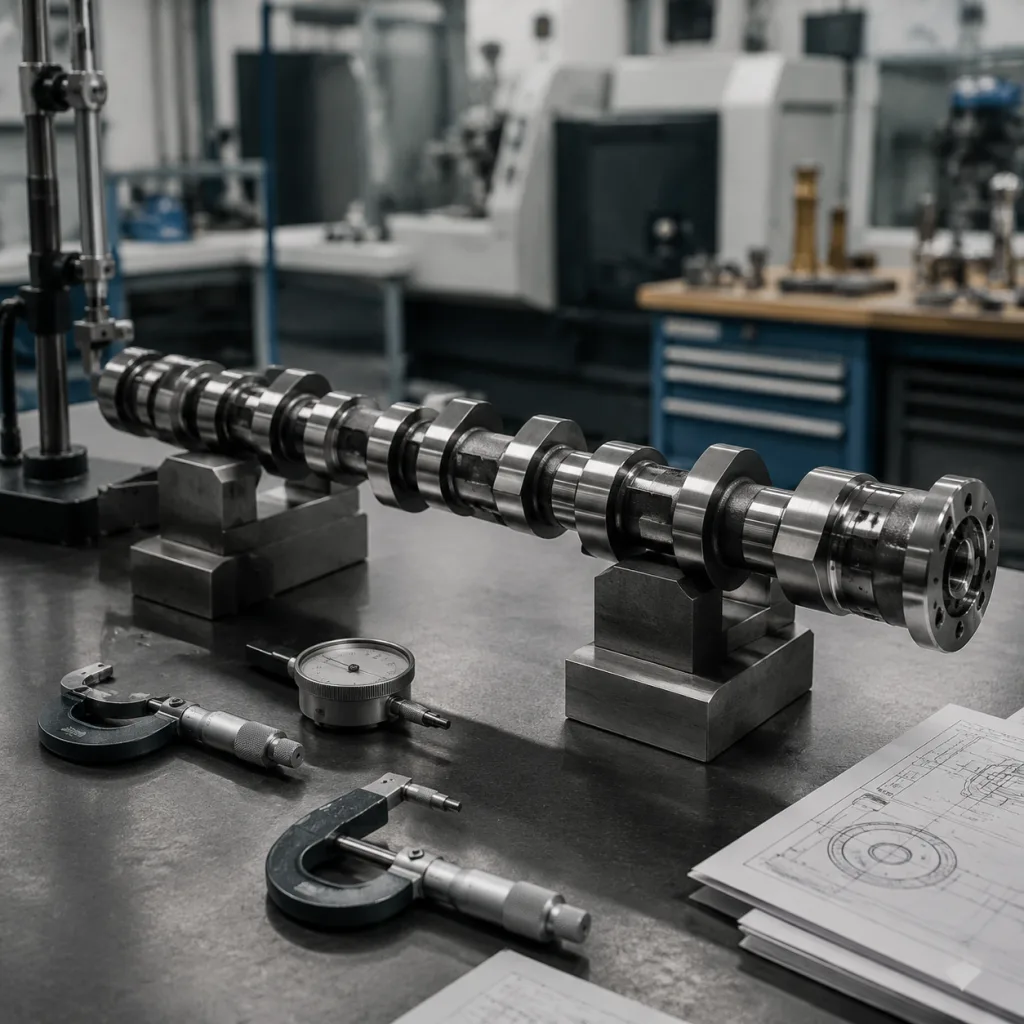
Sourcing a Fiat engine block is a specification decision first and a purchasing decision second. The real filter is whether the supplier can hold geometry, document traceability, and repeat the same result across lots. For Fiat applications, that means checking bore size, deck flatness, main-bearing alignment, coolant-jacket integrity, and the controls behind them.
Driventus manufactures engine and powertrain components in Taizhou, Zhejiang, and supplies B2B customers in more than 60 countries. We operate under IATF 16949:2016 and ISO 9001:2015 processes, and we support procurement teams that need factory audit data, lot traceability, and repeatable lead times. Driventus is an independent aftermarket manufacturer; brand names are referenced for fitment only. If you are screening an `engine block fiat oem supplier`, the question is not simply who can quote fastest. It is who can prove the part will stay within spec, document the evidence, and keep the program stable after launch.
What to verify before you compare quotes
Start with the failure points that are hardest to recover from later. A Fiat engine block supplier should be able to show:
Dimensional conformity to the drawing and the fitment reference used for the application
Machining capability for deck, bore, line bore, and sealing faces
Material traceability by heat number or batch record
Validation coverage for pressure, leak, and distortion checks
Export documentation aligned with the destination market
For buyers in the EU, UK, US, Canada, Australia, and Brazil, the documentation file matters as much as the unit price. Ask for PPAP-style evidence where relevant, inspection records, and the applicable conformity statement for material and finish. If the program includes elastomer seals, coatings, or gasket sets bundled with the block, confirm REACH (EC) No 1907/2006 awareness on the material-declaration side. A serious supplier should be able to explain its control plan without skipping the gauge method or frequency. If it cannot provide the last three lot reports, calibrated gauge list, and final inspection criteria within 24 to 48 hours, the program is usually not ready for commercial release.
Where engine-block specs usually fail
Most sourcing problems show up in the same places. The part may look correct and still fail in service because one control point drifted.
Item
What to confirm
Typical control target
Bore diameter
Finished size and taper control
Often held within ±0.01 to ±0.02 mm on finish-machined bores, depending on the drawing
Deck flatness
Measured after machining
Commonly controlled to 0.03 to 0.05 mm across the deck face
Main bearing alignment
Line-bore position and roundness
Frequently kept within 0.01 to 0.02 mm on critical bearing centers
Coolant passages
Casting integrity and core shift
Zero blockage, no visible porosity, no leak under pressure test
Thread quality
Insert condition and torque retention
Full thread engagement with no pull-out under specified torque
Surface finish
Mating-face roughness
Often specified around Ra 1.6 to 3.2 μm on sealing faces
</tr></thead><tbody> </tbody></table>If the block is being used as an OE-equivalent replacement, the supplier should also identify the exact application family, engine code, and any OE cross-reference only when that number is already part of your sourcing brief. Driventus does not claim OEM approval or endorsement from any vehicle manufacturer. Ask how each critical characteristic is measured, whether the method is CMM, bore gauge, profilometer, or pressure rig, and whether the same method is used on every shift or only on sampling lots. Mixed measurement methods are a common source of mismatch later.
How the commercial fit changes by volume
The right supplier depends on how you buy. A distributor needs packaging discipline and continuity. An OEM or Tier-1 buyer needs change control and release stability. A useful screening sequence is:
1. Confirm the minimum order quantity for each block variant. 2. Confirm the first-order and repeat-order lead times. 3. Separate in-house processes from outsourced work. 4. Define how pattern changes, machining revisions, and material substitutions are approved. 5. Ask whether pilot runs are available before full release.
Volume also changes what “good” looks like. At low quantities, you need flexibility and clean sampling. At higher volumes, you need stable throughput and fewer surprises. Many programs begin with a sample or pilot MOQ of 1 to 20 pieces, move to a launch lot of 50 to 200 pieces, and then step into a production MOQ of 100 to 500 pieces per variant depending on casting complexity and machining setup. First-order lead time is commonly 45 to 90 days, with repeat orders often in the 30 to 60 day range plus shipping. If a quotation leaves out MOQ, tooling amortization, or price breaks by tier, it is not yet a usable commercial offer.
Which quality controls actually lower rejection risk
Quality needs to be visible in three places: incoming castings, in-process machining, and final release. If one layer is missing, latent defects move downstream.
Chemical composition verification on incoming material
X-ray or equivalent defect screening where required by the program
CNC in-process probing for critical datums
Final dimensional inspection with calibrated gauges
Pressure testing of coolant and oil galleries
Visual inspection for porosity, flash, and thread damage
A plant working under IATF 16949:2016 and ISO 9001:2015 should be able to show how nonconforming parts are isolated, how corrective action is closed, and how gauge calibration is controlled. Ask for the quality-system documentation early, not after commercial terms are agreed. When comparing sources, this is usually where the gap appears: one supplier quotes lower but cannot show a stable control plan, while another provides traceable records and fewer downstream surprises. Request incoming, in-process, and final inspection samples with actual values, not just pass/fail marks. The file should also show who approved first article, when the last process capability review was completed, and what the rejection threshold is for porosity, warp, and thread damage.
Why Driventus suits B2B sourcing
Driventus is built for export supply, not retail order handling. That matters when you need repeatable production, documented inspections, and cross-program coordination across pistons, crankshafts, gaskets, water pumps, turbochargers, and related engine components. Our catalog is available at our catalog, and our quality system explains the certification and process controls used in production.
For customers that need drawing-based adaptation, our custom manufacturing service supports program-specific dimensions and packing requirements. If your team wants to review related engine hardware, see engine components.
Driventus is an independent aftermarket manufacturer; brand names are referenced for fitment only. For sourcing teams, that keeps the discussion on specification, validation, and continuity instead of ownership claims. A clean RFQ should include target annual demand, initial order quantity, required inspection format, preferred Incoterm, and whether packaging must be retail-ready, warehouse-ready, or export-palletized. That gives procurement and engineering the same baseline before commercial negotiation begins.
Frequently asked questions
Yes. We support B2B export programs and can supply blocks built to the agreed fitment specification, documentation set, and packaging standard for the destination market. For quotation accuracy, include annual volume, first order quantity, and required inspection method so the factory can confirm tooling, machining capacity, and final packing needs.
Request dimensional inspection data, material traceability, quality-system evidence, lead-time confirmation, and any validation records relevant to the application and market. For a commercial comparison, also ask for MOQ by tier, sample lead time, production lead time, and price break points at each quantity band so you can compare landed cost rather than just unit price.
Yes. Our OEM service can support custom manufacturing when the project needs a specific bore, deck, or interface requirement that is not a standard catalog item. We can review drawings, confirm critical tolerances, and define the pilot lot before production approval so the buyer has a clear path from sample to release.
If you are qualifying a new source for Fiat engine blocks, send your drawing, target volume, and inspection requirements. Start here: /contact.html