Check Engine Light P0301 Engine Bearing: What to Inspect
A P0301 fault points to a cylinder 1 misfire, but it does not automatically mean the engine bearing failed. The useful question is whether the fault stays in the combustion path or traces back to mechanical wear, oil-pressure loss, or rotating drag that makes the misfire worse. Driventus is an independent aftermarket manufacturer; brand names are referenced for fitment only. We supply engine components for B2B applications with IATF 16949:2016 and ISO 9001:2015 controls. This guide helps you separate a true cylinder fault from bottom-end damage, choose the right inspection order, and decide when an engine bearing belongs in the repair scope.
P0301 or bearing wear? Start with the failure pattern
P0301 is a cylinder 1 misfire code. The ECU sets it after it sees uneven crankshaft speed, so the code is a symptom of poor combustion, not proof that a hard part has failed.
That distinction matters. Ignition faults, injector problems, air leaks, compression loss, and wiring issues are still the most common causes. A basic diagnosis should start there.
A bearing problem behaves differently. It changes oil clearance, support, and crankshaft drag. In a severe case, it can add knock, lower oil pressure, and create enough mechanical load to worsen misfire behavior. But it is still a secondary suspect unless the engine gives you mechanical evidence.
Quick read
- Combustion fault: rough idle, load-related misfire, normal oil pressure
- Air or compression fault: vacuum leak, low compression, unstable idle
- Bottom-end wear: hot idle knock, metal in oil, falling oil pressure
For buyers and repair planners, the safest rule is simple: confirm the misfire path first, then escalate to the lower end if the symptoms point there. A code alone is not a parts order.
Decision points that justify a bearing inspection
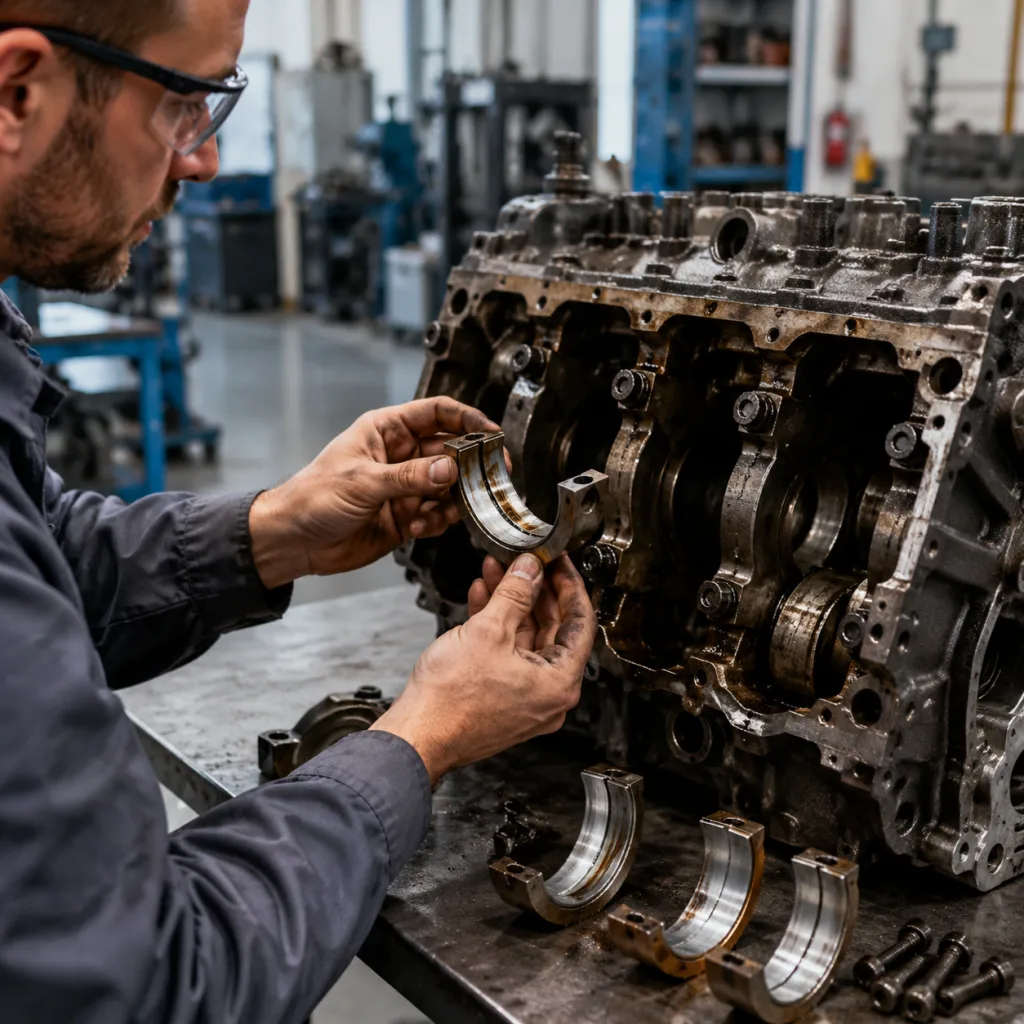
Move to bearing inspection when the engine gives you signs that go beyond a cylinder-specific misfire.
- Knock that rises with rpm
- Hot idle oil pressure below OEM minimum
- Copper, lead-tin, or other bearing debris in the oil filter or sump
- Repeated P0301 after coil, plug, and injector checks
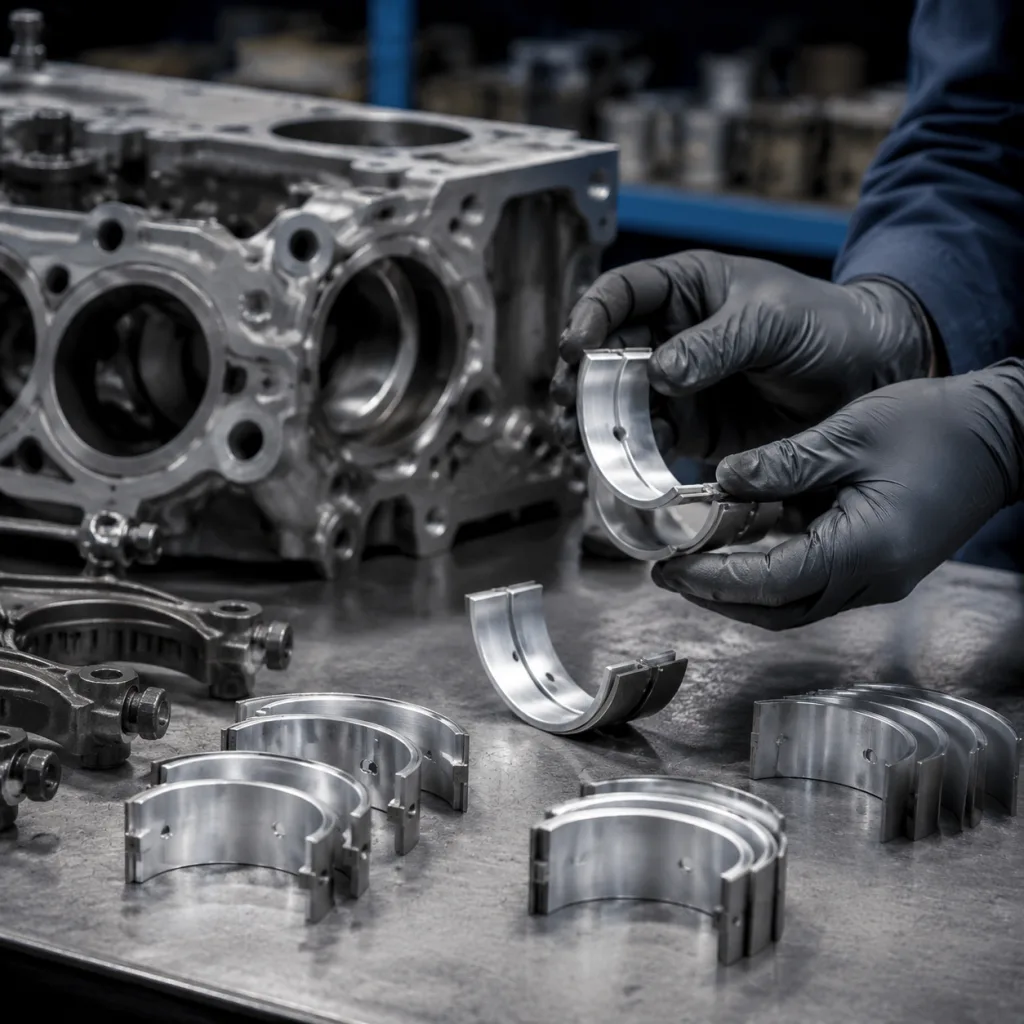
- Scoring visible on the journal or shell
A bearing can also be involved if cylinder 1 compression is abnormal and the engine has already run with lubrication problems. At that stage, the damage picture may involve more than one journal, so treat the evidence as a system.
| Check | What it tells you | What to do next |
|---|---|---|
| Mechanical oil-pressure test | Lubrication condition | Compare cold and hot readings to OEM data |
| Compression and leak-down | Sealing condition | Separate valve, ring, and gasket issues |
| Oil filter inspection | Wear debris | Open the filter and inspect the pleats |
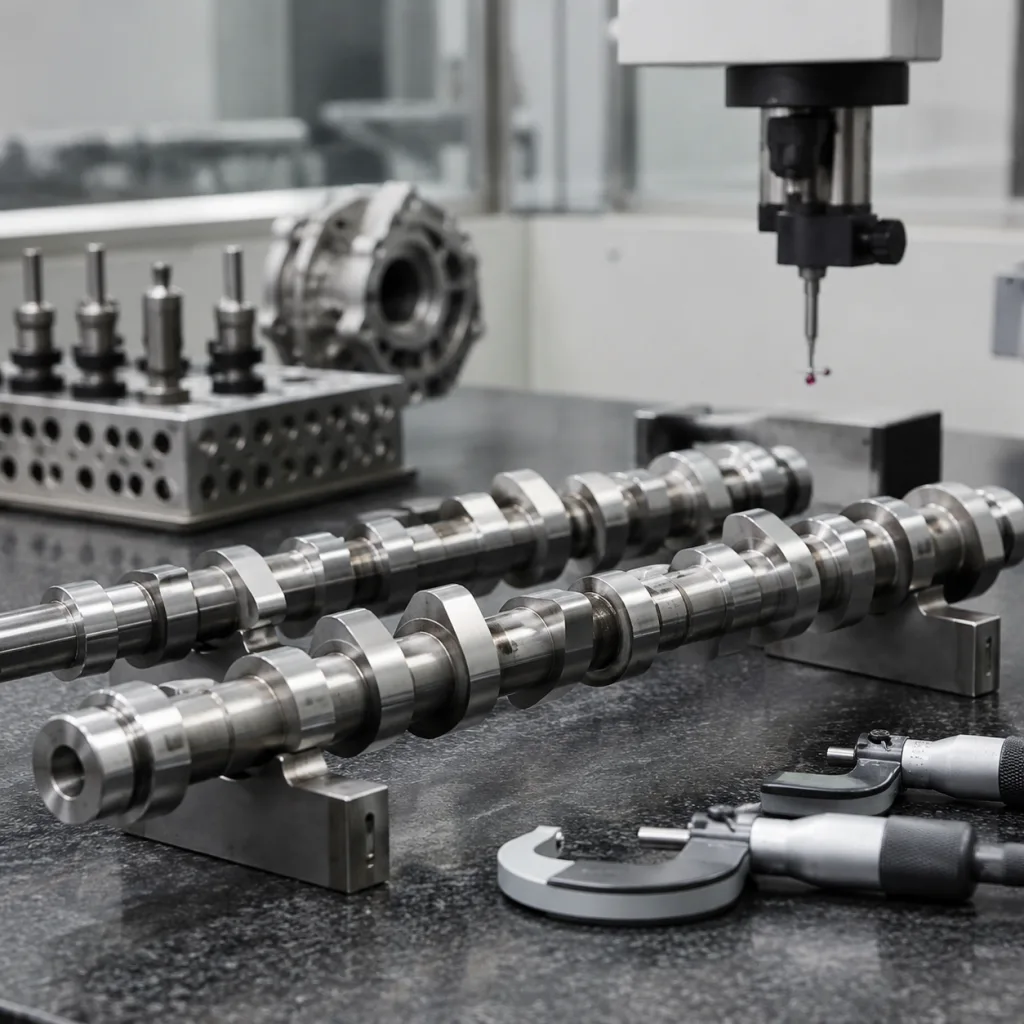
| Journal and end-play check | Mechanical wear | Measure before ordering parts |
| Misfire counter scan | Cylinder contribution | Confirm whether cylinder 1 stays dominant |