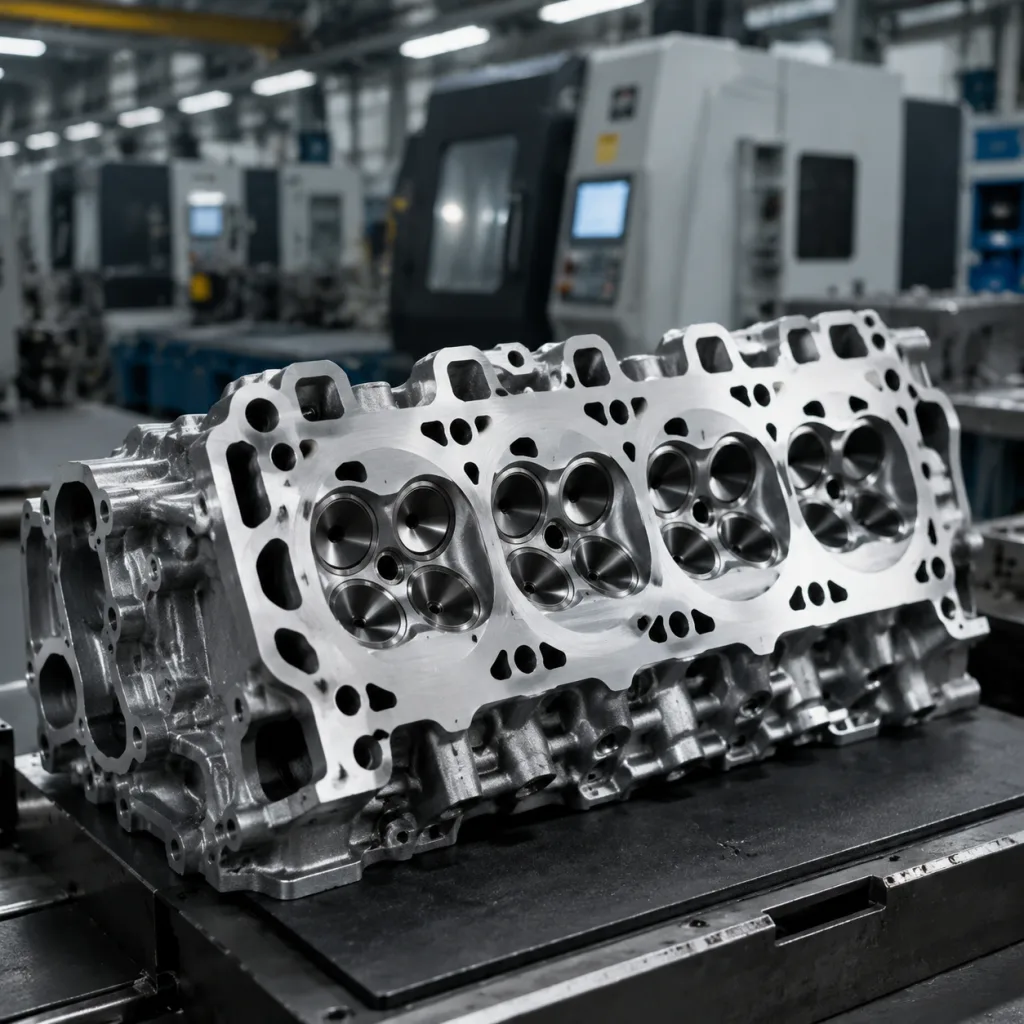
A Buick-fitment engine block RFQ can fail for small reasons: the quote assumes a rough casting while the buyer expects a finished bore; the supplier treats cleanliness as cosmetic; the packing protects the crate, not the deck face. Procurement teams need a sourcing process that catches those risks before money moves. Driventus manufactures engine and powertrain components in Taizhou, Zhejiang for aftermarket distributors, wholesalers, OEM/Tier-1 programmes, and multi-location repair chains. For engine block projects, we compare the buyer’s sample, drawing, 3D data, application information, OE part-number cross-references where available, import requirements, and supply-form expectations before quoting. Key decisions include rough casting versus fully machined block, grey iron versus aluminium alloy, plug and dowel installation, pressure-test scope, and whether PPAP-style records are required. Driventus is an independent aftermarket manufacturer; vehicle brand names are used only to identify fitment and application scope. This article is structured as a practical decision guide for evaluating Driventus as an engine block Buick supplier: what to define, what can go wrong, how to price the programme, which technical controls matter, and what to verify before long-term nomination.
Start with the supply-form decision, not the part name
“Engine block for Buick” is not enough for a controlled quotation. The first decision is the supply form: rough casting, semi-machined casting, fully machined bare block, or a block supplied with selected core plugs, oil-gallery plugs, dowels, threaded inserts, or caps. That choice changes the production route, inspection plan, packing design, lead time, and commercial risk.
A rough casting may only need casting inspection, material verification, and wall-thickness confirmation. A fully machined block needs much more: dimensional records, bore and deck protection, cleanliness control, and pressure testing where specified. Between those two points sits the semi-machined block, often the right option for remanufacturers that have their own line boring, honing, and final machining capability.
Before confirming feasibility, Driventus typically reviews:
Application range: model year, engine displacement, fuel type, aspiration, drive market, and vehicle region
Reference data: physical sample, 2D drawing, 3D scan data, customer-controlled drawing, or reference part
OE cross-reference format where provided, such as OE-style numeric or alphanumeric references used by the buyer’s catalog team
Required supply form: rough casting, semi-machined block, fully machined bare block, or kit with plugs, dowels, and caps
Critical interfaces: cylinder bores, deck face, main bearing tunnel, cam tunnel where applicable, oil galleries, coolant passages, threaded bosses, and mounting points
Dimensional target: customer drawing tolerances, datum scheme, surface-finish callouts, and any special characteristics
Required markings, neutral branding, pallet labelling, barcode format, and warehouse receiving rules
Destination-market compliance needs, including REACH (EC) No 1907/2006 where applicable
One RFQ point deserves extra attention: machining stock. Buyers should state whether stock must remain on bores, deck, and main tunnel. Semi-machined blocks are often quoted with agreed stock allowance, commonly in the 0.3-1.5 mm range depending on feature and customer process. Fully machined blocks should be quoted against final dimensions and inspection method, not only against an interchange number. Deck flatness, bore diameter, main tunnel alignment, and thread gauge requirements are controlled features because they affect assembly success directly.
This early definition prevents a common sourcing mismatch. A remanufacturing customer with in-house line boring and honing may prefer a semi-machined block. A distributor selling to engine rebuilders usually needs a more complete specification, with machined surfaces protected and inspected before shipment.
Buyers can review related product categories in our catalog and engine-related families at /products/engine-components.html. For projects that require customer-controlled drawings, fixture adaptation, revised machining allowance, or private tooling, Driventus can also discuss custom manufacturing.
Failure modes to eliminate before supplier nomination
Engine block sourcing has a different risk profile from many bolt-on aftermarket parts. Some defects are visible at receiving. Others appear only during machining, pressure testing, assembly, or field operation. A reliable supplier nomination should therefore test process capability, inspection discipline, and traceability from melt or material batch through final packing.
Use the table below as a nomination filter, not a paperwork exercise.
Risk area
What to request
Practical acceptance logic
Quality certification
IATF 16949:2016 and ISO 9001:2015 certificate copies
Verify scope, site address, expiry date, and certificate body rather than accepting a logo on a quotation
Material mismatch
Chemical composition report, hardness data, melt/heat traceability, and casting batch number
Confirm grade, carbon/silicon balance for iron, alloy designation for aluminium, and hardness range agreed in the drawing
Require real sample data for bores, deck, main tunnel, bolt patterns, and datum-to-datum relationships
Hidden leakage
Pressure test medium, pressure, duration, fixture coverage, and rejection rule
Define whether coolant jacket, oil galleries, and plug locations are tested; record serial or lot traceability
Contamination
Washing process, gallery flushing method, air blow-off, and inspection method
Reduce chip, sand, burr, and oil residue risk before assembly or warehouse storage
Transit damage
Export carton, crate or pallet design, rust prevention, drop/stacking plan
Confirm that machined faces are isolated and that pallet gross weight is compatible with receiving equipment
Unapproved changes
Written process for tooling, material, machining, fixture, and subcontractor changes
Require buyer approval before changes to pattern, CNC program, datum scheme, machining supplier, or coating/oil
</tr></thead><tbody> </tbody></table>Driventus operates under a documented quality system aligned with IATF 16949:2016 and ISO 9001:2015. For buyer audits, we can support document review, process walk-throughs, and sample inspection discussions before production release.
Certificate copies are a starting point, not the approval. Procurement and engineering teams should review the control plan, first-off inspection records, pressure-test logs, calibration status of gauges, and the supplier’s reaction plan if leakage, bore deviation, thread failure, or machining damage is detected. For launch approval, buyers commonly request 3-5 first-article samples from the same process route planned for mass production, with the same casting source, machining fixtures, cleaning line, rust-prevention method, and export packing.
If the block will be sold into a remanufacturing or engine-rebuild channel, agree on the warranty-return review method before the first order. Useful rules include photo evidence at receipt, batch-number capture, dimensional verification against agreed datums, and a decision window for whether a claim is caused by casting, machining, transport damage, assembly error, or application mismatch.
Build the quote in stages: trial, pilot, repeat supply
The best engine block quotation is not a single unit price with a vague lead time. It separates trial cost, sample validation, pilot order assumptions, repeat production, tooling or fixture investment, and shipment method. That makes competing offers comparable.
Minimum order quantity depends on the casting route, tooling ownership, machining complexity, packaging density, and whether the engine block is already within an active production family. For an active pattern with existing machining capability, a lower-quantity trial may be possible. For a new casting, customer-specific alloy requirement, or custom machining fixture, the economic MOQ is normally higher because pattern work, CNC programming, inspection setup, pressure-test fixtures, and sample validation must be amortised.
Working planning ranges:
Existing casting and existing machining route: trial order often discussed from 20-50 pieces, with repeat MOQ commonly 50-100 pieces depending on packing and schedule
Existing casting with new machining variant: sample run commonly 5-10 pieces, then pilot order around 30-80 pieces after dimensional approval
New pattern or customer-owned tooling: commercial MOQ often 100-300 pieces per order or an agreed annual commitment, plus tooling/pattern cost
Fully machined block with installed plugs, dowels, and caps: MOQ may be higher than a bare semi-machined block because final inspection, leak testing, and protective packing take more labour
Consolidated container shipment: unit freight cost improves when the buyer combines blocks with other engine components, but pallet weight and safe handling limits must be checked
A typical sourcing sequence is:
1. RFQ review: application, photos, drawings, sample availability, target specification, annual forecast, and destination market. 2. Feasibility confirmation: casting method, machining route, tooling status, controlled dimensions, inspection points, pressure-test need, and packaging method. 3. Commercial quotation: unit price, MOQ, tooling or fixture cost if applicable, sample charge, incoterms, payment terms, and estimated lead time. 4. Sample production: casting, heat treatment where specified, machining, cleaning, dimensional inspection, leak test where specified, packing review, and buyer evaluation. 5. Pilot order: controlled batch with inspection records, traceability, and packing validation before broader release. 6. Repeat supply: scheduled production based on forecast, call-off plan, and agreed change-control rules.
Lead-time planning should distinguish a repeat order from a launch. Indicative ranges are 45-75 days for repeat production after approval, 60-90 days for an existing casting with new machining or fixture adjustment, and 90-150 days for new casting tooling, sample casting, machining validation, and approval. These ranges can move with foundry capacity, alloy availability, holiday schedules, inspection burden, and whether the buyer requests PPAP-style submission.
Ask for the price breakdown. A useful quote separates unit part price, one-time tooling or fixture cost, sample cost, special inspection cost, packing cost, and freight term. Incoterms such as EXW, FOB Ningbo/Shanghai, CIF, or DDP change responsibility and risk, so they should not be mixed when benchmarking suppliers.
When contacting Driventus, include annual demand, first shipment quantity, target incoterm, required supply form, destination country, packaging preference, drawing tolerance level, and whether your team can provide samples or drawings. That information allows a more accurate response when you request a quote.
Spec deep-dive: the controls that decide whether the block assembles
A credible engine block Buick supplier should be able to explain how casting, machining, cleaning, inspection, and shipment controls connect to assembly performance. Exact tolerances depend on the engine family and the customer drawing, but the control plan should identify safety-critical and function-critical characteristics and state inspection frequency for launch, pilot, and mass production.
Typical controlled features include:
Cylinder bore position, diameter, roundness, taper, and straightness after machining
Main bearing tunnel alignment, diameter, roundness, and surface condition
Deck flatness, surface finish, and relationship to bore centreline
Head bolt thread depth, thread integrity, and torque-sensitive threaded holes
Oil gallery and coolant passage cleanliness, including removal of sand, chips, and loose burrs
Core shift inspection for casting stability and wall-thickness consistency
Plug, dowel, cap, and threaded insert fitment where included in the supply scope
Pressure test of coolant jacket and oil passages when required by specification
Visual inspection for cracks, shrinkage, sand inclusion, cold shuts, porosity exposure, and machining burrs
Protection of machined faces, bores, and sealing surfaces before packing
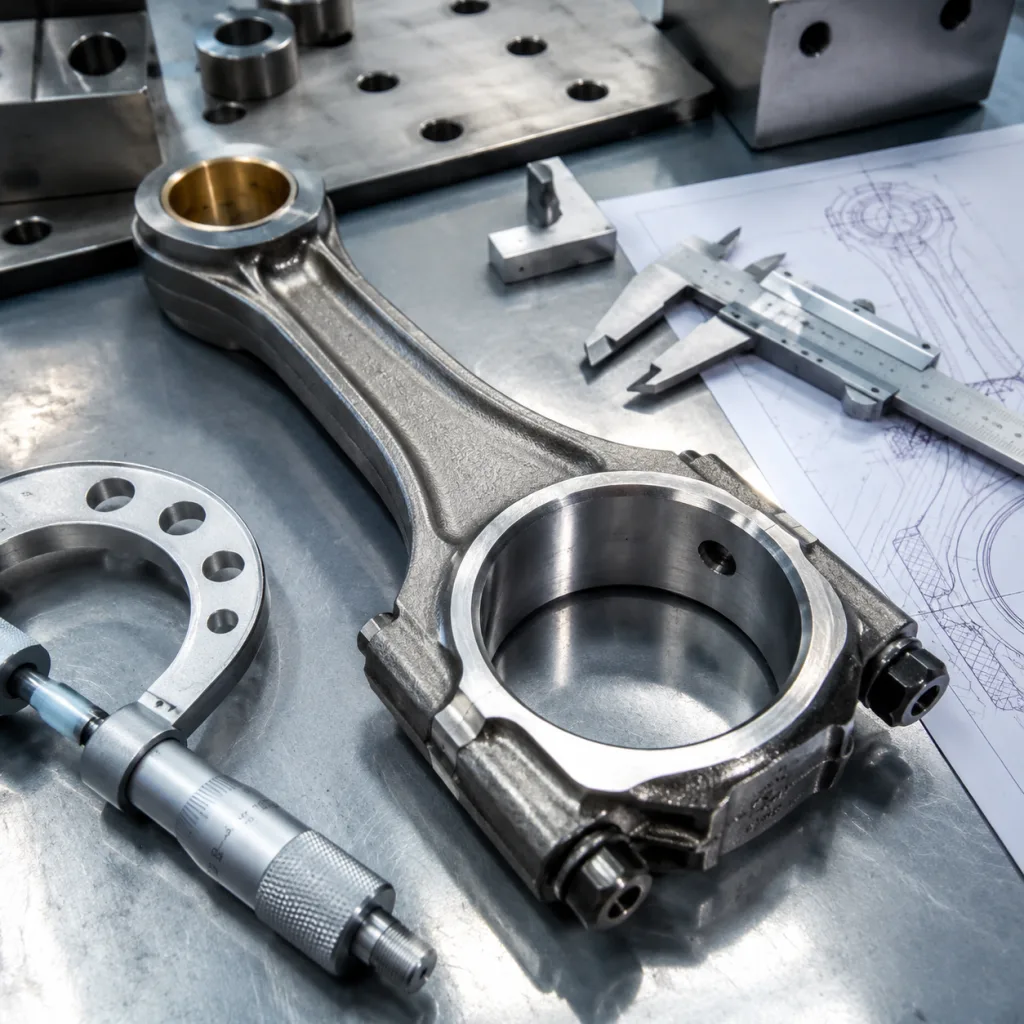
If a buyer does not yet have a drawing, the preliminary specification can still use measurable targets. Common discussion points include deck flatness in the 0.03-0.08 mm range depending on deck length and engine design, machined bore tolerance commonly within several hundredths of a millimetre when supplied finished, main tunnel alignment controlled by line-bore or line-hone inspection, and threaded holes verified by go/no-go gauges to the specified thread standard. These are not universal tolerances; final values must follow the buyer drawing, sample correlation, or mutually approved inspection standard.
Materials and process documentation
Depending on the programme, engine blocks may be specified in grey cast iron, compacted graphite iron, or aluminium alloy. Buyers should not accept a material description only as a trade name. The purchase specification should define chemical composition range, hardness range, heat treatment if required, casting method, inspection frequency, and the records expected with each shipment. For grey iron blocks, procurement should confirm grade, hardness, tensile-strength target where specified, and whether the block is stress relieved before final machining. For aluminium blocks, confirm alloy designation, heat-treatment condition, insert material where used, and galvanic/corrosion protection requirements.
Driventus can provide production documents such as material reports, dimensional inspection records, control plans, packing photos, sample approval data, and leak-test records according to the agreed project scope. If a customer requires PPAP-style documentation, capability studies, special-characteristic marking, MSA, process flow diagrams, PFMEA, or a defined submission level, this should be stated during RFQ rather than after sample completion.
Process control should include first-off approval at machining start, in-process checks at defined intervals, final inspection before rust prevention, and lot identification before packing. For higher-volume programmes, buyers may request capability data on selected dimensions after the process is stable; for small aftermarket batches, 100% checks may be more practical for key fitment features such as threaded holes, plugs, dowels, and mating surfaces.
Cleaning is a technical control, not a finishing touch. Residual sand, chips, oil-gallery contamination, or burrs can affect downstream assembly and warranty exposure. For fully machined blocks, buyers should clarify cleanliness expectations, flushing direction, compressed-air blow-off, protective oil requirements, plug status, and whether the block will be assembled immediately or stored before use.
Scenario check: will the block survive export, storage, and receiving?
Picture the best-case production result: the casting is sound, the machining is within tolerance, and the pressure test passes. The programme can still lose money if the deck face is dented in transit, the bores corrode during sea freight, or the receiving warehouse cannot scan the label. For engine blocks, packing is part of the product.
Engine blocks are heavy, high-value machined components with exposed sealing faces, threaded holes, machined bores, and cast edges that can be damaged by poor handling. Inadequate export packing can lead to corrosion, impact marks, broken corners, dented deck surfaces, cracked bosses, and claim disputes even when casting and machining quality are acceptable. Distributors and importers should approve the packing specification during the sample or pilot stage.
Recommended packing points include:
Rust-prevention oil, VCI bag, desiccant, or other agreed anti-corrosion treatment on machined surfaces
Bore, deck, and gasket-face protection against abrasion and impact using plastic caps, foam, separator boards, or fitted supports
Individual containment to prevent metal-to-metal contact during vibration and container movement
Reinforced export pallet, plywood crate, or steel/wood frame suitable for sea freight and inland handling
Gross weight, centre-of-gravity, and forklift access considerations for warehouse safety
Moisture control where long ocean transit or humid storage conditions are expected
Neutral labels or customer labels as agreed in the purchase order
Batch number, part number, quantity, country-of-origin marking, and barcode data according to destination rules
For planning, buyers should specify maximum pallet weight and stackability. Many receiving warehouses prefer pallet gross weights under 800-1,000 kg for forklift safety, but the final limit depends on local equipment, pallet dimensions, and handling rules. Heavy blocks should be fixed so the deck and machined faces do not carry the load. If sea transit exceeds 30-45 days or the destination has high humidity, VCI plus sealed bagging and desiccant should be considered rather than light oil alone.
Labelling should be defined in a data table, not left to the packing team. Required fields often include customer part number, supplier part number, PO number, quantity, batch/lot number, net and gross weight, origin, carton or crate number, and barcode symbology such as Code 128 or QR according to the buyer’s warehouse system. If individual serialisation is required, it must be stated before production so marking and records can be aligned.
For EU and UK-oriented buyers, material and substance declarations may be requested under REACH (EC) No 1907/2006. For North American and Australian buyers, distributors often focus on pallet strength, receiving-label accuracy, traceability, and warehouse-safe handling. Brazil-bound shipments may require additional attention to customs documentation, Portuguese label requirements where specified by the importer, and consistent HS code classification.
Driventus does not claim approval or endorsement by any vehicle manufacturer. Fitment references are used to help professional buyers identify application scope, compare replacement requirements, and reduce ordering errors. Importers remain responsible for confirming local labelling, customs, duties, HS code use, and compliance obligations before shipment.
Audit Q&A for a long-term engine block Buick supplier
Before awarding a long-term engine block programme, ask questions that reveal operational stability. A low unit price has limited value if the supplier cannot hold the same casting source, machining datum scheme, cleaning process, and packing standard across repeat shipments.
Use these audit questions to pressure-test the decision:
Which process steps are performed in-house and which are subcontracted?
How is melt, heat, or material batch traceability maintained from casting to final packing?
What inspection equipment is used for bore, deck, main tunnel, and threaded-feature verification?
Are CMM, bore gauges, thread gauges, pressure-test fixtures, and torque tools calibrated with valid records?
How are nonconforming castings segregated before machining, and how is rework authorised?
What is the documented reaction plan for pressure-test failure, porosity exposure, or core-shift detection?
Are machining programmes locked, backed up, and revision-controlled?
How are engineering changes approved, documented, and communicated to customers?
What records are retained for each production lot, and for how long?
How is cleanliness verified before packing, especially inside oil galleries and coolant passages?
What packaging validation has been completed for export shipments, including vibration, handling, or pilot shipment feedback?
Can the supplier support forecast-based production, scheduled shipments, and stable call-off quantities?
How are spare capacity, peak-season demand, energy cost, and raw-material fluctuations managed?
For a structured audit, buyers can score each area from 1 to 5 and set a minimum approval threshold before nomination. A practical scorecard should cover material control, casting defect prevention, machining capability, inspection coverage, pressure testing, cleanliness, packing, document response time, and commercial flexibility. If one area is weak, the corrective action should include a responsible person, completion date, verification method, and whether shipment is blocked until closure.
Driventus is vertically integrated across multiple engine and powertrain component categories, which supports coordinated sourcing for buyers who also purchase pistons, crankshafts, gaskets, water pumps, turbochargers, or related engine components. This does not remove the need for part-specific approval, but it can reduce supplier-management workload for distributors and repair-chain procurement teams consolidating engine-component purchasing.
For a long-term engine block Buick supplier relationship, the strongest result comes from aligning engineering approval, procurement terms, packaging design, replenishment planning, and change-control rules before the first production order. That approach gives both parties a clear baseline for quality, cost, lead time, inventory risk, and future technical changes.
Frequently asked questions
Yes. Private labelling and neutral export packing can be reviewed during quotation. Requirements should include label format, crate or pallet markings, barcode rules, pallet configuration, country-of-origin marking, batch numbering, and any country-specific import information needed by your receiving warehouse.
Depending on the project scope, Driventus can provide certificate copies, material reports, dimensional inspection records, leak-test records where specified, packing photos, control plans, and agreed sample approval documents. IATF 16949:2016 and ISO 9001:2015 quality documentation can also be reviewed through the supplier qualification process.
No. Driventus is an independent aftermarket manufacturer; brand names are referenced for fitment only. We do not claim vehicle manufacturer approval, endorsement, or genuine-part status. Buyers should validate application data, samples, drawings, and specifications before purchase.
If your team is evaluating an engine block Buick supplier for distributor, repair-chain, or programme supply, send the application details, forecast, required supply form, drawing or sample status, target incoterm, and shipment market. Driventus can review feasibility and quotation options at /contact.html