Sourcing replacement engine blocks for Alfa Romeo applications is a technical procurement project, not a simple catalogue purchase. Importers and distributors need confirmed dimensional compatibility, stable metallurgy, clean internal galleries, traceable machining, and documentation that supports customs clearance, warranty control, and downstream customer confidence. In engine block Alfa Romeo wholesale programmes, the most common supply risks include bore geometry drift (±0.025 mm on diameter, ≤0.010 mm roundness), deck flatness variation (≤0.05 mm over 200 mm), main housing misalignment (≤0.03 mm concentricity), oil-gallery contamination (particle size ≤200 µm), corrosion during transit (VCI protection required for >30 days), and packaging that is not strong enough for sea freight handling (minimum 15 kN edge crush resistance for palletised crates). Driventus Auto Parts manufactures engine and powertrain components in Taizhou, Zhejiang, supplying aftermarket distributors, OEM/Tier-1 programmes, and repair-chain buyers in more than 60 countries. This guide explains how procurement teams can evaluate Alfa Romeo-fitment block supply, from RFQ data and audit checkpoints to validation records, packaging, MOQ planning, and lead-time structure. Driventus is an independent aftermarket manufacturer; vehicle brand names are used for fitment reference only.
Decision framework: Is your RFQ ready for an Alfa block programme?
An RFQ for Alfa Romeo engine block applications should include more than displacement, model name, and vehicle year. European engine families often have several block variants with small but important differences in sensor bosses, oil feed points, bedplate design, mounting faces, coolant connections, starter location, and accessory brackets. A strong procurement file identifies the engine-code range (e.g., 1.8L TBi, 2.0L JTS, 2.4L JTDm), casting configuration (open-deck or closed-deck), bore size (e.g., 83.0 mm ±0.025 mm), deck height (e.g., 228.0 mm ±0.1 mm), main bearing housing specification (e.g., 65.0 mm diameter, H6 tolerance), oil-gallery layout (number of passages, thread sizes M10x1.0 or M12x1.5), and any required accessory mounting points (alternator bracket, engine mount bosses).
Before quotation, Driventus normally reviews sample parts, technical drawings, 3D scan data, or verified distributor references. If buyers have OE part-number cross-references, they should provide them exactly as used in their catalogue data, for example OE 06A107065 or OE 11251… where applicable. These references help define fitment; they do not imply approval, endorsement, or supply to any vehicle manufacturer.
Useful RFQ inputs include:
Target application range and engine codes
Annual forecast and first-order quantity (MOQ typically 50–200 units for existing references)
Required supply condition: raw casting (rough as-cast, no machining), semi-finished (machined datum faces only), or fully machined block (all critical surfaces finished)
Scope of included items: bare block only, or with core plugs (e.g., 22 mm diameter, brass), dowels (e.g., 10 mm diameter, steel), threaded plugs (e.g., M14x1.5, NPT), or other fittings
Packing preference: single export carton (≤25 kg per carton), palletised crate (≤1,200 kg per pallet), wooden case (ISPM 15 compliant), or distributor-labelled packaging
Destination port, delivery address if needed, and requested Incoterms (FOB Shanghai, CIF Hamburg, DAP warehouse)
Documentation needs: inspection report (dimensional, with CMM data), material certificate (EN 10204 3.1), HS code support (8409.91 for engine parts), country-of-origin documents, or market-specific declarations (REACH, RoHS)
The more precise the RFQ, the easier it is to avoid later disputes about machining scope, accessory content, and packaging responsibility. Buyers can compare related engine and powertrain items in our catalog and, where relevant, review the engine component range at /products/engine-components.html.
Failure modes: Why casting and machining shortcuts destroy margins
Engine blocks must manage combustion load, heat transfer, lubrication, coolant flow, sealing pressure, and structural alignment. A small deviation in bore geometry, deck surface condition, or main housing alignment can lead to oil consumption, piston noise, bearing distress, coolant leakage, head-gasket failure, or warranty returns. For Alfa Romeo-fitment programmes, procurement teams should confirm how the supplier controls both casting quality and post-casting machining.
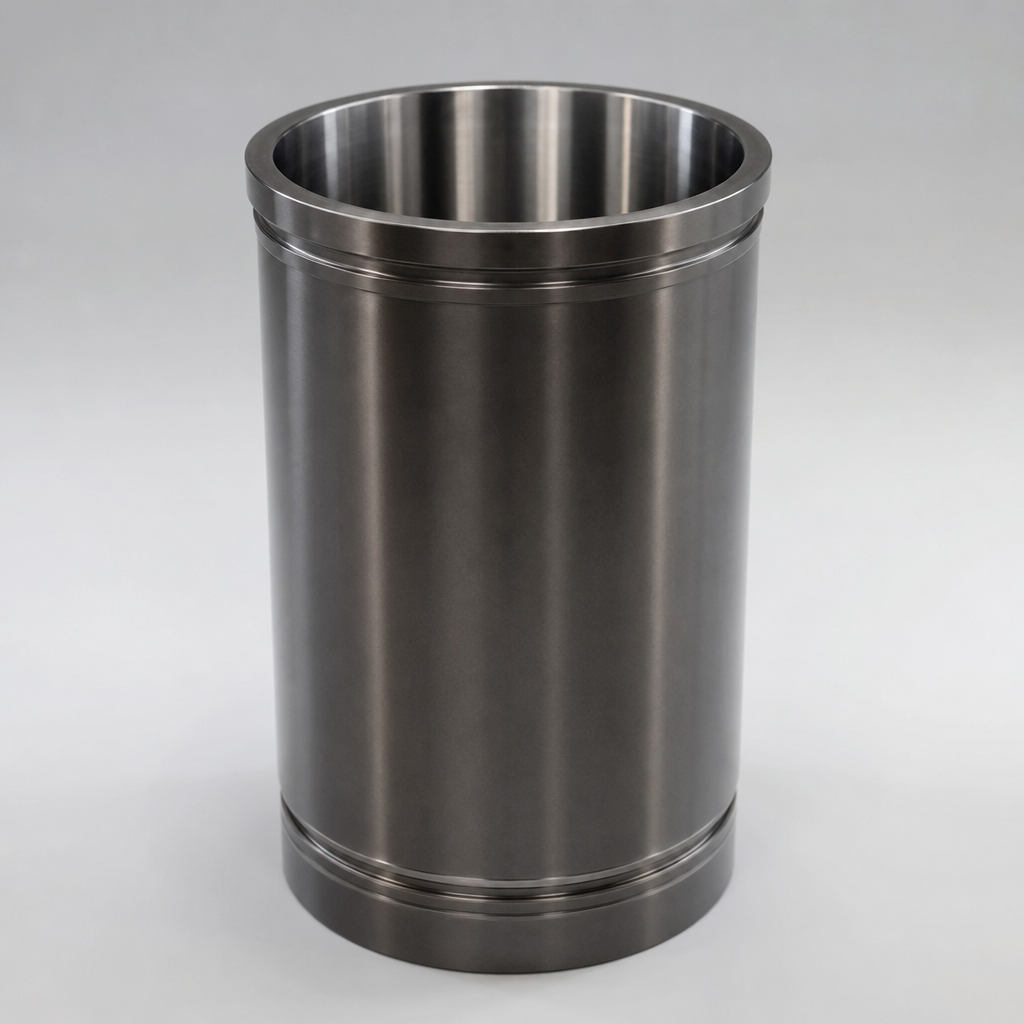
Common material routes include grey cast iron for rigidity and wear resistance (e.g., EN-GJL-250, hardness 180–220 HB), and aluminium alloy for reduced mass (e.g., A356-T6, density 2.7 g/cm³), usually with liners or an approved bore-surface solution depending on the original design. The correct route depends on the engine family and the original block concept. Driventus does not substitute material systems without engineering review and buyer confirmation.
A typical control plan covers:
Process stage
Procurement check
Typical evidence to request
Incoming alloy charge
Chemical composition stability (e.g., C 3.0–3.5%, Si 1.8–2.5%, Mn 0.5–0.8%)
Spectrometer report or melt record
Casting
Porosity (≤1.5% area by X-ray), shrinkage (≤0.5 mm depth), core shift (≤0.3 mm), misrun risk
Visual inspection, section check, pressure test record (e.g., 3 bar for 30 s, leak rate ≤0.1 cc/min)
Heat treatment or ageing
Dimensional stability after casting (e.g., solution treatment at 540°C for 8 h, artificial ageing at 155°C for 4 h)
Batch record and process parameters
Rough machining
Datum selection and machining allowance (e.g., 1.0 mm on bore, 0.5 mm on deck)
In-process dimension sheet
Finish machining
Bore diameter (e.g., 83.0 mm ±0.025 mm), taper (≤0.010 mm), roundness (≤0.010 mm), deck flatness (≤0.05 mm over 200 mm), main housing alignment (≤0.03 mm concentricity), threads (class 6H for metric, class 2B for UNC)
Final inspection report with critical dimensions
Cleaning
Removal of chips (≤0.5 mm), sand (≤100 µm), and abrasive residue (≤50 µm)
Cleanliness check (e.g., gravimetric analysis, ≤10 mg per gallery) and air-flow or oil-gallery verification (e.g., 2 bar air flow, no blockage)
Packing
Corrosion (VCI paper, ≤30 days outdoor exposure), impact (carton edge crush ≥15 kN), and surface protection (foam or bubble wrap)
Packing standard and drop or handling review (e.g., 1 m drop test, no damage)
</tr></thead><tbody> </tbody></table>For machined blocks, buyers should define measurable tolerances rather than rely on phrases such as “standard quality” or “OE quality”. Critical dimensions normally include cylinder bore diameter, taper and roundness, deck flatness and surface finish (Ra 0.8–1.6 µm), main bearing bore alignment, cam carrier or accessory mounting references, thread depth (e.g., M10x1.5, depth 15 mm ±0.5 mm), dowel position (e.g., 10 mm diameter, ±0.05 mm true position), oil passage condition, and plug fitment. Where drawings are unavailable, sample-based reverse engineering and first-article approval should be agreed before bulk production.
Spec deep-dive: What a compliant quality system actually looks like
Wholesale engine block sourcing requires a quality system that can control repeat production, batch traceability, document retention, and corrective action. Driventus operates under IATF 16949:2016 and ISO 9001:2015 systems. These standards do not replace part-specific validation, but they give procurement teams a framework for process control, risk review, gauge management, supplier control, and non-conformance handling.
Importers should also consider the regulatory environment of the destination market. For the EU, REACH (EC) No 1907/2006 is relevant to substance-control obligations (e.g., lead content ≤0.1% by weight in homogeneous materials). Packaging may need to comply with destination-specific wood-treatment rules, commonly based on ISPM 15, when wooden crates or pallets are used. Emissions regulations such as ECE R-83 apply to vehicles and systems, not to a bare replacement block by itself; however, the consistency of the engine block can affect the performance and durability of the assembled engine.
A distributor or OEM-service buyer should review the supplier’s quality system before approving routine orders. Practical audit questions include:
Are casting, machining, cleaning, and packing carried out in controlled locations?
Are critical dimensions linked to a documented control plan?
Can each batch be traced to casting date, machining lot, and inspection record?
How are non-conforming castings or machined blocks identified and segregated?
What is the response time for an 8D corrective action report (target ≤5 business days)?
Are CMMs, bore gauges, thread gauges, and other measuring tools calibrated on a documented schedule (e.g., annual calibration, ±0.005 mm accuracy)?
Is the packing method controlled by part number, weight, and shipping mode?
For higher-volume programmes, a factory audit can include a process walk-through, gauge verification, inspection-record sampling, warehouse review, packaging trial review, and a review of previous corrective actions. The goal is not only to approve one shipment, but to verify that the same specification can be repeated over time.
Step-by-step: From enquiry to repeat shipment without surprises
For engine block Alfa Romeo wholesale procurement, MOQ depends on the casting route, machining complexity, packaging requirement, and whether the item is already tooled and validated. Existing developed references can often be supplied in lower trial quantities (e.g., 10–25 units), while new or modified blocks require higher planning volume (e.g., 200–500 units) to cover pattern work, fixtures, machining programmes, inspection gauges, and casting preparation.
A typical sourcing sequence is:
1. Application confirmation: the buyer provides fitment data, sample, drawing, or cross-reference. 2. Technical review: Driventus checks casting feasibility, machining scope, accessory content, and inspection points (typically 2–4 weeks). 3. Quotation: unit price, MOQ, tooling cost if any (e.g., $5,000–$15,000 for new patterns), lead time, packaging, payment terms, and Incoterms are confirmed. 4. Sample or first article: dimensional inspection, material checks, and packing confirmation are completed before bulk release (typically 4–8 weeks). 5. Mass production: casting, machining, cleaning, inspection, and packing follow the agreed control plan (lead time 6–12 weeks for first order, 4–8 weeks for repeat orders). 6. Pre-shipment review: packing list, inspection summary, photos, label details, and logistics documents are prepared.
Indicative planning ranges are shown below. Final values depend on the exact block type, order quantity, documentation level, and destination.
Order type
Typical MOQ consideration
Lead-time driver
Existing machined block
10–25 units for trial
Stock status and machining schedule (4–6 weeks)
Existing casting, new machining variant
100–300 units
Fixture, CNC programme, and dimensional validation (8–12 weeks)
New casting development
200–500 units
Pattern, casting trial, machining trial, and approval cycle (12–20 weeks)
Distributor private-label packing
MOQ linked to packaging print (e.g., 500–1,000 units)
Carton, label, pallet, and artwork configuration (2–4 weeks additional)
</tr></thead><tbody> </tbody></table>For importers consolidating multiple engine parts, mixed-container planning can reduce freight cost per unit and improve replenishment frequency. Blocks are heavy, high-value machined parts (e.g., 20–40 kg each), so loading plans should account for pallet footprint (e.g., 1.2 m x 1.0 m), gross weight (e.g., 1,000 kg per pallet), carton strength (edge crush ≥15 kN), container weight limits (e.g., 28,000 kg for a 20-ft container), and the risk profile of LCL handling.
Audit scenario: What to look for on the factory floor
A supplier audit should test whether the factory can repeat the same block specification over multiple production batches. A clean showroom is less important than evidence at the casting line, machining cells, cleaning area, inspection room, and packing station. For Alfa Romeo-fitment block programmes, the audit should focus on process discipline and traceable records rather than general claims.
Procurement teams can use this checklist during on-site or remote audits:
Engineering data control: revision history, drawing control (e.g., latest revision date), controlled samples, and approval records.
Casting control: melt records (e.g., temperature 1,450–1,550°C for iron), mould and core handling (e.g., core assembly tolerance ±0.2 mm), rejection logs (e.g., ≤5% scrap rate), and traceability marks (e.g., date code, mould number).
Machining capability: CNC equipment list (e.g., 5-axis machining centres, accuracy ±0.005 mm), fixture control (e.g., hydraulic clamping, repeatability ±0.01 mm), tool-life management (e.g., tool change after 100 parts), datum strategy, and programme control (e.g., version-controlled G-code).
Critical measurement: CMM (e.g., accuracy ±0.002 mm), bore gauges (e.g., resolution 0.001 mm), surface plate (grade 0, flatness ≤0.005 mm), roughness tester (e.g., Ra 0.8–1.6 µm), thread gauges (e.g., class 6H go/no-go), and calibration status (e.g., annual calibration, traceable to national standards).
Cleanliness control: oil-gallery cleaning method (e.g., high-pressure water jet at 200 bar, then air blow at 6 bar), chip removal process (e.g., magnetic separator, ≤50 µm), air blow procedure (e.g., 30 s per gallery), and plug verification (e.g., torque check at 20 Nm).
Leak or pressure checks: applied where the design, customer drawing, or buyer specification requires them (e.g., 3 bar for 30 s, leak rate ≤0.1 cc/min).
Packing validation: corrosion protection (e.g., VCI paper, 30 days outdoor exposure), edge and deck-face protection (e.g., foam inserts, 10 mm thickness), pallet restraint (e.g., stretch wrap, 5 layers), moisture control (e.g., desiccant packs, 10 g per carton), and handling labels (e.g., “fragile”, “this side up”).
Driventus can support remote audits with process photos, inspection templates, calibration summaries, packing examples, and video review where commercially appropriate. For buyers needing part development beyond an existing catalogue reference, custom manufacturing can be used for sample-based engineering, drawing conversion, tooling, prototype review, and controlled first-article inspection.
Q&A: Which validation records actually protect your shipment?
A wholesale engine block order should not rely on a verbal fitment promise. Buyers should request a validation file that is proportionate to order value, application risk, and the warranty expectations of the destination market. For a distributor launch, this may include a first-article inspection report and packing confirmation. For a repair-chain or programme supply, the file should be broader and linked to batch traceability.
Recommended documentation includes:
First Article Inspection Report for critical dimensions (e.g., bore diameter, deck flatness, main housing alignment, with actual vs. nominal values and tolerances)
Material composition report for the casting batch (e.g., EN 10204 3.1 certificate, with C, Si, Mn, P, S percentages)
Hardness test record where specified (e.g., Brinell 180–220 HB for grey iron, 5 readings per block)
Deck flatness and surface finish data (e.g., Ra 0.8–1.6 µm, flatness ≤0.05 mm over 200 mm)
Cylinder bore diameter, taper, and roundness data (e.g., 83.0 mm ±0.025 mm, taper ≤0.010 mm, roundness ≤0.010 mm)
Main bearing housing alignment and diameter check (e.g., 65.0 mm H6, concentricity ≤0.03 mm)
Thread and dowel-position verification (e.g., M10x1.5, depth 15 mm ±0.5 mm; dowel 10 mm diameter, true position ±0.05 mm)
Oil and coolant passage cleaning confirmation (e.g., gravimetric analysis, ≤10 mg per gallery; air flow test at 2 bar)
Pressure or leak test result where applicable to the design and specification (e.g., 3 bar for 30 s, leak rate ≤0.1 cc/min)
Packing specification with carton, crate, or pallet dimensions (e.g., 1.2 m x 1.0 m x 1.0 m pallet, 4 blocks per pallet)
Batch traceability label format (e.g., date code, batch number, part number, quantity)
For warranty control, the block should carry a batch identifier that links back to production and inspection records. This does not need to be a visible consumer-facing code, but it should be durable and accessible enough for distributor receiving checks. Buyers should also confirm whether the block is supplied bare, with core plugs and dowels, or with additional fitted items. Misunderstanding this scope can create receiving disputes, assembly delays, and unnecessary warranty claims.
When the block will be sold through a distributor network, it is also useful to agree on a receiving inspection method. A simple checklist covering carton condition, label accuracy, visible corrosion, plug presence, deck protection, and batch-code readability can prevent small logistics issues from becoming technical disputes.
Comparison: Why logistics terms can make or break landed cost
Engine blocks have high mass (e.g., 20–40 kg each), machined sealing surfaces, threaded holes, and internal galleries that must remain clean. Logistics planning therefore matters as much as unit price. A low ex-works price can become expensive if blocks arrive with damaged deck faces, rusted bores, cracked cartons, missing plugs, or contamination caused by unsuitable packing.
Commercial points to clarify before purchase order release:
Topic
What to specify
Why it matters
Incoterms
EXW, FOB Shanghai, CIF Hamburg, DAP warehouse or agreed term
Defines cost, responsibility, and risk transfer
Packing
Single unit (carton, 25 kg max), palletised crate (1,200 kg max, 4 blocks), wooden crate (ISPM 15), VCI protection (30 days)
Reduces corrosion and impact risk
Labelling
Part number, batch code, quantity, gross weight, country of origin (e.g., “Made in China”)
Supports warehouse receiving and traceability
Inspection
Pre-shipment report (dimensional, with photos), sampling method (e.g., AQL 1.0, normal level II)
Reduces receiving uncertainty
Claims process
Evidence required (photos, inspection report), response time (≤5 business days), containment method (replacement or credit)
</tr></thead><tbody> </tbody></table>For markets such as the EU, UK, US, Canada, Australia, and Brazil, importers should review customs classification (HS 8409.91), local labelling rules, product-liability expectations (e.g., EU Directive 85/374/EEC), and distributor warranty terms before confirming the shipment plan. Driventus can provide commercial invoices, packing lists, country-of-origin documents where applicable, inspection summaries, and technical support documents according to agreed order conditions. Buyers should confirm any market-specific declaration requirements before production, not after shipment.
Risk control is strongest when commercial and technical requirements are aligned in the purchase order. The PO should reference the approved drawing or sample, packaging method, inspection document set, accessory content, and agreed claim-handling procedure.
How Driventus supports wholesale supply
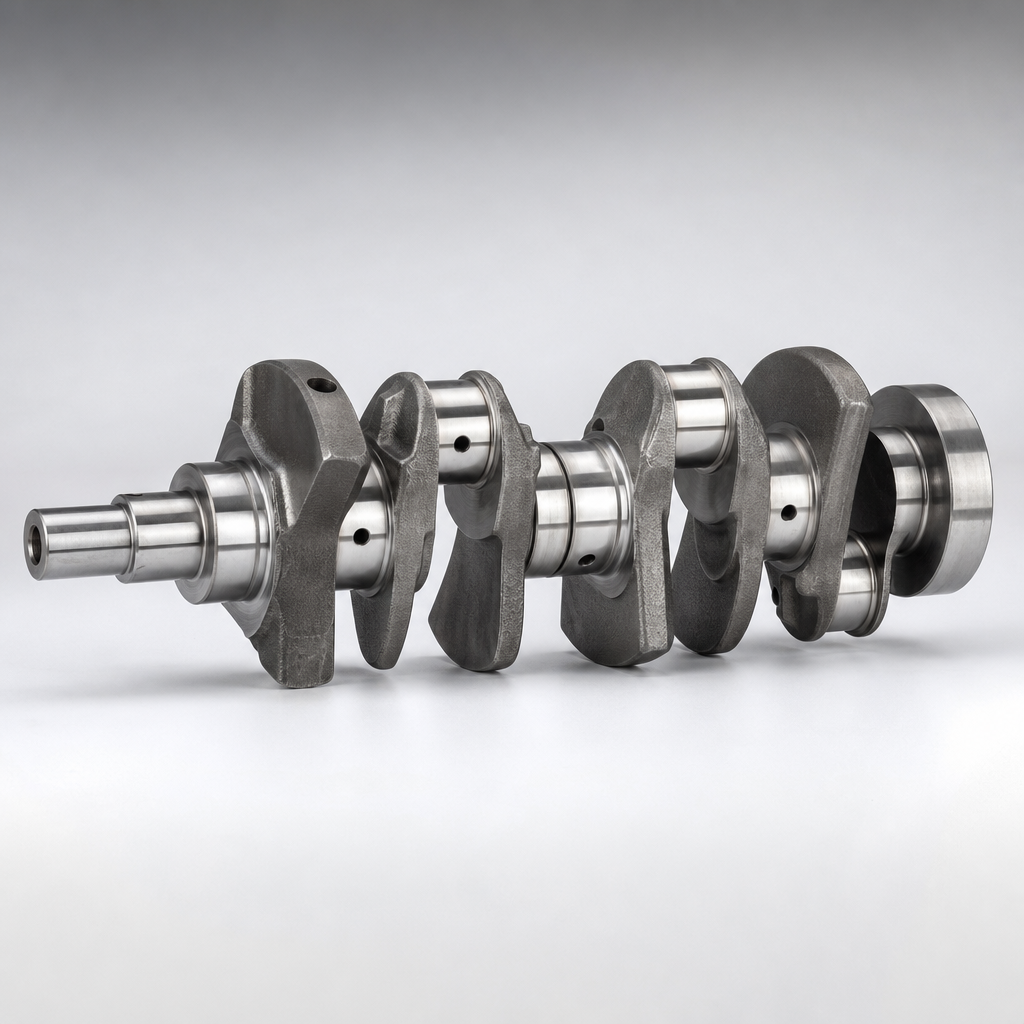
Driventus manufactures engine and powertrain components including pistons, crankshafts, gaskets, water pumps, turbochargers, and engine blocks. For engine block Alfa Romeo wholesale enquiries, our role is to help buyers turn fitment demand into controlled supply: confirm the technical reference, define the manufacturing route, validate samples, document the inspection standard, and maintain repeatable shipments.
The supply model can support:
Aftermarket distributors launching or expanding European engine coverage (e.g., 50–500 units per year)
OEM/Tier-1 related buyers requiring controlled documentation for non-branded programmes (e.g., IATF 16949, PPAP level 3)
Private-label programmes that need structured packing, labels, and traceability (e.g., MOQ 500 units, custom carton printing)
We do not state or imply vehicle manufacturer approval. Driventus is an independent aftermarket manufacturer; brand names are referenced for fitment only. Our commercial team can review your application list, forecast, packing requirement, documentation needs, and inspection expectations before quotation. To start a sourcing discussion, use request a quote with available part references, target annual volume, required delivery market, and any sample or drawing information.
Frequently asked questions
Yes. Supply depends on the exact engine family, block configuration, machining condition, accessory scope, and forecast. Buyers should provide fitment data, samples, drawings, or OE-style cross-references where available so the technical team can confirm feasibility before quotation. Typical MOQ ranges from 10 units for trial orders to 500 units for new casting development.
Buyers should review IATF 16949:2016 and ISO 9001:2015 quality management coverage, then verify part-specific controls such as material reports (EN 10204 3.1), first-article inspection (dimensional, with CMM data), gauge calibration (annual, ±0.005 mm accuracy), batch traceability (date code, batch number), cleanliness checks (gravimetric, ≤10 mg per gallery), and corrective-action procedures (8D report within 5 business days).
Private-label packaging can be discussed for wholesale programmes. MOQ may depend on carton printing (e.g., 500 units), label format, pallet configuration, artwork approval, and destination requirements. Technical labelling and traceability information should remain clear for warehouse and warranty control.
No approval or endorsement is claimed. Driventus is an independent aftermarket manufacturer; brand names are referenced for fitment only. Buyers should validate part suitability against their own application data, installation requirements, and market regulations.
If you are planning engine block sourcing for distributor or repair-chain supply, send your fitment list, annual forecast, destination market, and documentation requirements. Driventus can review feasibility and respond with a structured quotation at /contact.html