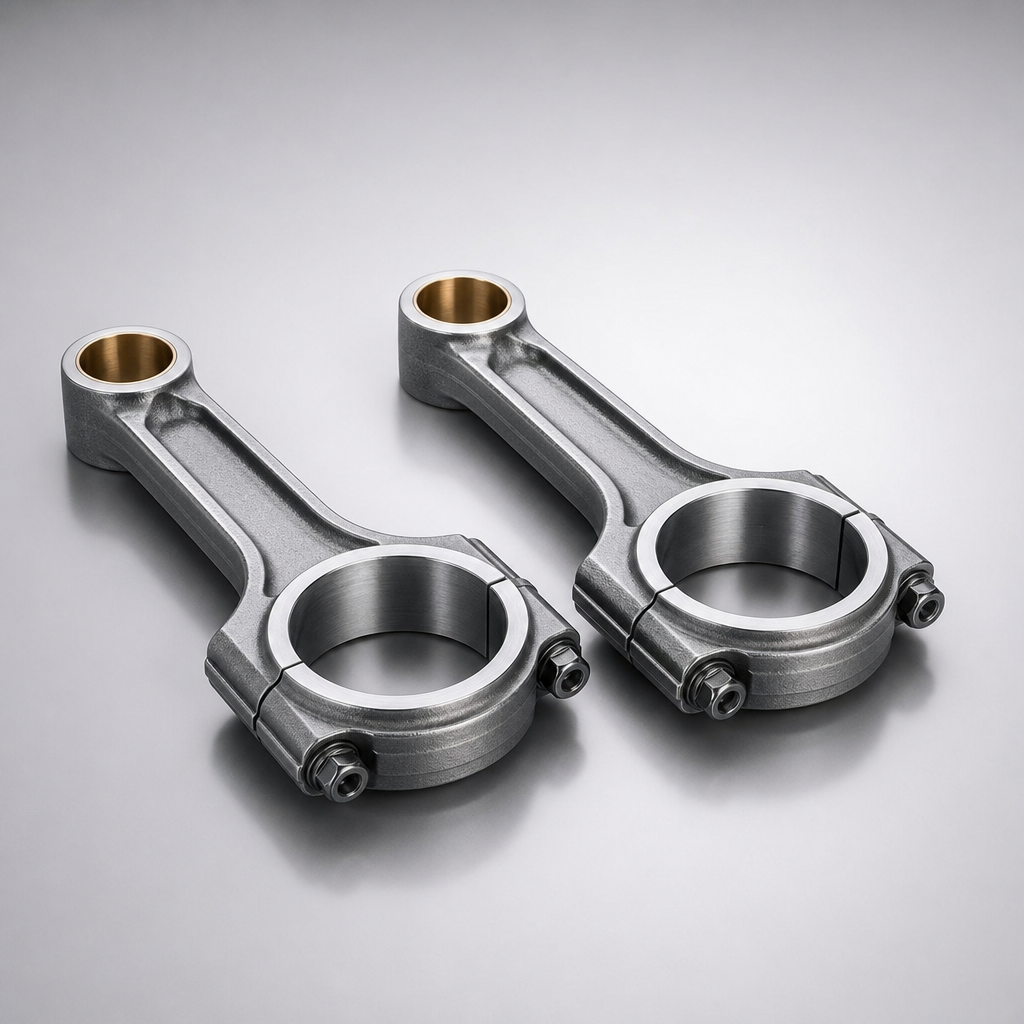
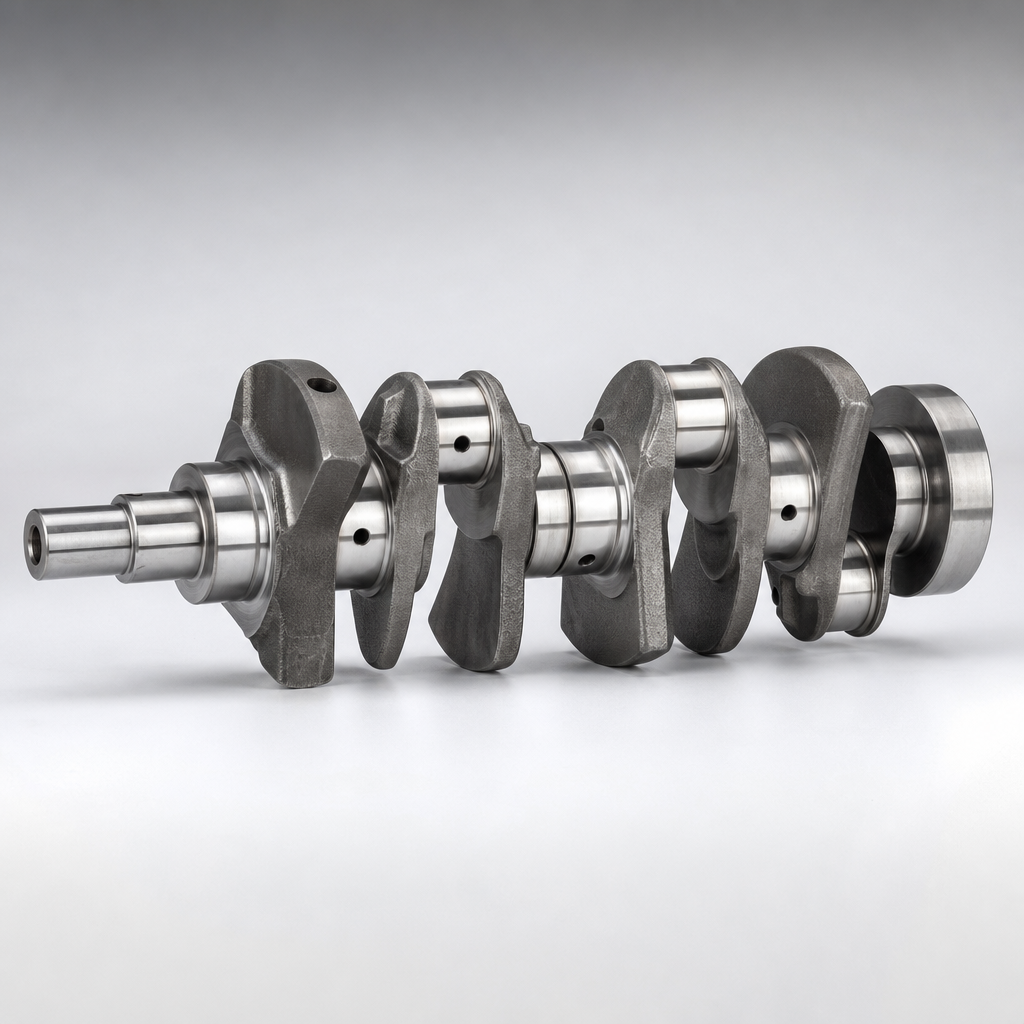
REACH compliance for crankshaft sourcing is more than a paperwork request at the end of a purchase order. For EU and UK importers, a crankshaft is normally treated as an article under chemical legislation, so the key obligations often relate to Substances of Very High Concern (SVHCs), restricted substances, coating chemistry, rust-preventive oils, packaging materials, accessories and traceable supplier declarations. Buyers outside Europe increasingly ask for the same evidence because distributors may sell from one global stock pool into several regulated markets. This guide gives procurement teams a practical way to verify REACH compliance for crankshaft programmes, covering forged and cast parts, supplier documentation, higher-risk chemistry points, audit checks, and how to connect compliance evidence with PPAP, quality systems and incoming inspection. Driventus is an independent aftermarket manufacturer; brand names are referenced for fitment only.
1. Decision Framework: When Does REACH Apply to a Crankshaft?
REACH (EC) No 1907/2006 applies to chemical substances, mixtures and articles placed on the EU market. A crankshaft is normally considered an article because its function is determined primarily by its shape, surface and design rather than by its chemical composition. That classification does not remove the importer’s duties. If any SVHC on the Candidate List is present above 0.1% weight by weight in the article, information may need to be communicated under Article 33.
UK buyers should also account for UK REACH. Since Brexit, the EU and UK regimes can differ in substance lists, administrative requirements and timing. Procurement specifications should therefore state the destination clearly: EU, Great Britain, Northern Ireland where relevant, the UK as a whole, or multiple markets. For distributors serving mixed markets, the safer approach is to collect documentation that can support both EU REACH and UK REACH wherever possible.
A crankshaft compliance review should cover the article as supplied, not only the steel or iron substrate. The delivered scope may include:
Forged steel or nodular cast iron base material
Surface hardening or heat-treatment residues, where relevant
Anti-corrosion oil, wax or other temporary protective film
Phosphate, black oxide or other conversion coating, if specified
Thread protectors, plugs, caps or transport sleeves supplied with the part
Plastic bags, VCI paper, cartons, wooden pallets and labels
Any service kit components packed together with the crankshaft
This early scope definition prevents a common sourcing error: approving the metal component while leaving the preservative, packaging or accessory chemistry undocumented. For buyers comparing suppliers, it is useful to combine compliance screening with engineering and commercial checks. Driventus lists crankshafts and related engine components in our catalog, and project-specific crankshaft programmes can be reviewed through custom manufacturing.
2. Failure Mode Analysis: Where Compliance Gaps Hide in Crankshaft Production
A REACH review starts with a controlled bill of materials and process route, even when the crankshaft is sold as a single component. Procurement teams should request a material and process declaration that identifies each relevant material, surface layer, preservative and packaging item that remains with the part at shipment.
Typical crankshaft production may include steel forging or casting, rough machining, heat treatment (e.g., induction hardening to 52–58 HRC, case depth 2–4 mm), straightening (runout tolerance ≤0.05 mm), finish machining (main journal diameter tolerance ±0.013 mm, surface finish Ra ≤0.4 µm), fillet rolling, grinding, washing, rust prevention and packing. Not every operation leaves a regulated substance on the finished article, but each step can introduce a chemistry risk or a documentation gap.
Packaging declaration, wood treatment record if applicable (ISPM 15)
</tr></thead><tbody> </tbody></table>The declaration should confirm whether the supplier evaluates the complete supplied article, not only the machined blank. For example, a crankshaft packed in VCI paper may be dimensionally correct and well protected, but it can still create a compliance gap if the packaging supplier has not provided current SVHC information.
Driventus manages engine component production under a documented quality system, with incoming material traceability, process control and final inspection records aligned to IATF 16949:2016 and ISO 9001:2015 principles.
3. Comparison: Strong vs. Weak Supplier Declarations
A useful compliance file is specific, dated and linked to the part number, product family or drawing revision. Generic statements such as “REACH compliant” are weak if they do not identify the SVHC list version, article scope, legal entity and review basis.
For crankshaft sourcing, buyers should request the following documents before supplier nomination or the first purchase order:
Signed REACH declaration covering REACH (EC) No 1907/2006.
SVHC declaration stating whether any SVHC exceeds 0.1% w/w in the supplied article.
UK REACH statement where the goods may enter Great Britain.
Safety Data Sheets for rust-preventive oil, relevant cleaning residue risk, VCI material and any coating mixture supplied with or on the part.
Material certificate for each heat or batch, with chemical composition and mechanical property reference where applicable.
Process flow chart identifying outsourced coating, heat treatment, nitriding or surface treatment operations.
Packaging material declaration for VCI paper, plastic bags, cartons and pallets.
A strong supplier declaration should include the product family, part numbers or drawing numbers, regulation cited, SVHC Candidate List date reviewed (e.g., June 2025 update), threshold basis (0.1% w/w per article), responsible company and contact person. It should also explain the review method, such as supplier material declarations, SDS review, internal material controls and packaging supplier confirmations.
What to Reject or Clarify
Procurement teams should reject or question declarations that are undated, unsigned, not linked to parts, limited to “raw material only”, or based on obsolete SVHC lists (e.g., pre-2023). If the supplier cannot confirm the rust-preventive oil, coating chemistry or packaging materials, the file is not complete for an imported crankshaft as shipped.
4. Step-by-Step: Auditing High-Risk Chemistry Points on a Crankshaft
The machined crankshaft substrate is often a lower chemical risk than coatings, preservatives, plastic accessories and packaging. Still, buyers should not assume that iron or steel automatically eliminates REACH risk. The correct approach is to review the full manufacturing and shipment route.
High-risk points include:
1. Rust-preventive oils and waxes: Some products may contain additives (e.g., boric acid, amines) that require SVHC or restriction screening. SDS review is essential, but an SDS alone is not a complete article declaration. Request application weight (e.g., 0.5–2.0 g/m²) and film thickness tolerance. 2. Black oxide, phosphate or other conversion coatings: If specified, confirm the coating supplier, bath chemistry (e.g., manganese phosphate per MIL-DTL-16232G, coating weight 5–15 g/m²) and residual substances on the delivered part. 3. Surface treatment subcontractors: Heat treatment, nitriding and coating suppliers should be covered by the manufacturer’s supplier approval and change-control process. 4. VCI packaging: Volatile corrosion inhibitors vary by formulation. Importers should request a packaging declaration and SDS where available. Confirm VCI emission rate (e.g., 0.1–0.5 g/m²/day at 20°C). 5. Thread protectors and plastic caps: Plastic accessories can introduce phthalate or other additive concerns if not controlled. Request material declaration (e.g., PE, PP, PA6) and SVHC screening. 6. Wood packaging: This is not a REACH issue in the same way as chemical substances in articles, but international shipment may require ISPM 15 treatment and marking (heat treatment to 56°C core for 30 min).
A crankshaft may also be sold as part of an engine repair kit. If bearings, thrust washers, seals, fasteners, lubricants or installation compounds are included, each additional article or mixture needs its own review. Buyers should define whether the purchase order covers a bare crankshaft, a protected and packaged crankshaft, or a complete kit.
Driventus can supply crankshafts as standard aftermarket references or under customer drawings. Where a programme requires a specific coating, storage oil, corrosion protection period (e.g., 12 months indoor storage) or private-label packaging, the compliance documentation should be agreed during quotation, not after shipment.
5. Spec Deep-Dive: Integrating Compliance into Supplier Qualification
The strongest process treats chemical compliance as part of supplier qualification, not as an emergency request triggered by customs, a customer audit or a marketplace platform. The checklist below can be used by category buyers, sourcing engineers and import managers when comparing crankshaft suppliers.
Step
Buyer action
Acceptance point
1
Identify destination market
EU REACH, UK REACH, or customer-specific substance requirements are named in the RFQ
2
Define article scope
Bare crankshaft, protected part, packaged part, or kit is stated
3
Request declarations
Current SVHC and REACH statements are linked to part numbers or drawings
4
Review SDS files
Rust-preventive oil, VCI and coating mixtures are checked
5
Verify change control
Supplier must notify material, coating, oil or packaging changes before shipment
6
Link to quality records
Heat traceability, inspection reports and process flow are available
7
Audit high-risk processes
Outsourced coating, heat treatment and packaging suppliers are controlled
8
Store evidence
Compliance file is kept with purchase order, drawing and batch records
</tr></thead><tbody> </tbody></table>For OEM and Tier-1 related programmes, chemical compliance should sit beside PPAP-style evidence such as dimensional reports (e.g., main journal Ø 50.000 ±0.013 mm, runout ≤0.03 mm), material certificates, process flow, control plan, FMEA where required and measurement system analysis (GR&R ≤10%). IATF 16949:2016 expects organisations to address customer-specific requirements and statutory and regulatory requirements for supplied products. ISO 9001:2015 also requires control of externally provided processes, products and services.
A supplier that separates “quality” from “compliance” can create avoidable gaps. The same change that affects REACH data, such as switching rust-preventive oil or VCI paper, may also affect corrosion protection, shelf life, cleanliness and customer packaging standards.
6. Scenario: Verifying Documentation Against a Physical Shipment
Documentation should be checked against the first article shipment and then maintained through periodic review. Importers can use a receiving checklist to confirm that the shipment matches the approved compliance file.
For each shipment, verify:
Supplier name and manufacturing site match the approved source.
Part number, drawing revision and purchase order match the declaration.
Batch, heat or lot identification is present and traceable.
Surface protection matches the approved rust-preventive oil, wax or coating (e.g., oil film thickness 0.5–2.0 g/m²).
Packaging materials match the declared method (e.g., VCI paper 40 g/m², PE bag 0.08 mm).
No unapproved accessories, plugs, oils, labels or kit components have been added.
Material certificate and inspection report are supplied if required by the contract.
Incoming inspection should still focus on crankshaft function: main journal diameter (tolerance ±0.013 mm), rod journal diameter (tolerance ±0.013 mm), stroke (tolerance ±0.05 mm), runout (≤0.03 mm), thrust width (tolerance ±0.05 mm), fillet radius (e.g., 2.5 ±0.2 mm), hardness (52–58 HRC), surface roughness (Ra ≤0.4 µm), oil-hole finish and cleanliness (e.g., particle count ≤50 mg per part). Chemical compliance does not prove dimensional conformity. Equally, a crankshaft can pass all dimensional checks while lacking the documentation needed for regulated markets.
For aftermarket distributors, OE cross-reference data should be used carefully. References such as OE 06A… or OE 11251… can help identify fitment families when already present in a customer specification, but they do not replace drawings, samples, approved specifications or compliance declarations. Driventus is an independent aftermarket manufacturer; brand names are referenced for fitment only.
7. Q&A: Contract Terms and Update Frequency for Crankshaft Compliance
REACH compliance for crankshaft procurement should be written into the RFQ, purchase agreement and quality agreement. Clear contract terms reduce ambiguity when the SVHC Candidate List changes or when a sub-supplier changes a preservative, coating or packaging formulation.
Recommended contract language should cover:
Compliance with REACH (EC) No 1907/2006 for EU-destined goods.
UK REACH statement where relevant.
Article 33 communication if any SVHC exceeds 0.1% w/w.
Supplier duty to notify changes before implementation.
Annual or semi-annual renewal of SVHC declarations.
Immediate notification when a newly added SVHC affects supplied parts.
Access to supporting SDS, material declarations and packaging declarations.
Audit rights for critical processes such as coating, heat treatment and packaging.
For long-running crankshaft programmes, buyers should set a calendar reminder to refresh declarations after SVHC Candidate List updates. The European Chemicals Agency typically updates the Candidate List twice per year, and procurement teams should not rely on a declaration from several years ago without confirming that it has been reviewed against the current list.
If a supplier cannot provide updated documentation, the buyer may need to quarantine stock for restricted markets, request substitute packaging or surface protection, complete further supplier investigation, or move production to an approved source. These actions are less disruptive when expectations are included in the original sourcing file.
8. Practical Sourcing Checklist for Importers
Use this checklist when evaluating a crankshaft supplier for EU, UK or global distribution channels.
RFQ stage
State the destination market and required chemical legislation.
Define part scope: bare crankshaft, protected part, packaged part or kit.
Request current REACH and SVHC declarations (list version, e.g., June 2025).
Ask for SDS of rust-preventive oil, VCI material and coatings.
Request process flow and a list of outsourced special processes.
Confirm IATF 16949:2016 and ISO 9001:2015 certification status where applicable.
Request MOQ (e.g., 100–500 pcs per variant), lead time (e.g., 8–12 weeks for first order, 4–6 weeks for repeat), and price break (e.g., €50–€80 per piece for forged steel, depending on volume and finish).
Sample stage
Check that sample packaging matches the intended production shipment.
Review material certificate and dimensional report (e.g., main journal Ø 50.000 ±0.013 mm, runout ≤0.03 mm).
Confirm surface protection does not conflict with customer storage, cleaning or assembly requirements.
Verify that all documents refer to the same part number, drawing or approved product family.
Production stage
Require change notification before changes to material, coating, oil, packaging or sub-supplier.
Maintain batch traceability and shipment records.
Refresh SVHC declarations on a defined schedule (e.g., annually or after each Candidate List update) and after relevant list updates.
Keep compliance documents with the purchase order, invoice and import file.
Driventus supplies crankshafts and related engine components for aftermarket distribution and customer-specific manufacturing projects. Buyers can review standard families in our catalog, discuss drawing-based crankshaft requirements through custom manufacturing, and request a quote with the compliance documentation needed for the target market.
Frequently asked questions
In most cases, yes. A crankshaft is generally an article because its shape and design determine its function. Importers still need SVHC information, especially for coatings, rust-preventive oils, packaging and any accessories supplied with the part.
No. An SDS is useful for mixtures such as rust-preventive oil or coatings, but buyers should also request a signed REACH/SVHC declaration linked to the crankshaft part number, drawing or product family.
Many importers request annual updates, plus additional updates after Candidate List changes. For high-volume or regulated customer programmes, semi-annual review may be appropriate, especially where packaging, coatings or preservatives may change.
Yes, Driventus can provide part-linked declarations, material certificates and relevant supporting documents according to the purchase specification. Requirements should be stated during RFQ so the correct article scope and target market are covered.
For crankshaft sourcing, share the target market, drawing or sample reference, packaging requirement and documentation checklist. Driventus can review the programme and provide a practical response through /contact.html