A cylinder sleeve Peugeot supplier should be judged on fit risk, repeatability and documentation—not just the piece price. The part is simple to look at, but a small error in bore geometry, interference fit, liner protrusion, flange height or metallurgy can create installation failures and warranty claims across an entire repair programme.
For Peugeot-related engine rebuilding, B2B buyers may need diesel and petrol applications, wet and dry sleeve designs, flanged liners, semi-finished blanks, finished honed sleeves and service overbore sizes such as +0.25 mm, +0.50 mm and +1.00 mm where the engine programme allows.
Driventus manufactures engine and powertrain components in Taizhou, Zhejiang for B2B customers in more than 60 countries. Our cylinder sleeve programmes support aftermarket distributors, importers, repair chains and OEM/Tier-1 buyers that need documented production control, batch traceability, practical MOQs and clear export terms. Driventus is an independent aftermarket manufacturer; brand names are used for fitment identification only.
Start With the Failure You Cannot Afford
A cylinder sleeve creates the running surface for the piston ring pack, transfers combustion heat to the block or coolant jacket, and restores worn, scored or cavitation-damaged bores during rebuilding. When it is wrong, the engine usually tells you quickly: oil consumption, blow-by, piston scuffing, coolant leakage, poor compression or head gasket sealing issues.
That is why supplier selection should begin with the likely failure modes, not the catalogue description.
Key risks to eliminate:
Wrong application match: Peugeot model names are not precise enough. A single model range can use multiple engine families, and the same engine may appear in passenger cars, light commercial vehicles, fleet vehicles and export-market variants.
Uncontrolled dry-sleeve fit: incorrect OD or interference can cause block damage, sleeve movement, distortion or poor heat transfer.
Incorrect wet-liner protrusion: flange and protrusion errors can affect head gasket clamping and coolant sealing.
Poor bore geometry: roundness, cylindricity and ID variation can cause ring sealing problems and high oil consumption.
Weak material control: unstable hardness or graphite structure can lead to premature wear, machining issues or scuffing.
Bad packing: sleeves are compact but heavy. Poor separation can dent flanges, damage chamfers and allow corrosion during sea freight.
Before asking for price, confirm the product definition:
Sleeve type: dry, wet, flanged or semi-finished blank.
Engine code, bore specification and target market.
Material grade, hardness range and casting method, typically centrifugal cast iron or alloyed cast iron.
Nominal bore, outside diameter, length, flange diameter and flange thickness in mm.
Interference or fit condition for dry sleeves, defined by drawing where possible.
Liner protrusion target for wet/flanged liners, often controlled in the 0.03–0.10 mm range depending on engine design.
Machining allowance for semi-finished sleeves, commonly 0.30–0.80 mm on bore diameter where final honing is done by the rebuilder.
Surface roughness target after machining or final honing, specified as Ra/Rz rather than “smooth finish”.
Overbore options for the rebuilding programme.
Rust-prevention and packing suitable for 30–60 days sea freight and downstream parcel distribution.
Batch traceability by production lot and inspection record.
Spec Deep-Dive: Material, Bore Geometry and Sleeve Features
Most aftermarket cylinder sleeves for Peugeot engine repair programmes are made from centrifugal cast iron or alloyed cast iron. Common requirements include pearlitic cast iron, controlled graphite structure, hardness around HB 190–260 for many repair applications, and alloy additions such as Cr, Mo or Ni where higher wear resistance is required.
The best material choice depends on combustion load, bore size, sleeve wall thickness, whether the part is wet or dry, and whether the buyer wants a finished liner or a semi-finished component. Diesel applications usually demand stronger scuffing resistance, consistent hardness through the wall section and careful control of flange and sealing details.
Driventus typically controls the process through charge preparation and melt control, centrifugal casting, controlled cooling, rough turning, stress relief where required, finish machining, chamfering, groove machining where applicable, washing, anti-rust treatment and final inspection. Semi-finished sleeves are left for the rebuilder or machine shop to complete final boring and honing. Finished sleeves require tighter ID, surface and geometry control so they match the intended piston and ring set.
Parameter
Why buyers should care
Typical control method
Inside diameter
Controls piston clearance, compression and oil consumption
Bore gauge, air gauge or CMM sampling; finished ID often held within ±0.01–0.03 mm if drawing requires
Outside diameter
Affects press fit, block sealing and heat transfer
Micrometer and fixture inspection; OD commonly controlled within ±0.02–0.05 mm by sleeve type
Flange height
Influences head gasket clamping and liner protrusion
Height gauge and surface plate; flange height often controlled within ±0.02 mm
Roundness and cylindricity
Drives ring sealing, oil control and wear pattern
Form measurement or multi-point bore check; typical target ≤0.01–0.03 mm
Surface finish
Affects ring bedding, oil retention and break-in
Profilometer; honed surfaces may target Ra 0.4–1.2 µm depending on ring pack
Hardness
Balances wear resistance and machinability
Brinell or Rockwell test with lot records
Wall thickness
Supports heat transfer and structural stability
Ultrasonic or section sampling; eccentricity checks reduce thin-wall risk
</tr></thead><tbody> </tbody></table>Do not treat these values as universal. Exact tolerances depend on the drawing, sleeve type, installation method and supply condition. For B2B orders, Driventus can review buyer drawings, physical samples, engine data or OE part-number cross-references where available. Cross-references may be recorded in generic procurement format such as OE 06A… or OE 11251… when supplied by the customer for identification and fitment checking.
Build the Order Around the Supply Pattern, Not the Catalogue
Cylinder sleeves are not difficult to count. They are difficult to replenish cleanly when the range includes fast movers, slow movers, new references and private-label packing.
A practical order plan usually separates the programme into three groups:
1. Regular movers: stocked or repeated references suitable for smaller replenishment lots. 2. Forecast items: slower references produced on a planned schedule to avoid dead stock. 3. New or custom sleeves: sample-approved items that may require tooling, first-article inspection or special packing.
Typical commercial variables:
MOQ: usually set by sleeve reference, material batch and machining setup. Common or stocked applications may support trial orders from about 50–100 pieces per reference. Made-to-order references are often more efficient at 200–500 pieces per reference. New casting/tooling projects may require 500–1,000 pieces or an agreed tooling charge.
Price logic: unit price is driven by casting weight, alloy content, scrap rate, machining cycle time, tolerance class, final honing requirement, inspection level, packaging and annual volume. A finished honed liner normally costs more than a semi-finished sleeve because of ID control, washing and extra inspection.
Lead time: stocked or repeat references may ship in 7–15 days after order confirmation. Normal production is often 30–45 days. New tooling, first-article inspection or private-label packing can extend this to 45–70 days.
Sampling: dimensional samples can be supplied before mass production for drawing confirmation, test fitting or market validation. Sample cost and freight are normally separated from the bulk-order quotation.
Private label: carton labels, neutral packaging, barcode formats, importer-specific coding and pallet marks should be frozen before production packing starts.
Shipment mode: sea freight is preferred for volume orders. Air freight is usually reserved for urgent validation samples or small replenishment orders because sleeve weight quickly increases landed cost.
Documentation: commercial invoice, packing list, certificate of origin where applicable and inspection summary by batch.
Also confirm whether the supplier can keep part numbers and production definitions stable across repeat orders. Uncontrolled changes in chamfer design, flange geometry, machining allowance, anti-rust method or packing configuration can create returns even when the sleeve looks visually similar.
Driventus treats drawing revision, sample approval and lot traceability as part of the purchasing file, not as informal sales notes. For configured projects, buyers can discuss custom manufacturing based on drawings, samples, material requirements or target engine applications.
Audit the Process, Not Just the Certificate
A certificate is useful. It is not proof that a sleeve will fit, seal or survive in service.
Driventus operates under IATF 16949:2016 and ISO 9001:2015. These standards support documented process control, internal audits, corrective action, calibrated measuring equipment and control of nonconforming output. For procurement teams, they are the starting point for qualification.
For cylinder sleeve supply, ask how the factory controls:
Incoming material identification and charge records.
Casting batch traceability, including furnace or centrifugal casting lot.
Chemical composition checks where the project requires them, such as C, Si, Mn, Cr, Mo, Ni, P and S limits.
Heat treatment or stress-relief records where applicable.
Machining inspection plans with first-piece, patrol and final inspection frequency.
Gauge calibration status for micrometers, bore gauges, height gauges, hardness testers and profilometers.
Final inspection criteria for dimensions, burrs, cracks, porosity, rust, dents and flange damage.
Packaging and rust-prevention checks, including anti-rust oil coverage, VCI bag use or separator configuration.
Corrective action records for repeat defects.
A meaningful audit follows the part through the plant: casting area, machining line, measuring room, warehouse and export packing. The checklist should include control plan availability, inspection frequency, gauge repeatability where relevant, nonconforming-product segregation and the method used to prevent mixed references during packing.
Driventus can support remote audits with production photos, process flow charts and sample inspection reports. For higher-volume programmes, buyers may request a first-article inspection report covering key dimensions, hardness, surface finish, material confirmation and packaging photos before release. On-site audits can be arranged by buyers or third-party inspection agencies. More information about our quality system is available for sourcing teams reviewing supplier qualification.
Regional Compliance: What Importers Usually Need to Check
Cylinder sleeves are not normally regulated like complete vehicles, safety systems or emissions-control devices. Still, importers can face delays or customer onboarding problems if documentation, labels or product claims are weak.
For EU and UK programmes, buyers may request substance declarations linked to REACH (EC) No 1907/2006. Depending on the channel, additional requirements may cover packaging recyclability, wood-packing treatment status, safety data for anti-rust oils or customer restricted-substance lists. If wooden pallets or crates are used, specify ISPM 15 treatment and marking requirements before shipment.
Fitment language also matters. A cylinder sleeve is an internal engine repair component. It should not be presented as a device that changes certified emissions performance. Vehicle emissions frameworks such as ECE R-83 apply at vehicle approval level, not as direct approval for an individual sleeve.
For North American, Australian and Brazilian importers, common requirements include:
Consistent HS code classification.
Clear country-of-origin documentation.
Net weight, gross weight, material description and carton count by part number where required.
Corrosion-resistant packing for long transit.
Labels that support warehouse receiving and picking.
Defined private-label carton language, barcode format and master-carton layout.
Any customer-specific warning statements required by the sales channel.
Driventus does not claim approval or endorsement by Peugeot or any vehicle manufacturer. Driventus is an independent aftermarket manufacturer; brand names are referenced for fitment identification only.
Supplier Comparison: Price Is Only One Line in the Scorecard
A low unit price can disappear quickly if bore distortion, unstable hardness, inconsistent flange height or mixed packing creates warranty claims. Compare suppliers with measurable evidence.
Buyer criterion
Low-risk supplier evidence
Risk if not verified
Drawing control
Revision-controlled drawings, tolerance notes and sample approval
Dimensional drift between orders
Material control
Material grade, chemistry target, hardness records and batch traceability
Premature wear or machining issues
Sleeve geometry
Inspection reports for ID, OD, length, flange data, roundness and cylindricity
Poor fit, leakage or incorrect protrusion
Surface condition
Roughness target, honing pattern and visual defect criteria
Ring bedding problems and oil consumption
MOQ flexibility
Defined MOQ by reference, tooling status and order mix
Excess inventory or unstable replenishment
Price transparency
Cost logic for casting weight, machining level, packing and forecast volume
Hidden cost changes after sample approval
Audit support
IATF 16949:2016 / ISO 9001:2015 evidence and audit access
Weak corrective action process
Export packing
Anti-rust protection, separators, carton strength and pallet plan
Transit corrosion or damaged flanges
Communication
Engineering review before quotation with engine code and sample/drawing check
Wrong engine application or catalogue mismatch
</tr></thead><tbody> </tbody></table>Different buyers should weight the scorecard differently. Distributors usually need a balanced range: high-volume sleeve references stocked regularly, slower-moving references produced against forecast and custom references validated before launch. Repair chains may prioritise stable availability, predictable installation quality and low defect rate over the broadest range. OEM/Tier-1 buyers generally need deeper documentation, PPAP-style evidence where requested, defined special characteristics and strict change-control discipline.
Scenario: Launching or Replacing a Peugeot Sleeve Source
Consider a buyer adding Peugeot-related repair parts to an existing engine component range. The catalogue looks ready, but the current source has inconsistent flange dimensions and poor packing. The buyer wants fewer returns, stable part numbers and a supplier that can support future custom references.
Driventus handles this type of project in stages:
1. Application review: the buyer provides engine code, sample, drawing or existing reference list, including target bore and overbore options. 2. Technical confirmation: Driventus reviews sleeve type, key dimensions, material, finish requirement, machining allowance, liner protrusion target and packaging needs. 3. Quotation: MOQ, tooling status, unit price, packaging format, sample cost if applicable and lead time are confirmed. 4. Sample production or stock sample: sample parts are supplied for dimensional review and test fitting where applicable. For new references, this stage commonly takes 10–25 days after technical confirmation if tooling is available. 5. Buyer approval: feedback is recorded, including drawing changes, tolerance notes, marking rules, inspection points or packaging instructions. 6. Mass production: casting, machining, inspection and packing follow the approved specification. First-piece inspection is used at machining start-up, followed by in-process checks and final lot inspection. 7. Shipment and repeat supply: inspection data, lot numbers and packing details are retained to support traceability on future orders.
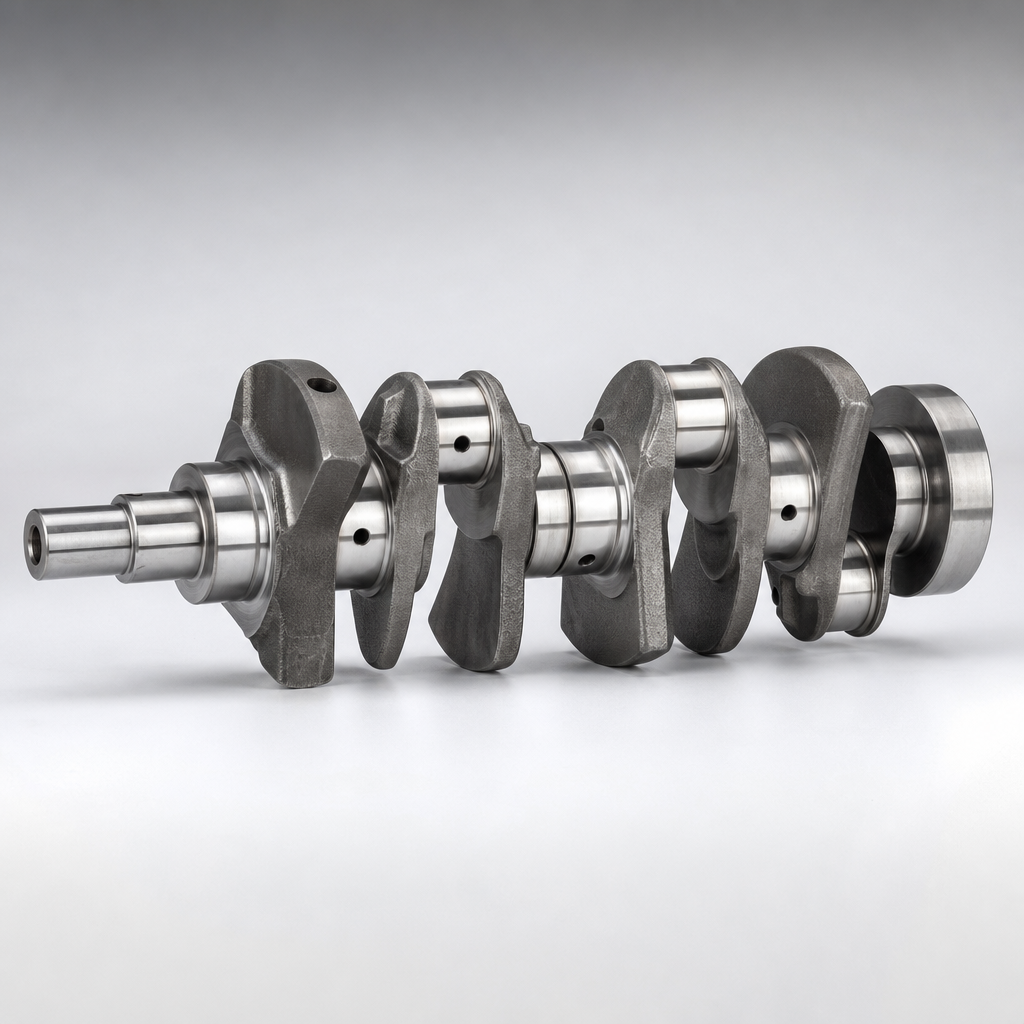
The same flow works for importers replacing an unstable supplier, repair groups standardising engine rebuild parts or buyers consolidating engine components under one manufacturer. It can also support mixed programmes that include pistons, piston rings, gaskets, water pumps, crankshafts and related engine parts.
To reduce quotation delays, send the target annual volume, current sleeve dimensions, preferred packaging, destination port, delivery term, required documents and must-meet tolerances at the first enquiry.
RFQ Checklist: Send This Before Asking for Final Price
A useful RFQ gives engineering and purchasing enough information to quote the same product the buyer actually needs. For a cylinder sleeve Peugeot supplier enquiry, include technical data even if the project is still in comparison stage.
Recommended RFQ checklist:
Engine family or engine code.
Sleeve type: wet, dry, flanged or semi-finished.
Existing reference number and any OE cross-reference if available.
Drawing or sample photos with measured dimensions in mm.
Nominal bore, OD, total length, flange diameter, flange thickness and wall thickness.
Required bore condition: rough-machined, semi-finished, finished or honed.
Required overbore sizes, such as standard, +0.25 mm, +0.50 mm or +1.00 mm where applicable.
Required tolerances for ID, OD, flange height, protrusion and roundness if not using Driventus standard control.
Required quantity by reference and forecast by quarter.
Target unit-price range or current landed-cost problem if available.
Target market: EU, UK, US, Canada, Australia, Brazil or other.
Packaging format: neutral, private label, bulk or set packing, including pieces per carton.
Inspection report requirements and sample approval method.
Required delivery term and destination port.
Any substance declaration, wood-packing, barcode or customer onboarding documents.
If only a physical sample is available, Driventus can reverse-check key dimensions and advise whether tooling or machining adjustments are required. For critical applications, buyers should validate samples in the intended engine block before releasing a production order. Driventus supplies parts for aftermarket and industrial repair channels, but final application approval remains the buyer’s responsibility.
Frequently asked questions
Yes. Driventus can supply cylinder sleeves for aftermarket and B2B engine repair programmes where the buyer provides the required application data, sample, drawing or reference list. Fitment should be confirmed by engine code, sleeve type and dimensions, not by model name alone.
MOQ depends on the reference, material batch, tooling status and whether the part is stocked or made to order. Common stocked references may support smaller trial quantities, while made-to-order or new-tooling items usually need higher volumes. Buyers should provide annual forecast and first-order quantity so Driventus can propose a practical production and shipping plan.
Yes. Driventus operates under IATF 16949:2016 and ISO 9001:2015 and can provide relevant quality-system evidence, inspection summaries, process information and audit support for qualified B2B sourcing projects.
No. Driventus does not claim vehicle manufacturer approval or endorsement. Driventus is an independent aftermarket manufacturer; brand names are referenced for fitment identification only.
If you are qualifying a cylinder sleeve Peugeot supplier for distribution, repair-chain supply or an OEM/Tier-1 project, send your drawings, samples, target quantities and tolerance requirements to [request a quote](/contact.html).