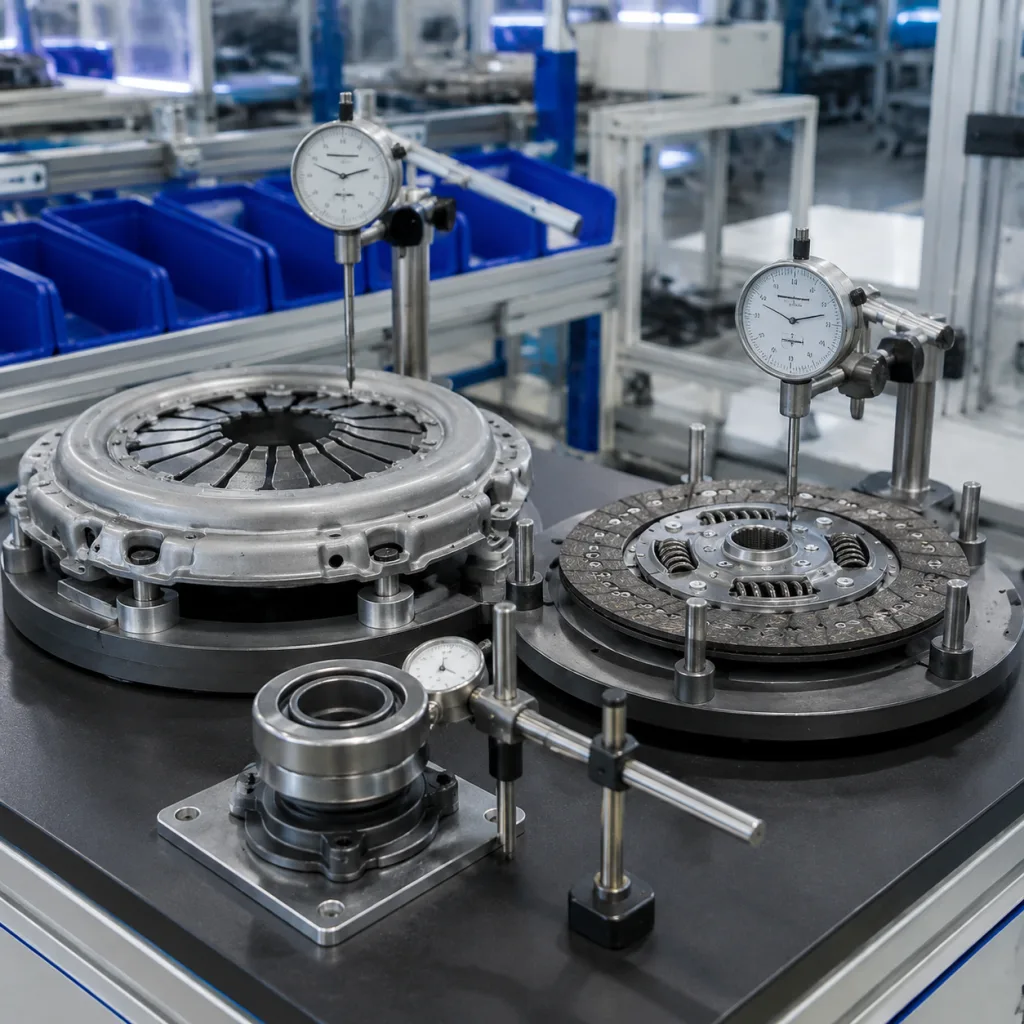
Choosing an engine bearing supplier is less about chasing the lowest unit price and more about limiting warranty risk, protecting inventory turns, and keeping fitment consistent across a mixed vehicle parc. The real test is whether the factory can hold stable metallurgy, wall thickness, crush height, and oil clearance from lot to lot, while also supporting export paperwork, private-label packaging, and repeat reorders. Driventus Auto Parts manufactures engine and powertrain components in Taizhou, Zhejiang, and supplies export markets in more than 60 countries. Our bearing range supports aftermarket distributors, wholesalers, OEM/Tier-1 purchasing teams, and multi-location repair chains that need consistent specifications across different demand profiles. This article breaks the sourcing decision into practical checks: what can fail, how to compare suppliers, what to ask for in an RFQ, and how Driventus supports approval and shipment. Driventus is an independent aftermarket manufacturer; brand names are referenced for fitment only.
Start with the failure modes, not the price
Engine bearings work in a harsh zone: mixed lubrication, repeated thermal expansion, and high cyclic loading. That is why the first sourcing question should be, “What usually goes wrong?” Not “Who is cheapest?”
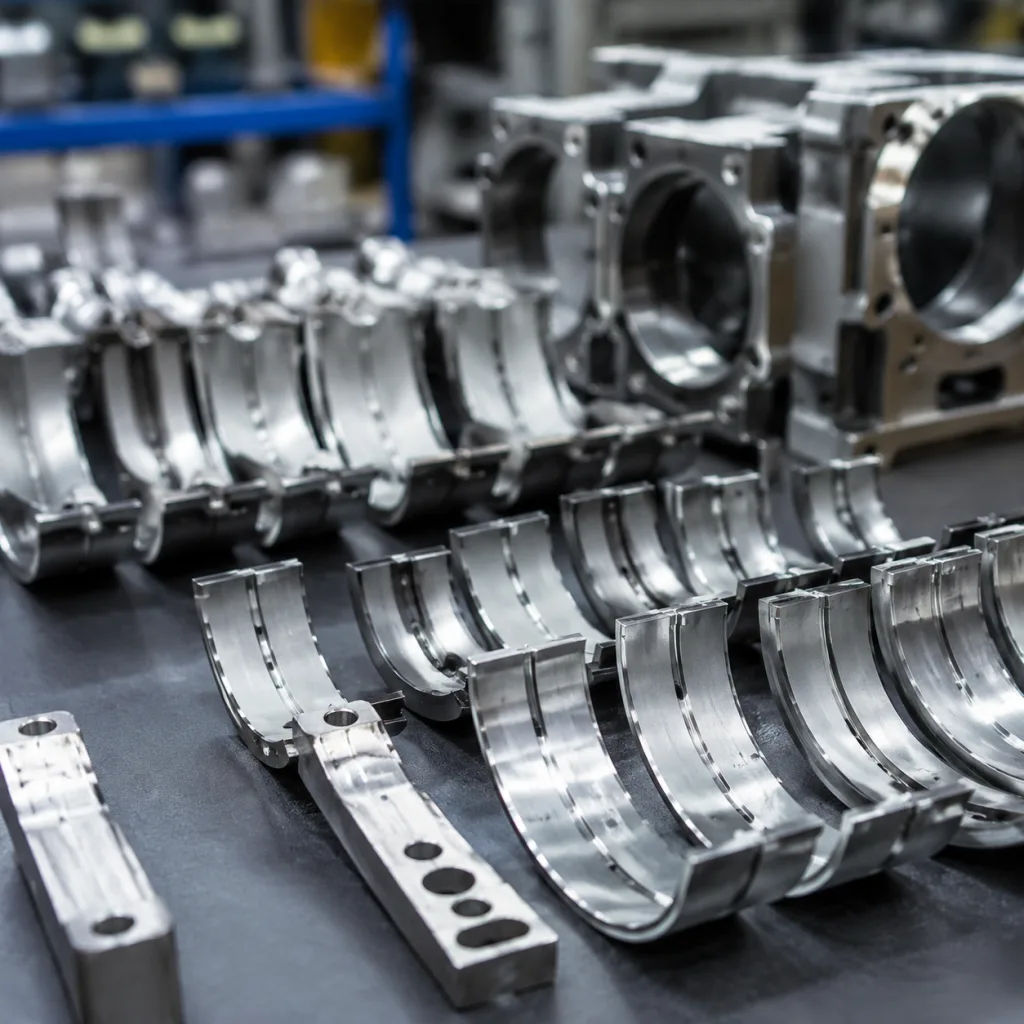
Common failure modes include incorrect wall thickness, unstable oil clearance, poor crush height, weak overlay adhesion, and inconsistent locating features. Any one of these can create noisy assembly, premature wear, or warranty claims even when the part looks correct in the carton.
Buyers should verify the dimensions that matter in service, not just the part number:
Main bearings and rod bearings must match the journal diameter and housing bore
Crush height must hold the shell firmly in the bore
Oil clearance must sit inside the approved band after installation
Bearing width must avoid side interference and misalignment
Thrust faces must control end play without excessive drag
A supplier that can explain these control points clearly is usually safer than one that only offers a catalogue and a unit price. Ask for the acceptance criteria in writing, then compare suppliers against the same standard. That turns the conversation from marketing claims into measurable risk.
Compare suppliers on control, not claims
Once the failure modes are clear, compare suppliers on how they control them. The best engine bearing supplier is not the one with the longest brochure. It is the one that can prove repeatability.
Use a simple comparison framework:
Area
What to compare
Why it matters
Material system
Bi-metal, tri-metal, aluminium-tin, copper-lead, or polymer overlay
Inspection reports, material certificates, certifications
Speeds approval and customs review
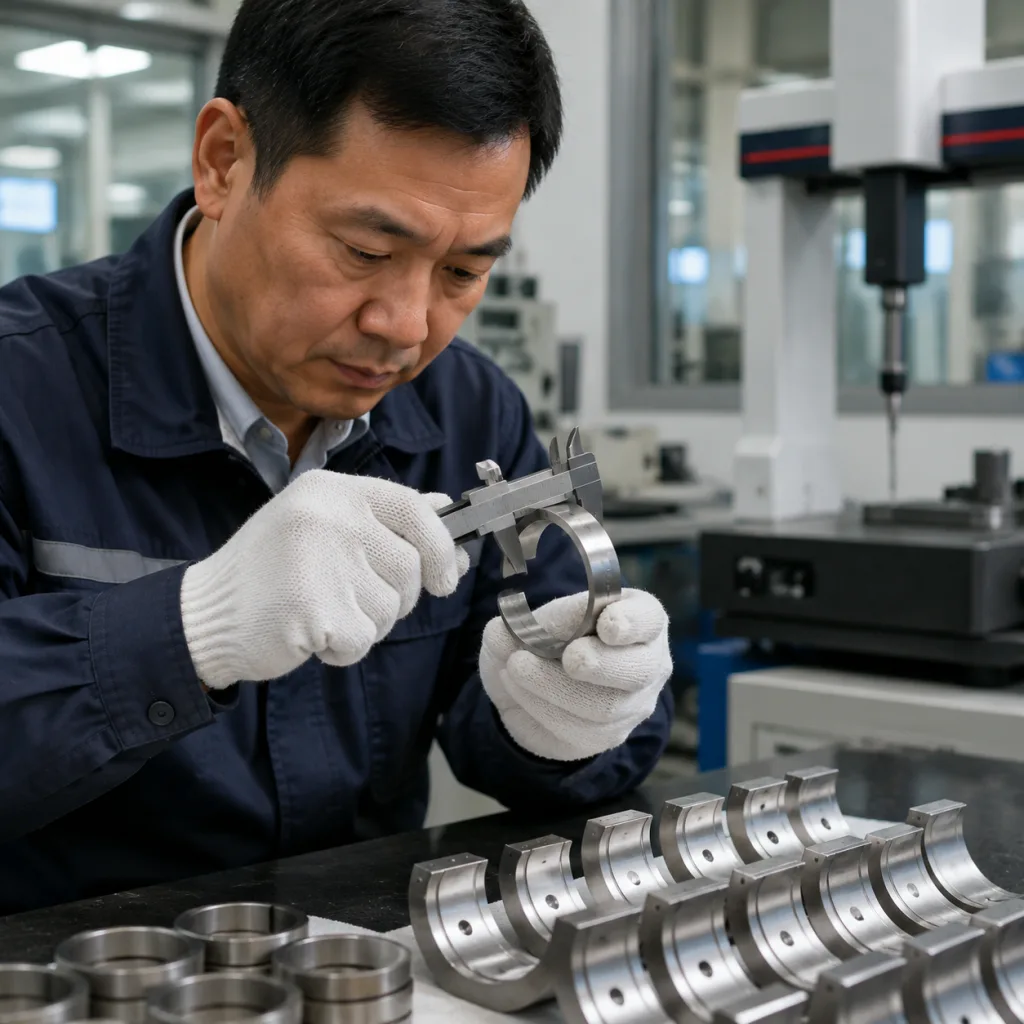
</tr></thead><tbody> </tbody></table>Driventus can support buyer-specified inspection plans, including dimensional layouts, sample verification, and lot-level records. For many programs, that matters more than a generic pass/fail statement. A stable supplier should be able to tell you the target wall thickness, the allowable range, the crush-height window, and the measuring method used for each lot. If they cannot, the sourcing risk is higher than the quote suggests.
Check the spec before you approve samples
Sample approval is where many bearing programs fail. The part may match visually but still miss the functional spec. That is why the approval process needs to be more than a quick fit check.
Typical technical checkpoints include:
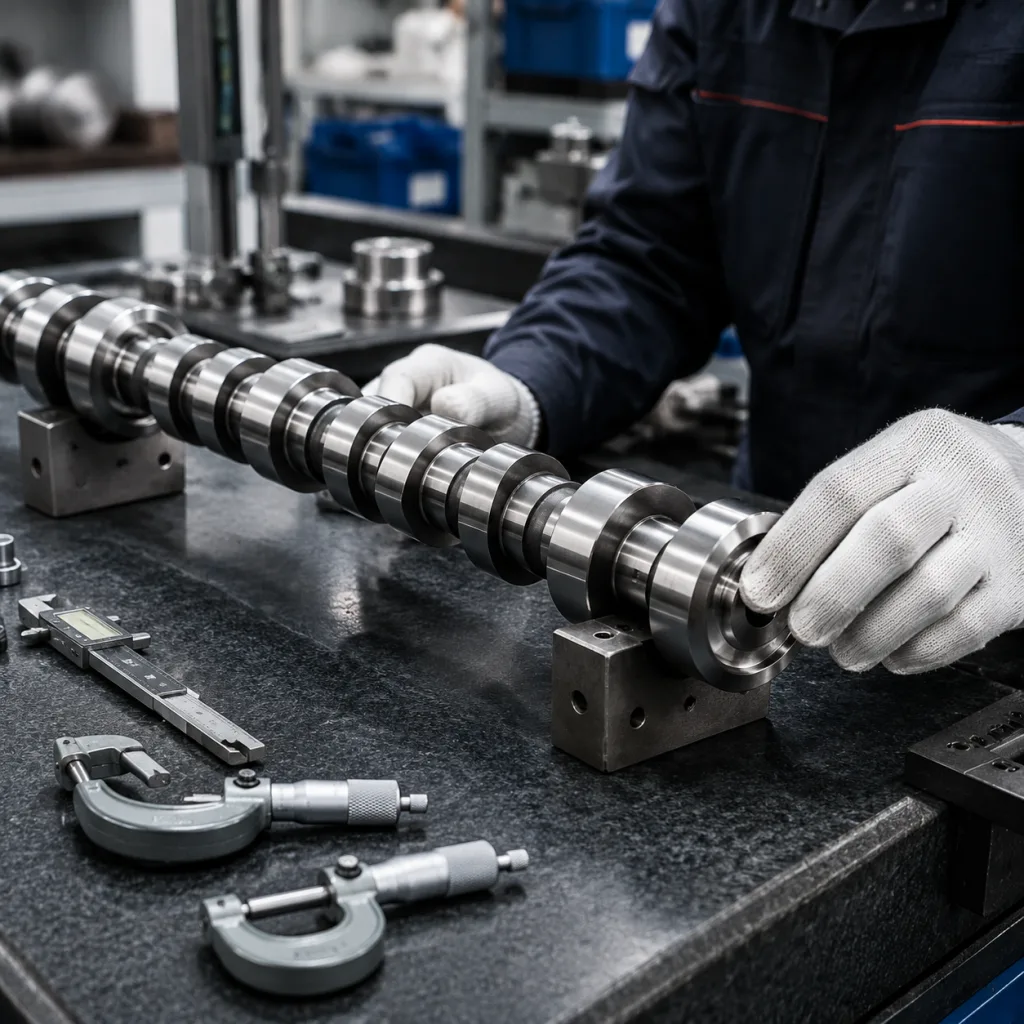
Wall thickness measured by micrometre or air gauge
Crush height verified with a fixture
Bearing width checked against the drawing
Overlay quality reviewed for continuity and finish
Backing steel hardness confirmed by certificate or test
Surface condition inspected for scoring risk
Packaging checked for corrosion protection and export durability
For heavy-duty or high-wear applications, buyers should also ask for installation trial results, oil clearance confirmation, and compatibility review against crankshaft journal condition. If undersize bearings are required, state the increment in the RFQ, such as 0.25 mm or 0.50 mm. Do not leave this implied.
Published frameworks such as IATF 16949:2016 and ISO 9001:2015 matter because they support process control, corrective action, and document discipline. For EU programs, REACH (EC) No 1907/2006 may also apply depending on the material declaration requirements. The point is simple: a bearing supplier should prove control, not merely promise it.
Choose the right supply format for your channel
The best commercial structure depends on how you sell. A national distributor, a regional wholesaler, and a repair chain do not buy the same way, even if they buy the same bearing family.
Driventus supports several sourcing formats:
Catalogue supply for fast-moving main and rod bearing sets
Mixed-SKU wholesale orders for aftermarket distributors
Private-label packaging with buyer artwork and carton specs
Consolidation with other engine components from our catalog
MOQ depends on the reference, tooling status, material, and packaging setup. Standard catalogue items usually support lower MOQ than a new development program. New references may require drawing confirmation, tooling, first-article review, and sample approval before production.
Instead of asking for one lead time, ask for three: sample lead time, production lead time after PO, and export packing lead time. That gives procurement a realistic schedule. It also prevents confusion when private-label cartons or mixed shipments add extra days. For price-sensitive buys, request quotes at 1,000, 3,000, and 5,000 set levels so you can compare landed cost against inventory carrying cost, not just the first number on the page.
Use a tighter RFQ to get a cleaner quote
A vague RFQ produces a vague quote. For engine bearings, the best requests combine commercial data with the dimensional facts the factory needs to price correctly.
Include these fields:
Part type: main bearing set, rod bearing set, thrust washer, or flanged bearing
Engine model, displacement, fuel type, and production range if known
Buyer-supplied OE-format reference where applicable, such as OE 06A… or OE 11251…
Material or performance requirement
Standard size or undersize requirement, such as 0.25 mm or 0.50 mm
Annual forecast and first-order quantity
Destination country and Incoterms
Packaging: neutral, Driventus, or private label
Documentation needed: inspection report, certificate copies, material declaration, PPAP elements if applicable
Approval timeline and sample quantity
If the order will ship with other engine parts, say so early. Consolidation affects carton design, pallet layout, and freight planning. Buyers can request a quote with drawings, samples, or a reference list. If you want an apples-to-apples comparison, ask for EXW, FOB, and CIF pricing separately. That makes the RFQ useful to sourcing, finance, and logistics at the same time.
How Driventus supports bearing sourcing programs
Driventus is a vertically integrated manufacturer of engine and powertrain components, including pistons, crankshafts, gaskets, water pumps, turbochargers, and engine bearings. That broader component base helps distributors consolidate programs without managing multiple export contacts.
For bearing sourcing, our support can include:
Application review based on buyer vehicle parc or sales history
Dimensional comparison against samples or drawings
Cross-reference mapping using buyer-supplied OE-format numbers where applicable
Driventus does not claim approval or endorsement by any vehicle manufacturer. Fitment references are used to help buyers identify replacement applications and manage catalogue data. For procurement teams, the practical value is straightforward: fewer handoffs, clearer documentation, and one factory that can support both standard catalogue demand and custom programs.
Frequently asked questions
MOQ depends on the reference, material, tooling status, and packaging format. Existing catalogue items usually have lower MOQ than new development parts. Mixed-SKU distributor orders can be reviewed case by case.
Yes. Driventus can review buyer samples, dimensional drawings, and application data for custom manufacturing. Tooling, inspection criteria, and sample approval steps are agreed before mass production.
Driventus supplies independent aftermarket replacement components and does not claim vehicle manufacturer approval. OE-format references may be used for fitment identification only when provided by the buyer.
If you are evaluating an engine bearing supplier for distributor, repair-chain, or OEM/Tier-1 sourcing, send your reference list, drawings, samples, and packaging requirements to Driventus for review at /contact.html