Connecting Rod for Citroen Berlingo Replacement: OE Fitment
A connecting rod for Citroen Berlingo replacement work has to do more than fit the engine family. It must match original geometry, material specification, and balancing requirements so rebuilds stay repeatable across batches. Small shifts in big-end bore, centre-to-centre length, or bolt stretch can shorten bearing life and create noise issues, which is why procurement teams should verify dimensional data, surface finish, and batch traceability before releasing volume orders. Driventus supplies engine components to B2B customers in the aftermarket, with production controlled under IATF 16949:2016 and ISO 9001:2015. Driventus is an independent aftermarket manufacturer; brand names are referenced for fitment only. For catalogue browsing, see [our catalog](/products.html) and our [quality system](/quality.html).
Start with the engine code, not the van badge
The fastest way to avoid a bad purchase is to treat the Berlingo nameplate as secondary. The correct connecting rod is determined by the engine code, the OE cross-reference, and the machining standard behind the part.
Decision checks
- Confirm the engine code before quoting
- Match centre-to-centre length to the approved drawing
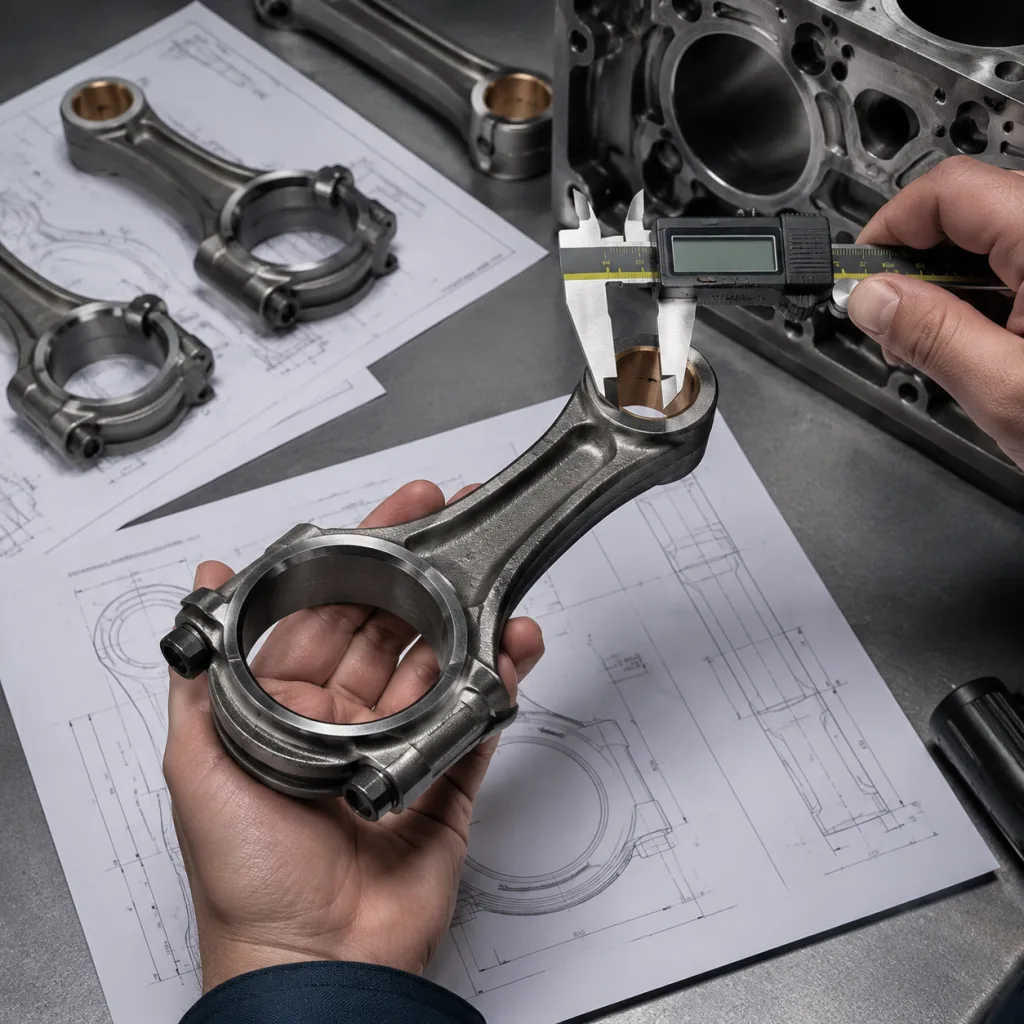
- Verify big-end bore, small-end bore, and pin fit
- Check rod bolt specification and clamp method
- Confirm matched weight group and balancing window
- Tie the reference to the exact engine family, not just the model name
For OE-equivalent buying, put the acceptance window in the RFQ. Do not rely on “fits model” wording. Buyers commonly ask for centre-to-centre length within ±0.02 mm of the approved drawing, big-end bore within the bearing clearance window, small-end bore matched to the pin spec, and rod-to-rod weight spread kept tight after final machining. If your programme uses an OE-style cross-reference such as 06A107065, keep it tied to the engine application and confirm the actual engine code before release. Driventus is an independent aftermarket manufacturer; brand names are referenced for fitment only.
Failure modes that turn a cheap rod into a warranty claim
Most replacement issues come from a few predictable weak points. The rod may look correct on paper and still fail if tolerance control or heat treatment is inconsistent.
| Failure mode | What usually causes it | What buyers should ask for |
|---|---|---|
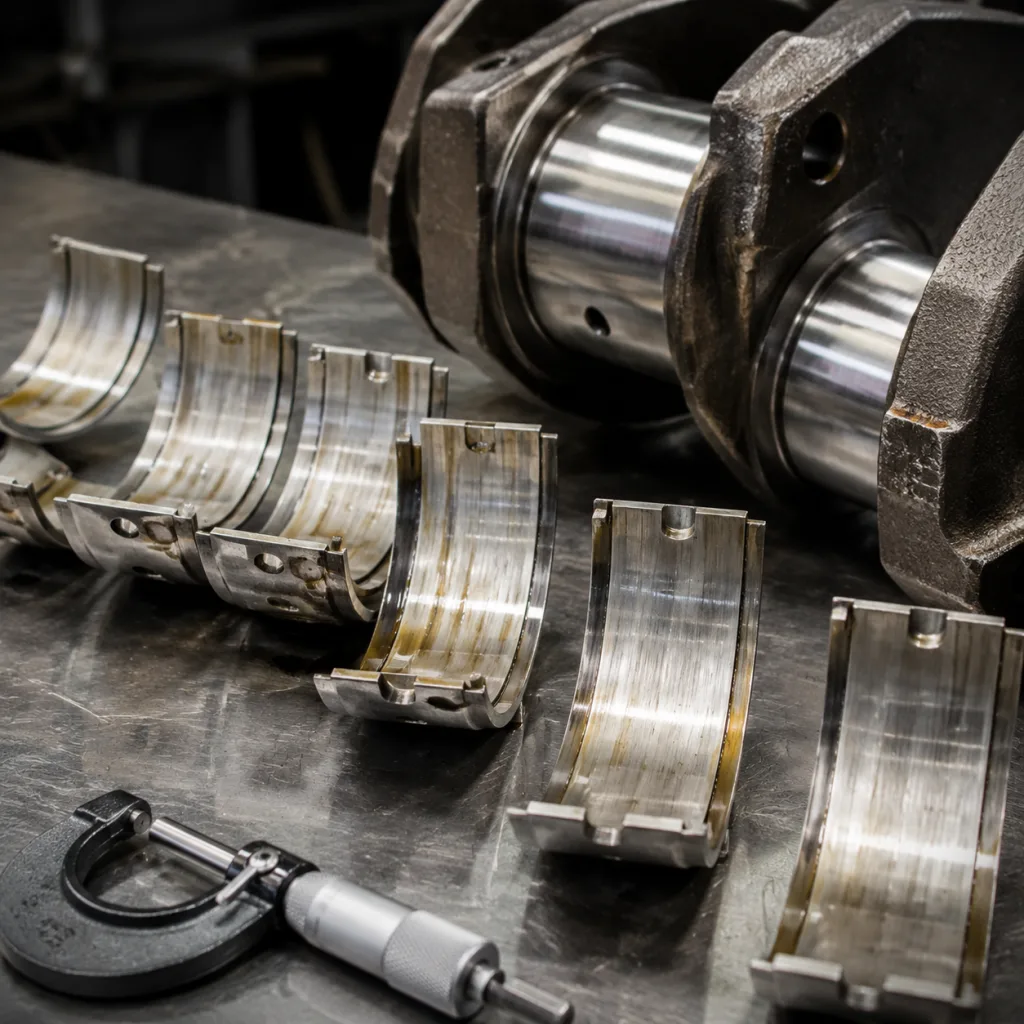
| Bearing wear | Big-end geometry drift or poor finish | Bore data, roundness, and surface roughness values |
| Pin seizure | Small-end mismatch or poor clearance control | Pin-fit spec and machining tolerance records |
| Cap separation | Incorrect bolt preload or stretch | Bolt specification and clamping method |
| Excess noise | Twist, bend, or weight mismatch | Final inspection data and balancing records |
| Early fatigue | Weak material control or bad heat treatment | Material certification and hardness results |
| Item | Typical control point | Why it matters |
|---|---|---|
| Centre distance | OE match, usually within ±0.02 mm | Preserves compression height and timing geometry |
| Big-end bore | Roundness and size within bearing spec, often held to 0.01-0.02 mm windows | Controls oil film and bearing clearance |
| Small-end bore | Pin fit tolerance matched to the piston pin spec | Protects piston pin load transfer |
| Twist and bend | Within assembly limit, commonly checked after machining | Reduces side loading and noise |
| Rod weight | Matched by set, often with a customer-defined gram window | Helps balance the rotating assembly |
| Bolt preload | Verified by torque-angle or stretch method | Prevents cap separation under load |